Japan
Amanohashidate
A pine-covered sandbar that becomes a bridge to heaven when you look at it upside down.
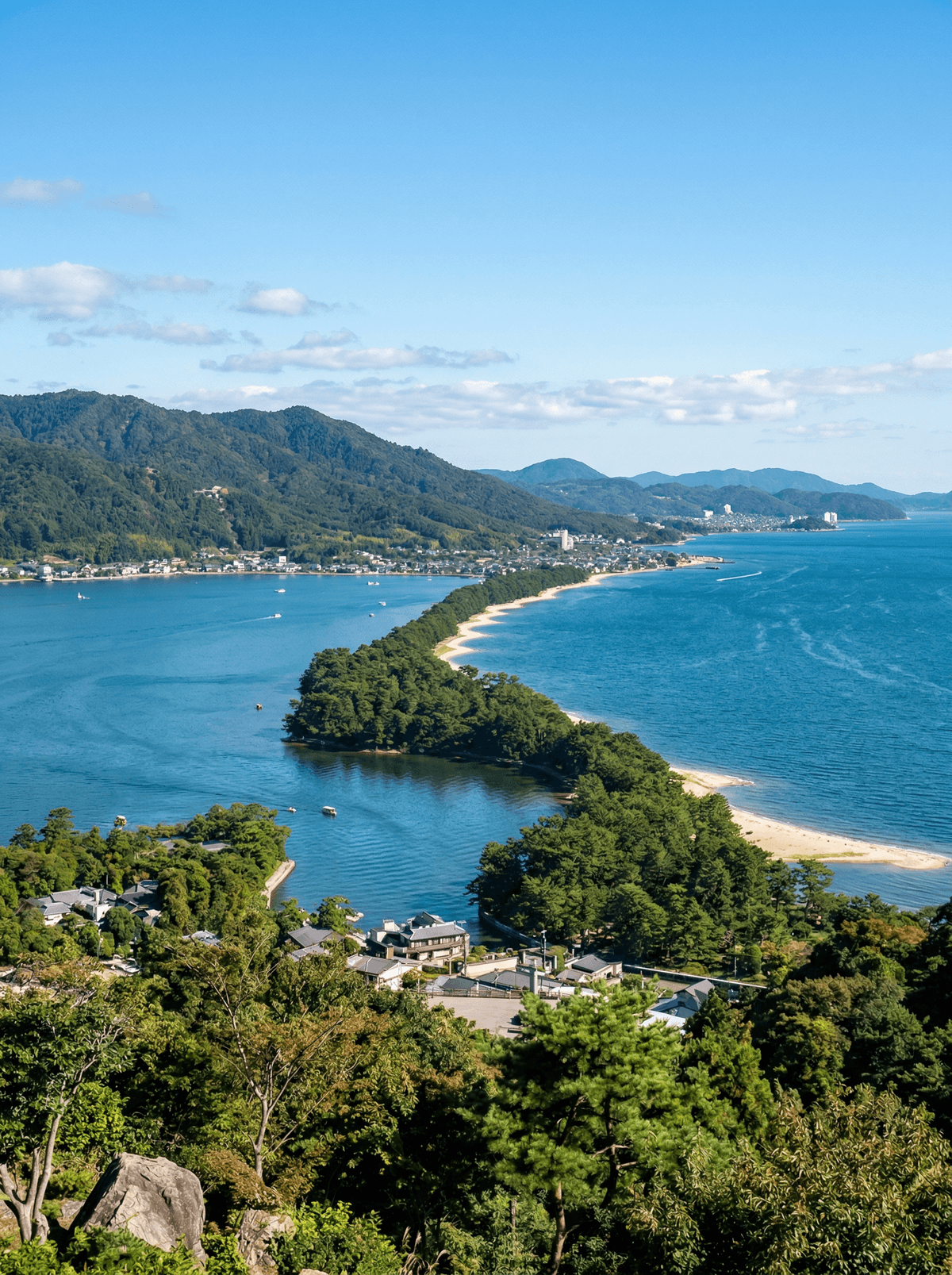
Bend over, look back through your legs, and the pine-covered sandbar lifts off the water into the sky. This is the prescribed way to see Amanohashidate — one of Japan's three most celebrated views — and visitors have been doing it for centuries with varying degrees of dignity. Right way up, it is a long spit of sand and pine across the mouth of Miyazu Bay. Upside down, it is a bridge to heaven.
Amanohashidate has been ranked among Japan's three most scenic views for centuries, alongside Miyajima and Matsushima. The sandbar closes the mouth of Miyazu Bay on the Sea of Japan coast of northern Kyoto Prefecture, and the way to see it is from the hills at either end: from Kasamatsu Park on the north side, reached by a lift, where the mata-nozoki 'through-the-legs' viewing is the tradition, or from the viewpoint above the southern shore. Then you cross it — on foot or by hired bicycle — through a corridor of black pines, beaches to seaward and the bay to landward, from Chionji temple at the southern foot to the mountain temple of Nariaiji above the north. Excursion boats circle the bay, and the fishing ports along this coast land the Tango snow crab that fills the winter rice bowls.
Couple
Cycling the pine-lined sandbar together and sharing the absurd upside-down viewing pose makes memories equal parts romantic and ridiculous. Rock oysters at the waterfront in summer seal the afternoon.
Family
Children delight in the upside-down viewing ritual, the lift to Kasamatsu Park, and cycling the flat sandbar trail to the beaches. The view rewards all ages equally.
- A pine-covered sandbar spans the mouth of Miyazu Bay — tradition says to view it upside down, through your legs, so it looks like a bridge to heaven.
- One of Japan's three most celebrated views, admired for centuries and painted for longer.
- Cross it on foot or by hired bicycle through a corridor of black pines, then take the lift to the hilltop viewpoint at Kasamatsu Park.
- Temples anchor both ends — Chionji on the shore and Nariaiji on the mountain — and boats circle the bay between them.
Rock oysters off the Tango coast — huge and creamy, summer only — at the waterfront restaurants.
Tango snow crab piled into a rice bowl from November to March, the 'king of winter' on this coast.
Clovelly
England
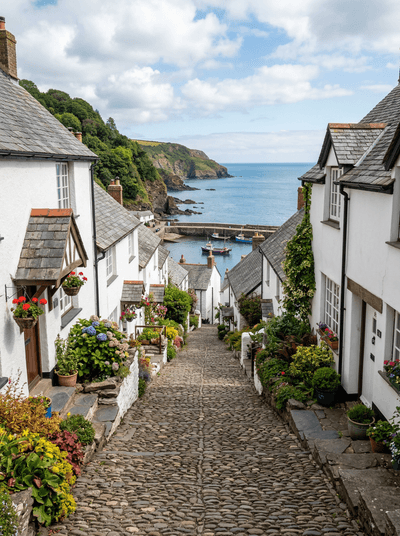
A vertical fishing village where wooden sledges carry groceries down car-free cobbles.
Húsavík
Iceland
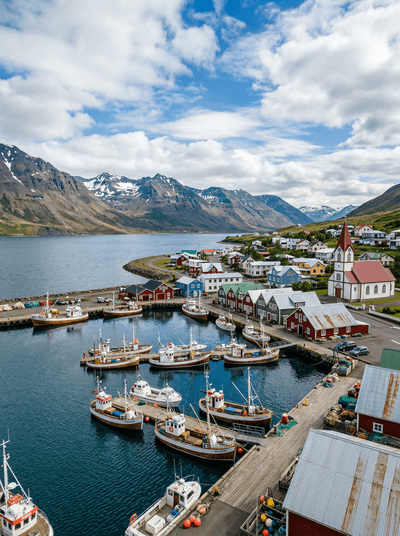
Wooden sailing ships chasing the exhales of blue whales in a sapphire northern bay.
North Berwick
Scotland
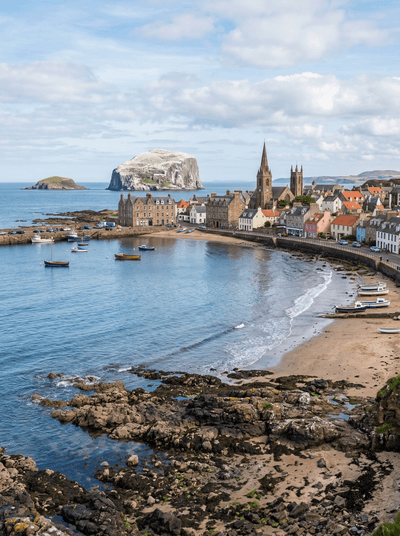
A volcanic rock towers from the Firth, white-coated with a hundred thousand screaming gannets.
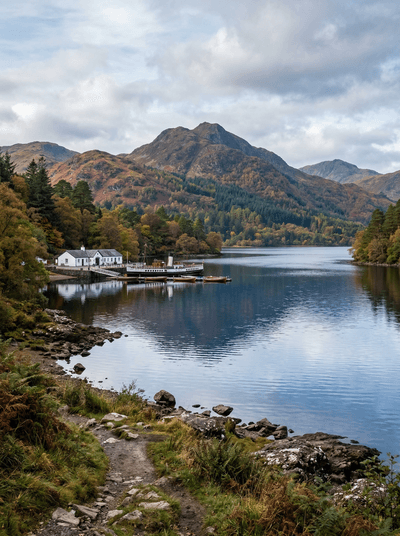
Loch Katrine
Scotland
A Victorian steamship crosses the loch that has quenched Glasgow's thirst since 1859.
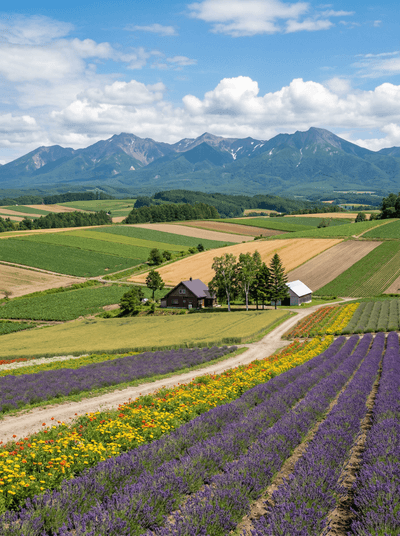
Furano and Biei
Japan
Lavender fields running to the mountains in ruler-straight purple rows.
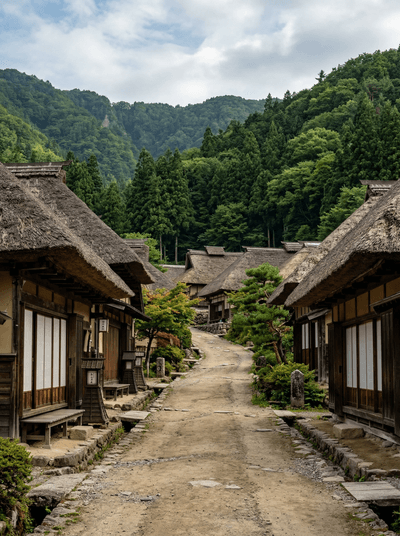
Ouchi-juku
Japan
Thatched-roof inns lining a mountain highway frozen since the samurai stopped passing through.
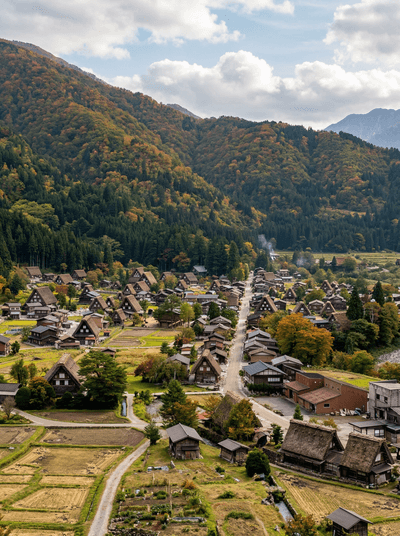
Shirakawa-go
Japan
Thatched roofs steep as praying hands, built for snow that buries the ground floor.
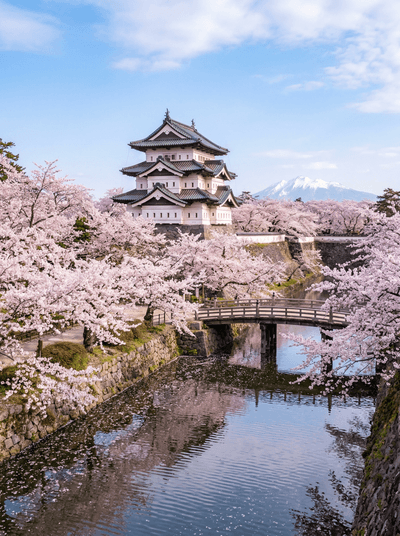
Hirosaki
Japan
Apple orchards around a castle moat where fallen cherry petals form a pink floating carpet.