Italy
Aquileia
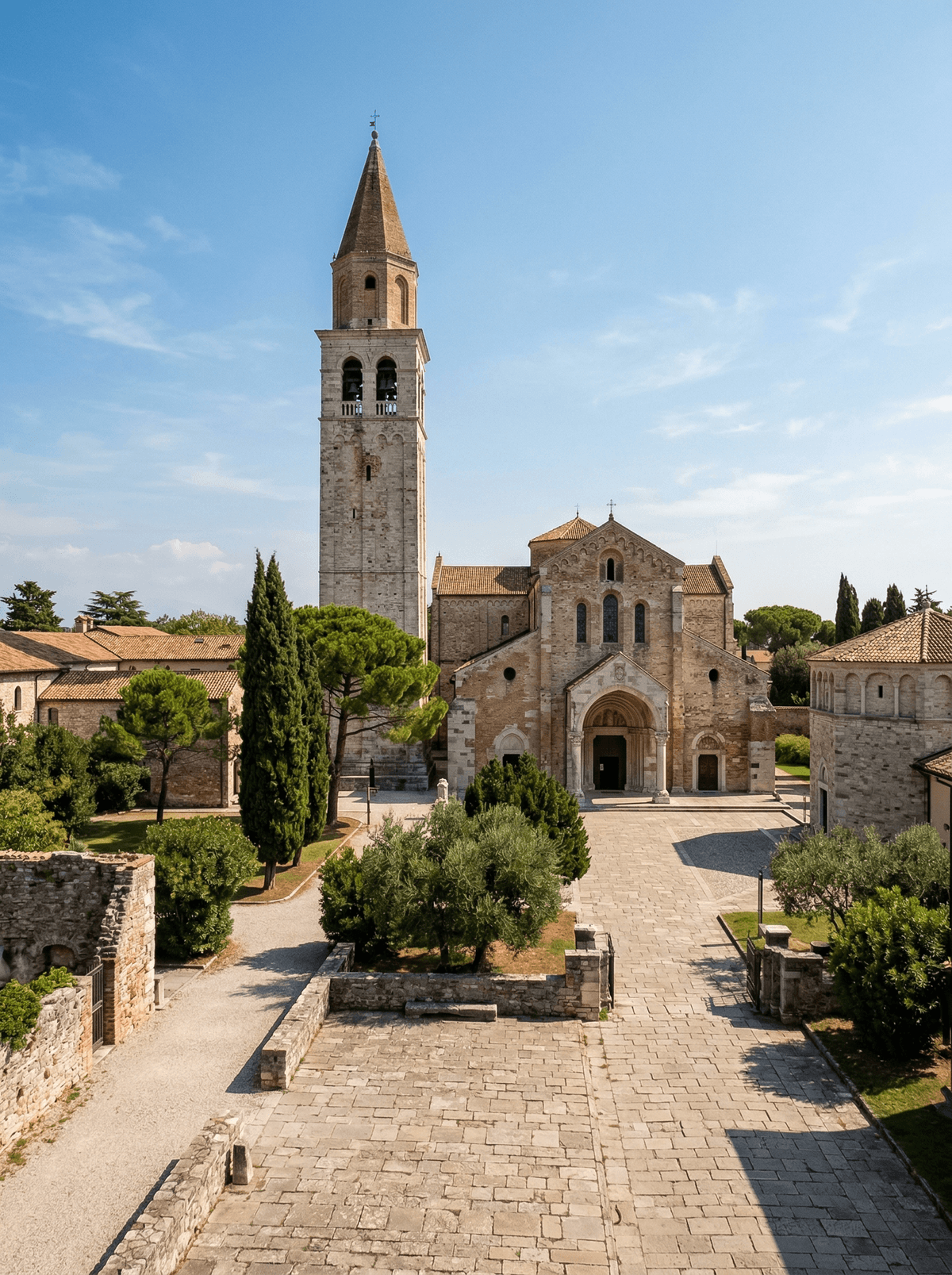
A village atop a buried Roman city, the basilica floor a vast fourth-century mosaic.
You step into the basilica and the floor gives way to time. A vast fourth-century mosaic spreads beneath your feet, sea creatures and Jonah's whale vivid in tessellated stone. Outside, a farming village drowses over the buried remains of an imperial city.
Aquileia was among the foremost cities of the Roman Empire, a port on the Natissa that funnelled goods between the Mediterranean and the Danube lands. The village that occupies it now barely covers the forum, the river wharves and the burial streets, which surface in open fields rather than under pavement. Inside the Basilica of Santa Maria Assunta, the floor laid under Bishop Theodore in the early fourth century runs to 760 square metres, the largest early Christian mosaic in the western world, hidden beneath later flooring until the early 1900s. UNESCO lists the whole complex, and the archaeological museum keeps the amber, glass and portrait heads the digs keep surrendering.
Solo
Aquileia asks for slow, close looking: the mosaics reward patience, the ruins reward wandering, and the village keeps farm-town hours.
- The basilica's fourth-century floor covers 760 square metres, the largest early Christian mosaic in the western world.
- The forum, river port and burial streets were excavated in open fields, not under a modern city.
- The National Archaeological Museum holds Roman amber, glass and portraiture from the digs.
- The vast mosaic lay hidden beneath later flooring until the early twentieth century.
Frico crisps Montasio cheese and potato into a golden disc, the Friulian answer to lunch.
San Daniele prosciutto, aged in hills just north of here, drapes paper-thin over bread at village tables.
Rissani
Morocco
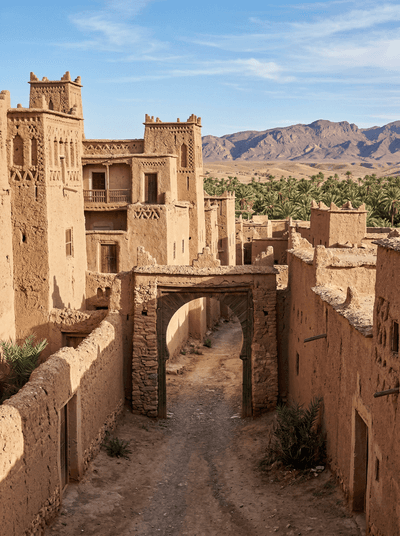
Date crates, donkey carts and ironwork crowd a market beside medieval Sijilmassa's ruins.
Kon Tum
Vietnam
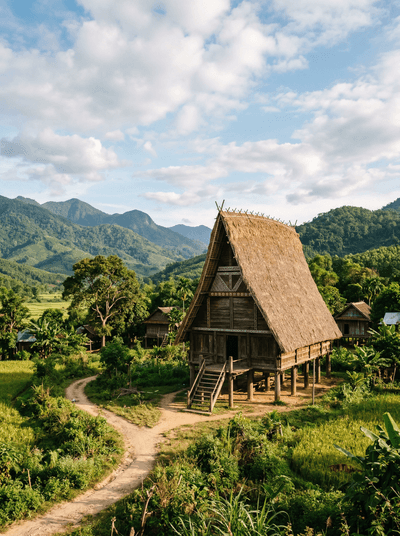
Towering wooden communal houses with axe-blade roofs rising from the Central Highlands.
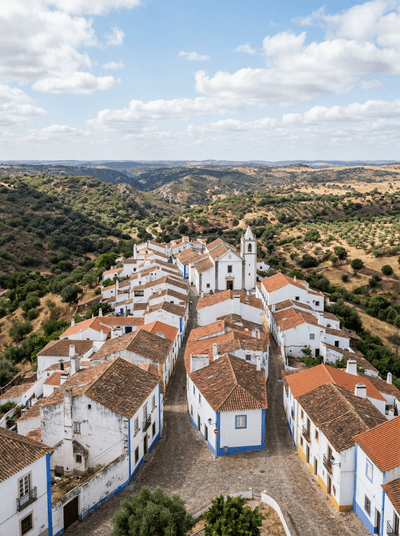
Barrancos
Portugal
So remote it bred its own tongue — half Portuguese, half Spanish, spoken nowhere else.
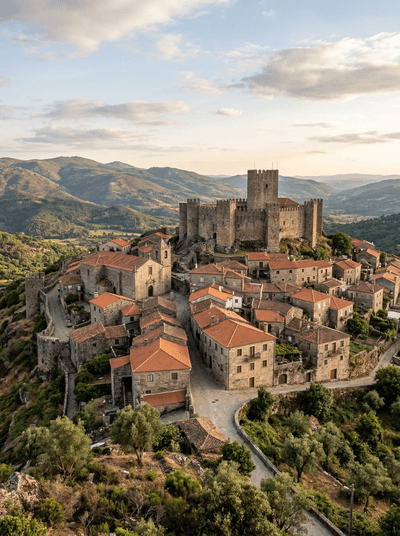
Belmonte
Portugal
Portugal's hidden Jewish heart — a faith practised in secret for five centuries.
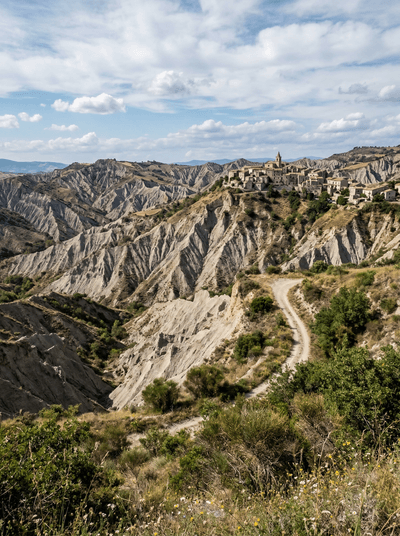
Calanchi di Aliano
Italy
Grey clay badlands stretching to the horizon, the exile landscape of Christ Stopped at Eboli.
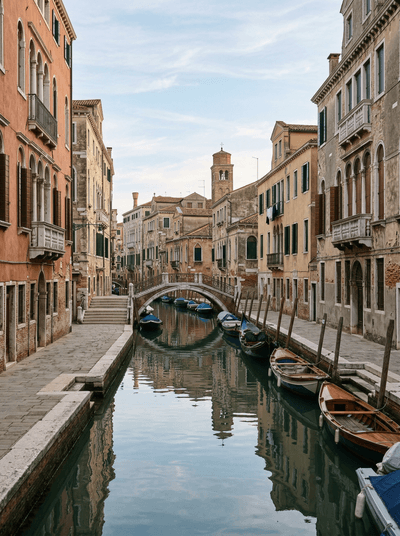
Venice
Italy
Dawn light on a silent canal where only your footsteps echo on wet stone.
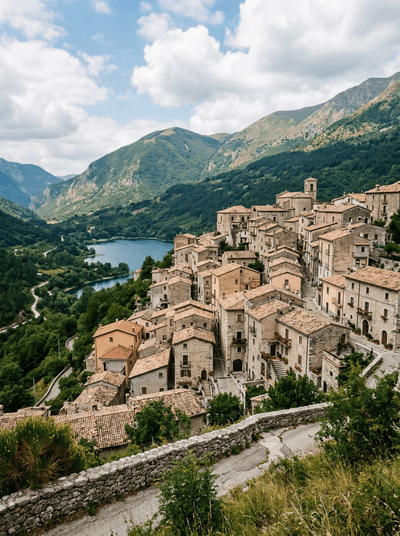
Scanno
Italy
A mountain village above a heart-shaped lake, where women still wear traditional dress on feast days.
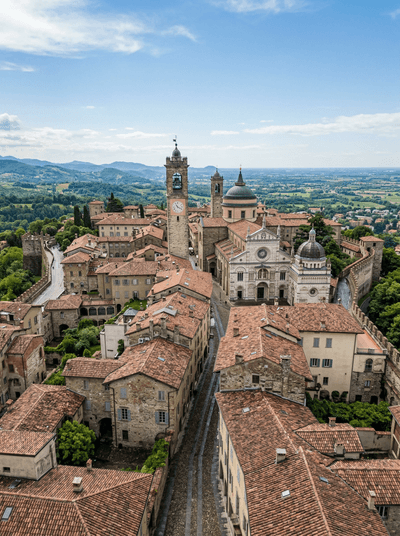
Bergamo Alta
Italy
A walled medieval hilltop city reached by funicular, floating above the Lombardy plain.