Greece
Chrysi Island
An uninhabited island of shell-pink sand and ancient junipers, now visited only on its own terms.
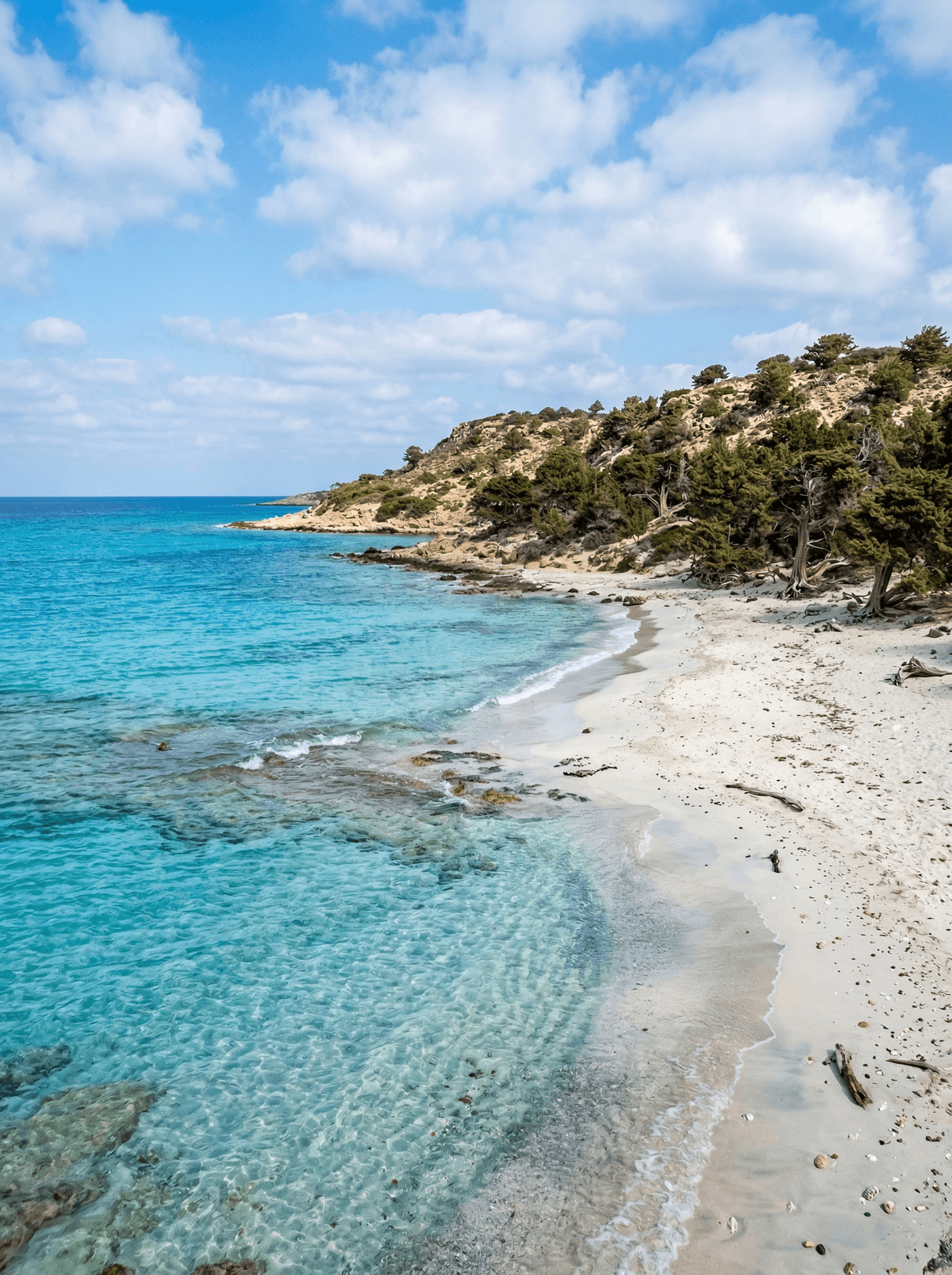
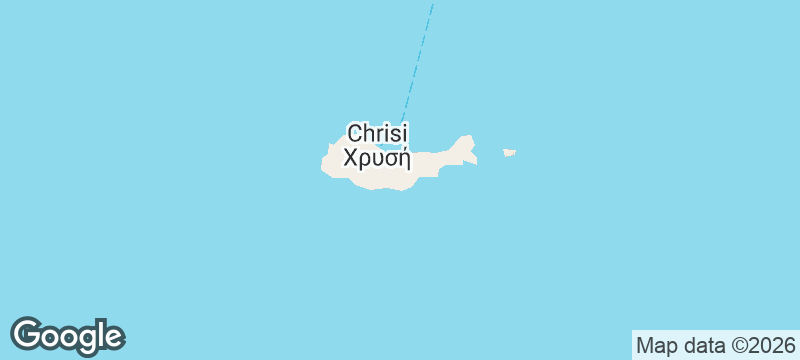
The boat from Ierapetra crosses for an hour before the island appears — flat, golden, fringed with sand of crushed shell. The juniper wood covering the interior is off-limits now; Chrysi is visited on its own terms, from the water and the permitted shore.
Day boats out of Ierapetra spend five to eight hours around the island, swimming from the boat or using the permitted beach zones under the current conservation regime — walking through the interior and its centuries-old juniper wood is prohibited. The protection is the point: the dunes and junipers were being loved to death, and the island is being given room to recover.
Couple
A boat day of clear water and bright coast experienced within the current protected-area rules.
Friends
Swimming, time on deck and a harbour meal back in Ierapetra without treating the island interior as open terrain.
- The sand really is pink-gold at the waterline — crushed shell in the millions.
- The juniper wood is centuries old, and its protection is why the island still has one.
- The crossing itself is a Libyan Sea hour — flying-fish weather in summer.
- You slip off the boat into water the colour of bottle glass.
A Cretan picnic of graviera, rusks, tomatoes and olives prepared before leaving Ierapetra.
Grilled local fish or cuttlefish at Ierapetra harbour after the return crossing.
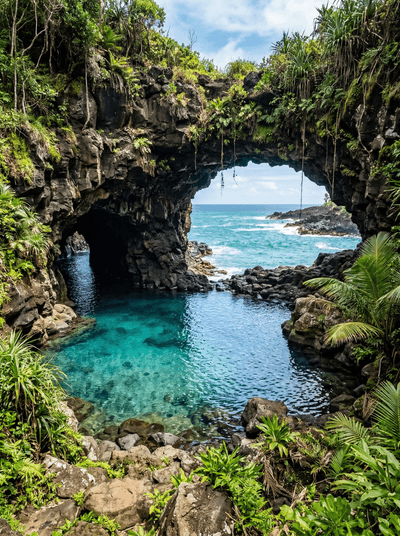
Piula Cave Pool
Samoa
Under the chapel, a lava tube pours cold spring water into a pool full of fish.
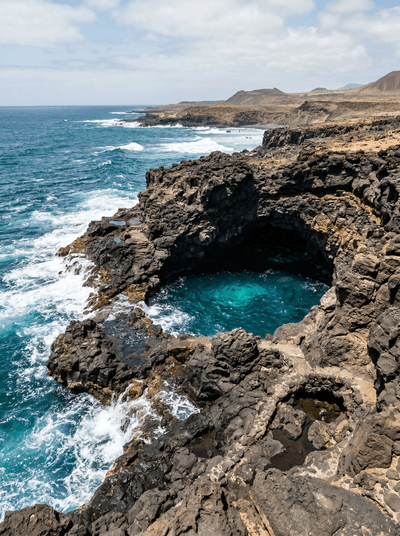
Buracona
Cape Verde
For two hours around midday, sunlight sets a submerged lava cave burning electric blue.
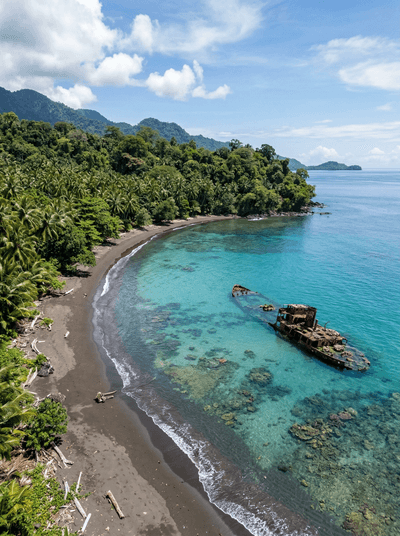
Bonegi Beach
Solomon Islands
A freighter's bow still breaks the surface where she was beached in 1942.
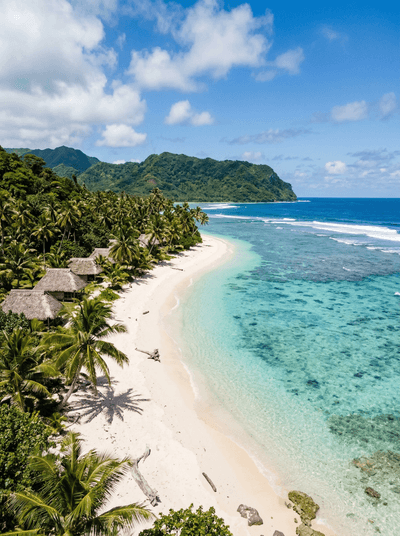
Lalomanu Beach
Samoa
A mile of white sand, a lagoon of reef fish, and Nu'utele dark on the horizon.
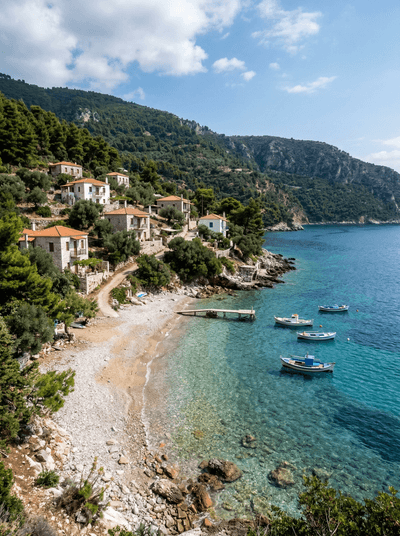
Milia
Greece
An abandoned Cretan hamlet rebuilt from stone into an off-grid eco-settlement deep in chestnut forest.
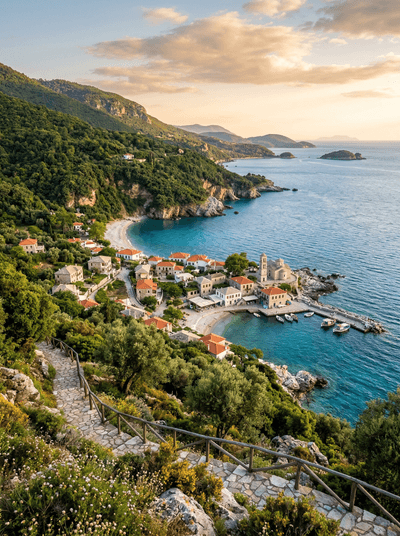
Pelion
Greece
The centaurs' mythic homeland — chestnut forests and stone villages sliding from peak to shore.
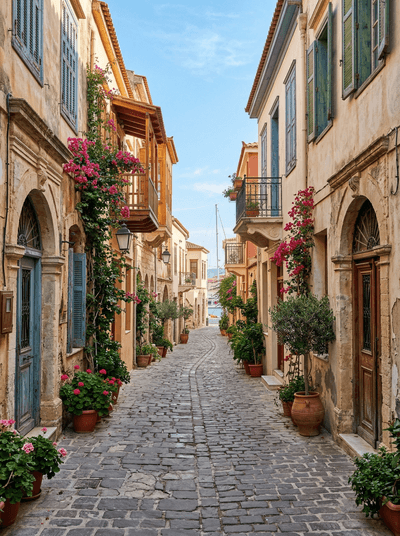
Chania Old Town
Greece
A Venetian harbour glowing at dusk where lighthouse and minaret share the skyline in tangerine light.
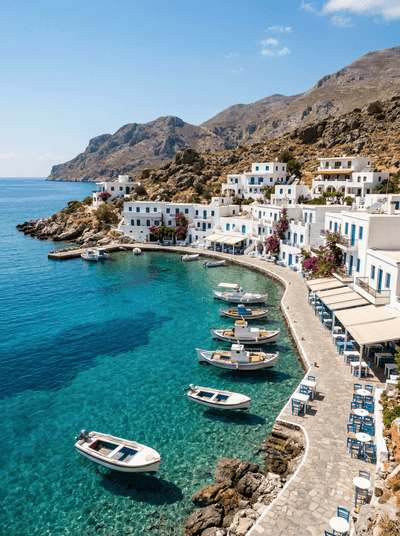
Loutro
Greece
A village with no road — arrive only by boat or on foot through Cretan gorges.