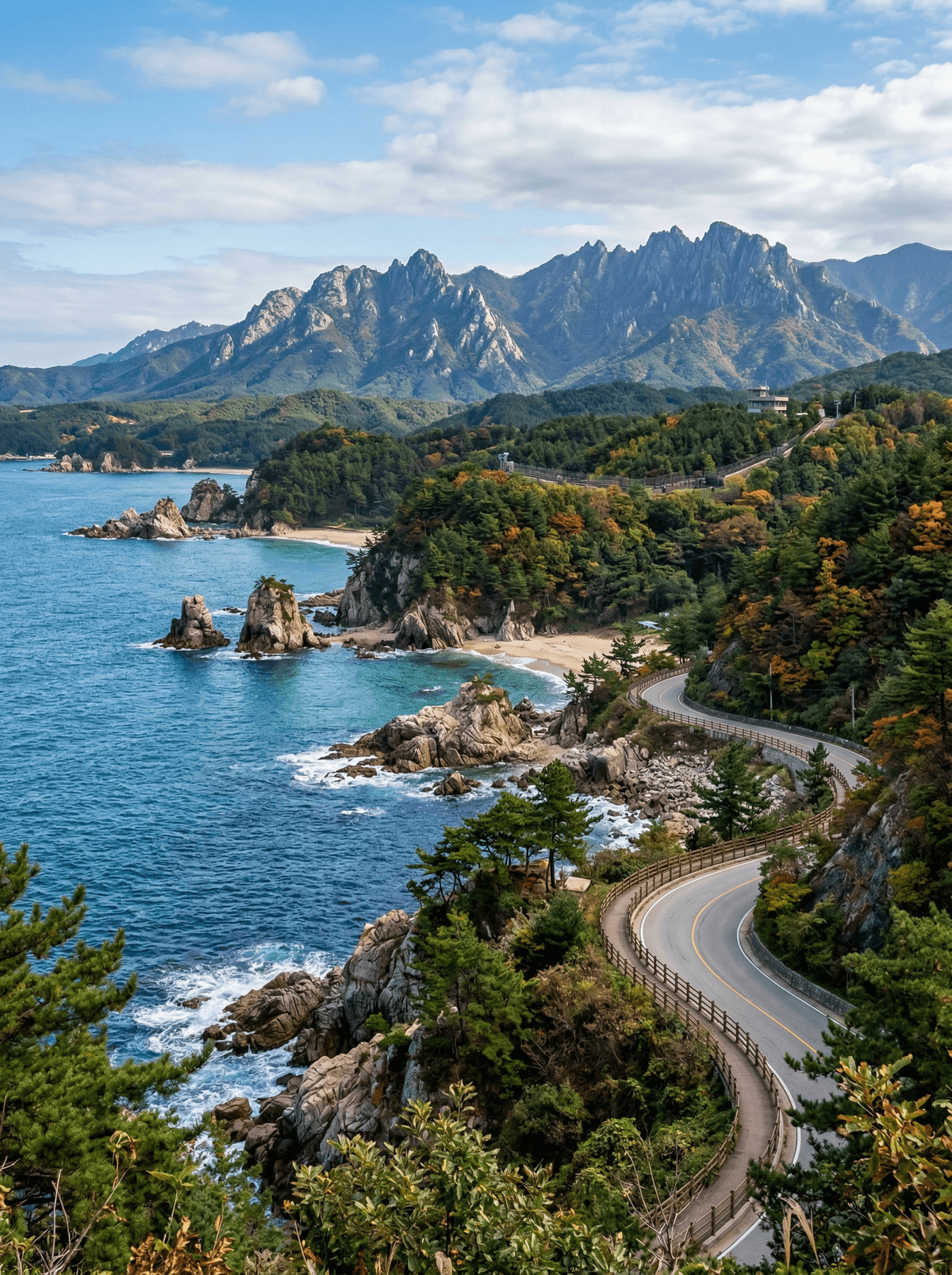
South Korea
Goseong
Footprints a hundred million years old surface twice a day with the tide.
The tide pulls back and there they are: footprints stamped into flat coastal rock by animals that walked here in the Cretaceous. Two hours later the sea takes them back.
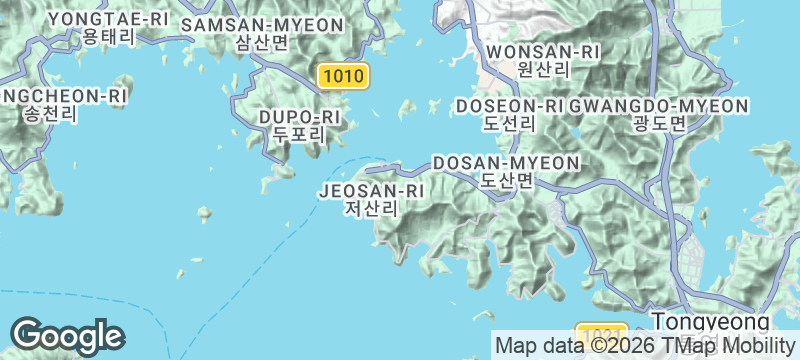
Goseong's Sangjogam shelf preserves thousands of dinosaur footprints from multiple species along an accessible stretch of tidal rock, one of Asia's densest trackway concentrations, with pterosaur and sauropod prints within metres of each other. The site runs on a natural clock: exposed at low tide, submerged at high, so the tide table plans the day. The museum above the shelf carries the story when the rock is under water, and cliff paths extend the coast walk either side.
Family
Footprints, museum displays and cliff scenery give children three different ways into the same deep-time story.
Solo
A solo visitor can time the fossil shore to the tide and use the museum when conditions obscure details.
- Thousands of Cretaceous footprints surface on one accessible tidal shelf.
- Pterosaur and sauropod tracks lie within metres of each other.
- The tide table is the site's natural opening hours.
- The museum carries the story when the sea covers the rock.
Chongjaengi-gukbap, the county's goat-and-rice soup, is Goseong's own tradition.
Samcheonpo's port restaurants along the coast handle the seafood.
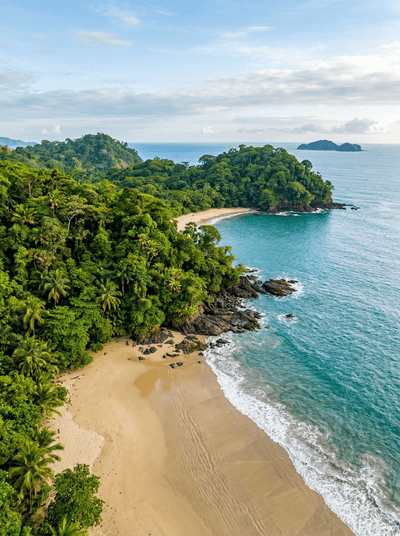
Manuel Antonio
Costa Rica
Capuchins patrol the sand beneath dozing sloths where rainforest walks into the ocean.
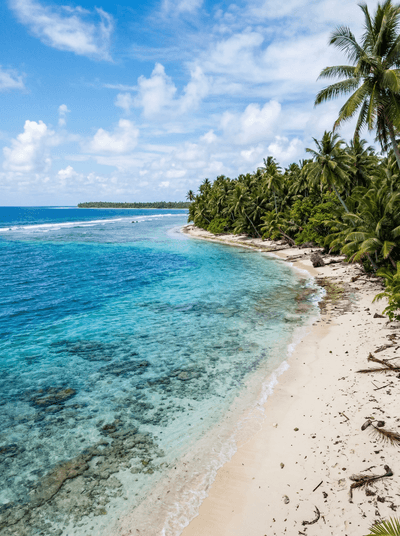
Vaitupu
Tuvalu
Tuvalu's largest island, where traditional sport te ano sends two woven balls flying at once.
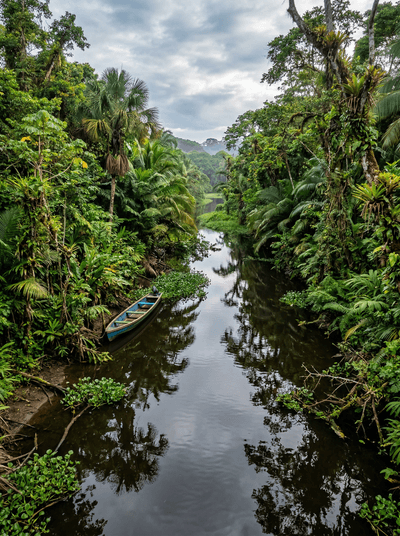
Tortuguero
Costa Rica
Jungle canals where green sea turtles haul onto black volcanic sand under a moonless sky.
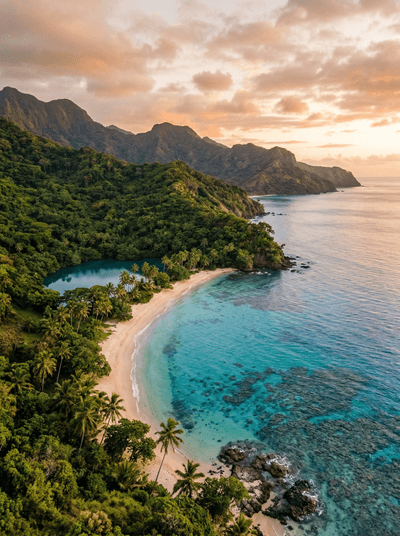
Kadavu
Fiji
Manta rays circle the world's fourth-largest barrier reef, off villages the road barely reaches.
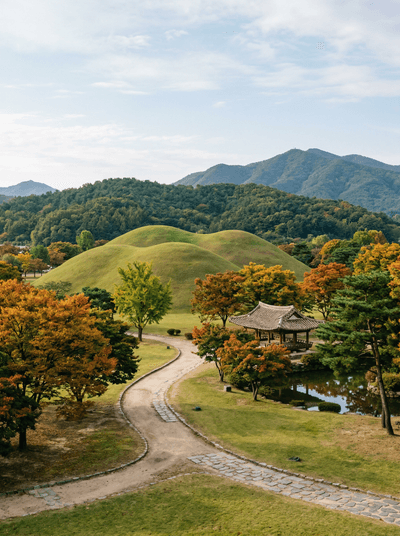
Gyeongju
South Korea
Grass-covered royal tombs the size of hills rise unfenced among city streets.
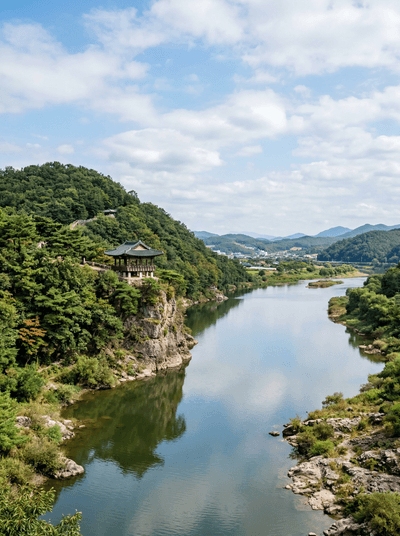
Buyeo
South Korea
Lotus flowers choke the pond of a kingdom that fell fourteen centuries ago.
Somaemuldo
South Korea
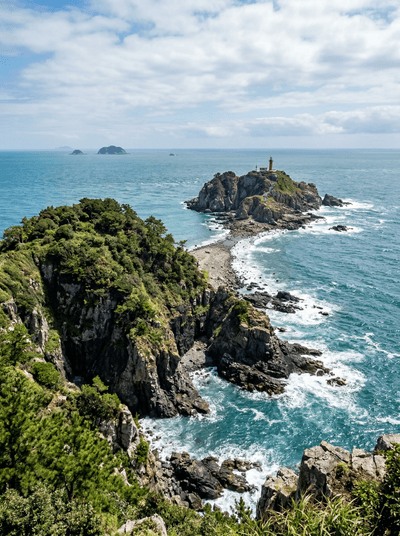
At low tide a boulder path surfaces between the island and its lighthouse.
Seoul
South Korea
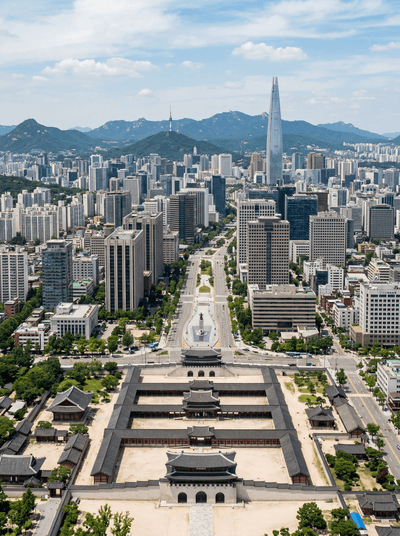
Sesame smoke and midnight neon run right up to the walls of Joseon palaces.