Tonga
Niuafo'ou
Swimmers caught tin-can mail thrown from passing ships — a crater-lake island barely less remote today.
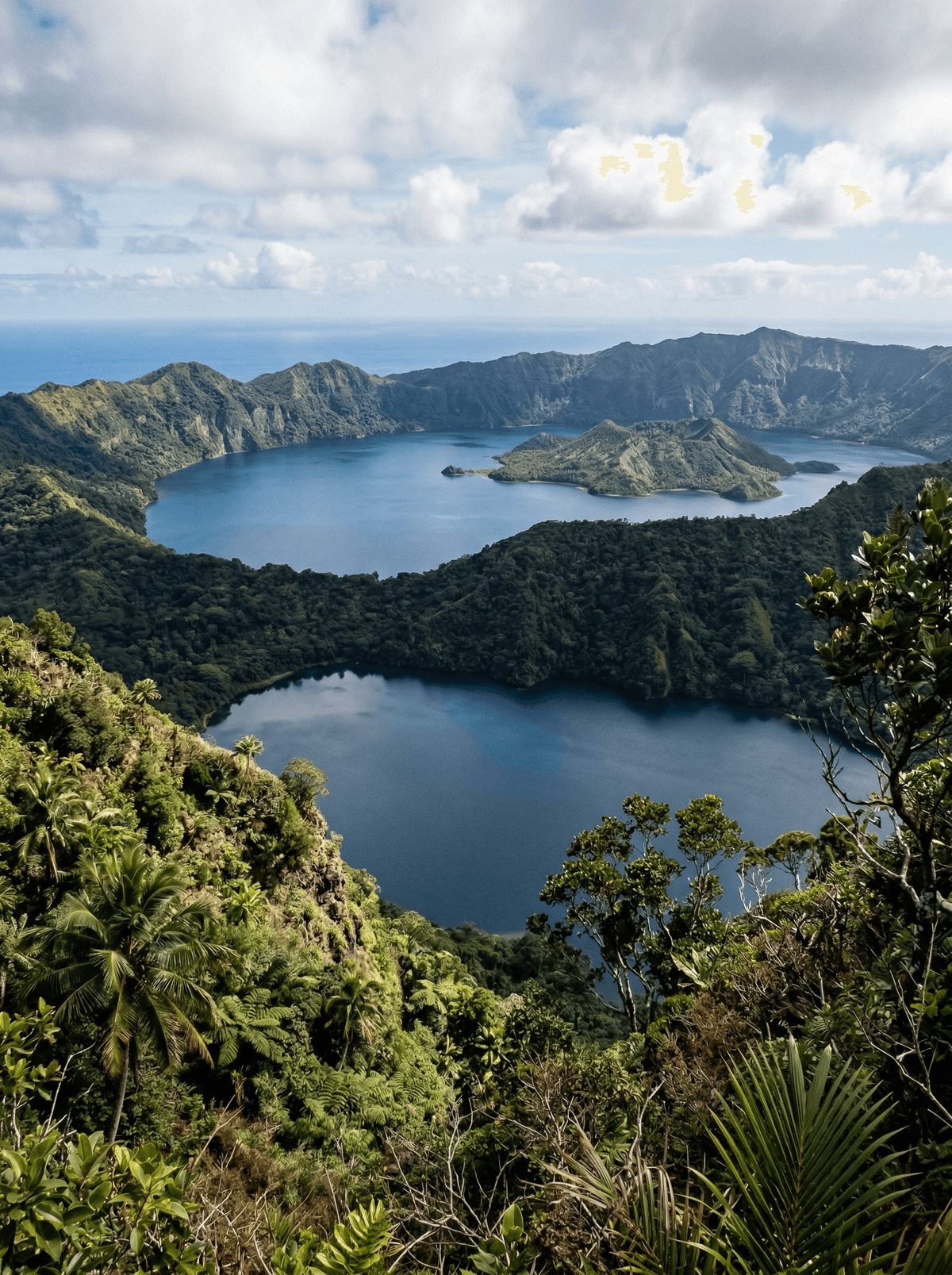
The cargo boat approaches from the south and there is no harbour, no jetty, no sheltered bay. You transfer to a dinghy in open swell and land on a reef-shelf that passes for a shore. Behind the coconut palms, a volcanic island rises to a freshwater crater lake that has no business existing this far from anywhere.
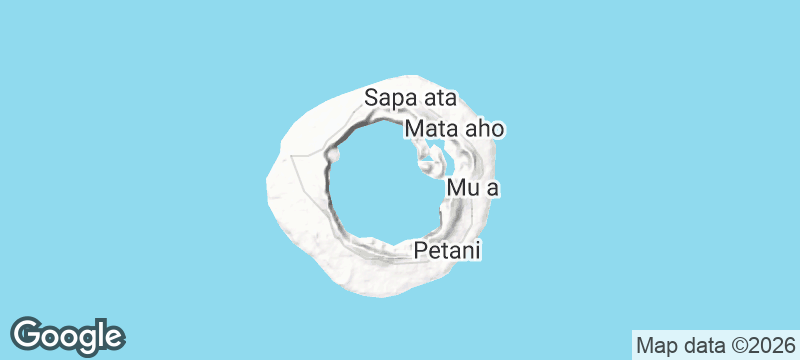
Niuafo'ou is Tonga's most remote inhabited island, lying roughly 574 kilometres north of the capital and accessible only by monthly government cargo boat or infrequent charter flight. From 1882 to 1983, the island had no wharf — incoming mail was sealed in biscuit tins and thrown overboard from passing ships, while local swimmers retrieved it from the sea, earning Niuafo'ou the name Tin Can Island. The crater lake at the island's centre is one of the most isolated bodies of fresh water in the Pacific, reachable by a thirty-minute walk from the main village. Niuafo'ou megapode birds incubate their eggs in geothermally heated volcanic sand rather than sitting on nests — a behaviour documented in fewer than a dozen species worldwide. Most visitors stay at least a week, living with host families who cook every meal from their garden.
Solo
Niuafo'ou strips travel to its essentials — you eat what your host family grows, you walk where the paths lead, and you stay until the next boat comes. Solo travellers comfortable with deep remoteness find a place where the 21st century arrived gently.
Couple
A week on Niuafo'ou together, with no agenda beyond the crater lake and the megapode nesting grounds, is a reset that demands nothing but presence. The isolation amplifies every shared meal and every sunset over the Pacific.
- From 1882 to 1983, the island had no wharf — mail was sealed in biscuit tins and thrown overboard from passing ships for local swimmers to retrieve, earning it the name Tin Can Island.
- The crater lake at the island's centre is one of the most remote bodies of fresh water in the Pacific — a thirty-minute walk from the main village reaches its edge.
- Niuafo'ou megapode birds bury their eggs in geothermally heated volcanic sand to incubate them without sitting — a behaviour documented in fewer than a dozen places worldwide.
- Access is by monthly government cargo boat or occasional charter flight — most visitors stay at least a week, living with host families who cook every meal from their garden.
Meals come from the host family's kitchen — taro, yam, reef fish, and coconut cream in every combination.
Fresh pawpaw and passionfruit from gardens fed by volcanic soil, eaten overlooking the crater lake at dawn.
Hideaway Island
Vanuatu
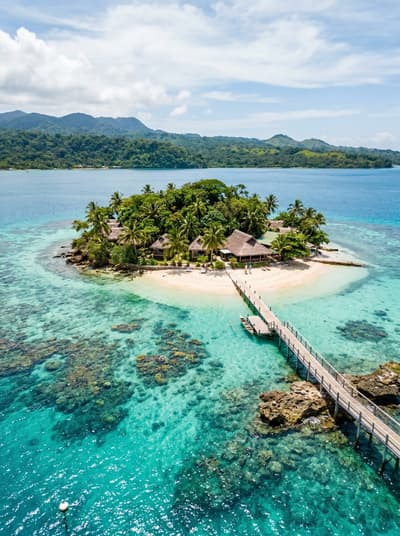
Post a waterproof postcard from the world's only underwater post office, then snorkel its coral reef.
Ureparapara
Vanuatu
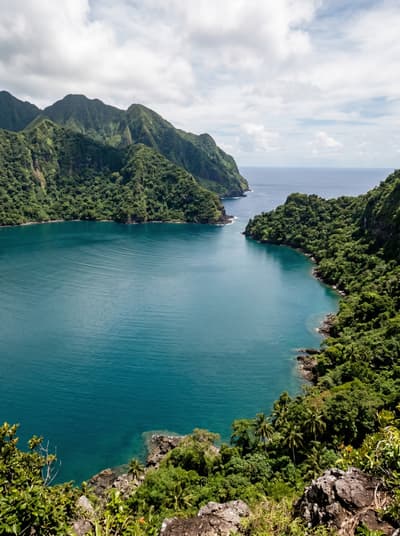
Sail into the flooded crater of a horseshoe-shaped volcanic island where fewer than 500 people remain.
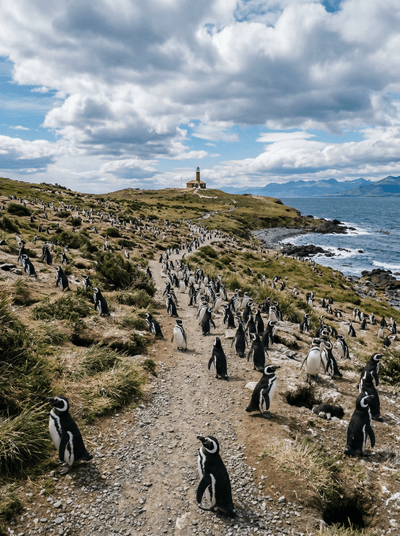
Isla Magdalena
Chile
Magellanic penguins in their tens of thousands, nesting so close you walk through their colony.
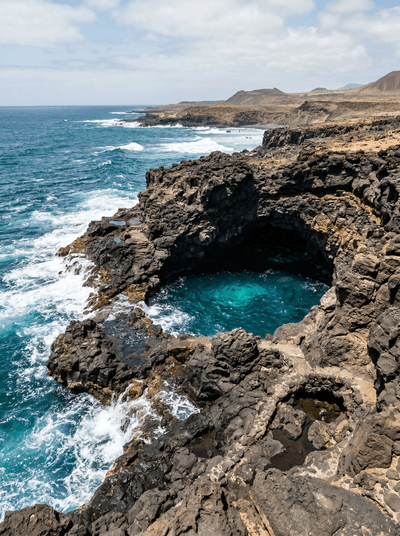
Buracona
Cape Verde
At midday, sunlight plunges through volcanic rock and ignites an underwater cave into electric blue.
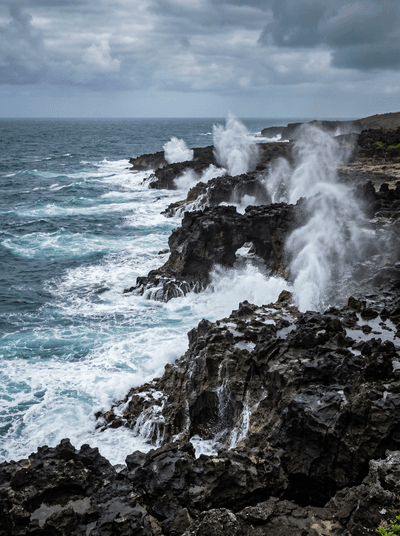
Mapu'a 'a Vaea
Tonga
Hundreds of blowholes shoot saltwater thirty metres skyward along five kilometres of coast — Chief's Whistles.
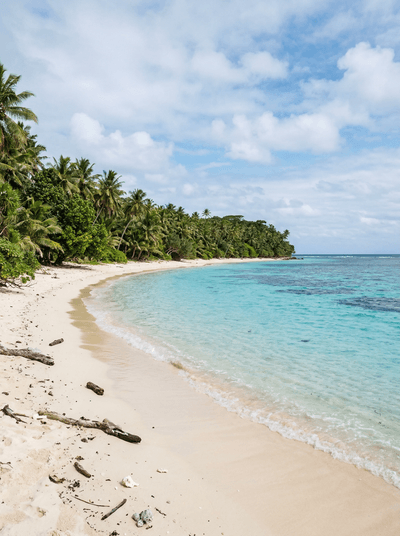
Uoleva Island
Tonga
White sand encircles the island — a few eco-lodges, no roads, silence so deep it hums.
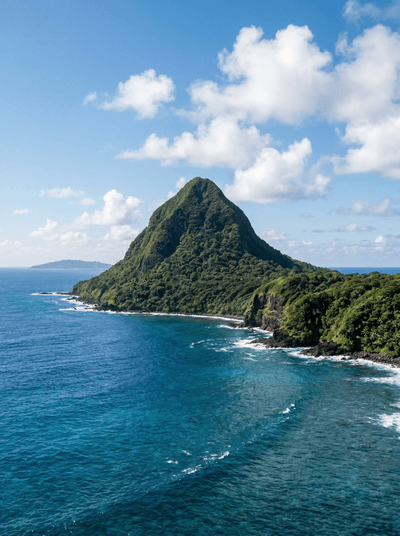
Kao Island
Tonga
A lone volcanic cone rises 1,030 metres from the ocean — Tonga's highest point, entirely uninhabited.
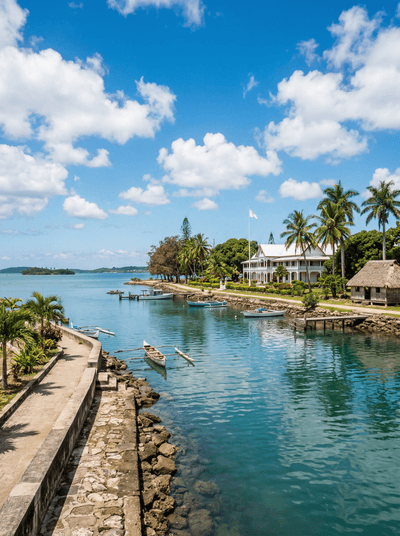
Nuku'alofa
Tonga
Sunday morning silence swallows an entire kingdom — then hymns begin from every church at once.