France
Pont du Gard
Three tiers of Roman arches across a gorge, standing without mortar for two thousand years.
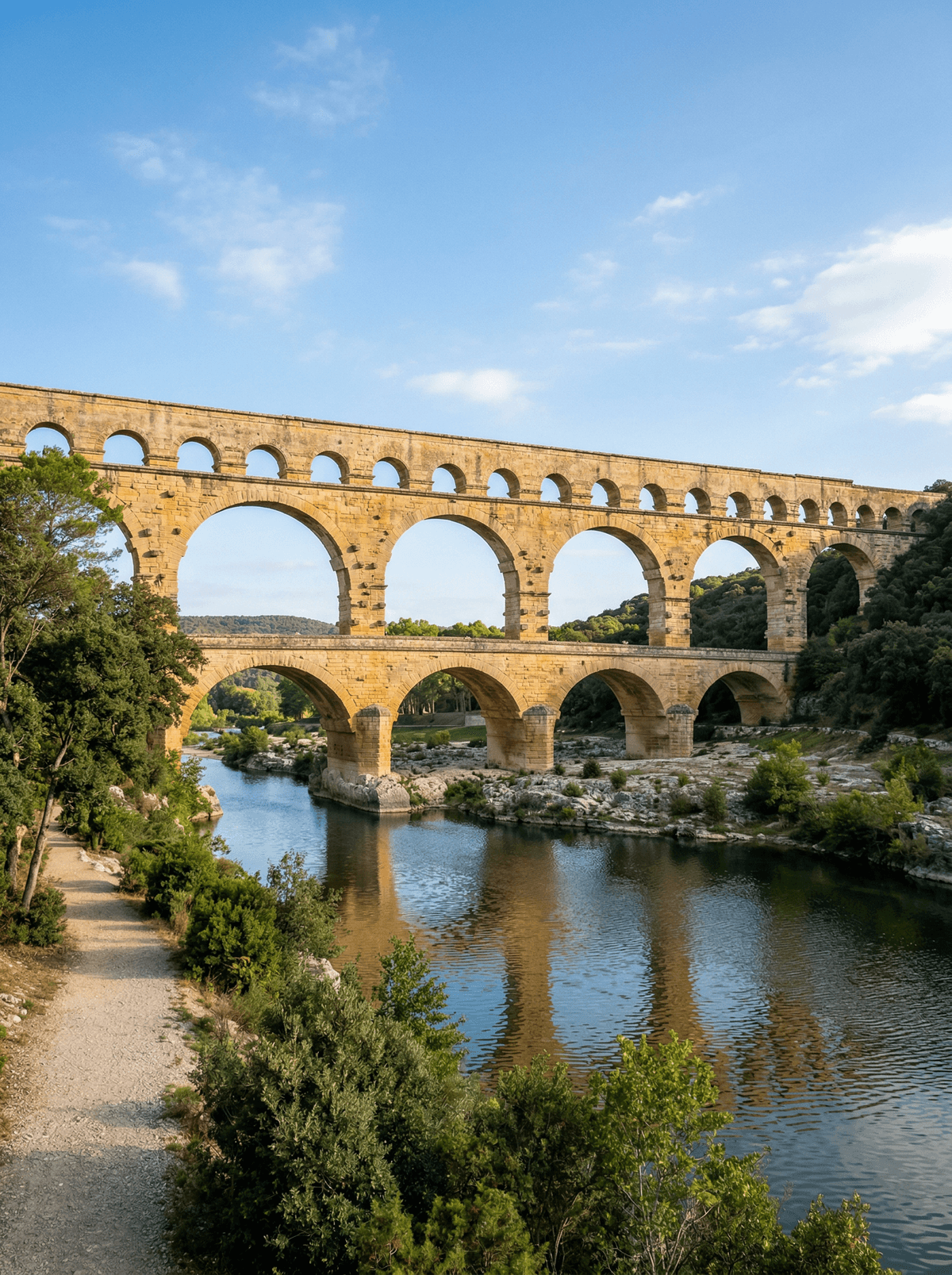
Three tiers of arches cross the gorge and the mathematics is visible in every joint — no mortar, no binding, just limestone blocks cut so precisely that gravity alone has held them for two millennia. The Pont du Gard stands in the Gardon gorge of southern France, the tallest bridge the Romans ever built, part of an aqueduct that carried spring water to Nîmes and still looks as if it could do it tomorrow.
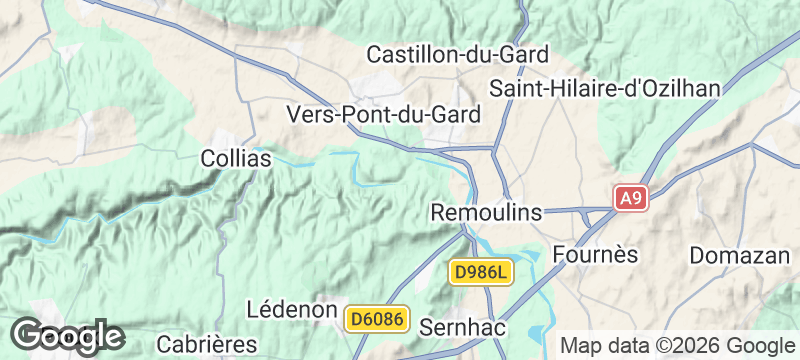
The Pont du Gard was raised in the first century to carry the aqueduct of Nîmes across the Gardon — the water travelled some fifty kilometres from a spring near Uzès on a gradient so slight it can barely be measured — and its three tiers of arches rise almost fifty metres above the river, the huge blocks of the lower levels laid dry, without mortar, each cut to sit on its neighbour. It is the highest Roman aqueduct bridge in the world, World Heritage listed, and the visitor site around it holds a museum that makes the engineering tangible. Below, the Gardon runs green and slow through the gorge, and in summer people swim from the pebble beaches and rocks under the arches — the water is cold, the current can be strong after rain, and the site posts the conditions. Paths lead along both banks and up onto the garrigue for the view of the whole bridge against the hills.
Couple
The bridge at last light, with the gorge falling away below and the garrigue turning amber. Swim in the Gardon afterwards and look up at the arches from river level — the shift in perspective is worth the cold water.
Family
The museum makes Roman engineering tangible for children — how water moved across country and how stones held without mortar. Swimming in the river beneath the aqueduct turns the history lesson into a swim.
Friends
Pack a picnic of saucisson, bread and a Costières de Nîmes rosé, swim in the river, dry on the rocks with the aqueduct overhead. The Pont du Gard turns a simple day out into something that stays.
- Three tiers of Roman arches cross the Gardon gorge — the precision after two thousand years is humbling.
- Swimming in the river beneath the aqueduct is allowed and popular — the water is green, cool and slow.
- The huge blocks were laid without mortar — each cut to fit its neighbour, and gravity does the rest.
- Paths climb onto the garrigue for the view of the whole bridge at sunset, with the gorge below and the hills to the horizon.
Pélardon — a small goat's cheese from the Cévennes, creamy and tangy under a wrinkled rind — from the market at Uzès.
A picnic of saucisson, bread and Costières de Nîmes rosé on the pebbles beside the Gardon.
Broome
Australia
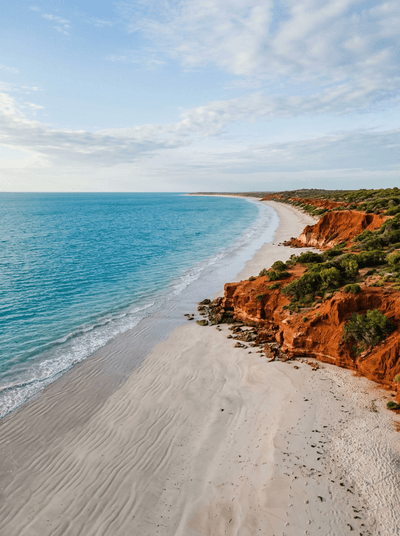
130-million-year-old dinosaur footprints revealed at low tide on a beach where camels walk at sunset.
Patara
Turkey
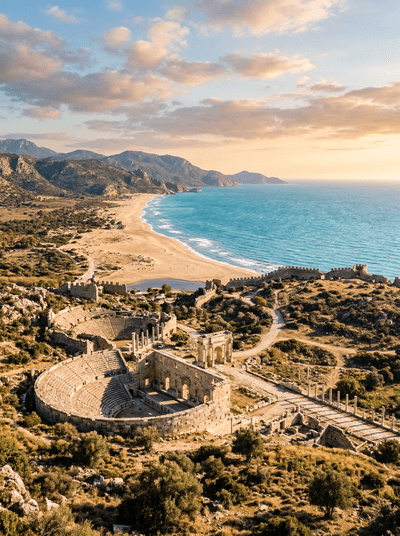
Kilometres of empty sand where loggerhead turtles nest beside half-buried Lycian ruins.
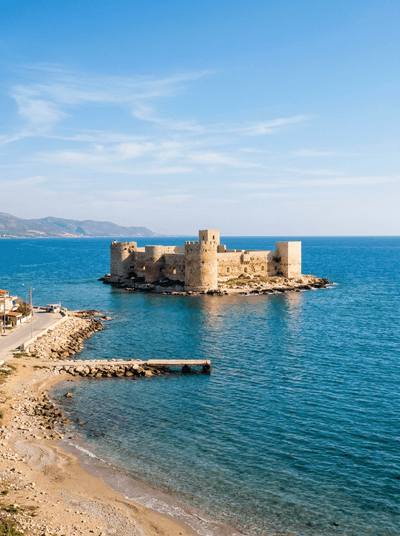
Kızkalesi
Turkey
Twin medieval castles face each other across a turquoise strait, one on land, one on water.
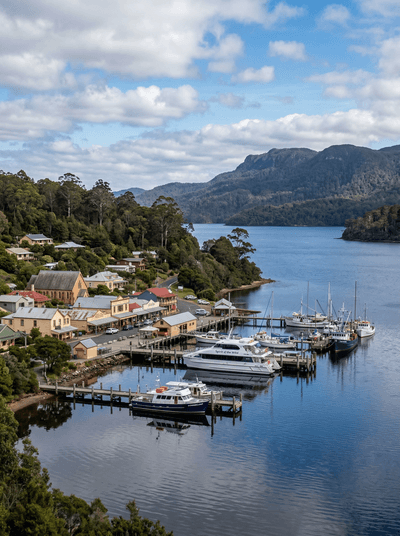
Strahan
Australia
Tannin-dark water mirrors rainforest before the Gordon River cruise reaches convict ruins.
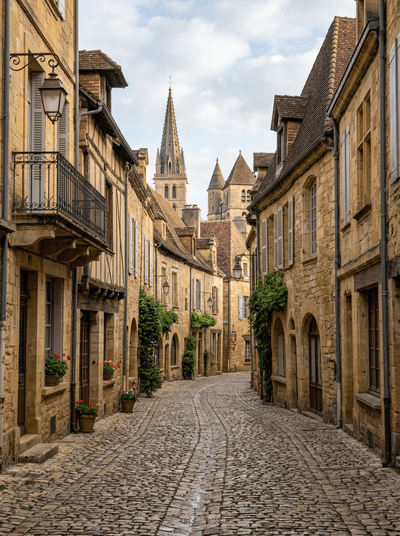
Sarlat-la-Canéda
France
Honey-coloured stone and truffle-scented market air in a medieval town preserved almost by accident.
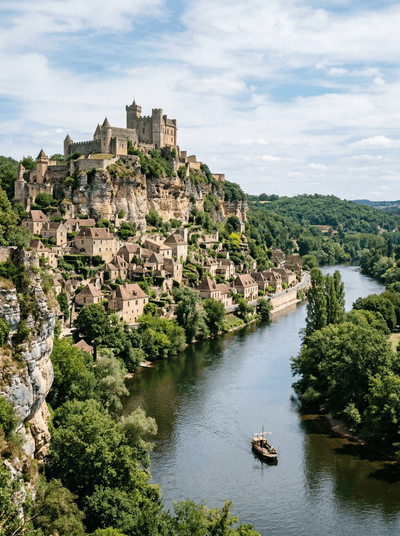
Beynac-et-Cazenac
France
A fortress village gripping a cliff high above the Dordogne's green coil.
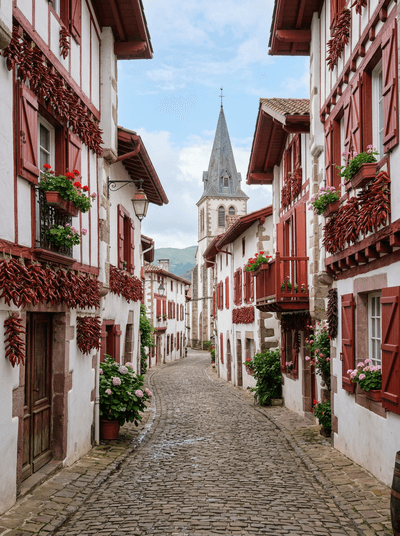
Espelette
France
Red peppers drying on every white façade — a Basque village wearing its spice outside.
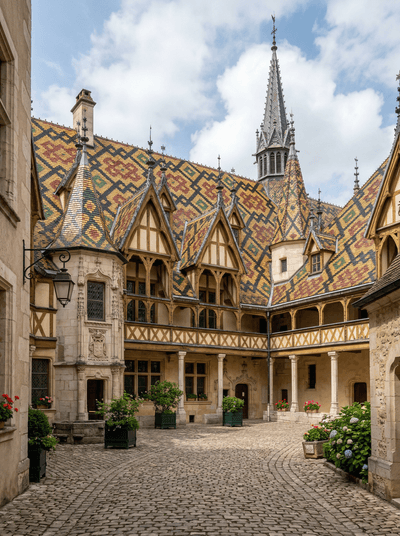
Beaune
France
Glazed polychrome roofs above cellars where Burgundy's greatest wines sleep in limestone silence.