Turkey
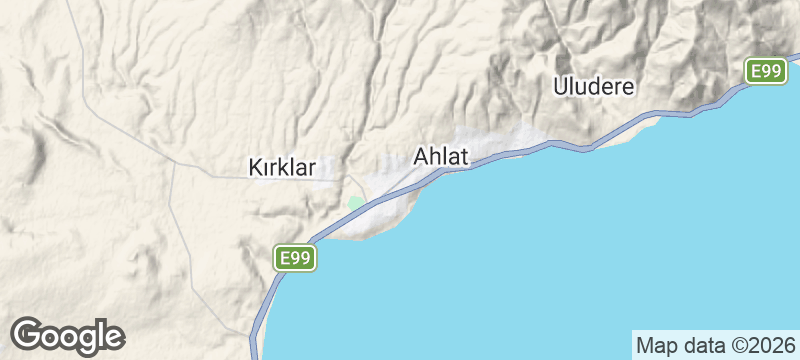
Ahlat
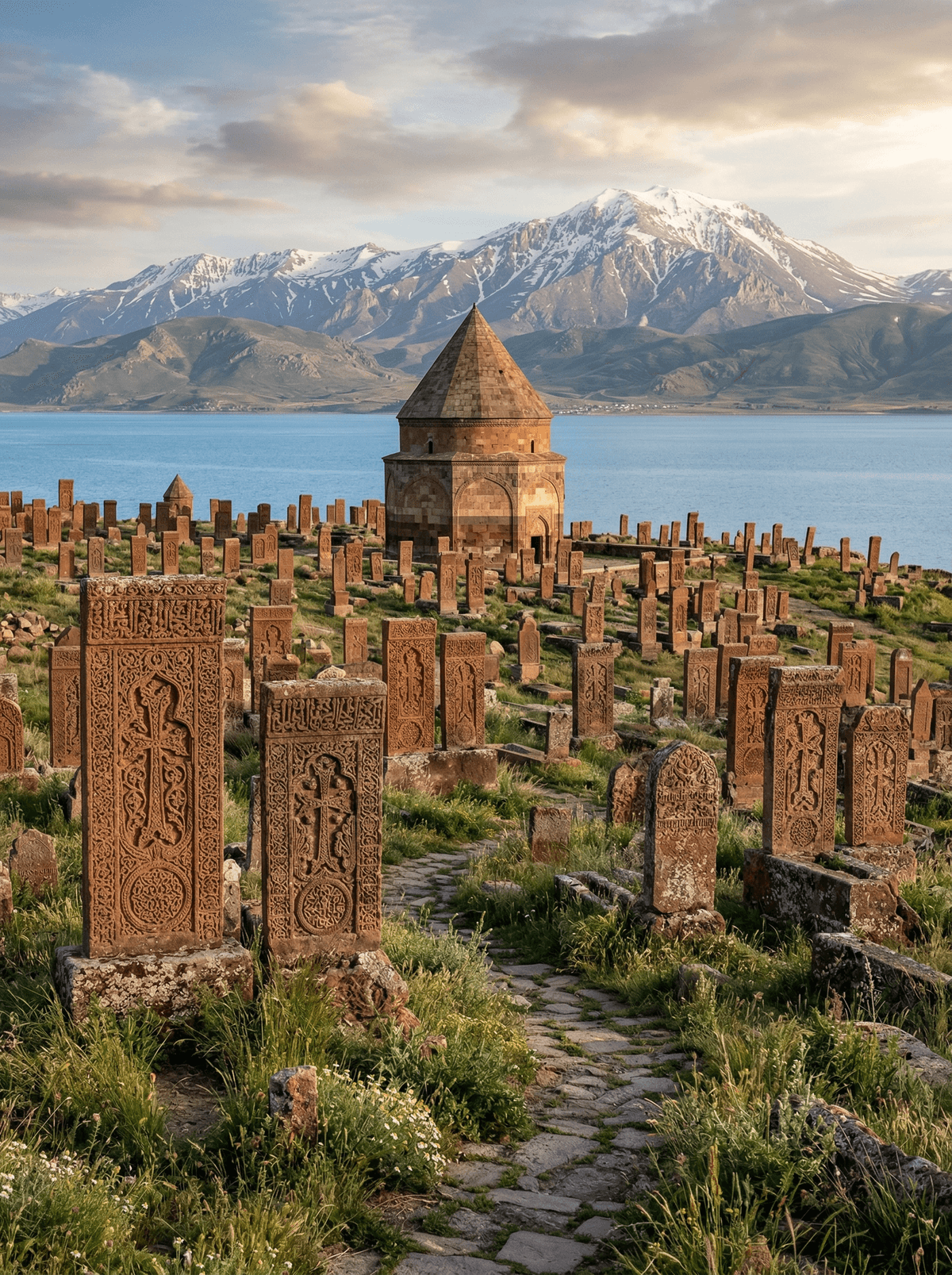
Thousands of Seljuk tombstones stand like a stone army on the shore of Lake Van.
They stand in rows like soldiers who never left their post. Hundreds of Seljuk tombstones rise from the grass on the shore of Lake Van, carved with geometric interlace so precise it looks machine-cut. But these are 800 years old, hand-chiselled from volcanic tuff, and the lake behind them stretches turquoise to snow-capped mountains on the far shore. Ahlat in eastern Turkey is a cemetery that feels like a lost civilisation.
Ahlat's Seljuk cemetery is the largest medieval Islamic burial ground in Turkey, containing over 1,000 kümbet tomb towers and hundreds of carved stone stelae dating from the 12th to 15th centuries. The carved inscriptions and geometric patterns represent the peak of Seljuk stone-carving craftsmanship — no other site in Anatolia matches the density or quality. The largest kümbet, the Ulu Kümbet built in 1273 AD, stands 9 metres tall with its carved surface still completely intact after 750 years. The cemetery occupies the western shore of Lake Van, Turkey's largest lake, with views across the alkaline water to the volcanic peaks beyond. Ahlat was a major Seljuk administrative centre and a gateway city on the historic east-west trade routes, which explains the scale and ambition of its funerary architecture.
Solo
Walk among the tombstones at dawn when the light catches the carved geometric patterns and Lake Van glows behind them. No other visitors, no fences, no interpretation boards — just you and 800 years of silence.
Couple
The combination of the cemetery's haunting scale and Lake Van's turquoise backdrop makes Ahlat one of eastern Turkey's most atmospheric destinations. Arrive late afternoon when the volcanic tuff turns gold.
- The Seljuk cemetery contains over 1,000 kümbet tomb towers and hundreds of carved stone stelae dating from the 12th-15th centuries.
- The carved inscriptions and geometric patterns represent the peak of Seljuk stone-carving craftsmanship — no other site matches the density.
- The cemetery sits on the western shore of Lake Van, with snow-capped mountains visible across the water on clear days.
- The largest kümbet, the Ulu Kümbet (1273 AD), stands 9 metres tall with its carved surface still completely intact after 750 years.
Ahlat's kete — flaky layered pastry with ground walnut filling — served with strong çay.
Lake Van's inci kefalı, the pearl mullet, smoked over willow branches by the water.
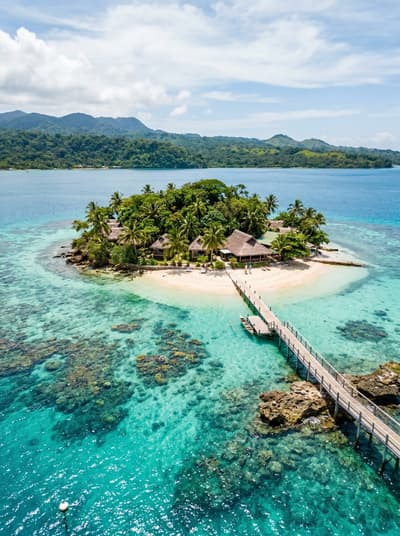
Hideaway Island
Vanuatu
Post a waterproof postcard from the world's only underwater post office, then snorkel its coral reef.
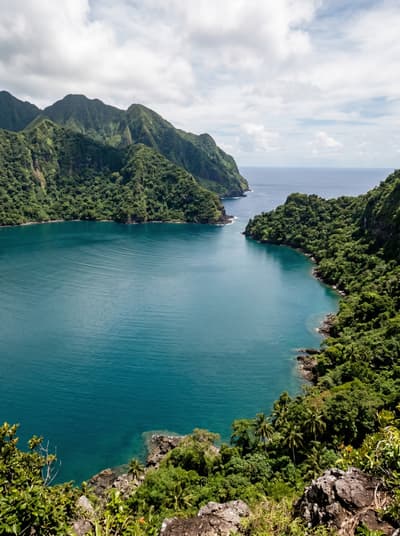
Ureparapara
Vanuatu
Sail into the flooded crater of a horseshoe-shaped volcanic island where fewer than 500 people remain.
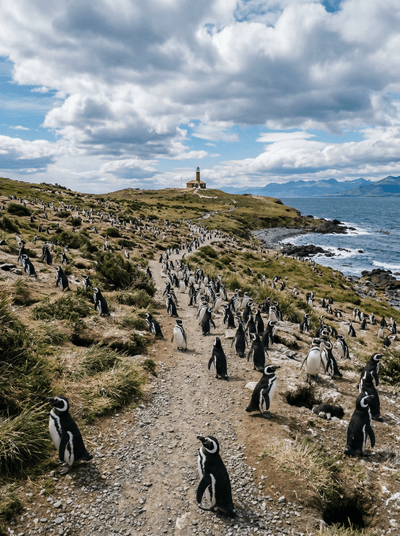
Isla Magdalena
Chile
Magellanic penguins in their tens of thousands, nesting so close you walk through their colony.
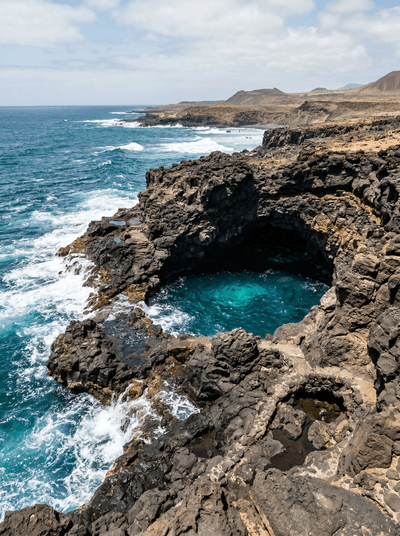
Buracona
Cape Verde
At midday, sunlight plunges through volcanic rock and ignites an underwater cave into electric blue.
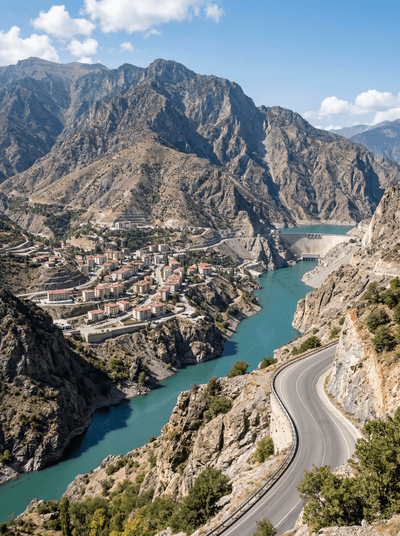
Yusufeli
Turkey
White-water rapids crash through a granite canyon where a medieval Georgian church perches on the cliff.
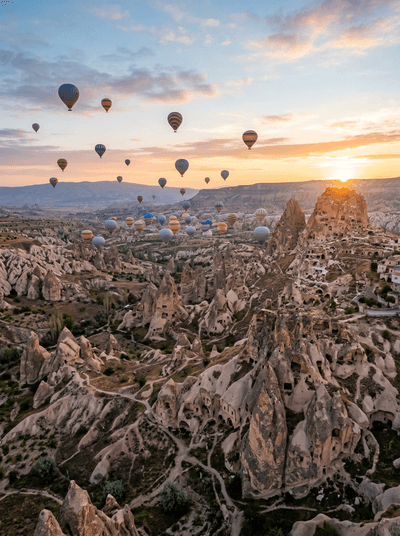
Cappadocia
Turkey
Hundreds of hot air balloons drift through a forest of stone pillars at dawn.
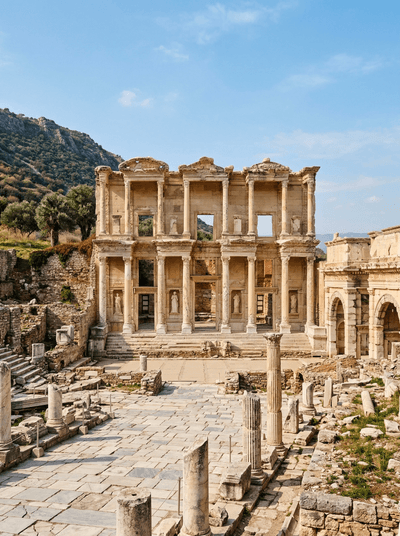
Ephesus
Turkey
Marble streets still grooved by Roman chariot wheels lead to a library that held 12,000 scrolls.
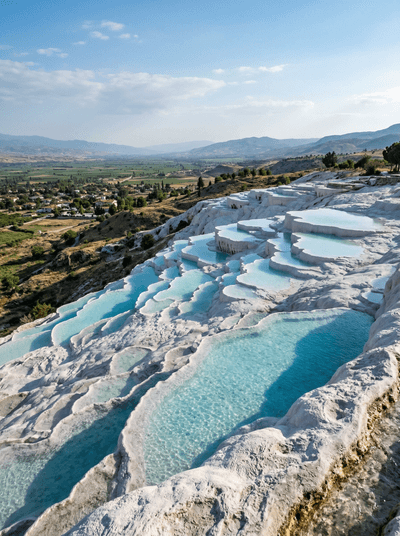
Pamukkale
Turkey
Thermal water spills down white travertine terraces like a frozen waterfall you can wade through.