Turkey
Ephesus
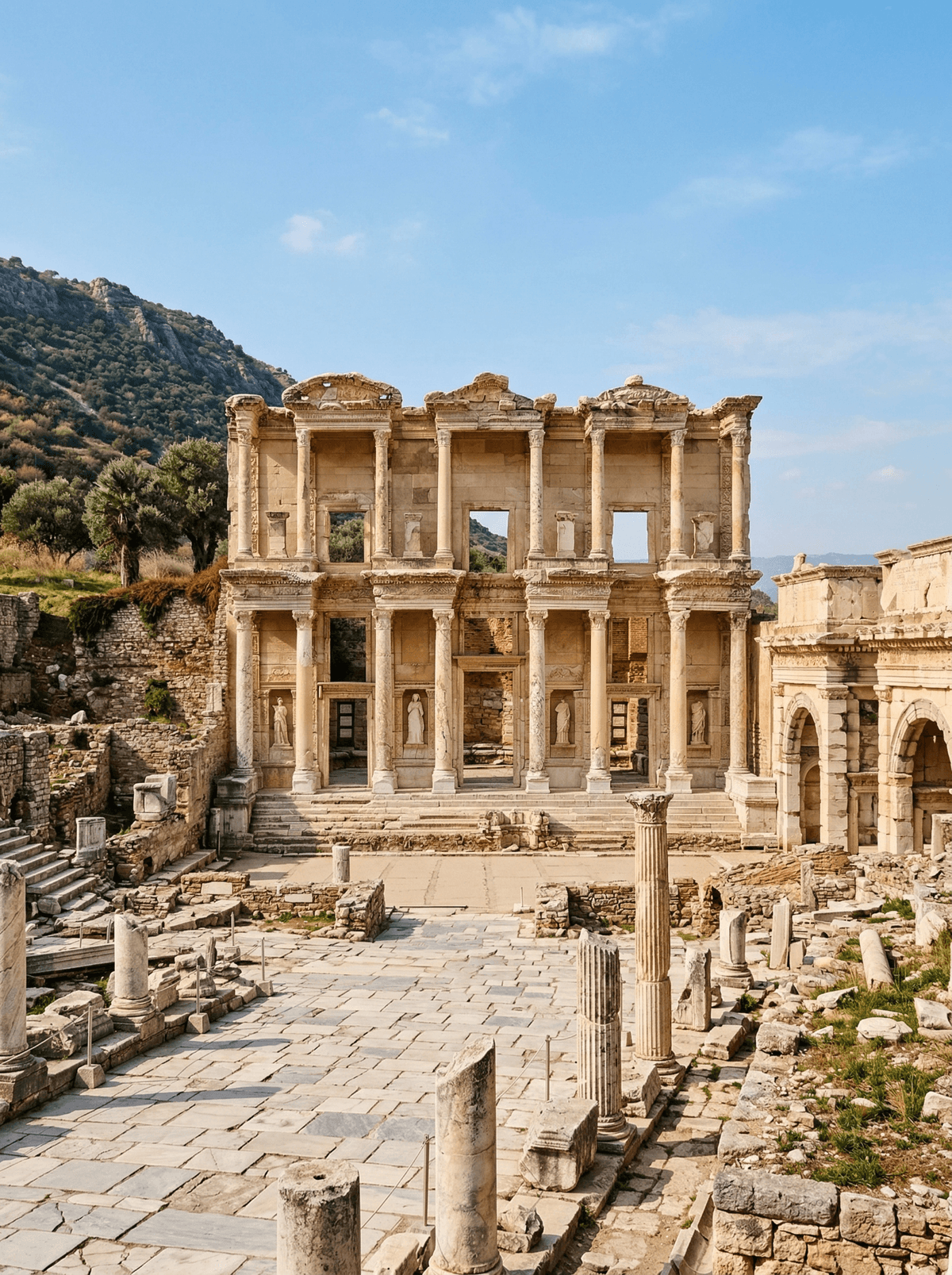
Marble streets still grooved by Roman chariot wheels lead to a library that held 12,000 scrolls.
Marble grooves worn by chariot wheels catch the Aegean light as you walk the streets of Roman Asia's capital. Down a colonnaded avenue the Library of Celsus rises two storeys, its carved faces staring out over two millennia of foot traffic. The air smells of dry stone and wild sage drifting in from the surrounding hills.
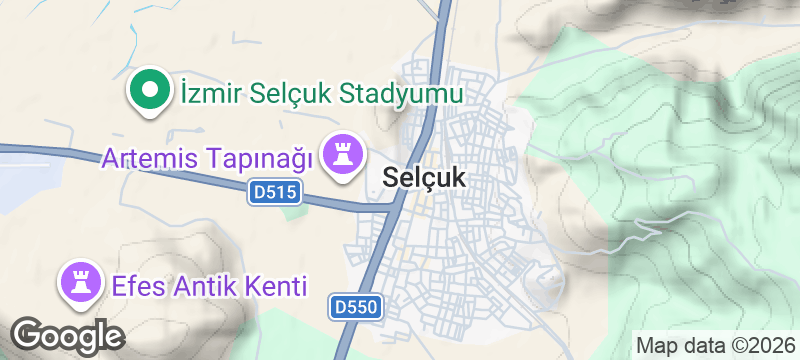
Ephesus, beside modern Selçuk, stands among the best-preserved classical cities in the Mediterranean, and it once held the Temple of Artemis, a wonder of the ancient world. The Library of Celsus, completed in 117 CE, kept its scrolls in wall niches engineered to hold off the damp. The great theatre seated some 24,000 spectators, and it was here that the silversmiths' riot over the apostle Paul's preaching gathered. Above the marble street, the separately ticketed Terrace Houses preserve the floor mosaics and frescoed walls of wealthy Roman homes. Ancient estimates of the city's population at its peak ran to a quarter of a million people.
Solo
Ephesus rewards your own pace. Arrive at opening time to walk the marble streets in near-solitude, linger in the Terrace Houses, then spend the afternoon in the Selçuk museum, where the finds tell the stories the ruins can only hint at.
Couple
The Library of Celsus at golden hour is reason enough. Pair the ruins with a slow lunch under the vines in Şirince village, a short drive into the hills.
Family
Children grasp history differently when they can stand in a Roman theatre and test the acoustics themselves. Chariot ruts, ancient public latrines and mosaic floors turn the past into something tactile.
- The Library of Celsus, finished in 117 CE, held around 12,000 scrolls in niches designed to keep damp away from the papyrus.
- The Terrace Houses preserve intact floor mosaics and wall frescoes from wealthy Roman homes of the 1st to 3rd centuries AD.
- The marble street is still scored by grooves worn by centuries of wagon wheels.
- Ancient estimates of the city's population at its Roman peak ran to a quarter of a million people.
Çöp şiş, Selçuk's own kebab: small skewers of marinated lamb grilled over flame and folded into fresh bread.
Zeytinyağlı artichokes, cooked gently in olive oil with lemon, the Aegean meze tradition at its lightest.
Cartago
Costa Rica
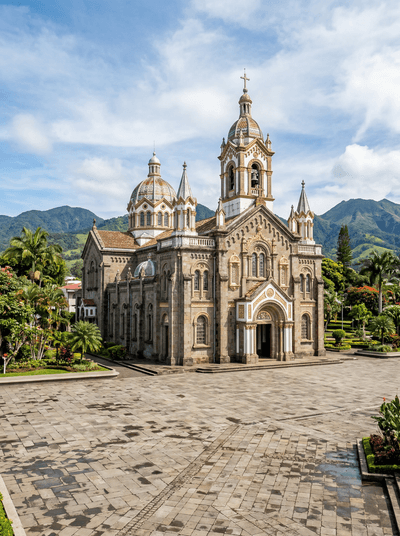
Two million walk through the night to a stone virgin who refuses to leave her rock.
Sipán
Peru
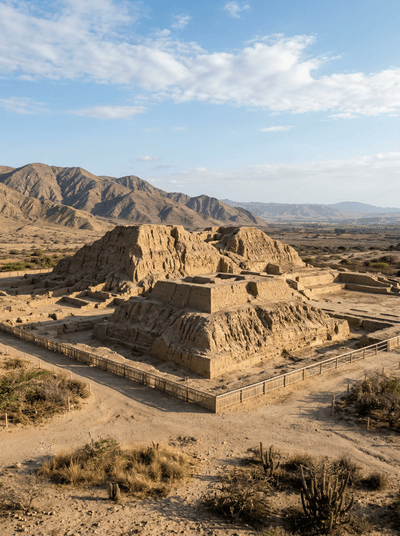
An unlooted Moche royal tomb whose gold rewrote the archaeology of the Americas.
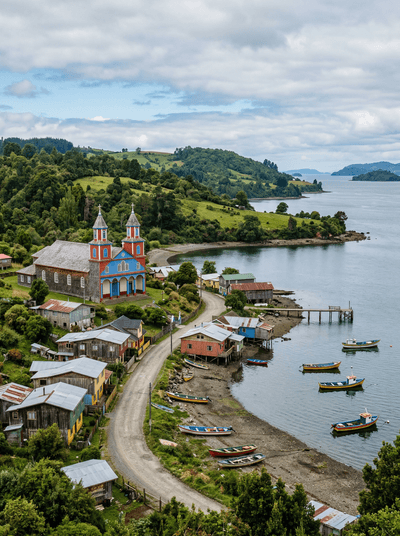
Isla Chiloé (Tenaún)
Chile
Three timber towers rise above a quiet Chilote waterfront.
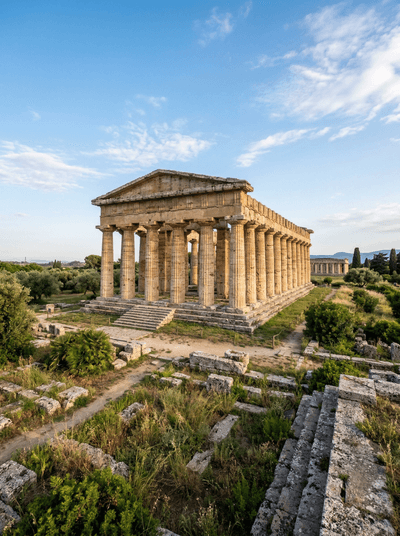
Paestum
Italy
Three Greek temples older than the Parthenon, still standing in an open Cilento field.
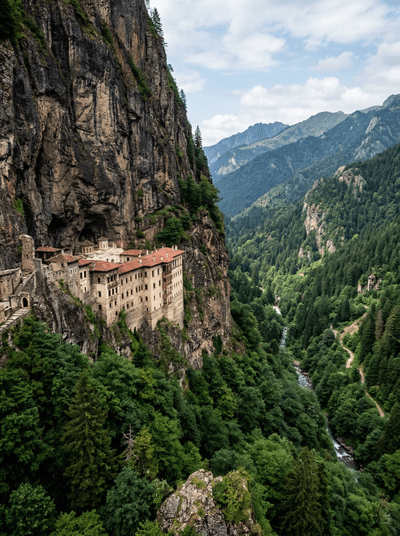
Sumela Monastery
Turkey
A monastery clinging to a cliff 300 metres above a misty Black Sea valley.
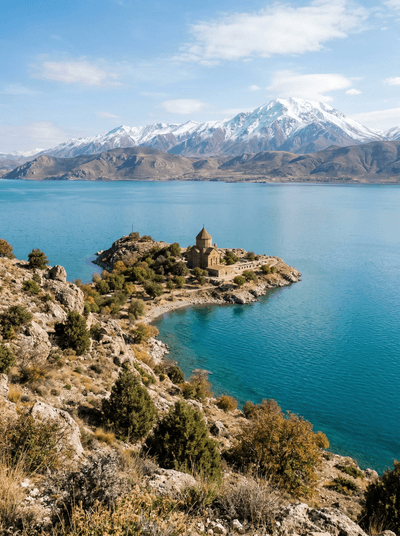
Lake Van
Turkey
A vast soda sea where you float without trying, ringed by snow-capped volcanoes.
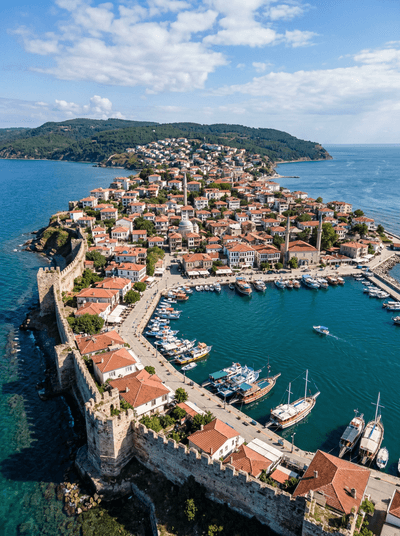
Sinop
Turkey
A prison peninsula where Diogenes was born and waves crash on three sides.
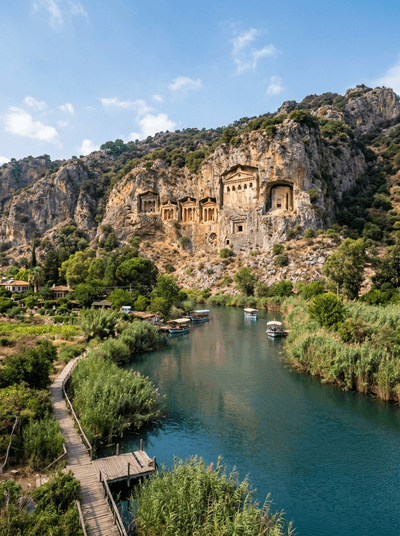
Dalyan
Turkey
River channels wind past Kaunos's cliff-cut temple tombs to a turtle-nesting beach, explored by wooden boat.