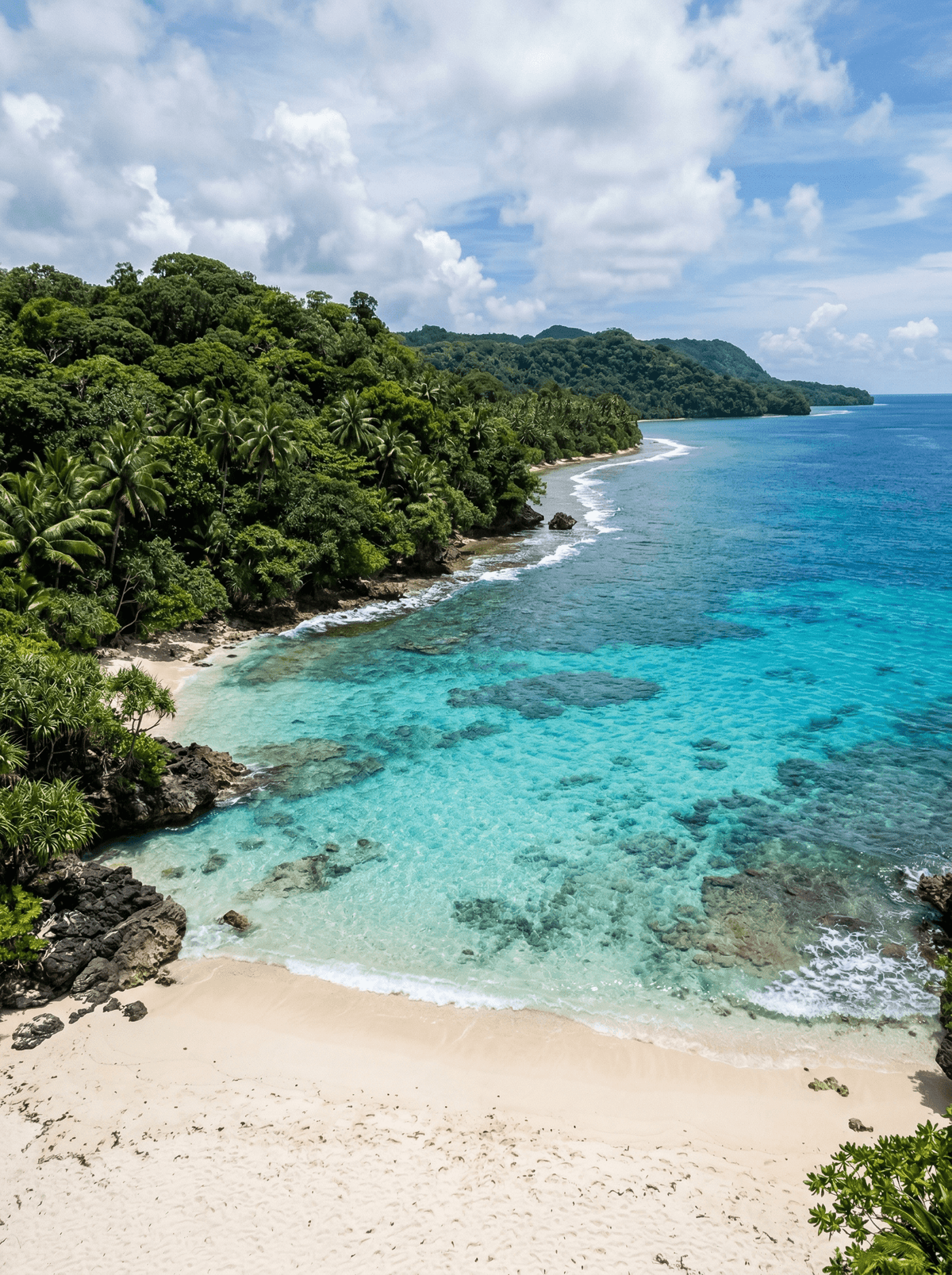
Palau
Angaur Island
Macaques introduced by German miners outnumber humans five to one across this crumbling Pacific phosphate island.
The state boat drops you at a concrete dock half-reclaimed by the tide. A macaque watches from the rusted frame of a phosphate conveyor. Another sits on the roof of the island's only guesthouse, turning a breadfruit over in its hands. The village is quiet — not the quiet of early morning but the quiet of a place where barely more than a hundred people live and the monkeys outnumber them all.
Angaur Island in Palau is home to the only wild macaque colony in the Pacific island region outside Southeast Asia. The monkeys descend from a population introduced by German phosphate miners around 1909, and they now outnumber the island's roughly 130 human residents by about five to one. There are no cars. WWII-era infrastructure — a Japanese Shinto shrine, abandoned American military buildings, crumbling phosphate processing equipment — forms an accidental open-air history trail that requires no itinerary to follow. The southwest coast holds a surf break known to only a handful of dedicated surfers, who arrive to find it essentially uncontested. Angaur operates on its own clock; the hours between meals fill with wildlife encounters, shoreline walks, and the particular silence of a place the modern world has mostly forgotten.
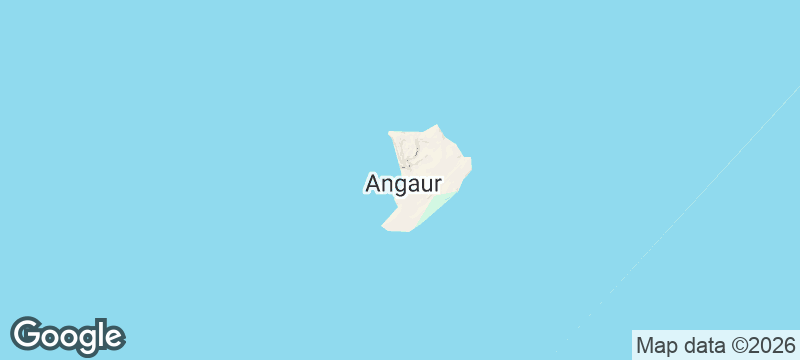
Solo
Angaur is for travellers who want to disappear. One guesthouse, no cars, no agenda — just an island where monkeys own the ruins and the reef is yours alone. The isolation is the point.
- Angaur's feral macaque population — descended from monkeys brought by German phosphate miners around 1909 — is the only wild macaque colony in the Pacific island region outside Southeast Asia.
- No cars, one guesthouse, around 130 human residents; silence and wildlife encounters fill the hours between meals.
- WWII phosphate infrastructure, a Japanese Shinto shrine, and abandoned American military buildings create an accidental open-air history trail that requires no itinerary.
- The southwest coast surf break is known to only a handful of dedicated surfers, who arrive to find it essentially uncontested.
Fish caught off the old phosphate dock, grilled whole over a fire pit behind the island's guesthouse.
Foraged breadfruit roasted in embers and split open steaming — the smell reaches you before the plate does.
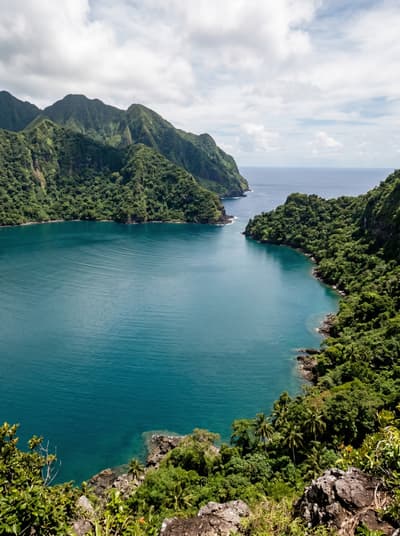
Ureparapara
Vanuatu
Sail into the flooded crater of a horseshoe-shaped volcanic island where fewer than 500 people remain.
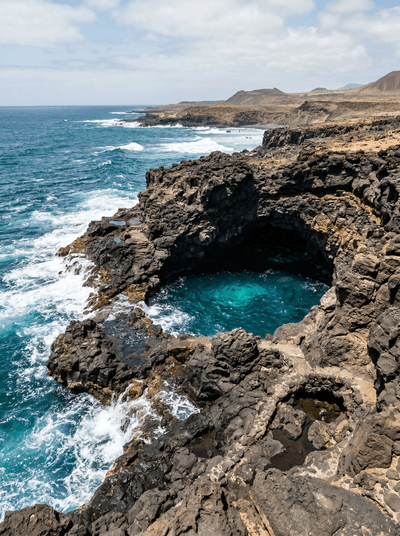
Buracona
Cape Verde
At midday, sunlight plunges through volcanic rock and ignites an underwater cave into electric blue.
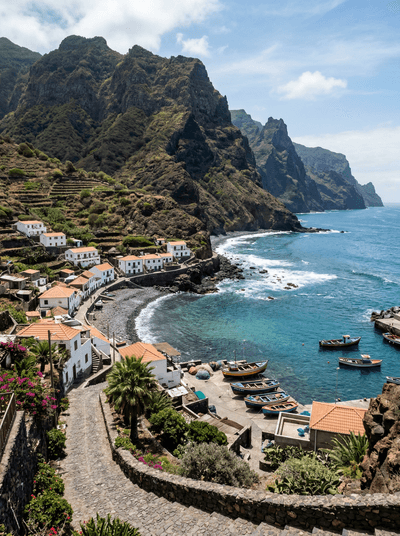
Fajã d'Água
Cape Verde
Hairpin bends drop through bougainvillea clouds to a hidden bay beneath the island of flowers.
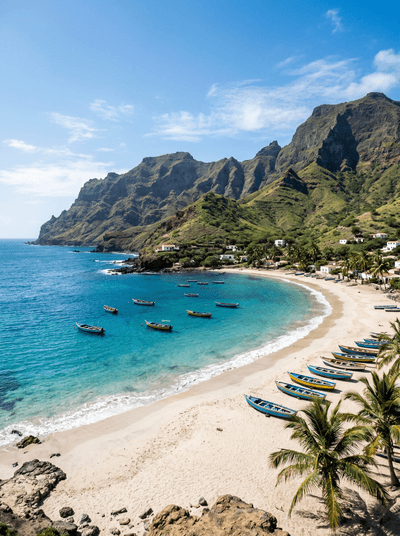
Tarrafal
Cape Verde
A concentration camp turned resistance museum sits behind the cove where political prisoners once swam.
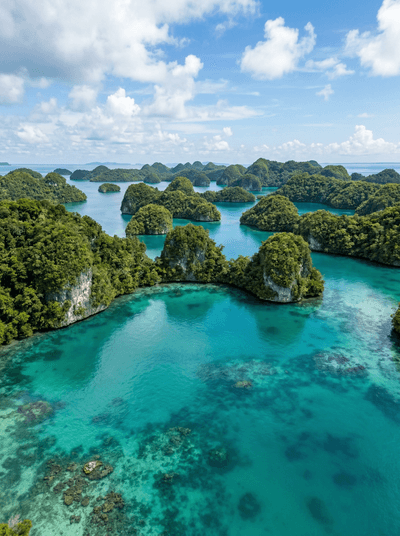
Rock Islands Southern Lagoon
Palau
Hundreds of mushroom-shaped limestone islands floating on water so clear the shadows have shadows.
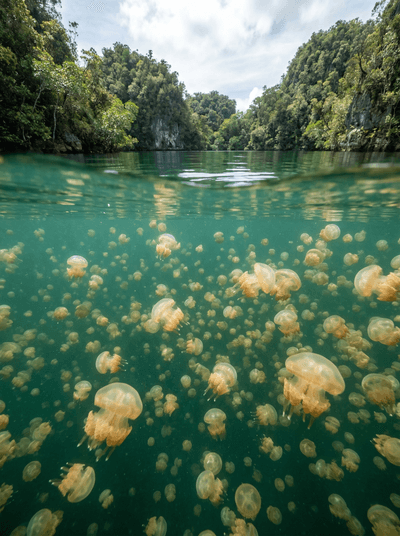
Jellyfish Lake
Palau
Float weightless among millions of pulsing golden jellyfish in a lake sealed for twelve thousand years.
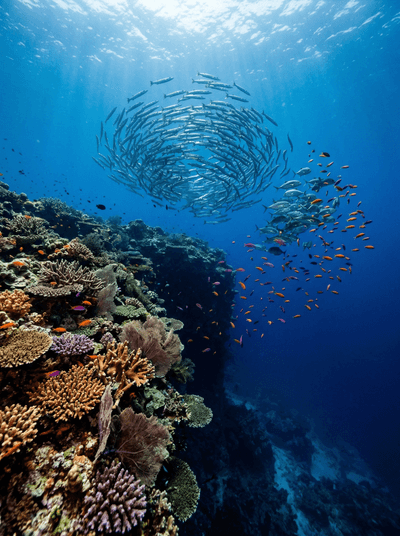
Blue Corner
Palau
Hook into the reef and hang in the current while grey reef sharks circle below.
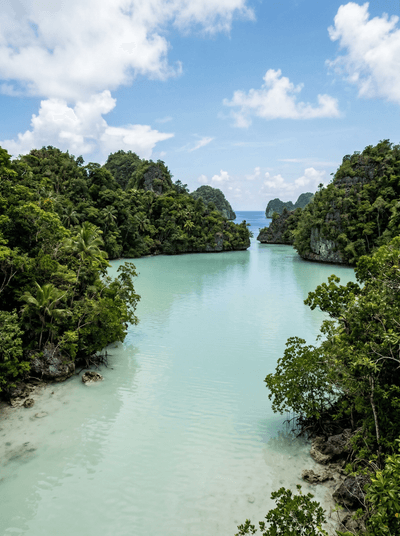
Milky Way Lagoon
Palau
A cove of white limestone mud that turns the water to milk and paints your skin.