France
Carnac
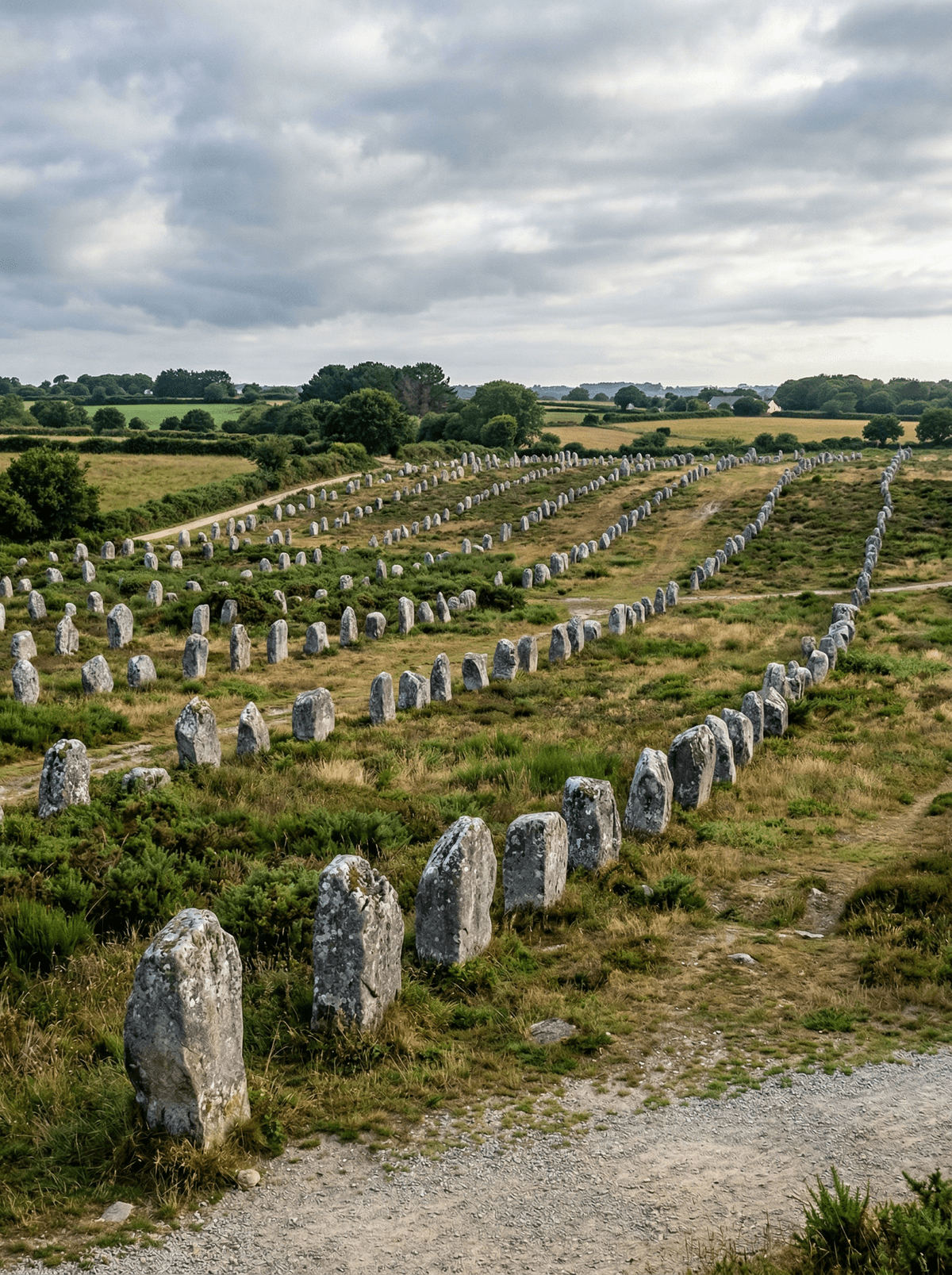
Three thousand standing stones marching across the moor in rows nobody has ever explained.
Three thousand stones stand in rows across the moor, shoulder to shoulder, stretching toward the horizon like a Neolithic army that stopped mid-march and never moved again. Carnac in France has been trying to explain these alignments for centuries and has yet to succeed. The mystery is the attraction — and the scale of it, under an open Breton sky, is genuinely unsettling.
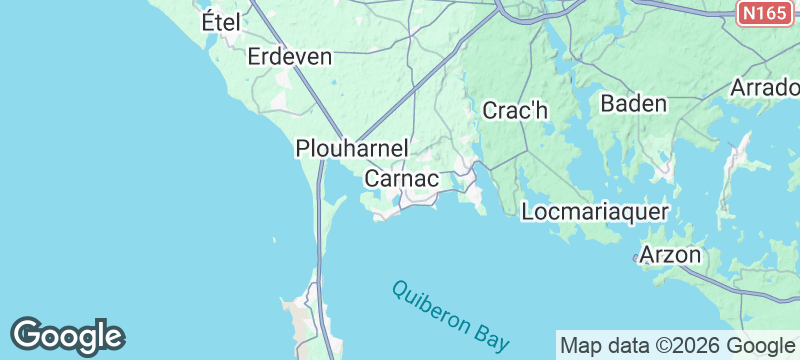
The Carnac alignments comprise over 3,000 megalithic standing stones arranged in parallel rows across nearly four kilometres of the Morbihan coastline, erected between 4500 and 3300 BC — predating Stonehenge by over a millennium. The stones are organised into three main groups: Le Ménec (1,099 stones in eleven rows), Kermario (1,029 stones in ten rows), and Kerlescan (555 stones in thirteen rows). The purpose of the alignments remains unknown — theories range from astronomical observatory to ceremonial procession route to territorial marker, but no hypothesis has achieved consensus. The Musée de Préhistoire de Carnac holds one of the richest collections of megalithic artefacts in Europe. The beaches south of the alignments, particularly the Plage de Carnac, are sheltered by the Quiberon peninsula and offer family-friendly swimming.
Solo
Walking the alignments alone at dawn, when the stones cast long shadows and the moor is empty, is an encounter with a mystery that predates written language. The museum afterward provides context without answers — which is the honest position.
Family
The stones are a landscape children can explore physically — clambering, counting, guessing. The mystery engages them in ways that explained history often doesn't. Afternoon at the beach adds swimming to the megaliths.
- Over 3,000 standing stones march in parallel rows across the moor — nobody knows why, and that's the point.
- The alignments predate Stonehenge by a thousand years — this is one of the oldest human-made landscapes on Earth.
- Beaches on the southern coast are sheltered and sandy — the standing stones are a morning, the sea is an afternoon.
- The Musée de Préhistoire contextualises the megaliths with artefacts that make the Neolithic feel close.
Galettes de sarrasin — buckwheat crêpes filled with egg, ham, and Gruyère at a crêperie with stone walls.
Kouign-amann — laminated butter cake so rich it leaves a slick of caramel on the paper.
Trollskogen (Öland)
Sweden
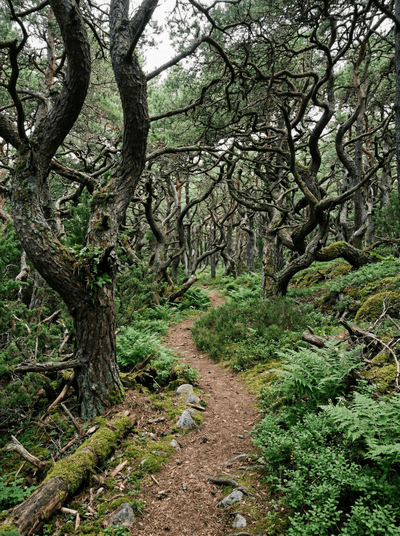
A forest of wind-warped oaks so twisted they look like a witch's spell gone wrong.
Millennium Cave
Vanuatu
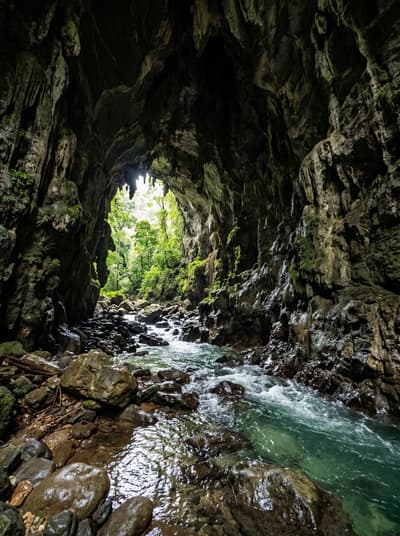
Scramble through jungle and wade chest-deep rivers to a cave you enter walking and exit floating.
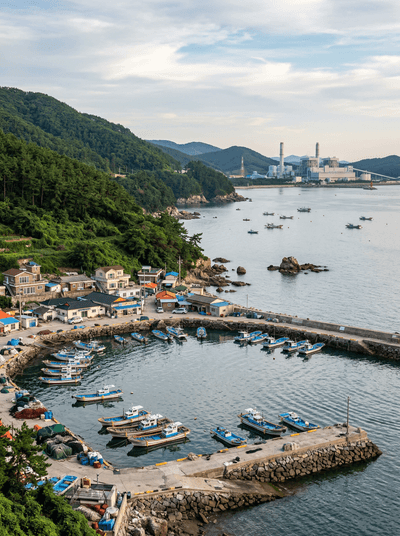
Maryang-ri
South Korea
A five-hundred-year-old forest of camellia trees bleeding red flowers against the grey winter sea.
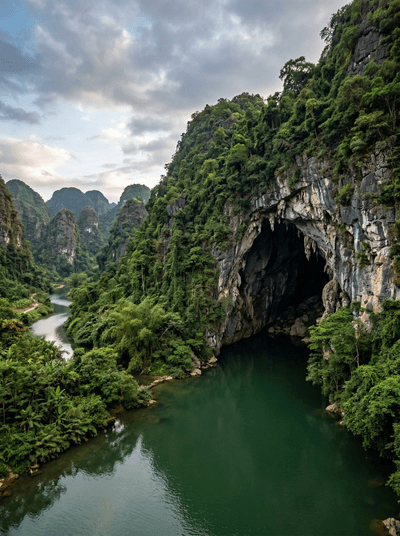
Phong Nha
Vietnam
Hidden jungle portals opening into subterranean river systems and limestone caverns.
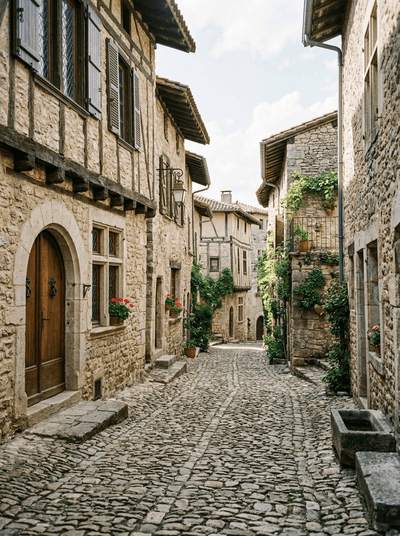
Pérouges
France
Cobblestones polished to glass in a walled hilltop village where the 15th century never left.

Mont-Saint-Michel
France
A granite abbey rising from quicksand flats where the tide races in faster than horses.
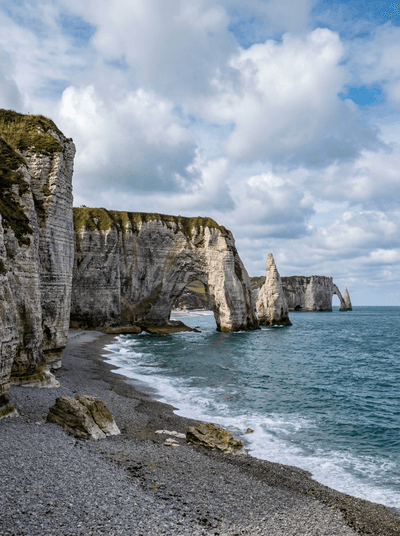
Étretat
France
Chalk arches punched through sea cliffs like cathedral windows opening onto the Channel.
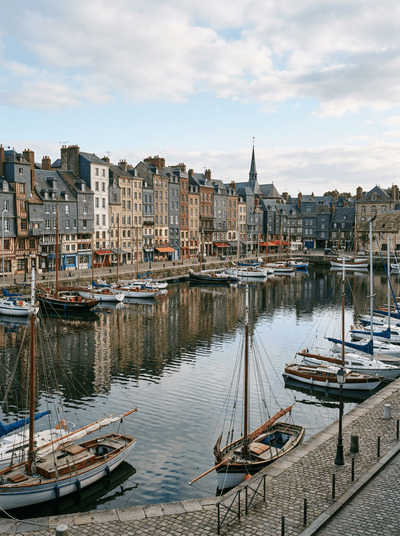
Honfleur
France
Slate-fronted houses mirrored in a harbour that taught the Impressionists how light works.