Chile
Castro
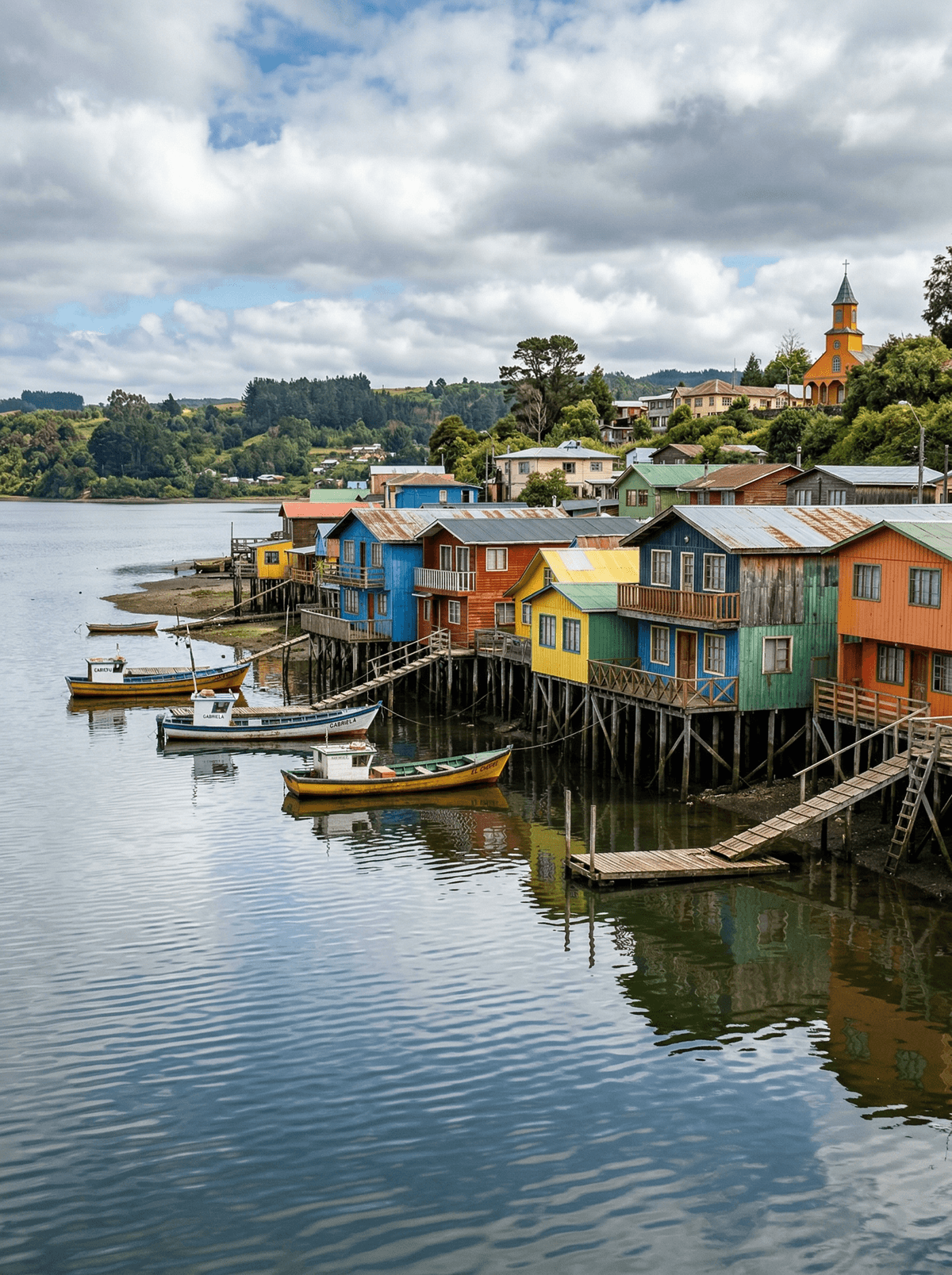
Palafitos stand over the tide while a timber church brightens Chiloé's harbour town.
At low water, boats settle beneath houses raised on wooden posts. The yellow church towers above a market smelling of fish, smoke and potatoes.
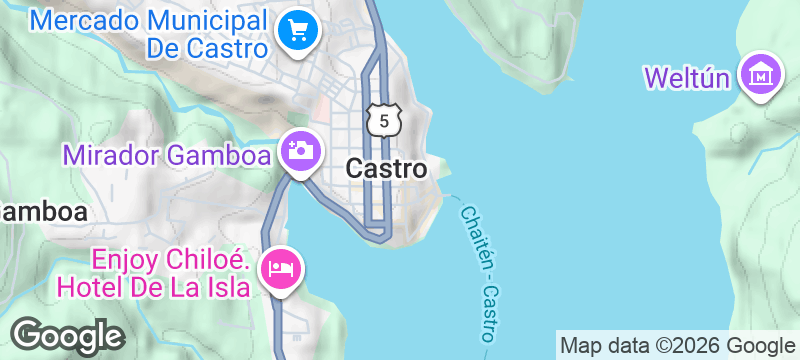
Castro compresses Chiloé's waterfront, public market and timber architecture into a walkable base. Roads and boats then open the smaller islands and wider church circuit. Its strongest character comes from a living port, with colour serving the daily rhythms rather than replacing them.
Couple
Walk palafitos and market at low tide, then share a boat or rural church day from the city.
Family
Castro offers a compact church, waterfront and market before shorter island outings.
- Castro gathers palafitos, a working waterfront and its yellow timber church within a few walkable streets.
- Boats and rural roads reach the smaller islands and the wider church circuit from town.
- Chonchi, a short drive south, still makes licor de oro — the whey liqueur of a few local families.
Dalcahue's cocinerías, a short hop north, are famous for curanto — a market-hall feast of shellfish, meats and vegetables.
Milcao — grated potatoes wrung dry and fried — is the archipelago's everyday genius.
Colmar
France
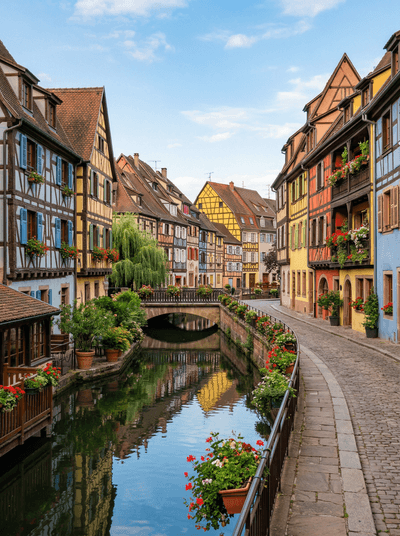
Candy-coloured half-timbered façades reflected in canals so still they look like poured paint.
Şirince
Turkey
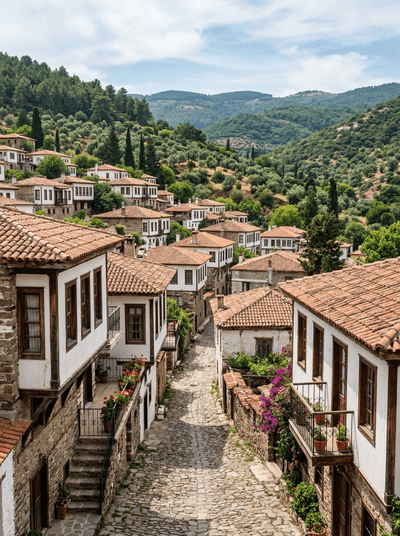
Grandmothers sell peach wine on doorsteps where Greek prayers gave way to Turkish ones in 1923.

Falkland
Scotland
A Renaissance palace hides the oldest real tennis court on Earth, in play since 1539.
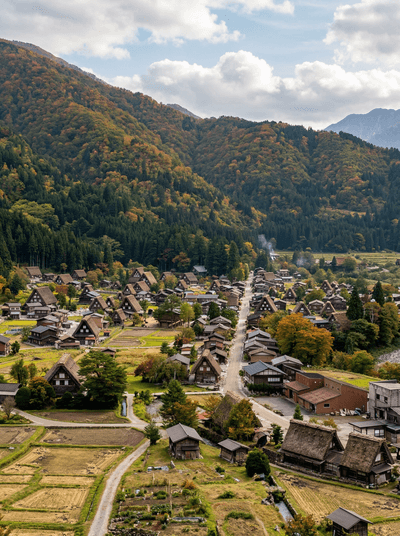
Shirakawa-go
Japan
Thatched roofs steep as praying hands, built for snow that buries the ground floor.
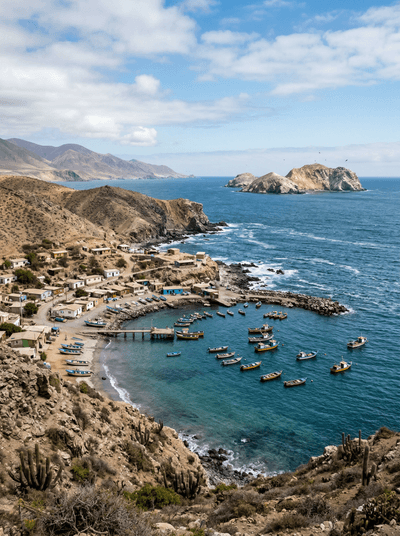
Chañaral de Aceituno
Chile
Local boats enter the Humboldt Current in search of whales, dolphins and seabirds.
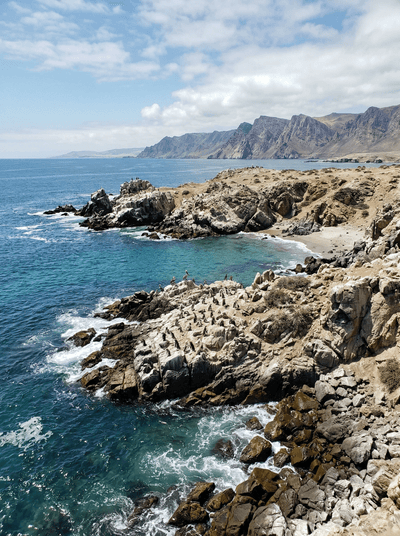
Isla Damas (Reserva Nacional Pingüino de Humboldt)
Chile
A small boat crosses cold desert water towards protected island habitat.
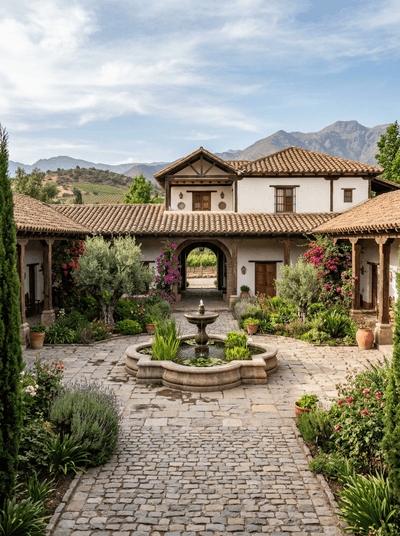
Hacienda Los Lingues
Chile
Red earth, old rooms and Chilean horses shape a living Colchagua estate.
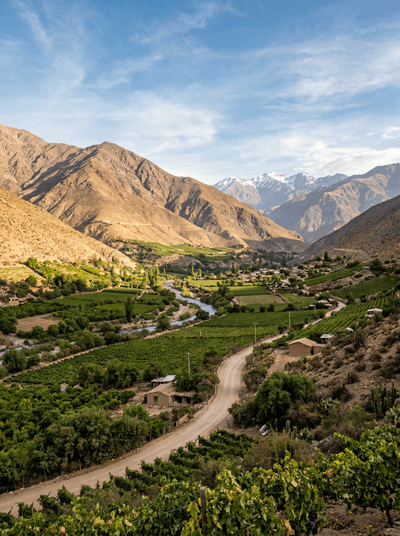
Elqui Valley
Chile
Pisco vines and observatory domes share a clear-skied Andean valley.