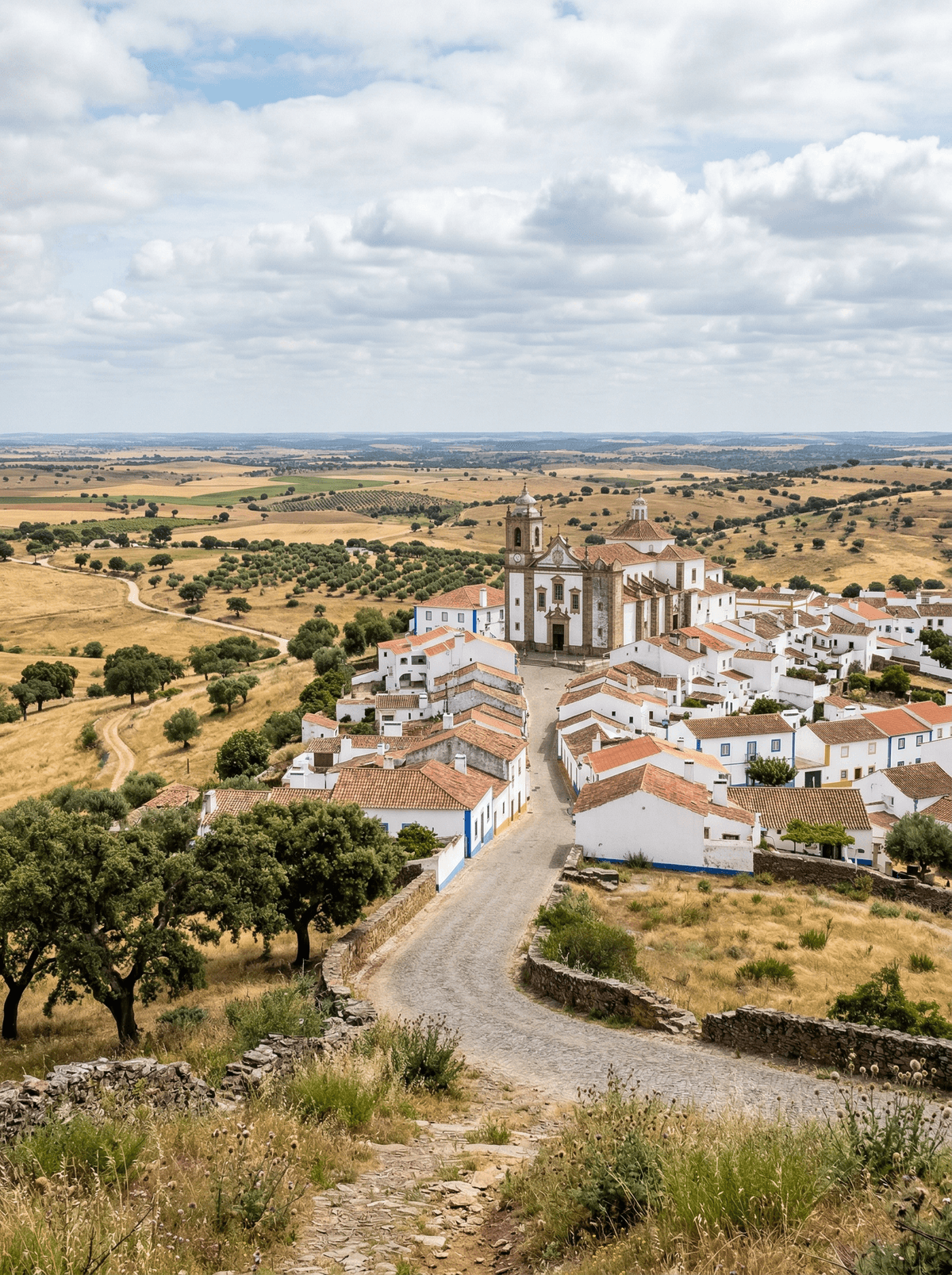
Portugal
Castro Verde
Treeless steppe that Europe's heaviest flying birds call home — older than farming's changes.
The steppe opens flat in every direction, treeless and immense, the horizon a ruled line. This is great bustard country — Europe's heaviest flying bird holds its most stable ground here, in grasslands whose character predates modern agriculture. The silence is agricultural, total, and old.
Castro Verde anchors the Special Protection Area that guards the largest remaining Iberian pseudo-steppe — open cereal plains supporting one of Europe's most important great bustard populations, birds that can reach eighteen kilograms and depend entirely on the traditional rotation still practised here: wheat, fallow, grazing. Lesser kestrels nest in the town's towers, rollers flash turquoise from fence posts, Montagu's harriers quarter the spring fields — all with breeding-season closures taking priority over any hoped-for sighting. In town, the Basilica Real wears floor-to-ceiling azulejos of the Battle of Ourique, tying the plain to Portugal's founding story — it was near here in 1139 that Afonso Henriques was proclaimed first king. What Castro Verde really offers is increasingly rare: a European landscape defined by emptiness.
Solo
A pilgrimage for birders and silence-seekers — steppe tracks at dawn, spring display season, and a landscape built of emptiness.
- The protection area spans vast cereal steppe — among Europe's largest grassland reserves.
- Great bustards hold one of their most stable European populations on these plains.
- Traditional wheat-fallow-grazing rotation keeps the open landscape alive, not preserved.
- The Basilica Real's azulejos tie the steppe to the kingdom's founding at Ourique.
Wild asparagus omelettes in spring, foraged from the surrounding plains.
Migas with pork ribs, the fried bread crumbs soaking up rendered fat and garlic.
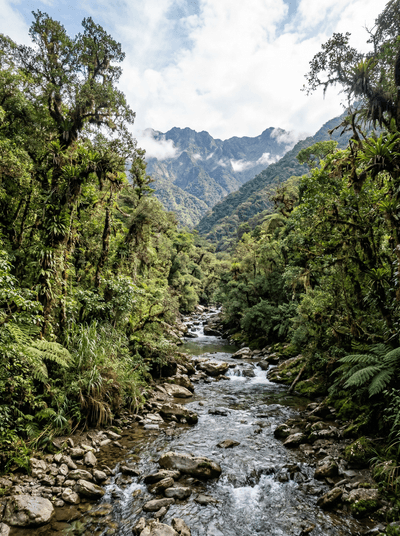
Parque Nacional El Rey
Argentina
A cloud forest fills a natural amphitheatre where bird species outnumber daily visitors.
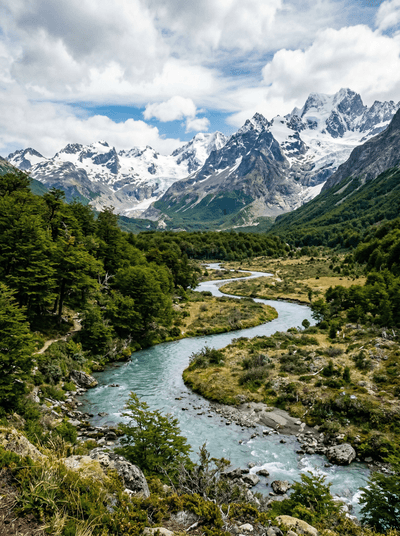
Parque Nacional Yendegaia
Chile
Fjords and lenga forest valleys climb toward the Cordillera Darwin at Tierra del Fuego's edge.
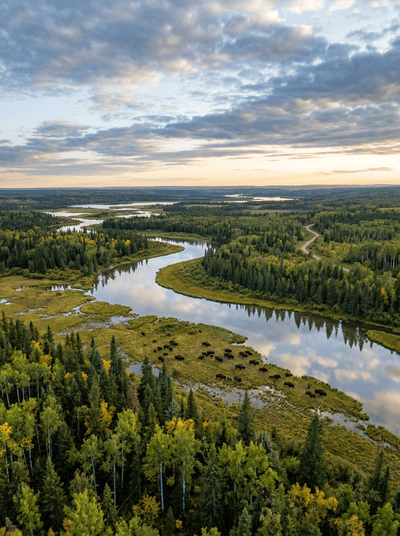
Wood Buffalo National Park
Canada
Canada's largest park spreads salt plains, boreal wetlands and free-ranging bison toward the sixtieth parallel.
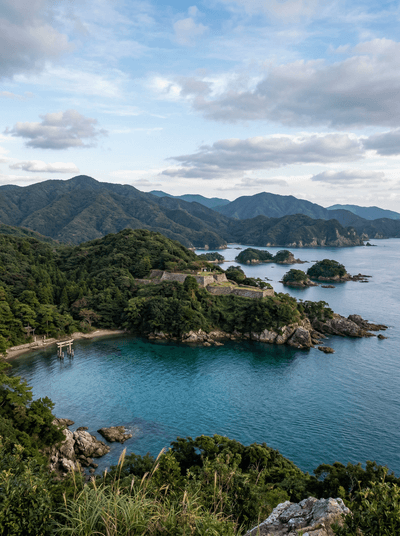
Tsushima
Japan
An island nearer Korea than Japan, where a wildcat found nowhere else stalks the forest.
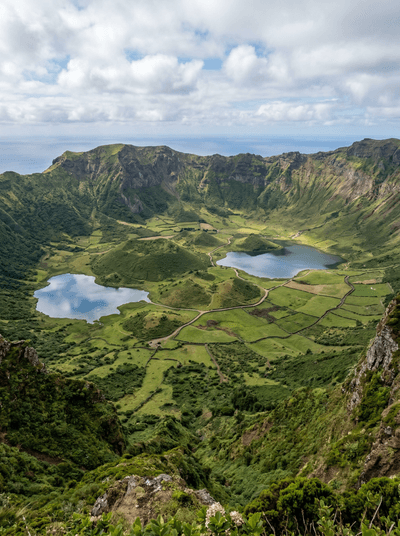
Corvo
Portugal
Europe's smallest municipality — one village, one crater lake, the end of everything.
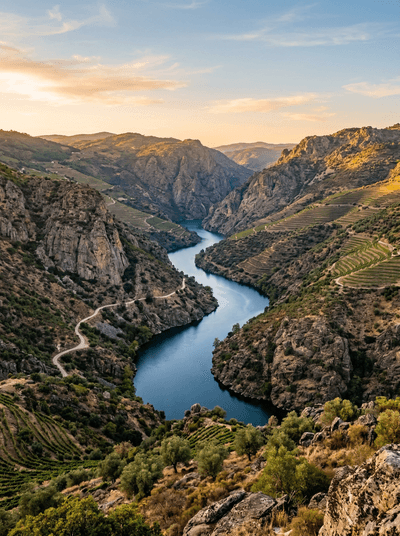
Douro Internacional
Portugal
A 200-metre canyon slicing the border, its cliff air ruled by griffon vultures.
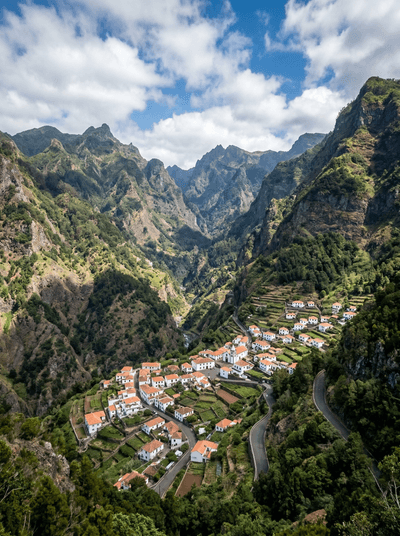
Curral das Freiras
Portugal
A village hidden in a mountain bowl so deep that nuns fled here from pirates.
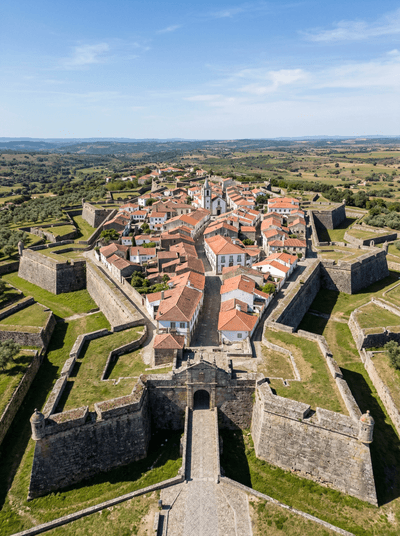
Almeida
Portugal
A star fortress of moats and tunnels where the border was drawn in gunpowder and stone.