Brazil
Conceição do Mato Dentro
Three hundred and fifty-six springs rise in one park; the waterfalls below are what they become.
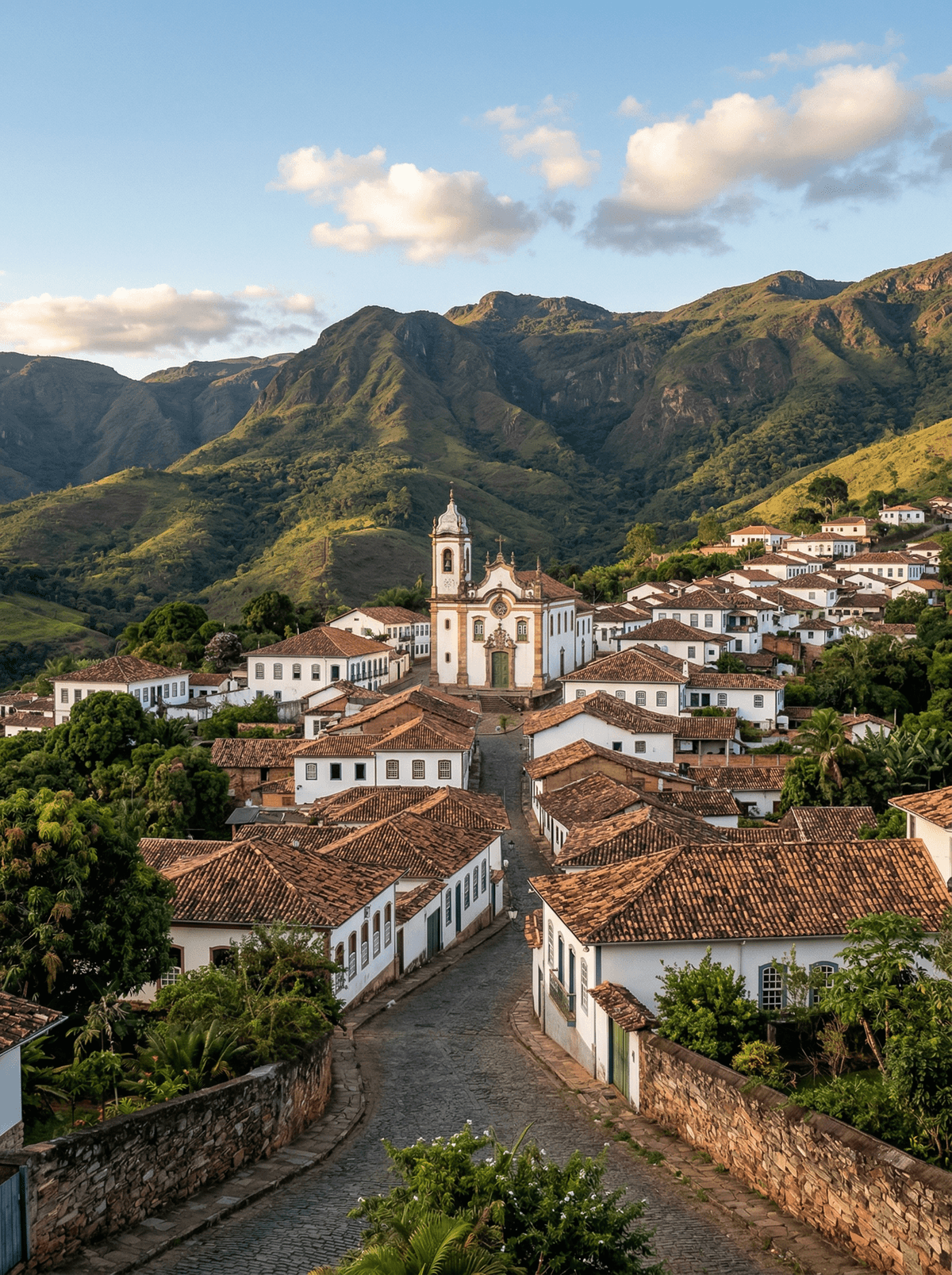
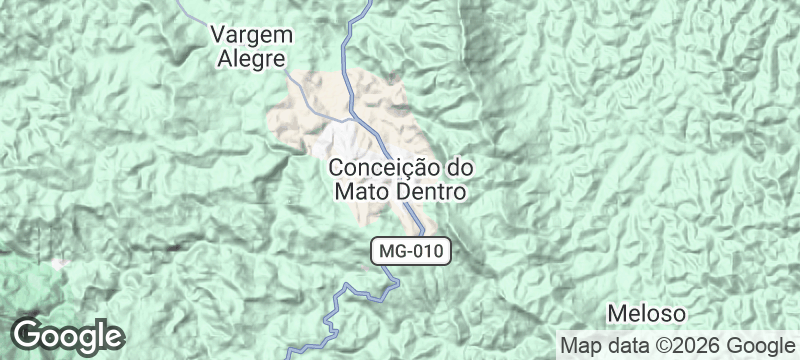
Conceição do Mato Dentro has stood here more than three centuries, 166 kilometres out of Belo Horizonte on the Estrada Real. Behind it the Serra do Intendente holds 356 springs across 13,508 hectares of cerrado meeting Atlantic Forest, and everything that comes off the escarpment starts in one of them. The tallest of those falls is Tabuleiro, 273 metres in a single drop into a pool about twenty metres deep.
The mother church was begun in 1702, at the opening of the Minas gold cycle, listed by IPHAN in 1948, and shut for fifteen years before it reopened on 8 December 2018. The waterfall has had the harder decade. On 25 July 2026 a court, at the state prosecutor's request, closed everything within 500 metres of the fall, restricting the ground to specialists and maintenance teams on inspection duty and setting a fine of a thousand reais a day, on the grounds that the municipality had not put in place the weather, rainfall and seismic monitoring its agreement with the prosecutors required. What is open is the rest of it, and there is a lot of it: Rabo de Cavalo, Congonhas, Roncador and Mutambo, the Salão de Pedras municipal park with its pools and rapids, and the Travessia Lapinha to Tabuleiro across the Espinhaço. Every May the Largo do Rosário fills for the Festival Fartura, in its seventh edition on 22 to 24 May 2026, free to walk into, with the town's own producers selling alongside visiting cooks.
Solo
Work from the town rather than the falls. The church, the Largo do Rosário and the small producers fill a day, and Rabo de Cavalo takes entries until three, out of a park that opens at eight and shuts at four.
Friends
The Travessia Lapinha to Tabuleiro is the serious version of this place, across the Espinhaço on foot. Whatever you walk, obey the state agency's own rule: at the first sign of rain on the river's headwaters, leave, because flash floods happen here.
- The Parque Estadual Serra do Intendente holds 356 springs across 13,508 hectares where cerrado meets Atlantic Forest, created by decree on 27 March 2007.
- Cachoeira do Tabuleiro falls 273 metres in a single drop into a pool some twenty metres deep, the tallest in Minas Gerais and the third tallest in Brazil.
- Since 25 July 2026 a court order has closed everything within 500 metres of that fall, leaving the ground to specialists and maintenance teams on inspection duty.
- Rabo de Cavalo takes walkers until three in the afternoon, and the Parque Natural Municipal Salão de Pedras has pools and rapids in the same transition forest.
Pastel de angu, registered as this town's own intangible cultural heritage, made at the May festival by Lurdinha Majó.
Feijão-tropeiro and frango com quiabo on the everyday table, with queijo artesanal tipo Serro from the small producers around town.
Hachijojima
Japan
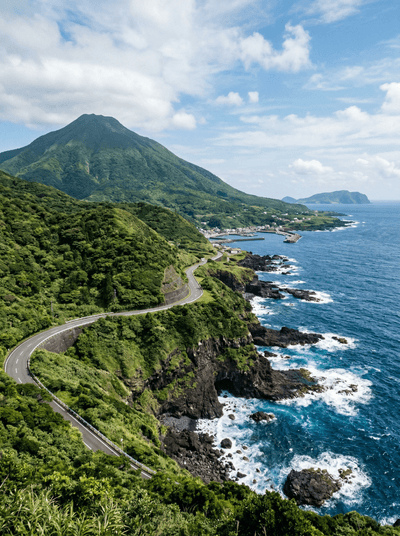
Two volcanoes wearing jungle, cliff-top onsen over the Pacific, three hundred kilometres south of Tokyo.
Ninety Mile Beach
New Zealand
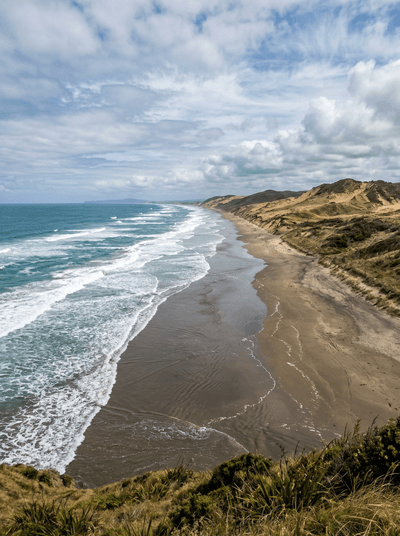
Called Ninety Mile Beach and fifty-five miles long — still vast beyond argument.
Mitchell Falls
Australia
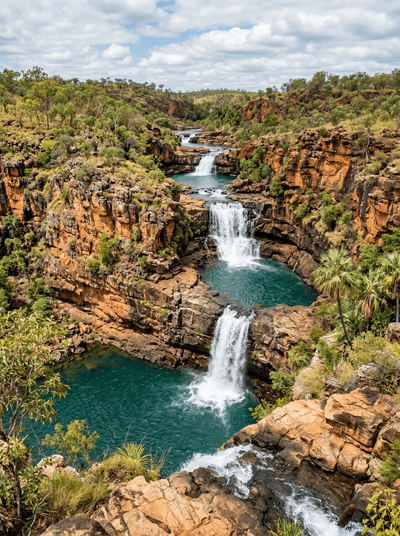
In season, four tiers of water thunder through sandstone on remote Wunambal Gaambera Country.
Kalymnos
Greece
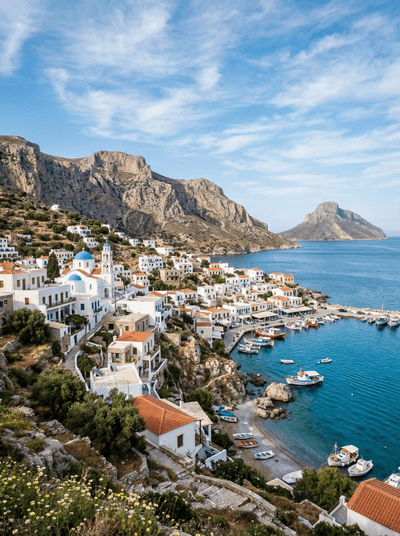
Chalk-dusted hands on overhanging limestone where sponge divers' grandchildren turned an island into a climbing mecca.
Chapada Diamantina
Brazil
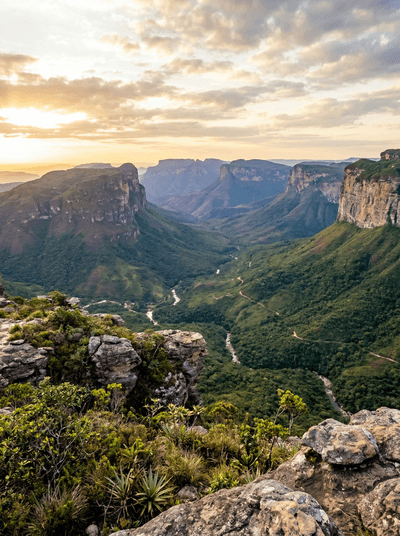
A three-hundred-and-eighty-metre waterfall, in a park with no signposts and no phone signal.
Chapada das Mesas
Brazil
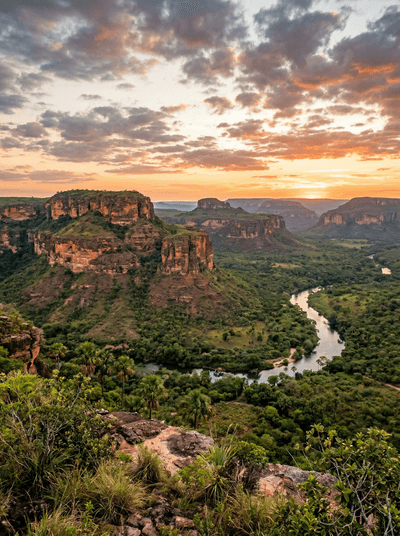
Mesas to the horizon, and a seventy-metre fall past a rock they read as the saint.
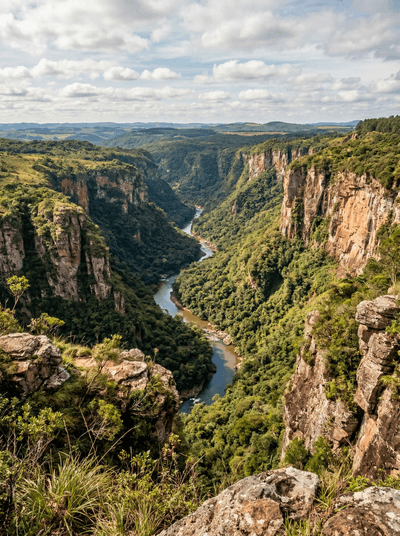
Canyon Guartelá
Brazil
A river that refused to go around cut Brazil's longest canyon dead straight for thirty kilometres.
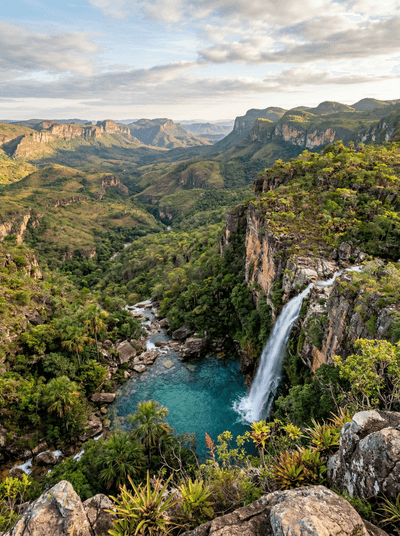
Chapada dos Veadeiros
Brazil
One trail crosses rock older than Pangaea, through abandoned crystal diggings, to a 120-metre fall.