Morocco
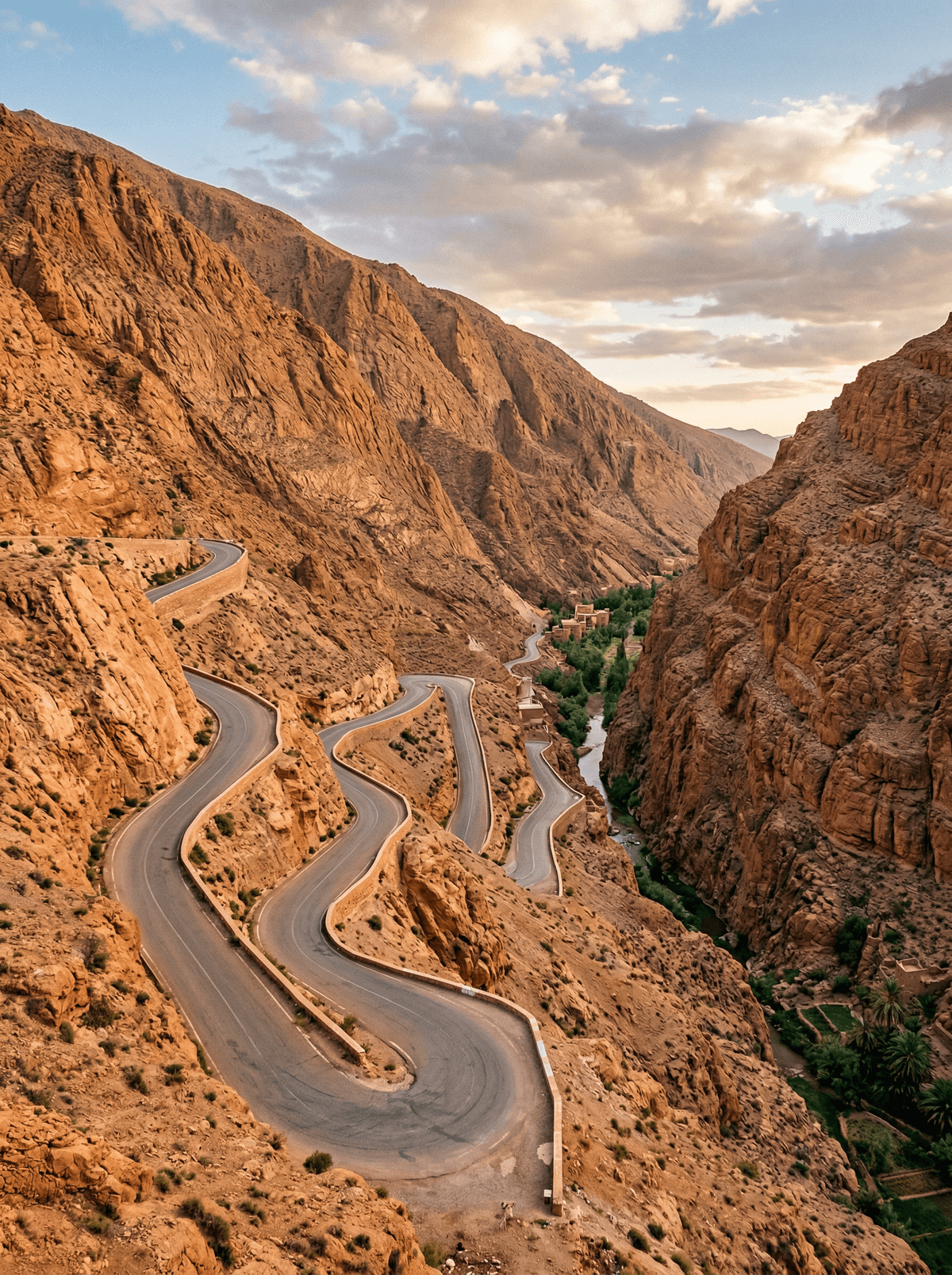
Dades Valley
Five tonnes of Damask rose petals disappear into one kilo of perfume.
The Dades comes down out of the High Atlas through red sandstone, and wherever the floor widens enough to hold soil, the fields are roses. Damask roses grow in hedges along the irrigation lines, and briefly each spring their scent takes over the valley. Outside that short season, this becomes a hard dry place of red walls and earthen kasbahs standing on the ledges above the water.
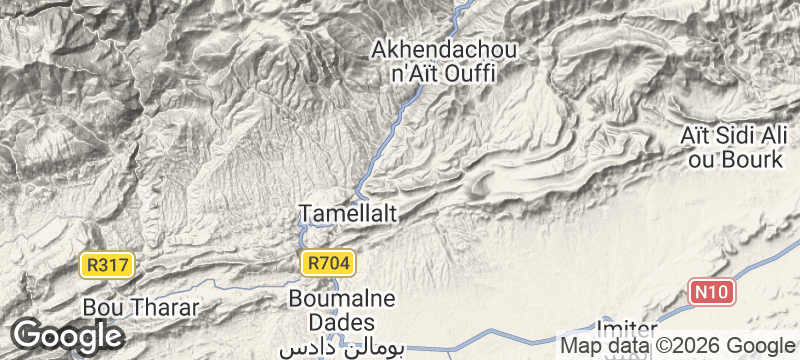
Kelaat M'Gouna is the town the rose built, and the arithmetic behind it is brutal: five tonnes of flowers for one kilo of essential oil. Around 4,100 tonnes of perfume rose come off roughly 950 hectares here in a year, and whether the crop is any good is decided by whether the spring frost or the drought gets there first. Two distillation units operate in town, including the Arômes du Maroc distillery, which dates to the 1950s; a women's cooperative runs another still down at Souk Lakhmis. Each spring the perfume-rose salon takes the town over, with cars buried under flowers and folk troupes filling Avenue Mohammed V.
Couple
Come in the first days of May, when the fields are being cut and the town is in carnival. Every other week of the year the valley is quiet enough that a kasbah room on a ledge above the river is the whole evening.
Solo
Walk the irrigation lines between the rose hedges early, then take the mule tracks up to the terraced villages above the water. Nobody will hurry you, and the day has no prescribed circuit.
- About 4,100 tonnes of perfume rose come off roughly 950 hectares of this valley in a year.
- Two distillation units operate in Kelaat M'Gouna; the Arômes du Maroc distillery dates to the 1950s.
- The spring perfume-rose salon fills Avenue Mohammed V with flower-covered cars and folk troupes.
- Whether the valley flowers well is decided by spring frost and drought, which is why the sector is being replanted and re-irrigated.
Rose water from the women's cooperative still at Souk Lakhmis, distilled out of the fields it stands in.
Boufeggous dates with yielding flesh, amber-brown translucence and a light caramel taste, eaten fresh or cooked into jam.
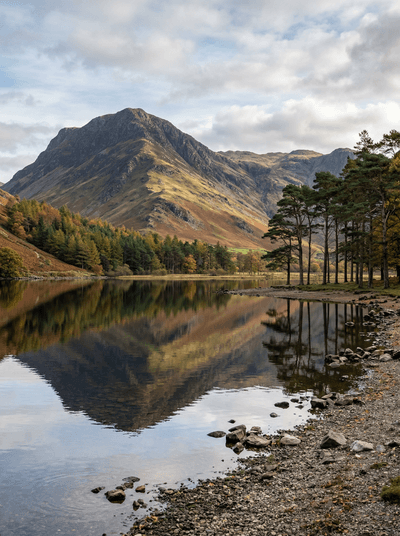
Buttermere
England
A mirror lake ringed by fells so symmetrical the reflection is indistinguishable from the real.
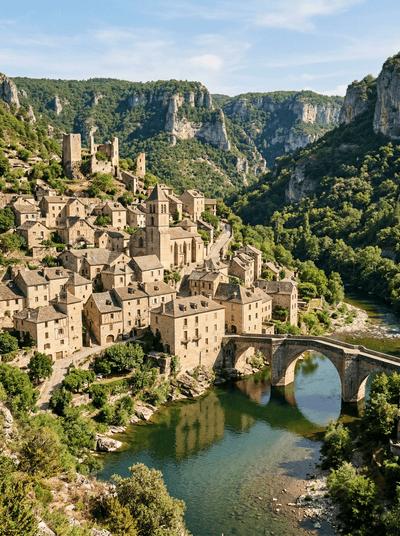
Sainte-Enimie
France
A medieval village wedged into the Tarn gorge so tightly the river runs through its gardens.
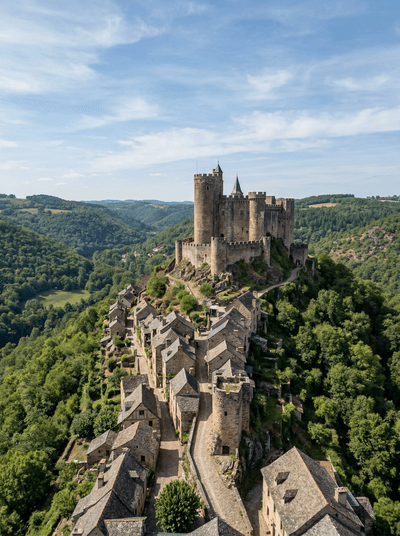
Najac
France
A single-street village on a ridge, a royal fortress at the tip, a river coiled below.
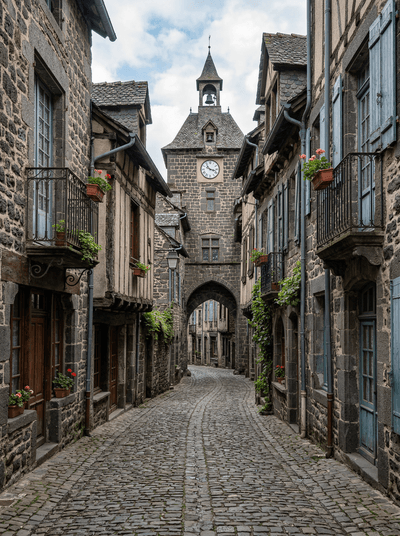
Salers
France
Lava-stone turrets above green pastures where dark-red cows match the volcanic rock.
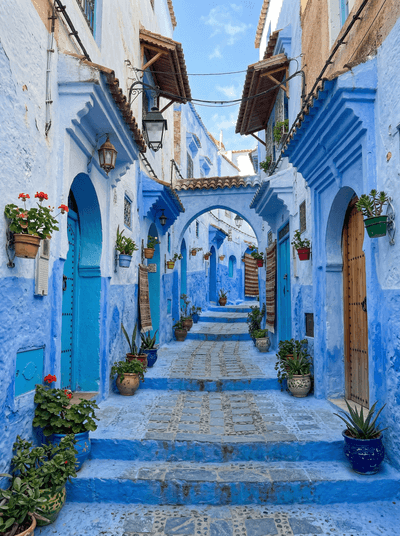
Chefchaouen
Morocco
A whole mountainside rinsed in blue, and the town still argues over who started it.
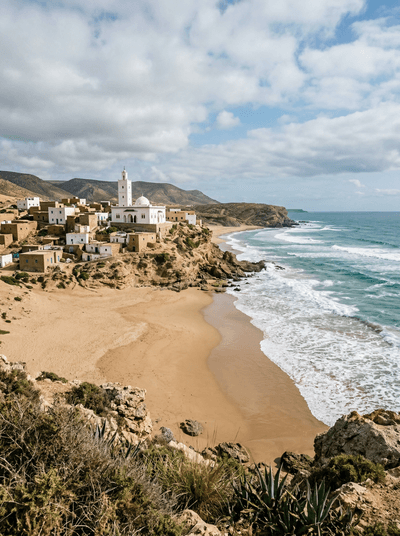
Sidi Moussa d'Aglou
Morocco
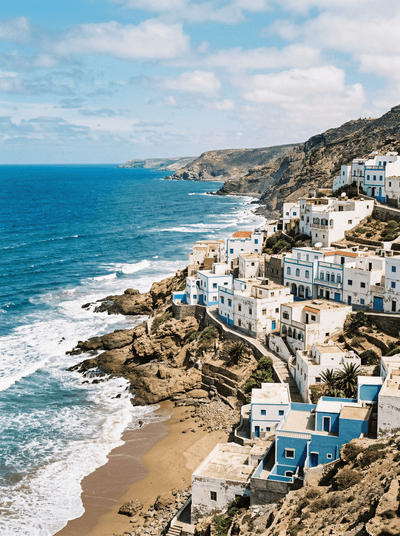
White doors puncture an Atlantic cliff where fishermen carved rooms into rock.
Sidi Ifni
Morocco
Spain left on the last day of June 1969, and the Art Deco is still standing.
Massa
Morocco
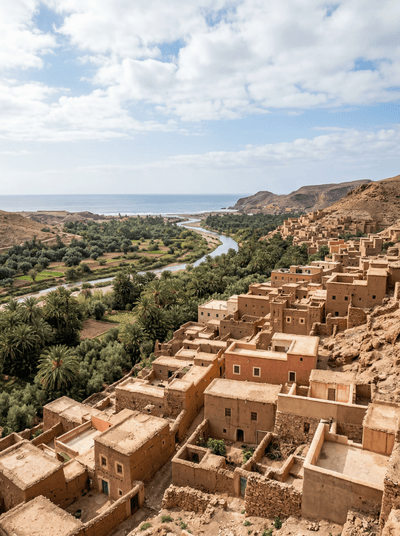
Mist, reeds and birdcalls follow one estuary path until Atlantic surf drowns them out.