Chile
Desierto Florido
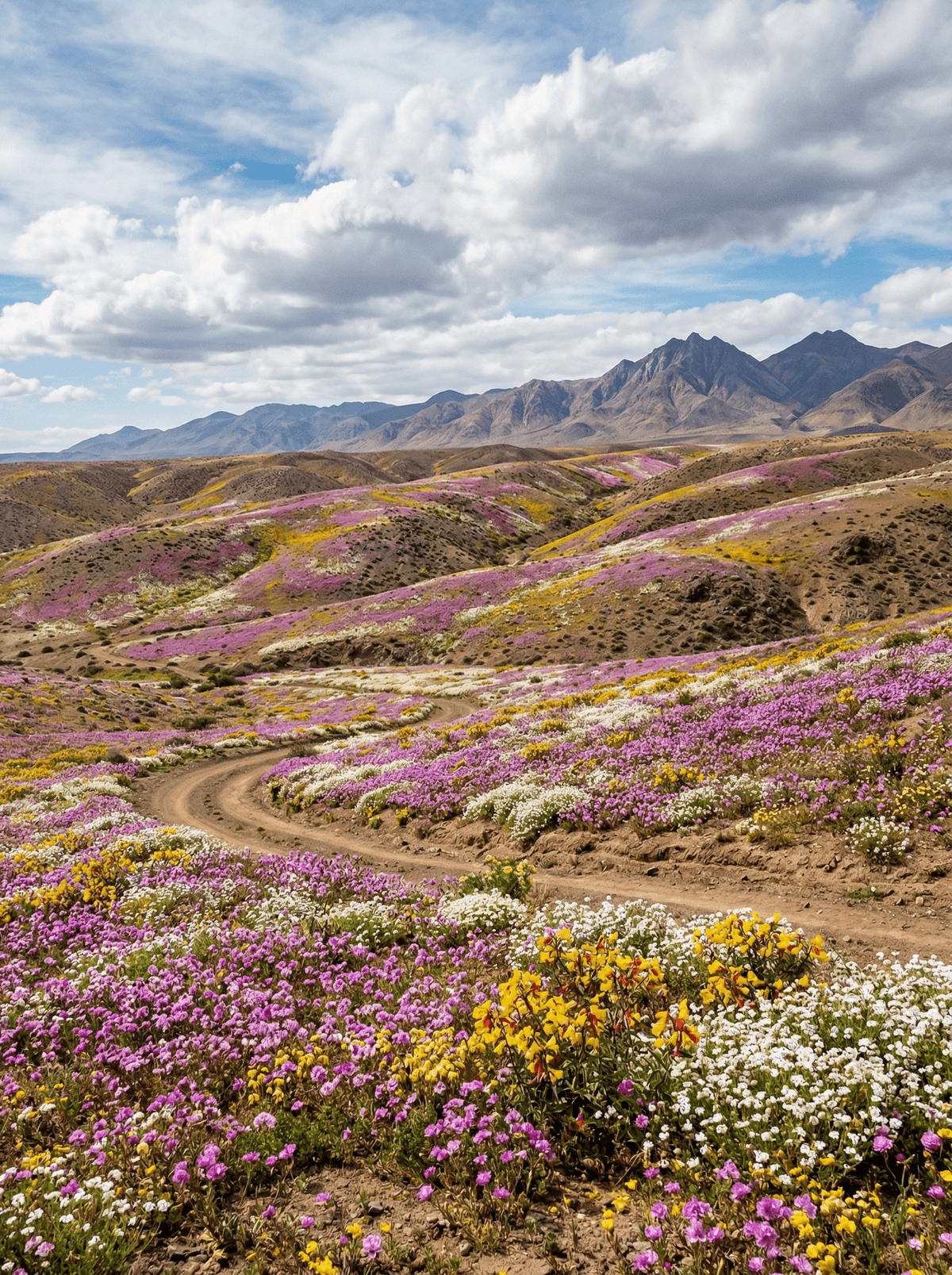
Every few years the driest desert on Earth erupts in wildflowers from horizon to horizon.
One year it's dust and gravel to every horizon. The next, without warning, the ground erupts — pink, yellow, white — wildflowers so dense they erase the desert entirely. You drive the Panamerican through the Atacama Region and the landscape doesn't look like Earth. Seeds that waited a decade underground have all decided to bloom at once.
The Desierto Florido is a natural phenomenon in Chile's Atacama Desert, triggered only when winter rainfall exceeds 15 millimetres — a threshold met fewer than 20 times in the past century. When it occurs, over 200 native plant species flower simultaneously between Copiapó and the coast, some having survived in seed form underground for up to a decade. The bloom typically peaks between September and November, and its intensity is impossible to predict — some years produce scattered patches, others carpet the desert from horizon to horizon. The concentration is most vivid along the Panamerican corridor, where the contrast between bare desert and total floral coverage creates a landscape that looks digitally altered. The unpredictability is the point: you cannot book the Desierto Florido. You can only be lucky enough to witness it.
Solo
Witnessing the Atacama in full bloom alone is a profoundly disorienting experience — the silence, the scale, the knowledge that this might not happen again for years. Solo travellers can chase the bloom at their own pace, following local reports.
Couple
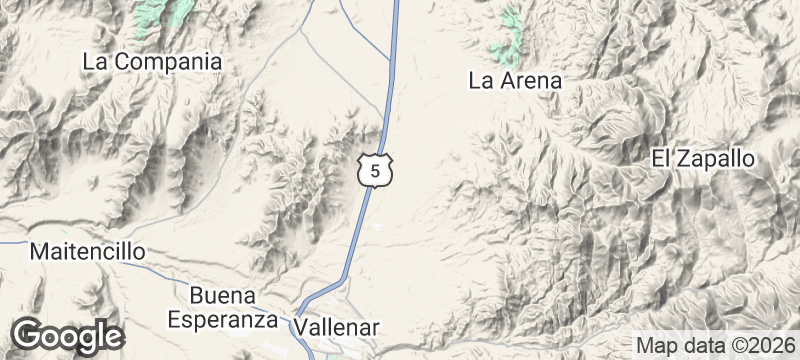
Few natural events are this ephemeral or this visually overwhelming. Driving through the bloom together, stopping at roadside goat stew restaurants in Vallenar, creates a memory anchored to something that may never repeat.
Family
Children who see the desert in bloom and then learn the same landscape is bare rock most years experience a lesson in patience and impermanence that no classroom can replicate.
- The bloom occurs only after winter rainfall exceeds 15mm — it has happened fewer than 20 times in the past 100 years.
- When it does bloom, over 200 native species flower simultaneously, some having waited in seed form for up to a decade underground for the right conditions.
- The concentration of colour is most intense between Copiapó and the coast along the Panamerican corridor — the horizon disappears into pink and yellow.
- Children who see the bloom often cannot believe the same landscape they drove through last year is the same desert — the transformation is total.
Goat stew at roadside restaurants in Vallenar, cooked with oregano and served with fresh tortillas.
Pajarete — a sweet Muscat wine made in the Huasco Valley, sipped cold at dusk.
Aceitunas de Huasco — prized olives from the desert coast, cured and eaten with bread and cheese.
Trollskogen (Öland)
Sweden
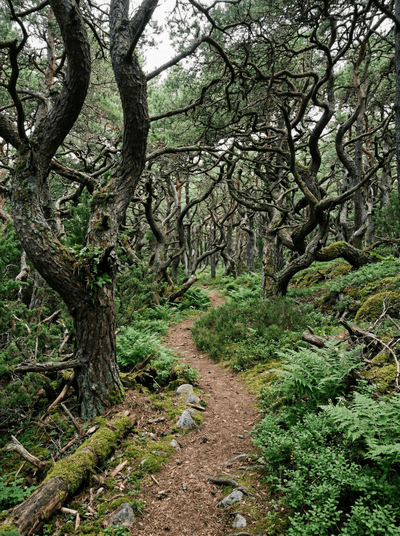
A forest of wind-warped oaks so twisted they look like a witch's spell gone wrong.
Millennium Cave
Vanuatu
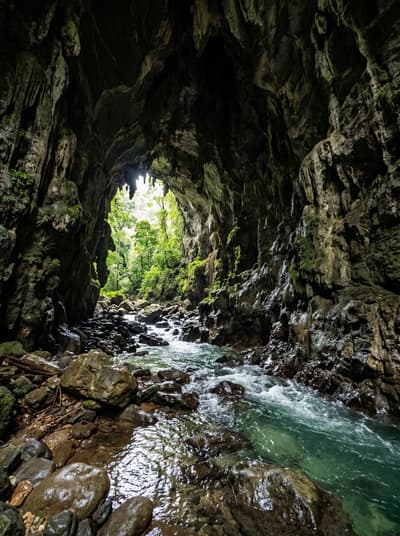
Scramble through jungle and wade chest-deep rivers to a cave you enter walking and exit floating.
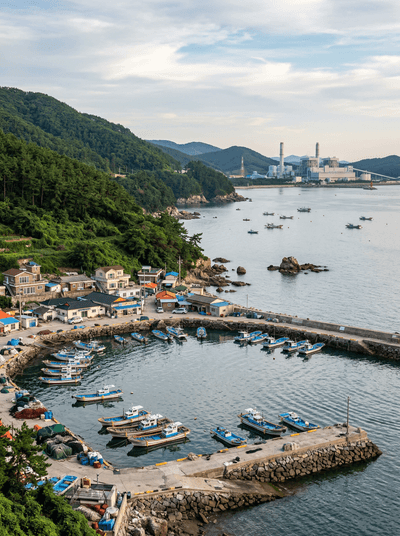
Maryang-ri
South Korea
A five-hundred-year-old forest of camellia trees bleeding red flowers against the grey winter sea.
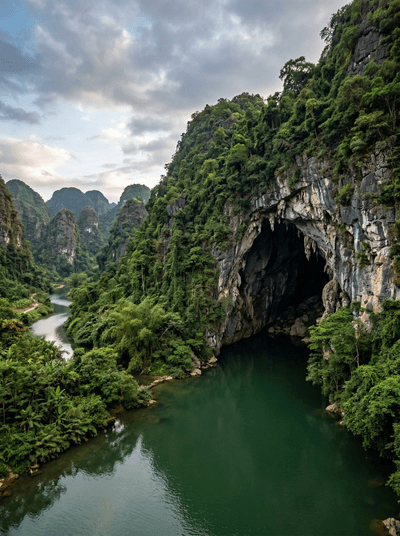
Phong Nha
Vietnam
Hidden jungle portals opening into subterranean river systems and limestone caverns.
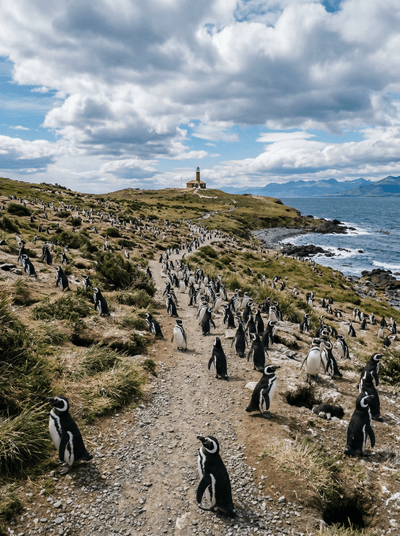
Isla Magdalena
Chile
Magellanic penguins in their tens of thousands, nesting so close you walk through their colony.
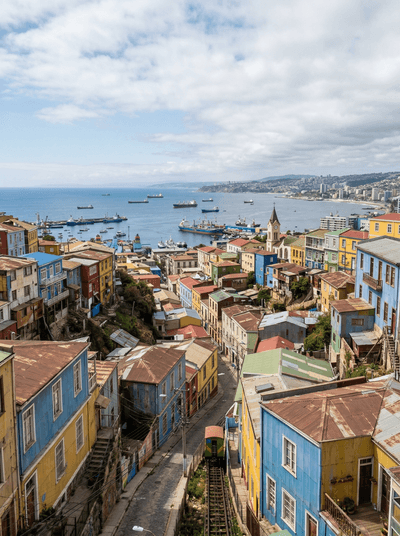
Valparaíso
Chile
Forty-two hills of riotous street art where funiculars creak between graffiti-walled stairways.
San Pedro de Atacama
Chile
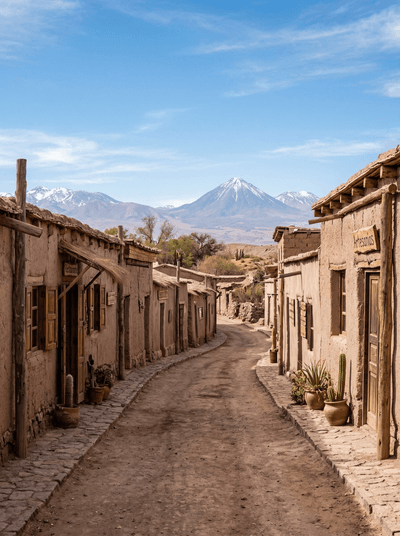
Adobe village where you stargaze through the driest, clearest sky on Earth.
Torres del Paine
Chile
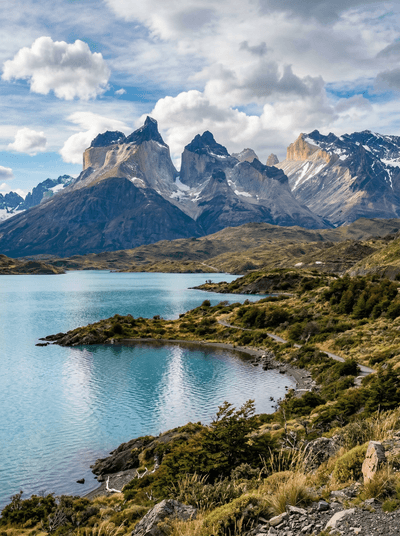
Granite towers erupt from Patagonian steppe, condors riding thermals above ice-blue lakes.