South Africa
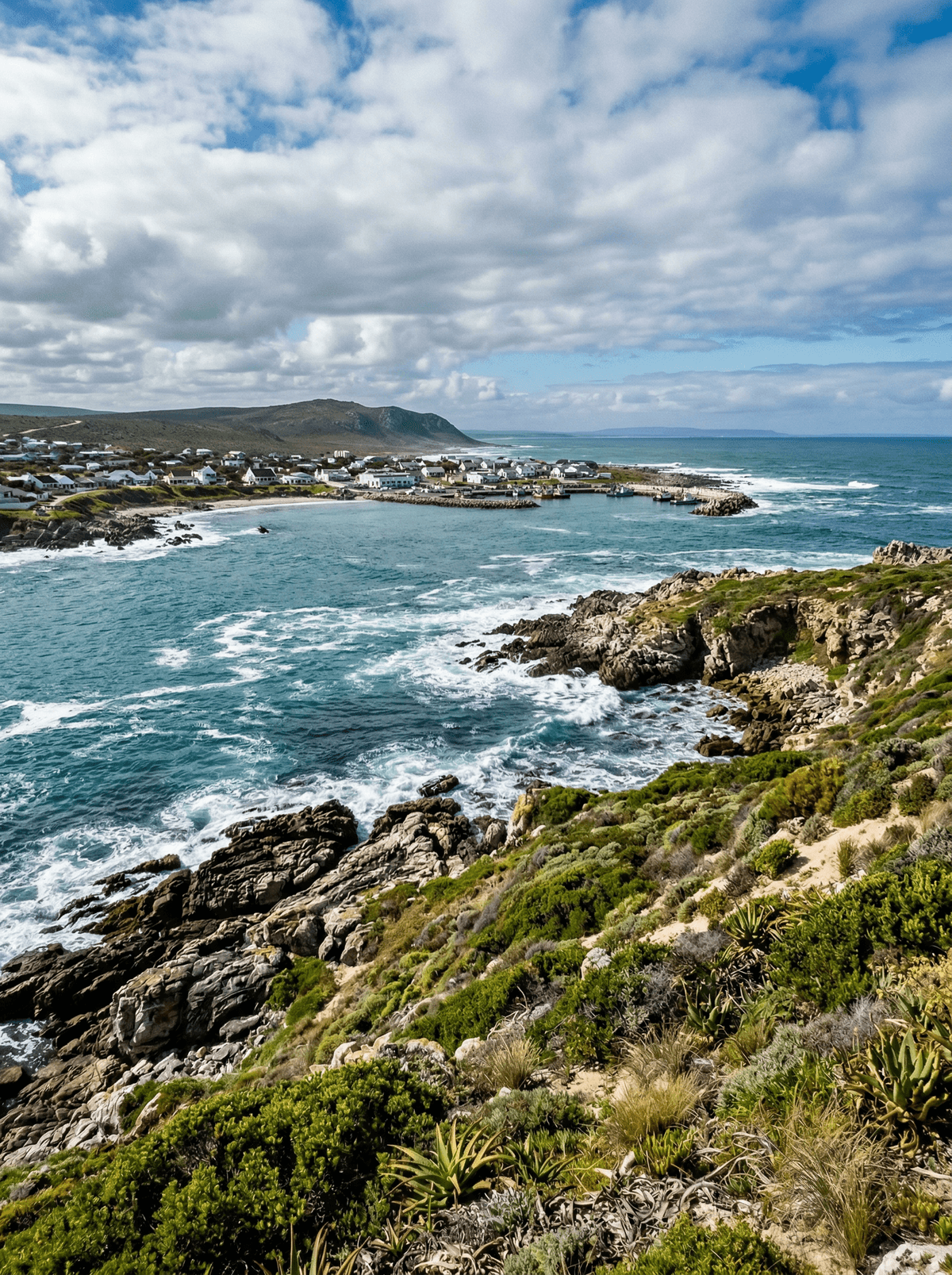
Gansbaai
Seals bark beyond the kelp while open-ocean predators circle a working fishing harbour.
Boats clear the harbour before the wind roughens the channels around Dyer Island. Beyond the kelp, thousands of seals turn the water noisy and alive.
A working harbour sits beside the dense Dyer Island marine system. Seals and seabirds are the dependable cast; larger predators and whales arrive on their own terms. A conservation-led trip makes those changing relationships more compelling than any promise of one species.
Solo
Choose a conservation-led marine trip for Dyer Island, seals and seabirds, then let the wildlife present on the day shape the story.
Friends
Treat the boat as one weather-dependent part of the day; keep harbour food and a coastal walk ready if wind or wildlife changes the plan.
- Dyer Island and Geyser Rock support seabirds and a large Cape fur seal colony.
- Marine trips interpret a wider ecosystem than a single shark species.
- White-shark presence has changed and no sighting can be promised.
- The coast also supports seasonal whale watching.
Perlemoen is farmed at scale here: Gansbaai's abalone farms raise the Cape delicacy beside Danger Point.
The harbour's colourful trawlers still land the town's fish; Gansbaai eats off its own boats.
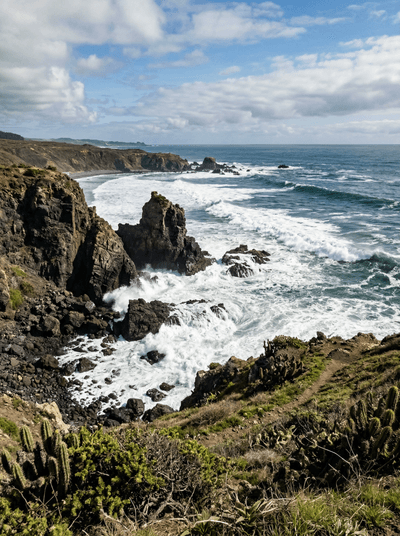
Punta de Lobos
Chile
Long Pacific lines bend around a protected headland south of Pichilemu.
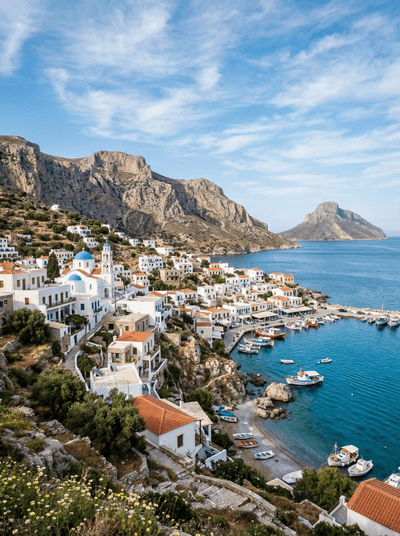
Kalymnos
Greece
Chalk-dusted hands on overhanging limestone where sponge divers' grandchildren turned an island into a climbing mecca.
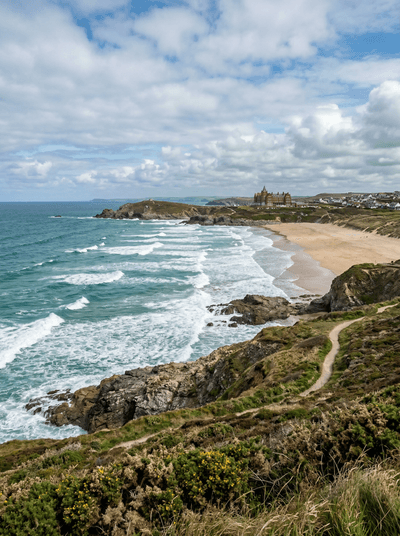
Newquay
England
Atlantic swells smash into seven beaches at the modern home of British surfing.
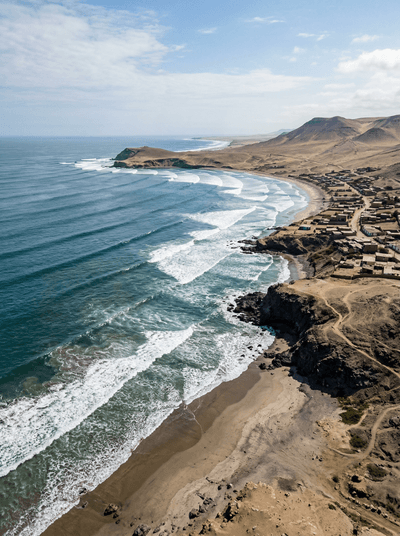
Chicama
Peru
A left-hand point wave of legendary length, peeling down a bone-pale desert shore.
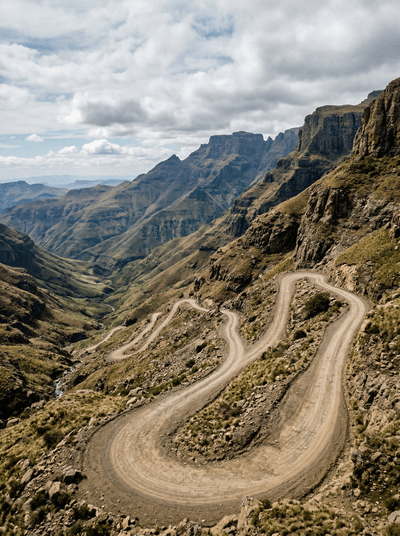
Sani Pass
South Africa
A switchback road climbs from green foothills to a high border above the clouds.
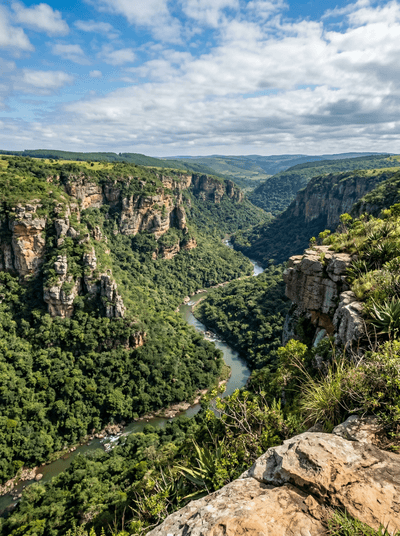
Oribi Gorge
South Africa
A river cuts deep through forested sandstone, with suspension bridges hanging above the gorge.
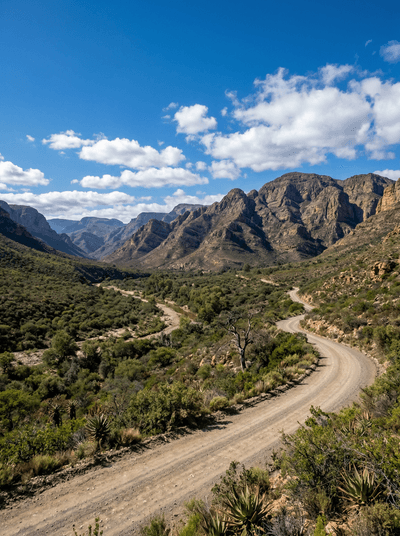
Baviaanskloof
South Africa
A rough road threads folded mountains, river crossings and farms through a hundred-mile valley.
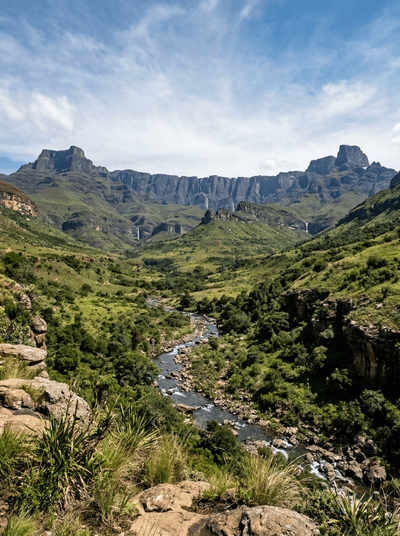
Royal Natal National Park
South Africa
The Amphitheatre's five-kilometre rock wall fills the sky above a river-cut mountain valley.