Iceland
Grímsey Island
A wind-battered island where you step across the Arctic Circle among a million nesting seabirds.
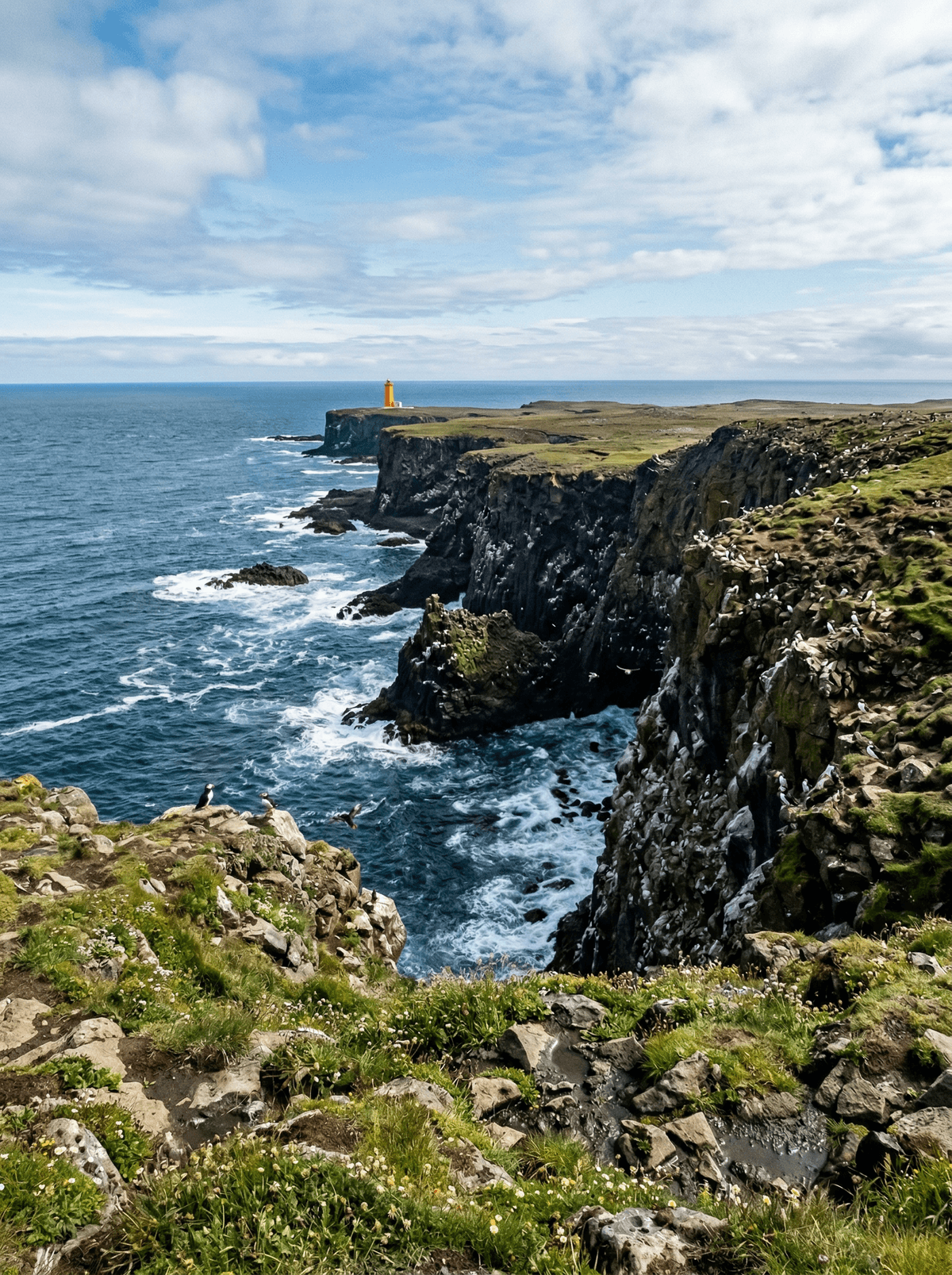
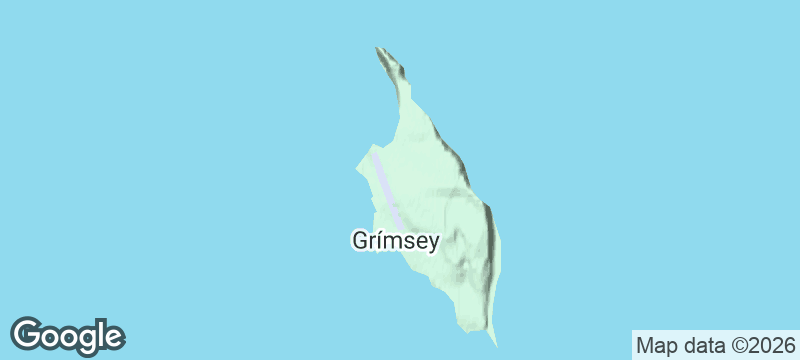
The concrete sphere marks the line — the Arctic Circle, 66°33' north — and beyond it there is nothing but nesting seabirds, wind, and the knowledge that you have run out of Iceland. Grímsey lies forty kilometres off the north coast, the only piece of Iceland above the Circle.
Grímsey holds around sixty permanent residents and seabirds in their hundreds of thousands, including one of Iceland's densest puffin colonies on its eastern cliffs. Its defining oddity is the Circle itself: the line drifts north a little every year, so the island's marker — Orbis et Globus, a three-tonne concrete sphere — is rolled to follow it. In high summer the midnight sun still rides clear of the horizon here after it has dipped on the mainland. The Sæfari ferry sails from Dalvík in about three hours, flights from Akureyri take twenty-five minutes, and the whole five-square-kilometre island — church, lighthouse, guesthouse, harbour — walks comfortably in an afternoon.
Solo
Stepping over the Arctic Circle on a tiny island in the open sea, seabirds overhead and nothing else — a geographic solitude nowhere else in Iceland can stage.
Couple
Crossing the line together, watching true midnight sun from Iceland's northern extremity and sharing a guesthouse on a sixty-person island makes a milestone of the trip.
Friends
The ferry out, the Circle crossing and the puffin cliffs give a group bragging rights and wildlife in one day from Akureyri.
- The only part of Iceland above the Arctic Circle — and the line is drawn underfoot.
- The three-tonne Orbis et Globus sphere is rolled each year to follow the drifting Circle.
- The eastern cliffs hold one of Iceland's densest seabird colonies, puffins in their masses.
- A three-hour ferry from Dalvík or a twenty-five-minute flight from Akureyri gets you there.
Fresh catch and salt fish at Krían by the harbour — landed by the island's own boats.
Coffee and kleinur against the wind before the walk back across the Circle.
Netaji Subhas Chandra Bose Island (Ross Island)
India
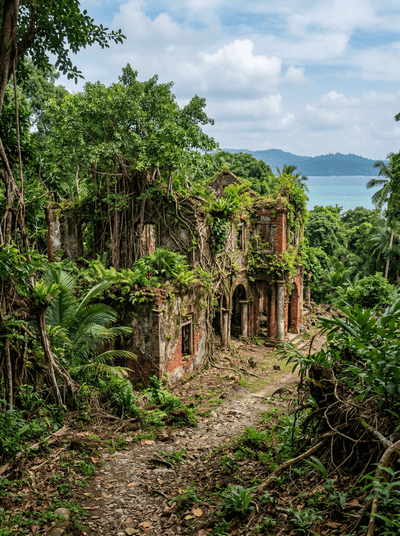
A British colonial headquarters slowly being digested by ficus roots in the Andaman Sea.
Tulagi
Solomon Islands
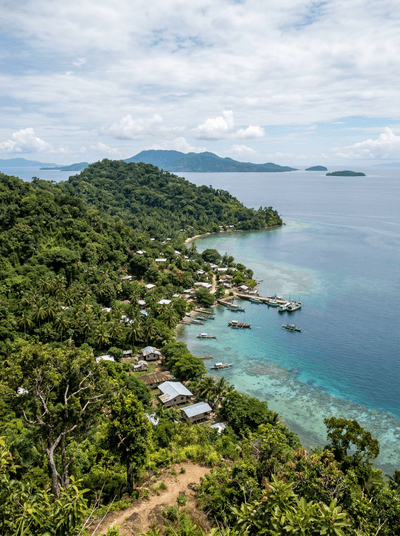
The old capital's harbour still holds the flying boats the war left on its floor.
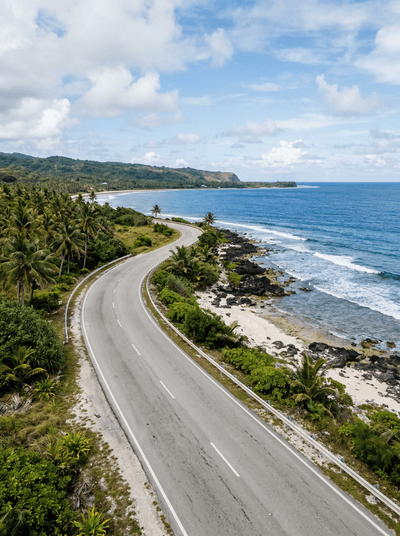
The Ring Road
Nauru
Salt air and rusting pillboxes line the road that loops an entire country in seventeen kilometres.
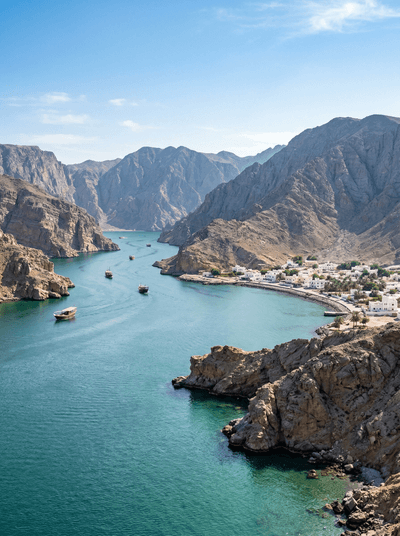
Khasab
Oman
A harbour fort and dhow basin sit beneath Musandam's bare limestone ridges.
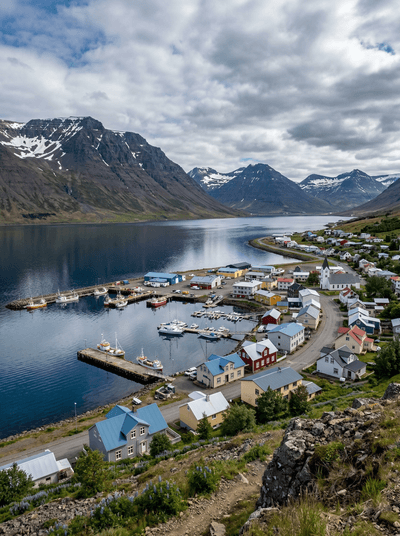
Ísafjörður
Iceland
The Westfjords capital clinging to a spit of land between mountains so steep roads spiral.
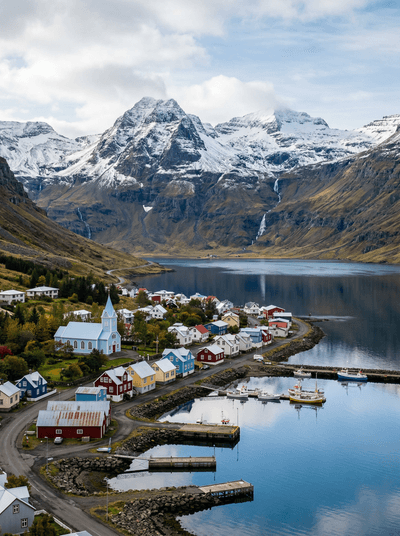
Seyðisfjörður
Iceland
A rainbow-paved path leading to a pale blue church beneath snow-streaked fjord walls.
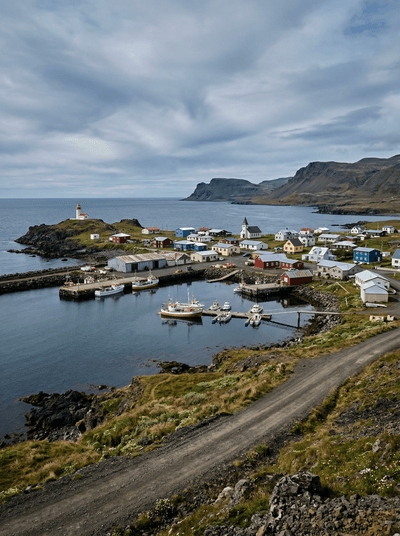
Raufarhöfn
Iceland
Monoliths of an Arctic Henge reaching for the midnight sun on a desolate tundra.
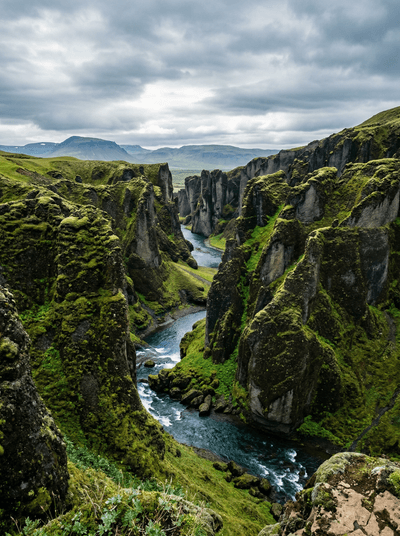
Fjaðrárgljúfur
Iceland
A serpentine canyon with walls of moss-covered palagonite carved by ancient glacial meltwater.