Gambia
Kerbatch Stone Circles
Among a thousand Senegambian megaliths, only one stone forks into two arms; it stands here.
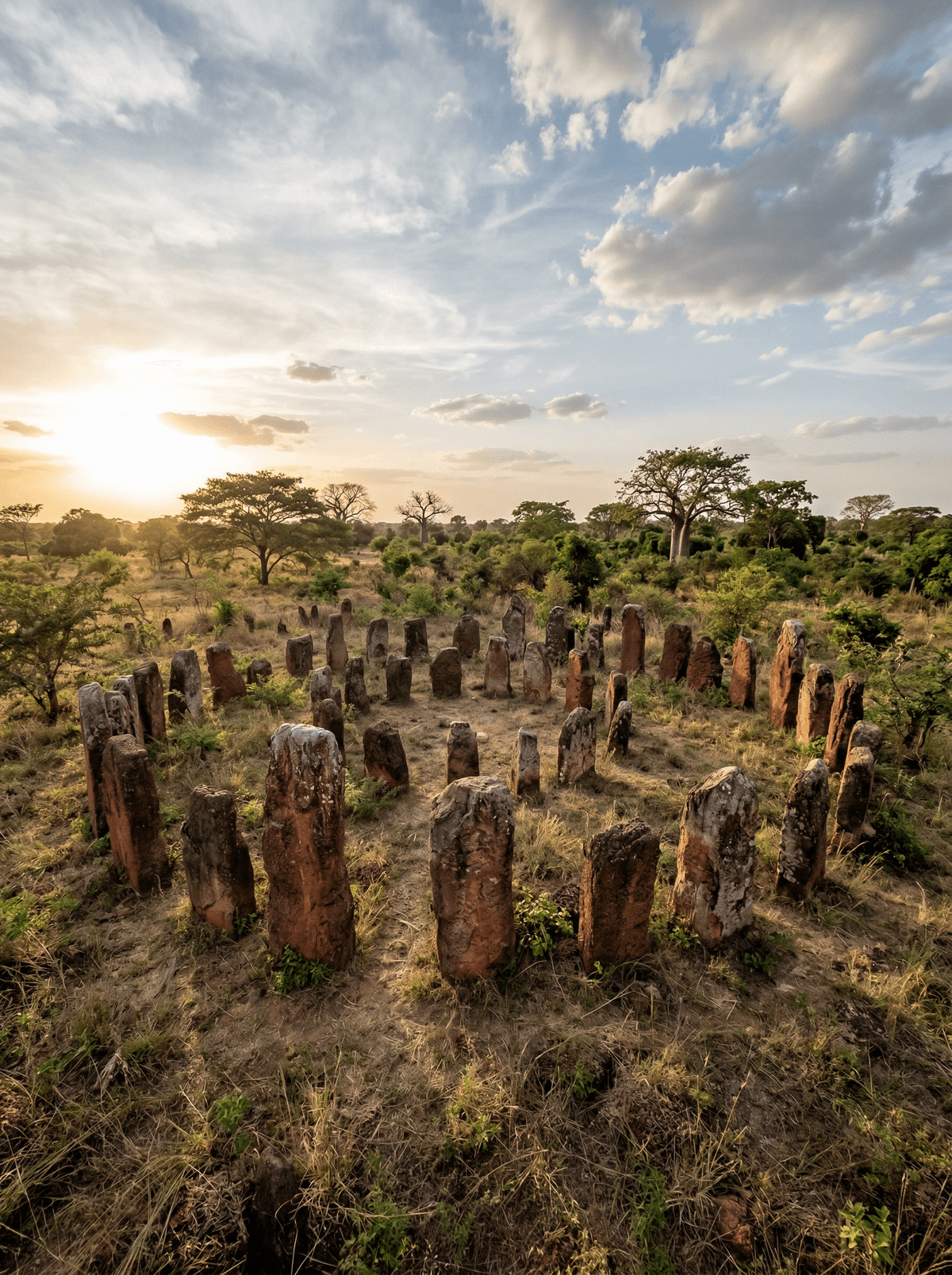
The field at Kerbatch is so quiet you hear the grass tick in the heat. Nine rings of laterite break the scrub, and among them one pillar splits at the crown into two arms, a forked silhouette repeated nowhere else in the inscribed landscape.
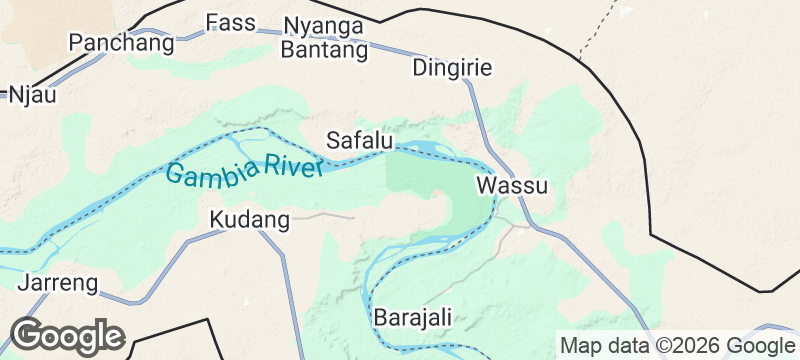
Kerbatch is one of the four inscribed Senegambian stone circle groups: nine circles including a rare double ring, raised over graves in the same long tradition as Wassu, laterite cut with iron tools by builders nobody can name. Its signature is the lyre stone, a pillar forked into a V, recorded as the only bifid stone among the property's megaliths. A one-room museum beside the field gives as much space to the living traditions of the surrounding countryside as to the archaeology. This is the remote sibling: it sits off the north-bank road beyond public transport, so visitors arrange a vehicle from Janjanbureh or fold it into a planned day with Wassu. The reward is a well-preserved group of circles met in near silence.
Solo
The quieter, stranger counterpart to Wassu: one museum room, no queue, and unmetered time with the lyre stone. Sort transport and water before you set out.
Couple
See Wassu first and let Kerbatch land second; the forked pillar hits harder after a field of plain rings. Bring the picnic, because nothing out here sells one.
Friends
A hired vehicle turns the two UNESCO sites into one red-road day across the north bank. Agree an early start; the plain holds no shade by noon.
- The lyre stone's forked V is recorded as the only bifid pillar in the inscribed Senegambian stone circle landscape.
- Nine circles, including a double ring, form one of the four groups of the 93-circle UNESCO property.
- The graves beneath the rings belong to a burial tradition that ran for well over a thousand years.
- Reaching the site takes a vehicle and a plan, which is why the circles are usually met in silence.
Domoda, the Mandinka stew of concentrated peanut paste, tangy with tomato; the classic plate of this groundnut-growing countryside.
The stones have no kitchen: carry drinking water plus a picnic from Janjanbureh or Kuntaur and take the museum wall's strip of shade.
Taveuni
Fiji
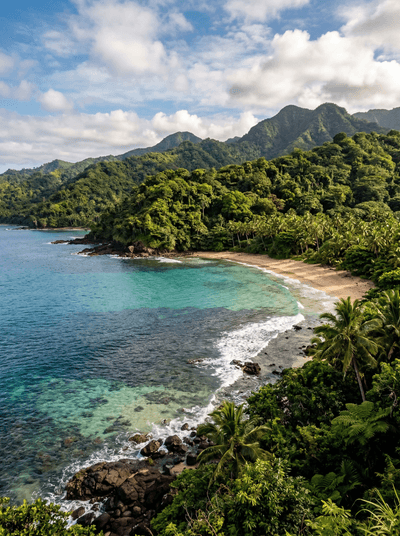
Stand astride the 180th meridian in rainforest, one foot in today, one in yesterday.
Parque Nacional Conguillío
Chile
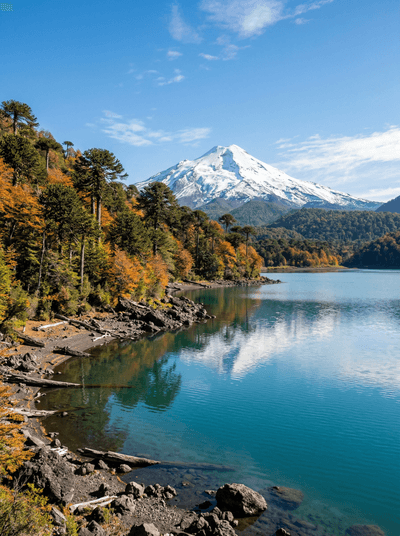
Araucaria crowns stand over black lava and clear lakes beneath Volcán Llaima.
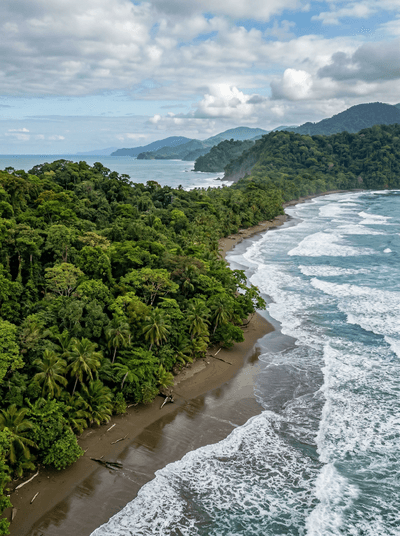
Corcovado National Park
Costa Rica
National Geographic called it the most biologically intense place on Earth. They undersold it.
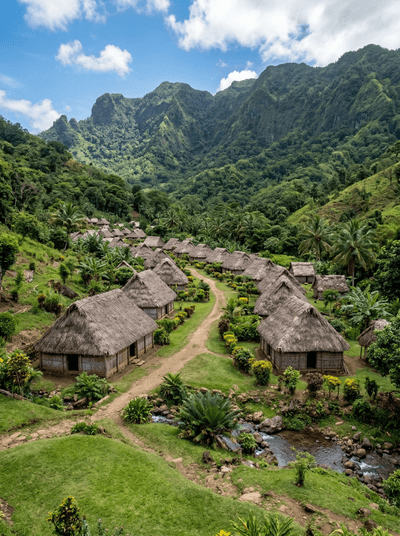
Navala Village
Fiji
Two hundred thatched bures, all built the same size, climb a valley above the Ba River.
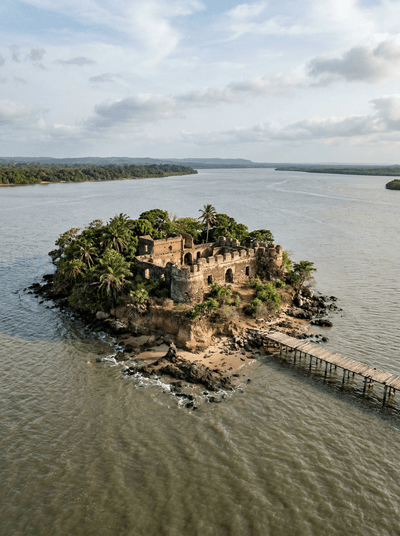
Kunta Kinteh Island
Gambia
The last piece of Africa many captives ever saw, and the river is taking it back.
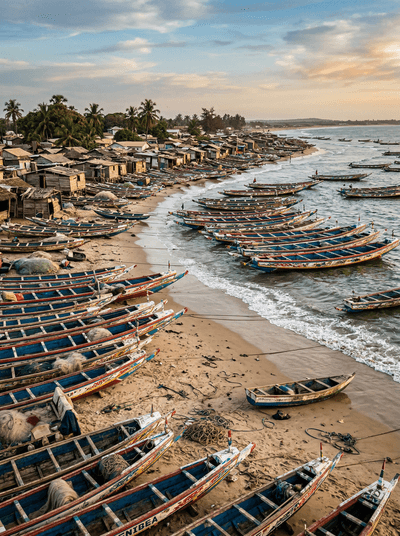
Tanji Fishing Village
Gambia
The beach erupts each afternoon: pirogues through surf, silver bonga by the basket, woodsmoke everywhere.
Makasutu Cultural Forest
Gambia
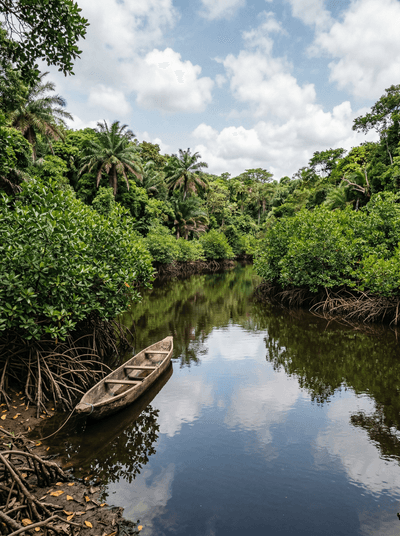
A forest named for Mecca: palm wine drips from the trunks, baboons patrol the floor.
Wassu Stone Circles
Gambia
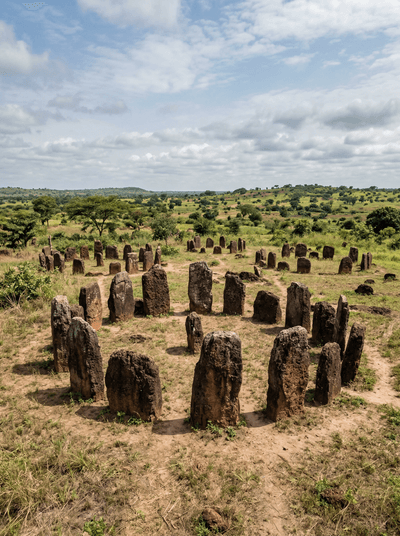
Eleven rings of rust-red pillars guard ancient graves; visitors still add pebbles for luck.