South Africa
Kuruman
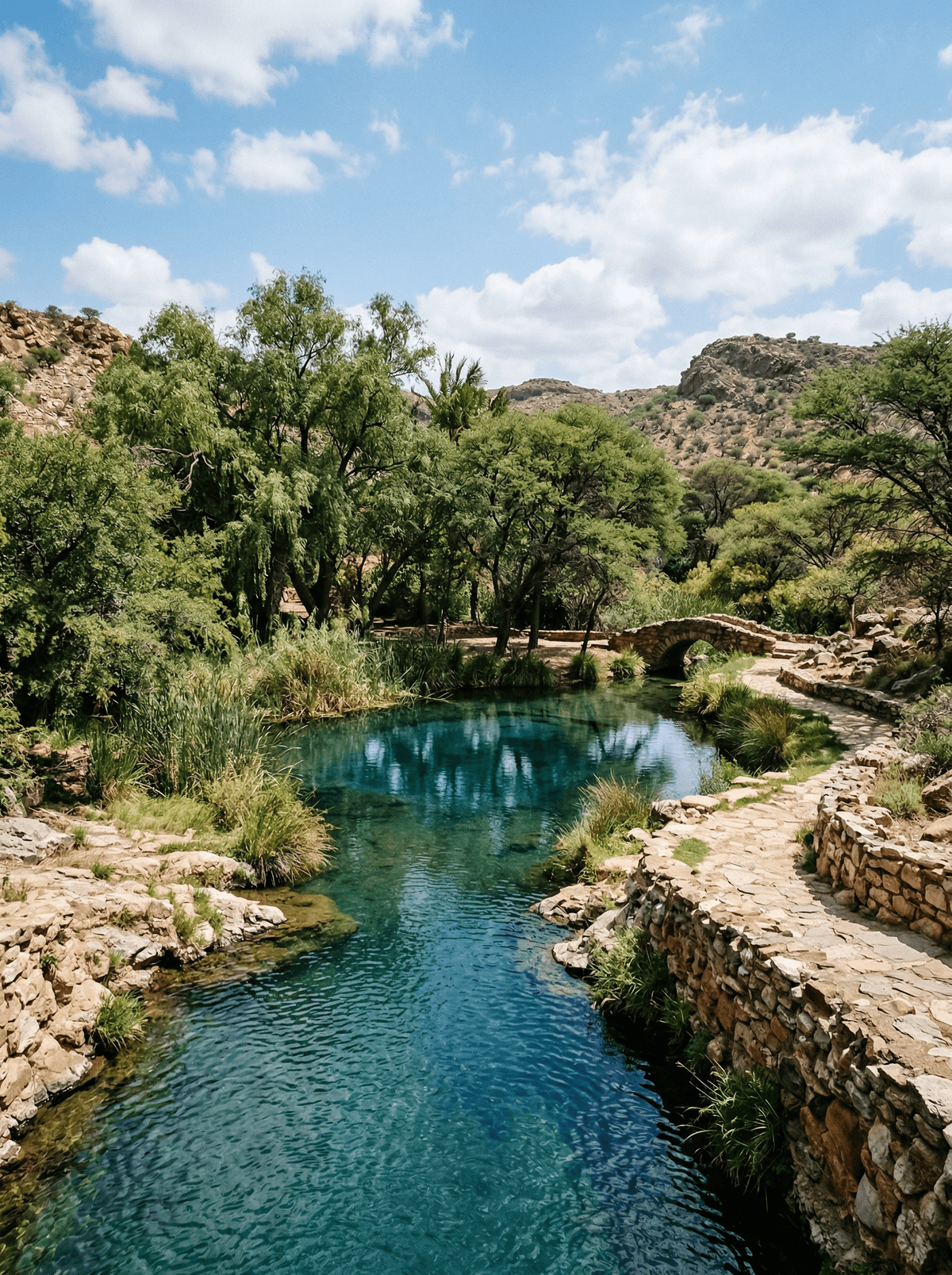
Twenty million litres rise daily from Kalahari rock, filling a clear pool in town.
Fish move below lilies where cold water appears beside the main street. The spring keeps pouring through a town surrounded by dry Kalahari country.
The Eye turns an abstract daily volume into a clear pool you can circle on foot. Wonderwerk Cave then extends the route from living water into deep human history. Together they give Kuruman a complete day built on two forms of survival in an arid region.
Couple
Walk the spring gardens slowly, then give Wonderwerk Cave its own planned excursion; the water and archaeology explain the region at very different scales.
Family
The Eye is an easy first stop with visible water and fish, while Wonderwerk adds a deeper story for children ready for a longer drive and guided context.
- The Eye of Kuruman is a permanent natural spring in town.
- The spring supplies roughly twenty million litres of water each day.
- Wonderwerk Cave adds major archaeological depth nearby.
- The spring supports fish and vegetation in an arid region.
After good rains the Kalahari yields n'abbas, desert truffles the Khoikhoi called eggs of the lightning bird.
Northern Cape cooks still gather veldkos, the wild plants and bulbs of the plains, and the local lamb grazes on them.
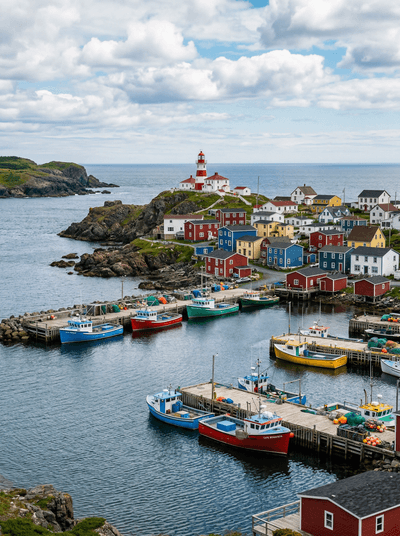
Bonavista
Canada
Sea cliffs, saltbox colours and a working headland face the open North Atlantic.
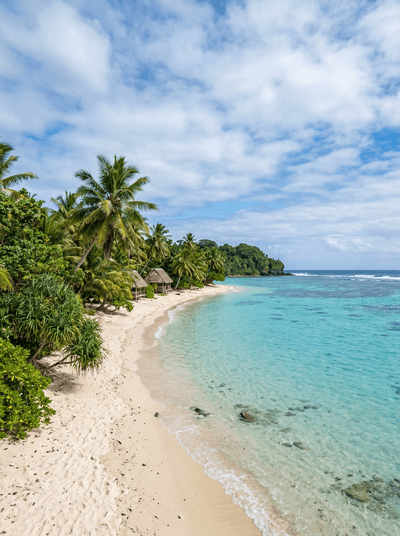
Manase
Samoa
Thatch fales open to the sea, and a village that feasts every Sunday.
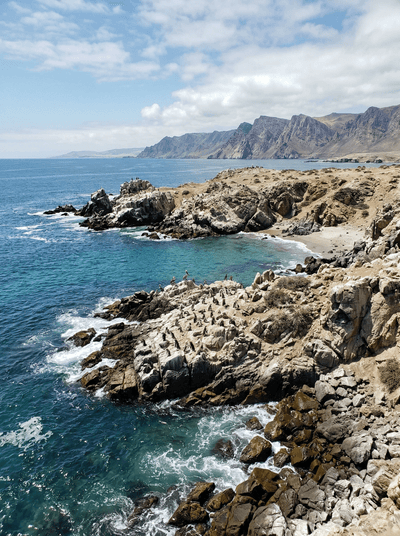
Isla Damas (Reserva Nacional Pingüino de Humboldt)
Chile
A small boat crosses cold desert water towards protected island habitat.
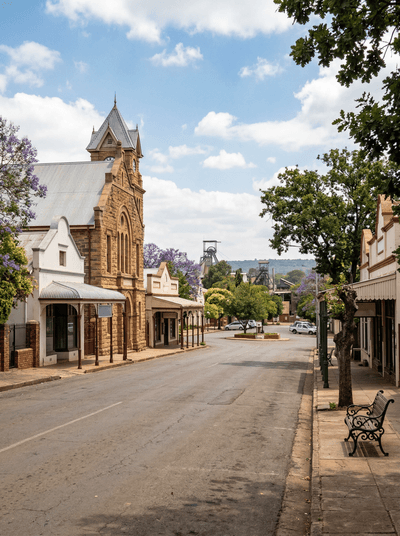
Cullinan
South Africa
The world's largest gem diamond emerged behind a town still living beside its mine.
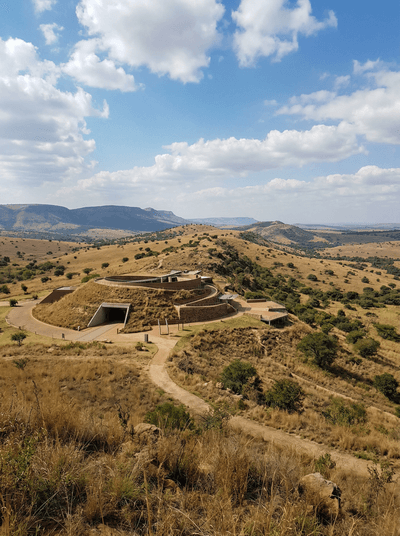
Cradle of Humankind
South Africa
Fossils surface from limestone darkness, pulling the human family tree millions of years backwards.
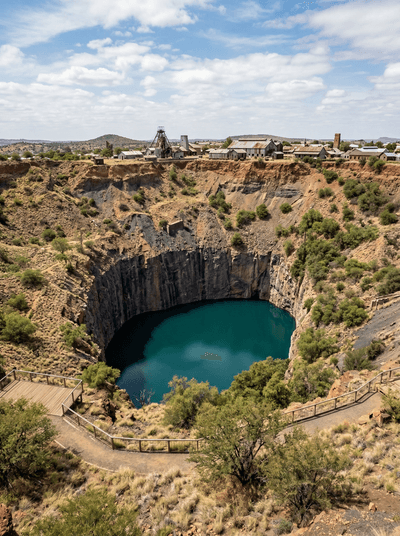
Kimberley
South Africa
Thousands of miners erased a hill and built a diamond empire around the void.
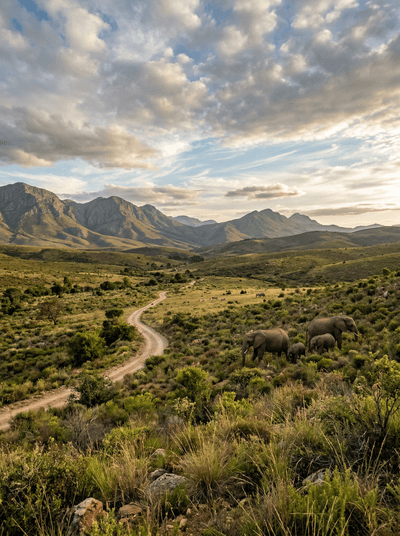
Gondwana Game Reserve
South Africa
Fynbos-covered hills carry safari wildlife within reach of the Garden Route coast.