Mexico
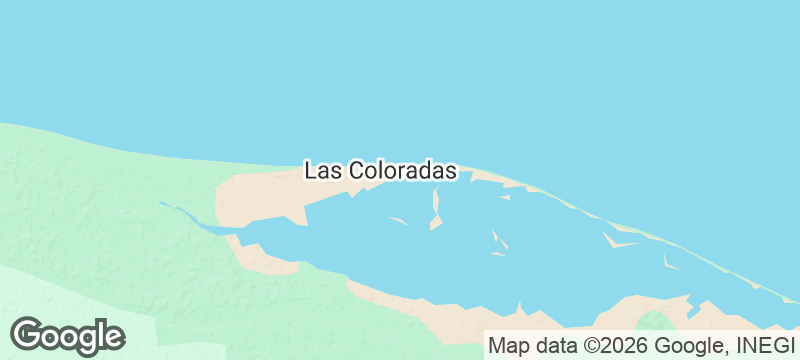
Las Coloradas
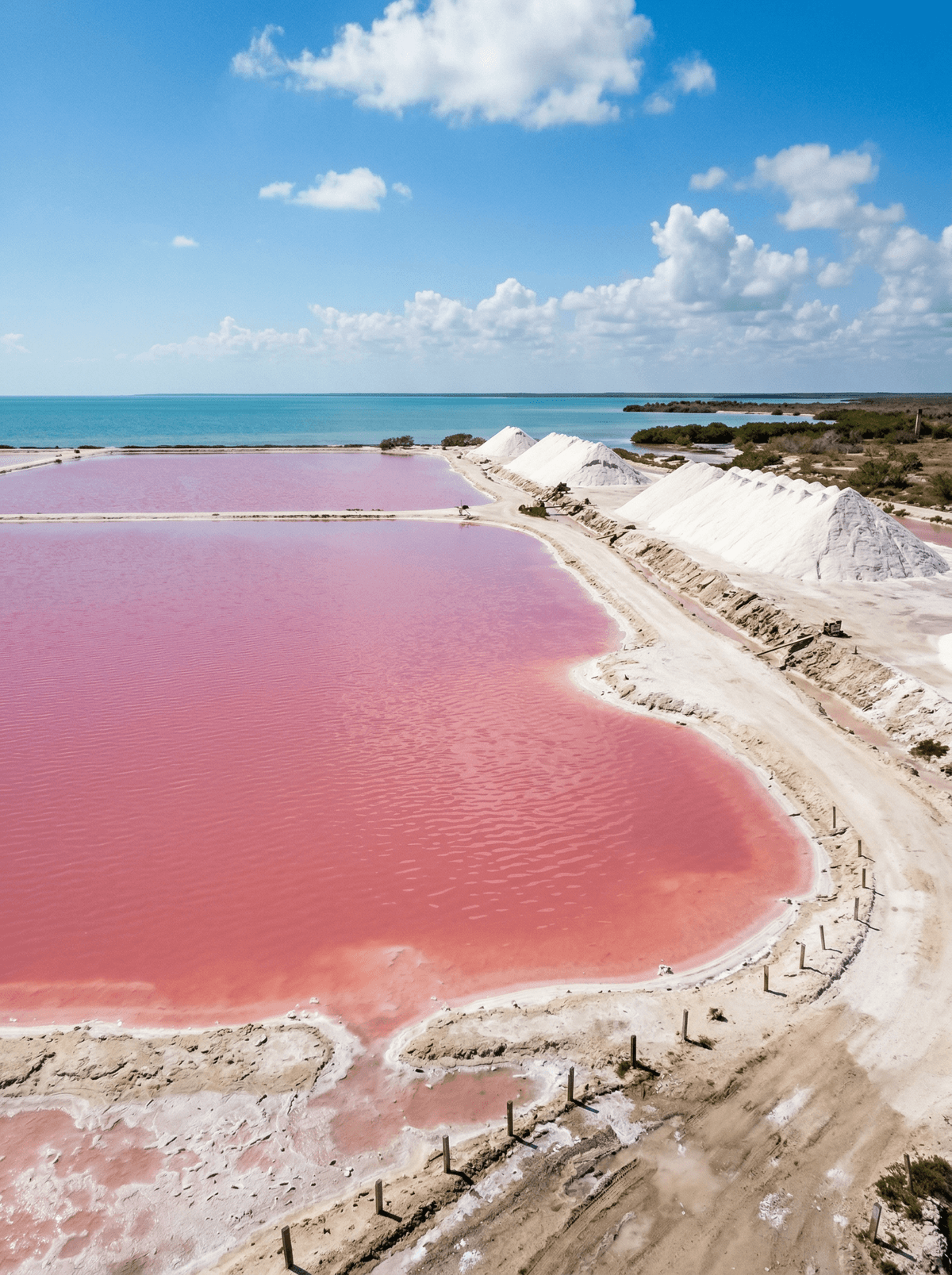
Salt, microbes and sharp sunlight can turn working evaporation ponds vivid pink.
The pink is real and it is industrial. These are working salt ponds, harvested for generations, and when salinity and sun align the water turns a saturated rose that no filter needs to help.
Las Coloradas is a salt-producing village inside the Ría Lagartos reserve, where salt has been worked since Maya times and the first refinery in the region dates from the 1940s. The famous colour comes from salt-loving microorganisms in the evaporation ponds and appears under particular conditions, viewed from designated points and tours; entering or floating in the ponds is prohibited. Neighbouring Ría Lagartos adds an authorised boat route through the protected wetland.
Couple
Combine the designated pink-pond viewpoints with an authorised Ría Lagartos boat morning.
Friends
Share the coastal drive out, the salt story and the wetland route as one loop.
- Las Coloradas' pink tones occur in industrial salt ponds under particular salinity and light conditions.
- Visitors use designated viewpoints and tours; entering or floating in the production ponds is prohibited.
- Nearby Ría Lagartos offers a separate protected wetland route with authorised boat operators.
The eating happens in Río Lagartos, the boat town next door: seafood nachos piled with octopus, shrimp and the day's fish.
Family kitchens there fry whole mojarra and plate shrimp ceviche to order.
Diep Son Island
Vietnam
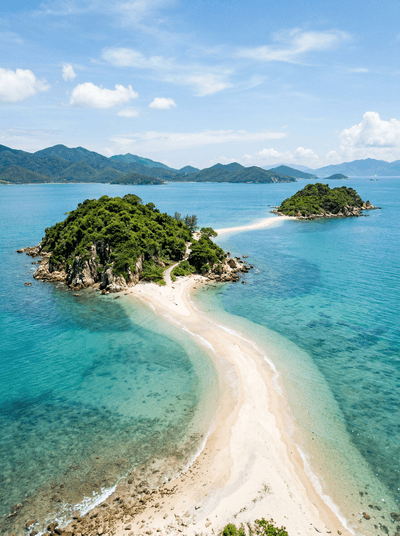
A submerged winding sandbar connecting three wild islands, walkable only when the tide retreats.
Nam Du Archipelago
Vietnam
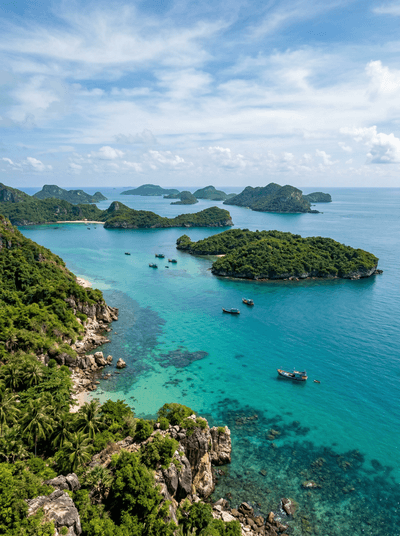
Twenty-one raw volcanic islands where coconut palms lean over coral shallows and fishing nets dry.
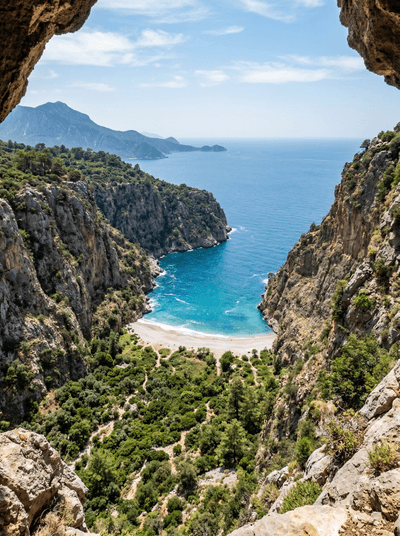
Butterfly Valley
Turkey
Only reachable by boat, a sheer-walled canyon where butterflies swirl above a hidden beach.
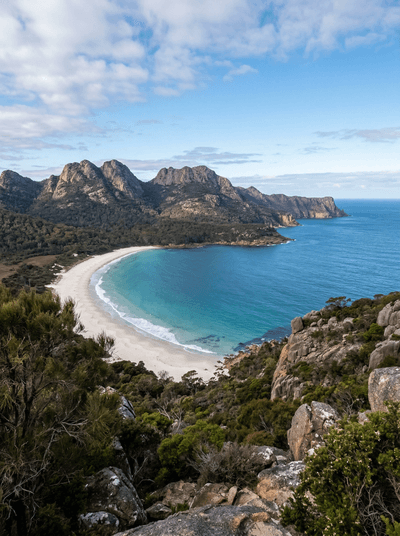
Freycinet
Australia
Wineglass Bay; a crescent of white sand framed by pink granite peaks and Tasman blue.
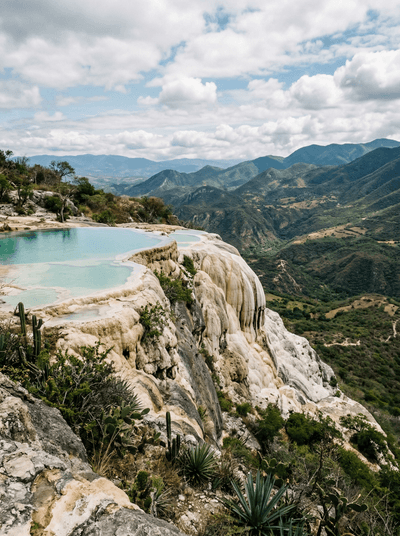
Hierve el Agua
Mexico
A waterfall caught mid-plunge in pale stone hangs above the Oaxaca valleys.
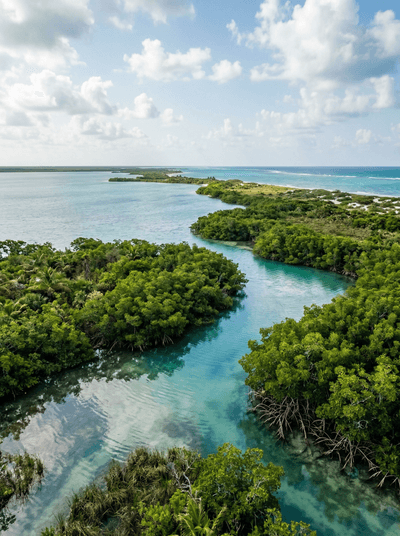
Sian Ka'an Biosphere Reserve
Mexico
Forest, mangrove and reef meet across half a million protected hectares.
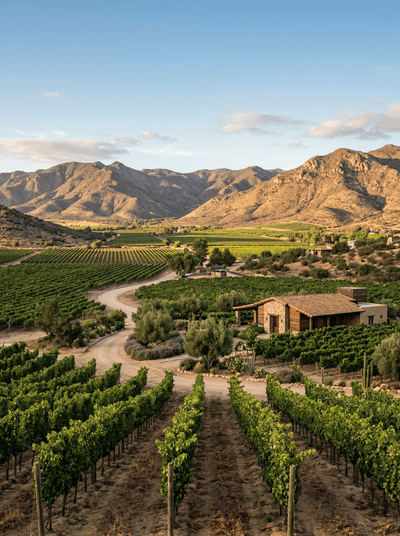
Valle de Guadalupe
Mexico
Dusty vineyard roads link cellar doors and open-fire kitchens across northern Baja.
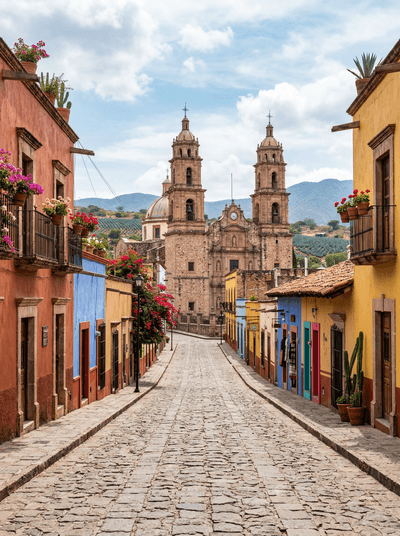
Tequila
Mexico
Blue agave fields stretch to the volcano's base, the spirit of Mexico distilled here for centuries.