Iceland
Látrabjarg
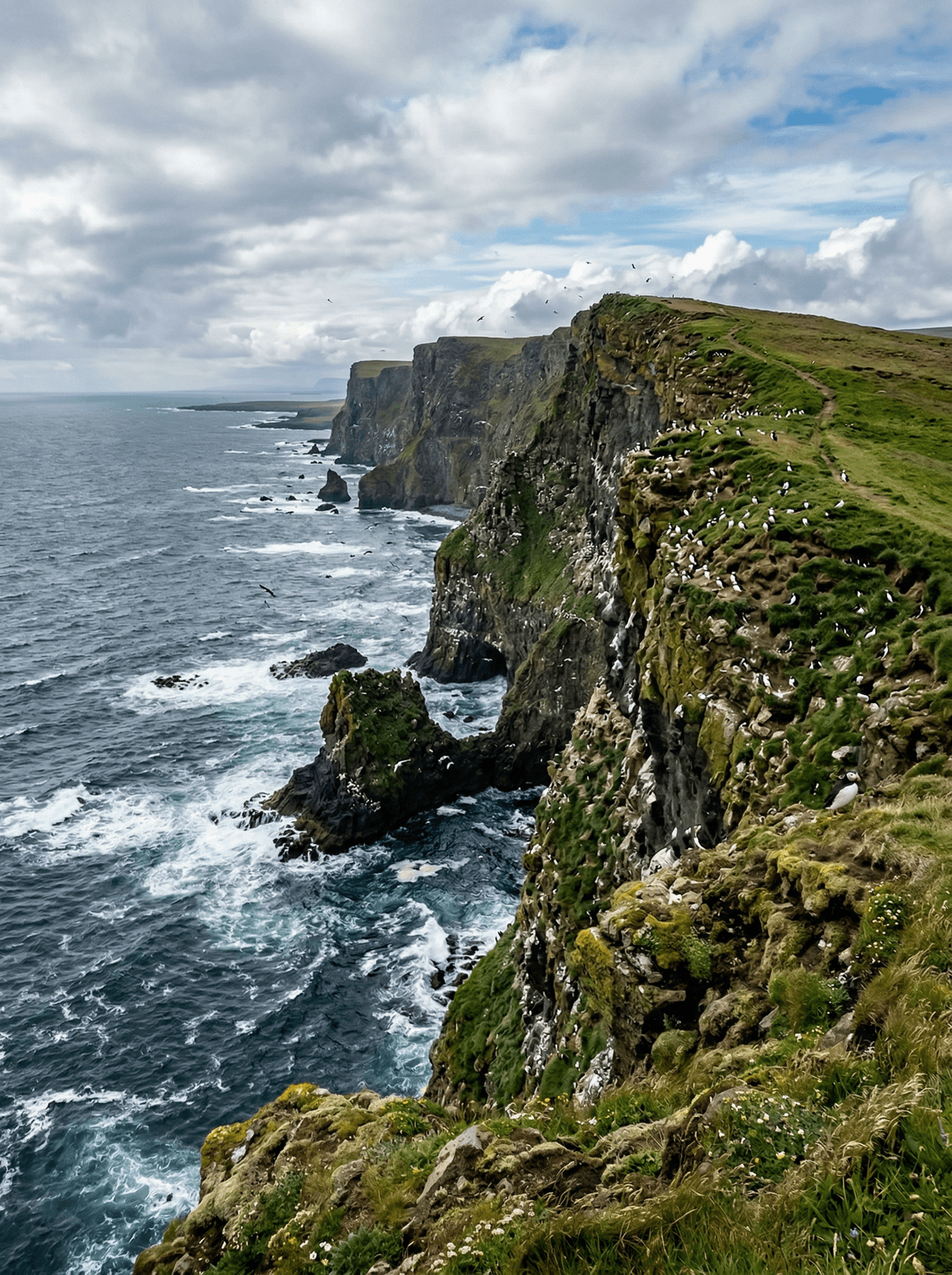
Vertical sea cliffs swarming with puffins at the absolute western edge of Europe.
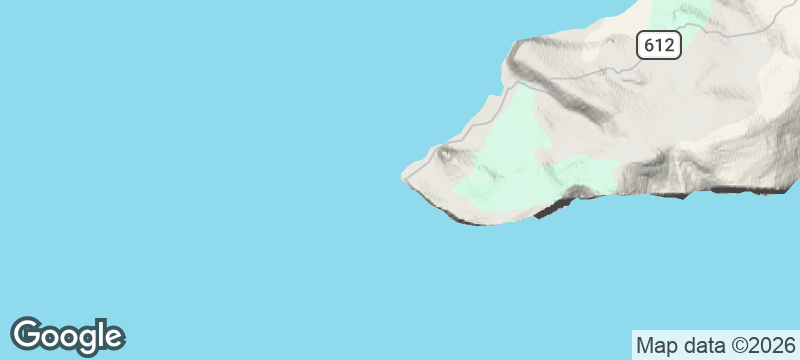
In the nesting months the cliff edge belongs to puffins — painted heads tilting above the burrows while the ocean runs unbroken to Greenland below. Látrabjarg, counted the westernmost point of Europe, is a fourteen-kilometre wall of vertical cliff alive with seabirds beyond counting.
Látrabjarg rises 441 metres from the North Atlantic — among Europe's tallest sea cliffs — and its ledges hold one of the continent's greatest seabird cities: puffins, guillemots, fulmars and the largest razorbill colony in the world, nesting in their millions from May to August. The puffins here are famously unafraid of people, but the grassy lip overhangs and the rule is simple: stay well back from the edge. The cliffs also hold one of Iceland's proudest stories — in 1947 local farmers rappelled the sheer face in winter seas to rescue the crew of the British trawler Dhoon. The gravel roads in cross some of the Westfjords' emptiest country, past abandoned farms and golden beaches.
Solo
Standing at the western edge of Europe with puffins for company and nothing ahead but ocean — the kind of geographic extremity solo travel is for.
Couple
The long drive through empty Westfjords, the cliff-edge wildlife and the knowledge that you reached the end of Europe together.
- Counted Europe's westernmost point — the ocean ahead runs unbroken to Greenland.
- Fourteen kilometres of cliff rise to 441 metres, packed with millions of nesting seabirds.
- From May to August the ledges fill with puffins, guillemots and the world's biggest gathering of razorbills.
- In 1947, farmers rappelled these cliffs in a storm to save the crew of the trawler Dhoon.
Fish or lamb straight from the short daily menu at Hótel Breiðavík, the golden beach out the window.
Hótel Látrabjarg's fixed evening meal — two or three courses served in one convivial nightly sitting.
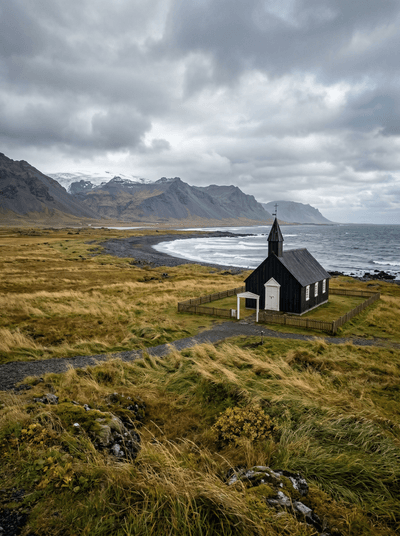
Búðir
Iceland
A solitary jet-black church standing between a golden beach and a vast lava field.
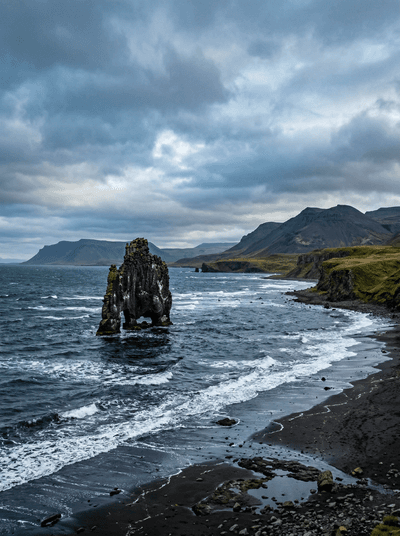
Vatnsnes Peninsula
Iceland
A dragon-shaped sea stack rising from shallows on Iceland's seal-watching coast.
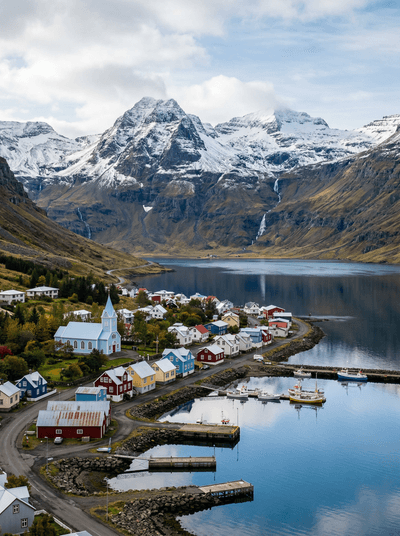
Seyðisfjörður
Iceland
A rainbow-paved path leading to a pale blue church beneath snow-streaked fjord walls.
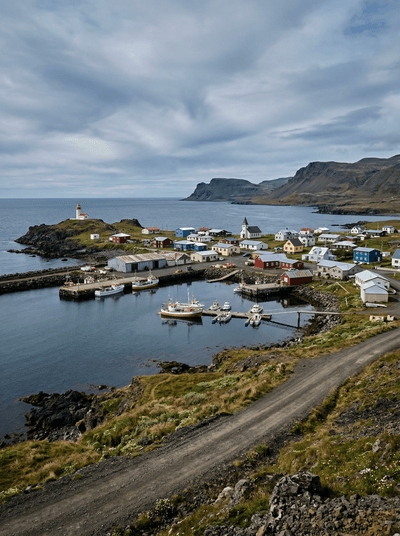
Raufarhöfn
Iceland
Monoliths of an Arctic Henge reaching for the midnight sun on a desolate tundra.