South Africa
Mapungubwe National Park
A hilltop kingdom older than Zimbabwe — its gold rhinoceros is Southern Africa's most iconic artefact.
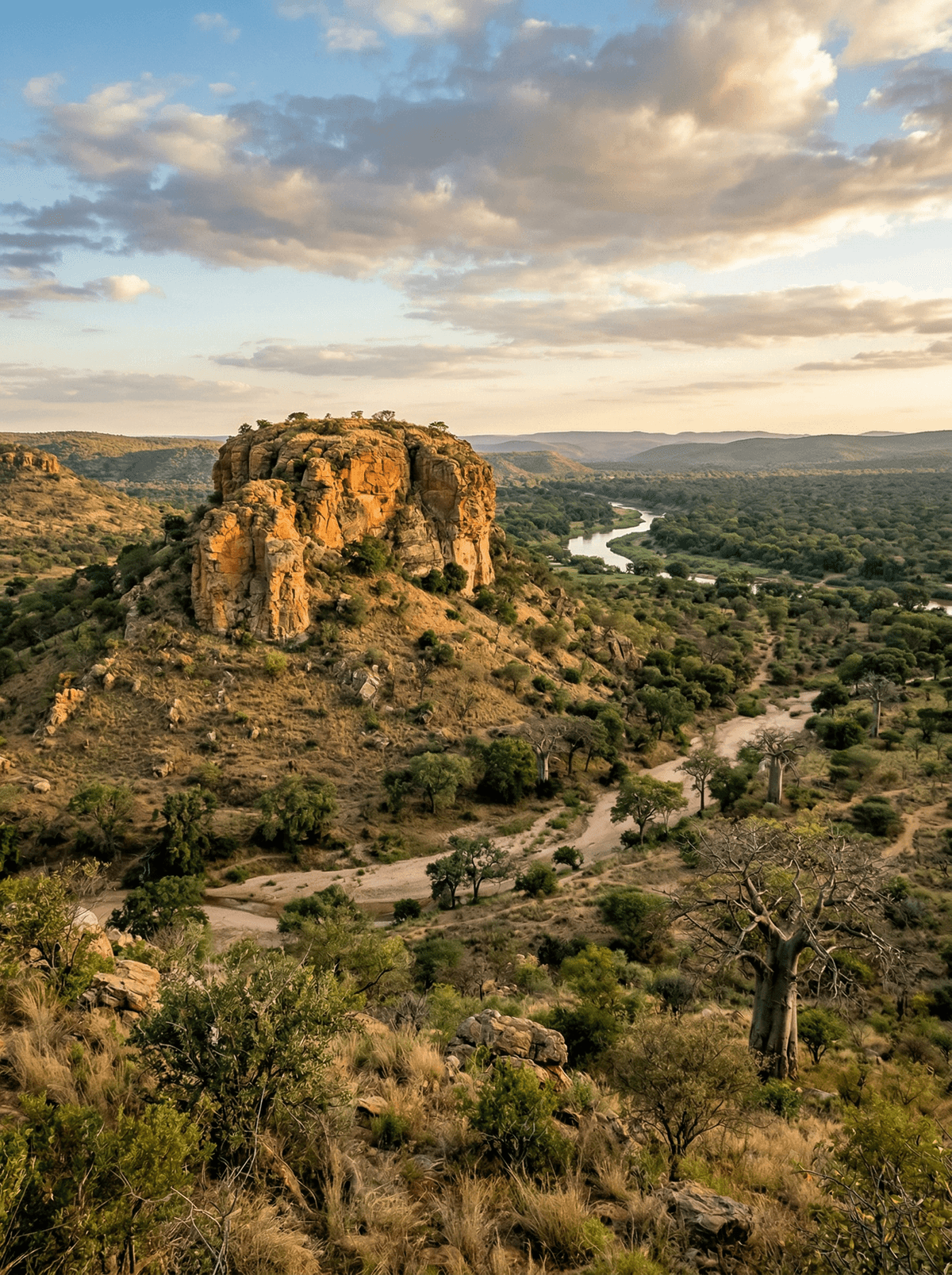
Baobabs a thousand years old stand in the dry woodland below a flat-topped sandstone hill. The hill is sacred ground — a royal residence that predates Great Zimbabwe by a century. The gold rhinoceros excavated from its summit in 1933 is now locked in a vault at the University of Pretoria. The landscape that produced it is still open to the sky.
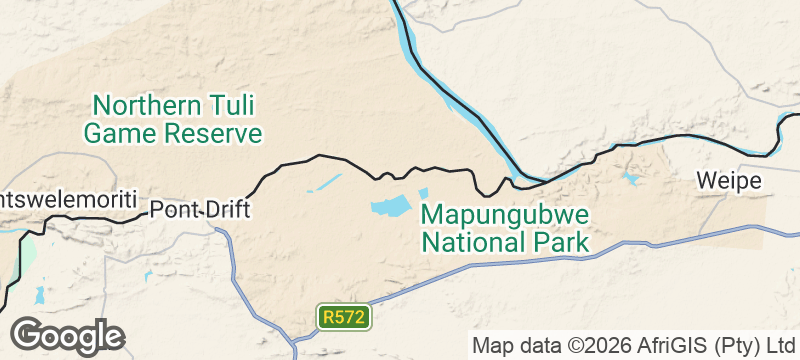
Mapungubwe National Park in South Africa's far northern Limpopo province protects the archaeological remains of a 13th-century Iron Age kingdom that thrived at the confluence of the Limpopo and Shashe rivers. The gold rhinoceros — gold foil beaten over a carved wooden core — is considered the most significant Iron Age artefact found in sub-Saharan Africa. Mapungubwe Hill, the sacred royal residence, is climbed via a chain-assisted route up a near-vertical rock face to the hilltop palace platform. The surrounding baobab woodland contains trees estimated at over 1,000 years old, some predating the kingdom itself. Night drives along the Limpopo floodplain encounter elephant, leopard, and bat-eared fox at the tripoint where South Africa, Zimbabwe, and Botswana meet.
Solo
Climbing Mapungubwe Hill via the chain-assisted route and standing on the palace platform alone — knowing what was found here and why it matters — is one of the most powerful solo moments in South African travel.
Couple
Leokwe Camp overlooks the confluence of two rivers and three countries. Evening braais on the open-air terrace, with baobabs silhouetted against the last light, match the romance of any private reserve.
- The gold rhinoceros excavated from Mapungubwe Hill in 1933 — gold foil over a carved wooden core — is considered the most significant Iron Age artefact found in sub-Saharan Africa.
- Mapungubwe Hill, the sacred royal residence of a 13th-century kingdom, is climbed via a chain-assisted route up a near-vertical rock face to a hilltop palace platform.
- The baobab woodland surrounding the camp contains trees estimated at over 1,000 years old — some pre-date the kingdom itself.
- Night drives along the Limpopo River floodplain encounter elephant, leopard, and bat-eared fox on the border between South Africa, Zimbabwe, and Botswana.
Leokwe Camp's open-air kitchen overlooks the confluence of the Limpopo and Shashe rivers — braai with a view.
Musina farm stalls sell marula jam, baobab powder, and macadamia nuts from the surrounding bushveld.
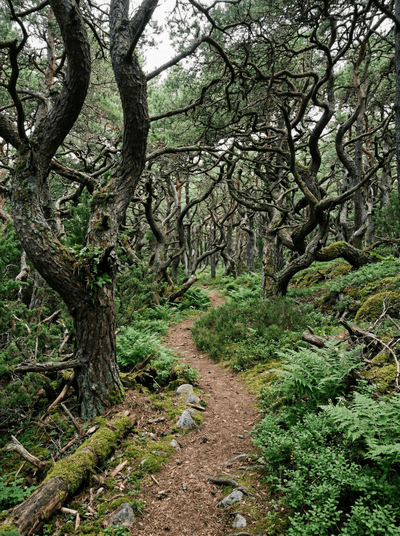
Trollskogen (Öland)
Sweden
A forest of wind-warped oaks so twisted they look like a witch's spell gone wrong.
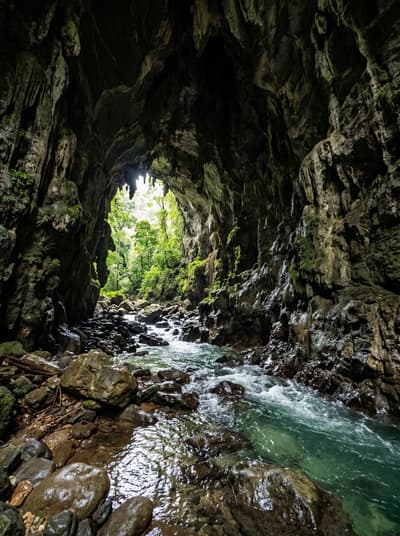
Millennium Cave
Vanuatu
Scramble through jungle and wade chest-deep rivers to a cave you enter walking and exit floating.

Maryang-ri
South Korea
A five-hundred-year-old forest of camellia trees bleeding red flowers against the grey winter sea.
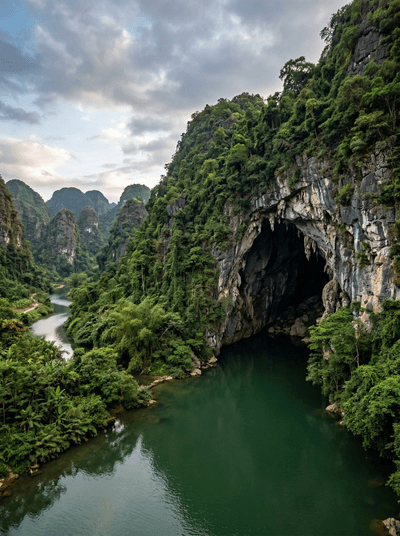
Phong Nha
Vietnam
Hidden jungle portals opening into subterranean river systems and limestone caverns.

Cape Town
South Africa
Dawn light crowns a flat-topped mountain while penguins waddle the southern shore below.
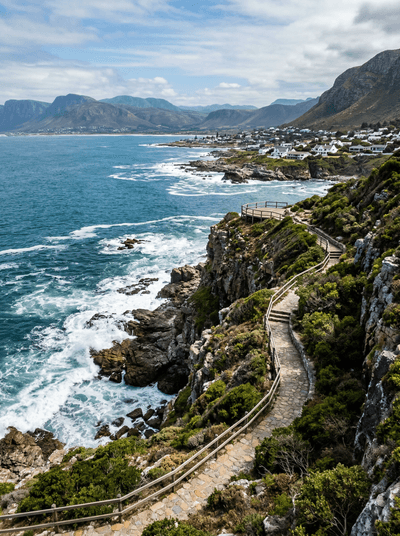
Hermanus
South Africa
Whales breach so close to the cliff path you feel the spray on your skin.
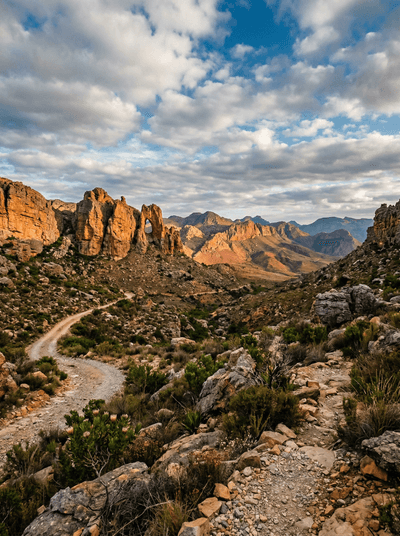
Cederberg
South Africa
Sandstone arches and San rock art older than the pyramids, wild rooibos growing between the boulders.
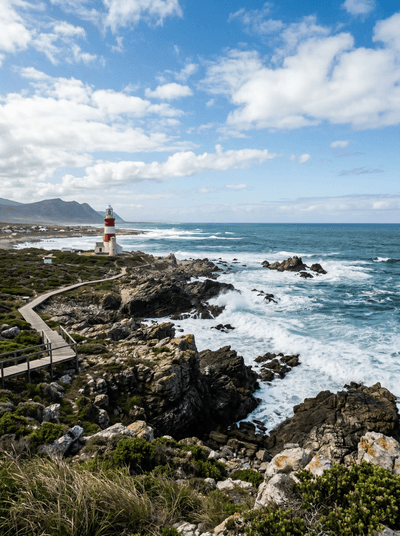
Cape Agulhas
South Africa
A stone cairn marks where two oceans collide — the Indian warm, the Atlantic cold, underfoot.