France
Marais Poitevin
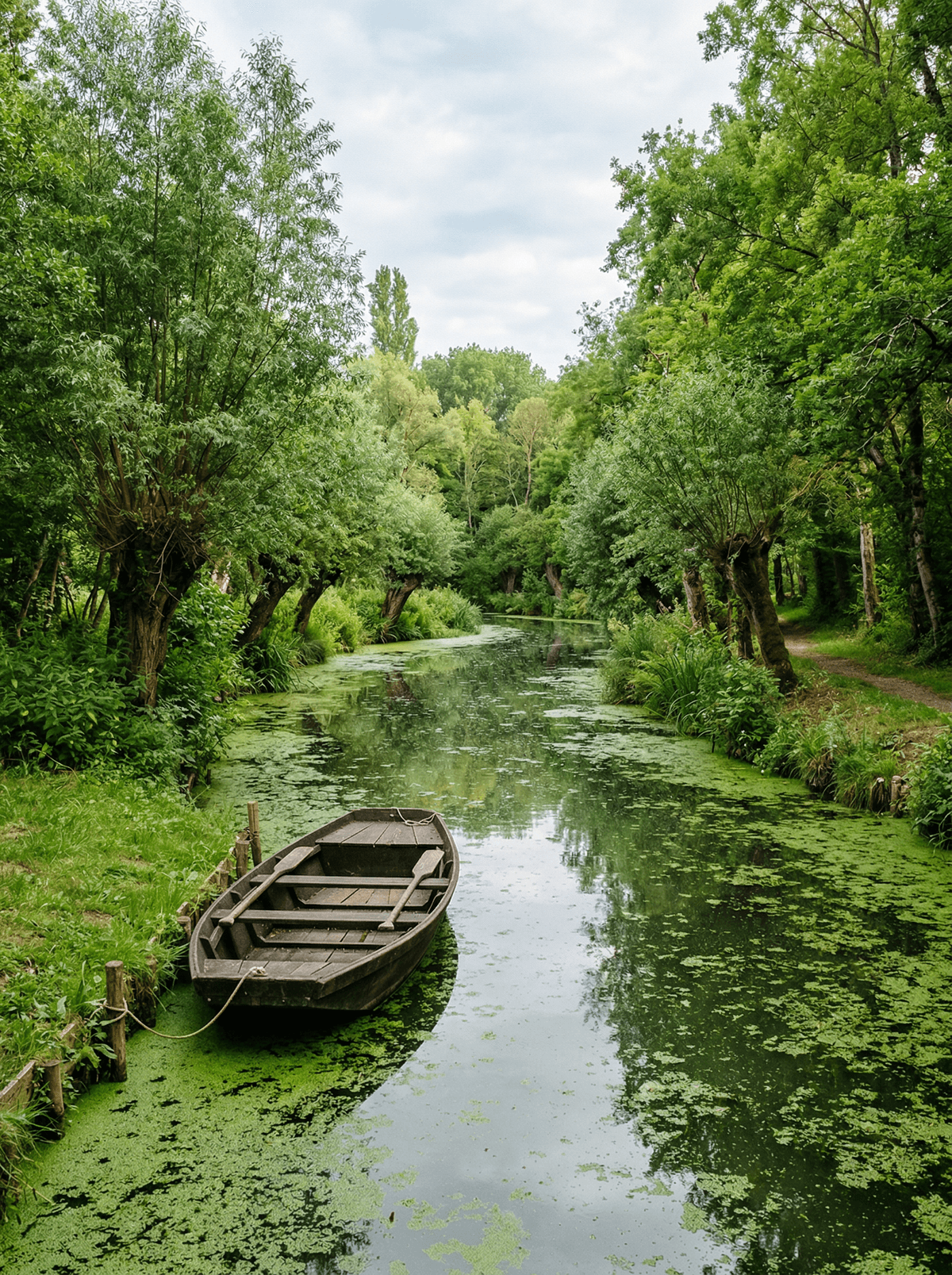
Flat-bottomed boats gliding through a green labyrinth of canals roofed by ash and poplar.
The boat slides through a green tunnel of ash and poplar, the canals so still the reflections are indistinguishable from the trees above them. The Marais Poitevin, on France's Atlantic side, is a hand-made wetland — every canal, dyke and ditch dug and kept since the Middle Ages, beginning with the monks — and the green labyrinth they made is now home to otters, kingfishers and a quiet broken only by the pole on the water.
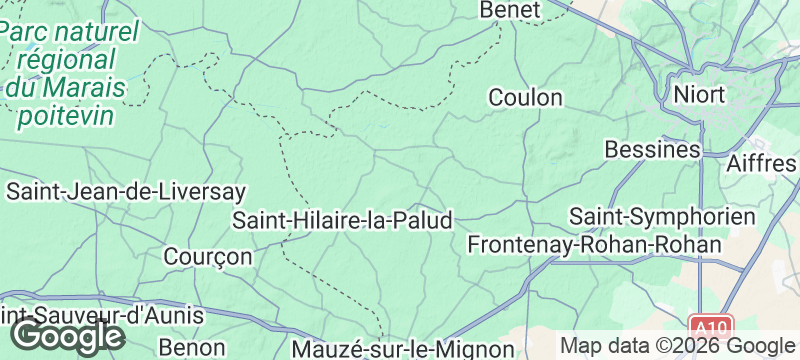
The Marais Poitevin is the largest wetland on France's Atlantic coast, a land shaped by people since the Middle Ages that now reads as pure nature, and it holds three labels at once — regional natural park, Grand Site de France and Ramsar wetland. The eastern part is the Venise Verte, the Green Venice: a maze of canals roofed by pollarded ash and poplar between villages of pale stone, where the traditional flat-bottomed boats are still the way through, poled or paddled from the boat-hire quays at Coulon and the villages around, many channels too narrow for anything else. Cycle paths run the towpaths and dykes between farms and lock-keepers' cottages, and the pace is set by the landscape. Westward the marsh opens into drained pasture running to the bay of Aiguillon. Duckweed covers the water like a lawn in summer; look for the heron standing in it.
Couple
A flat-bottomed boat for two, poled through green canals that arch overhead — the silence, the reflections and the occasional flash of a kingfisher. The marsh is a landscape that slows time by design.
Family
Children spot herons and kingfishers from the boat, and the canals are calm enough for them to try the pole. The mix of wildlife, water and silence works precisely because it asks nothing of them but attention.
- Flat-bottomed boats glide through canals roofed by ash and poplar — the water is green, still and mirror-smooth.
- The marsh is a hand-made landscape — every canal, dyke and field shaped by people since the Middle Ages, beginning with the monks.
- Otters, herons and kingfishers live in the labyrinth — the water is managed as it was for centuries, and the wildlife shows it.
- Cycle paths follow the towpaths between villages, farms and lock-keepers' cottages — the pace is set by the landscape.
Farci poitevin — a green loaf of herbs, chard and cabbage — sliced cold like a terrine at a marsh café.
Grilled eel from the marsh channels — a local dish that tastes of the water it came from.
Muju
South Korea
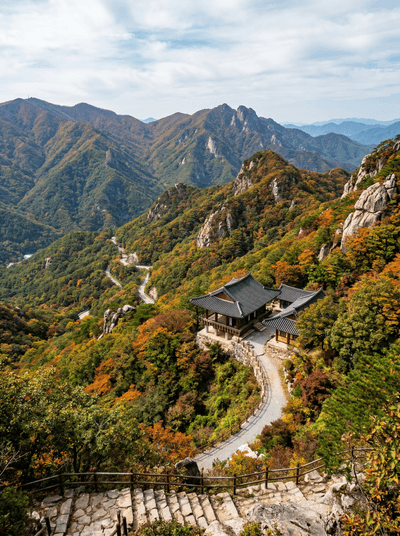
On humid summer nights, wild fireflies lift green light out of a dark river valley.
Huon Valley
Australia
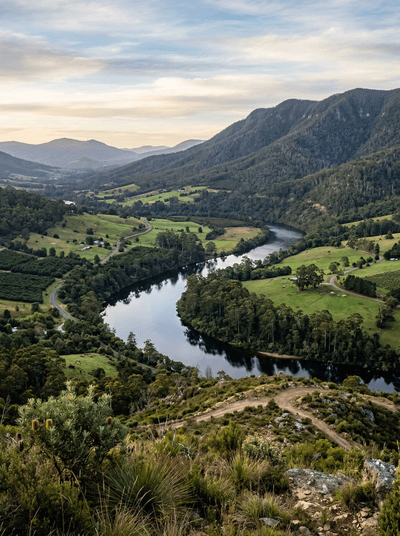
Apples, cider and wooden boats follow a river until wet forest closes around the road.
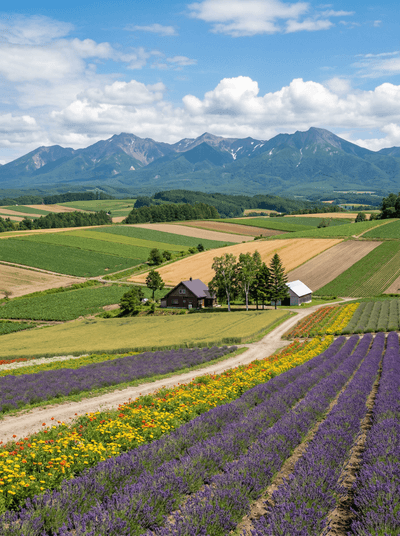
Furano and Biei
Japan
Lavender fields running to the mountains in ruler-straight purple rows.
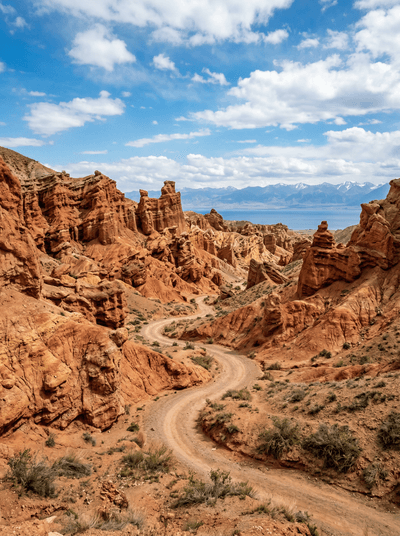
Skazka Canyon
Kyrgyzstan
Wind-carved sandstone castles in rust and amber rising from desert that ends at a mountain lake.
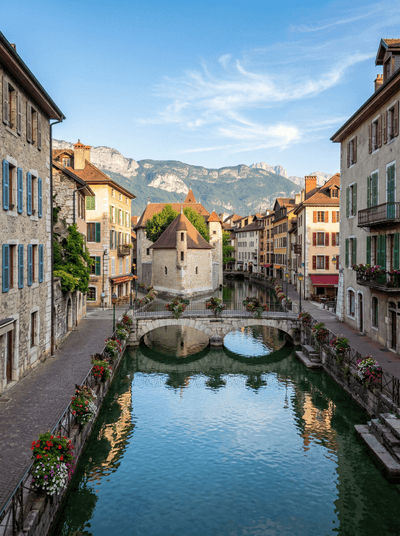
Annecy
France
Canals threading pastel arcades beside a lake so clean you can count the pebbles.
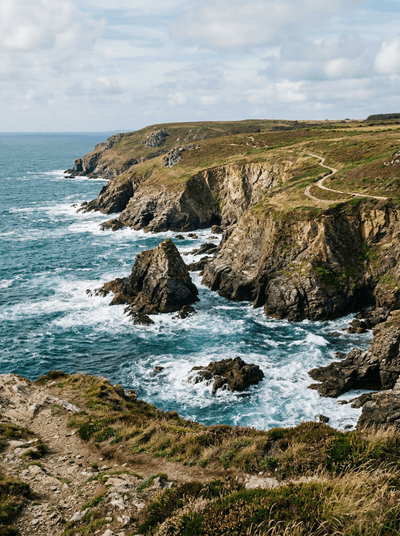
Belle-Île-en-Mer
France
Monet's needle rocks, wind-hammered heath and hidden coves on an island the mainland forgot.
Porquerolles
France
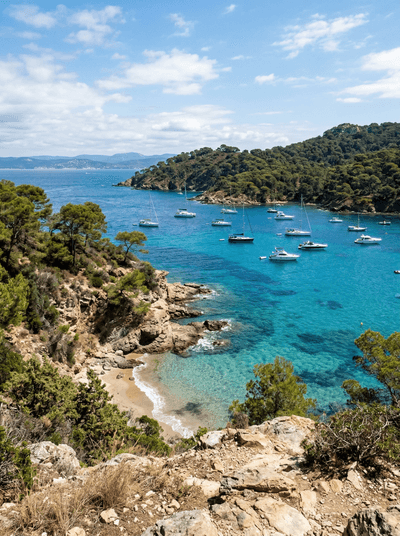
Car-free island tracks through umbrella pines to beaches with Caribbean water, an hour from the mainland.
Côte de Granit Rose
France
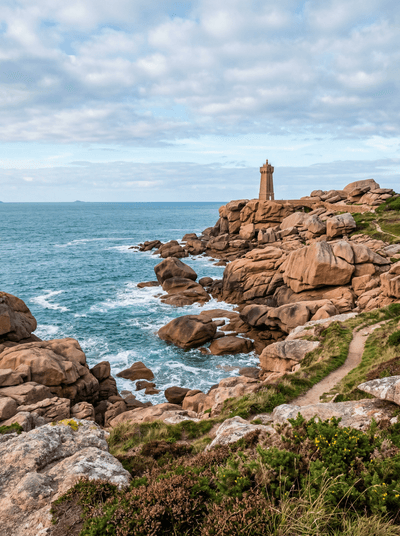
Pink granite boulders balanced in impossible shapes over three hundred million years of wind and salt.