Kyrgyzstan
Skazka Canyon
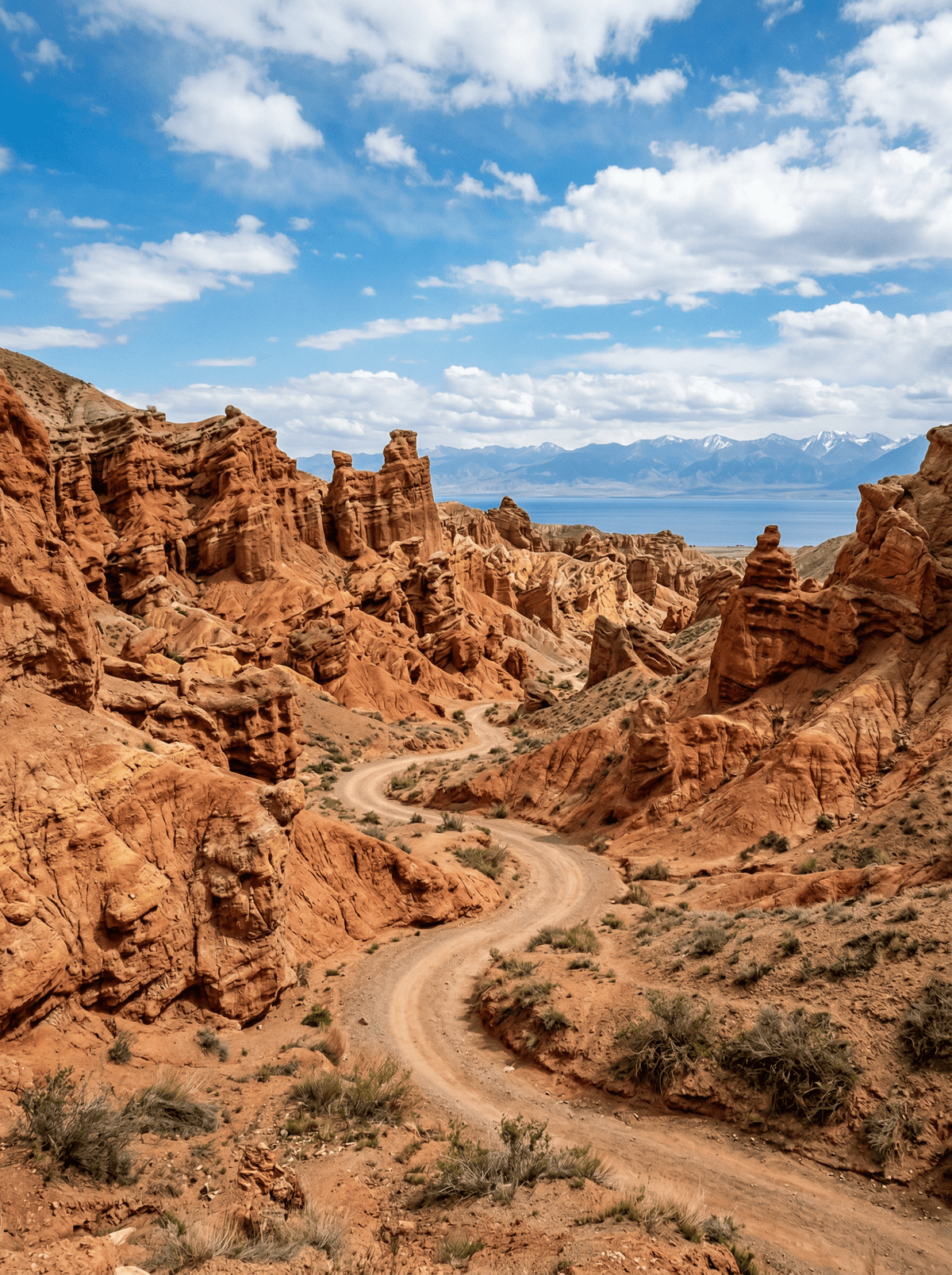
Wind-carved sandstone castles in rust and amber rising from desert that ends at a mountain lake.
The rock rises like turrets and melted towers, layered in bands of apricot, rust and cream. At Skazka the ground crumbles softly underfoot and the shapes shift with every angle: a dragon's back here, a castle wall there. Behind you, Issyk-Kul glitters flat and blue.
Skazka means 'fairy tale' in Russian, and the name is a local verdict on these badlands between Tosor and Kaji-Say on Issyk-Kul's south shore: soft sandstone and clay carved by wind and rain into ridges that read as dragons, animals and fortress walls. Legend makes it literal. A red dragon, refused by a village girl, flooded the valley through her unsealed well, creating Issyk-Kul, then lay down on the south shore and turned to stone gazing at the water. There is no set loop and no guardrail; you wander the eroded paths wherever the formations lead, past the Colorful Hills to the Castle and up to a panorama over the lake. The colour does half the work: bleached orange at noon, apricot and deep rust as the sun drops.
Couple
Sunset turns the formations to liquid gold. The canyon is small enough for an evening wander but strange enough to feel like discovery, with the lake glittering at the edge of it.
Family
Children see castles, dragons and monsters in every formation, a natural playground for the imagination. No climbing skill is needed, though the edges have no guardrails, so smaller explorers walk in front.
- The ridges glow apricot and rust at sunset, while midday bleaches the palette, so the canyon changes colour through the day.
- There is no set loop: you walk the eroded paths freely, wherever the formations lead.
- Local legend says the canyon is a petrified dragon who created Issyk-Kul in a rage and turned to stone gazing at it.
- Named walks lead to the Colorful Hills, the Castle viewpoint and a panorama over the lake.
Warm bread and summer cherries and apricots from Bokonbaevo's market, picked up on the road to the canyon.
Smoked fish bought in the towns around the lake, to unwrap with flatbread once you are out of the wind.
Marais Poitevin
France
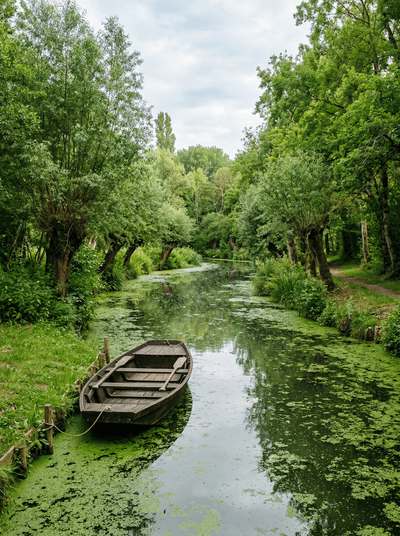
Flat-bottomed boats gliding through a green labyrinth of canals roofed by ash and poplar.
Plateau de Valensole
France
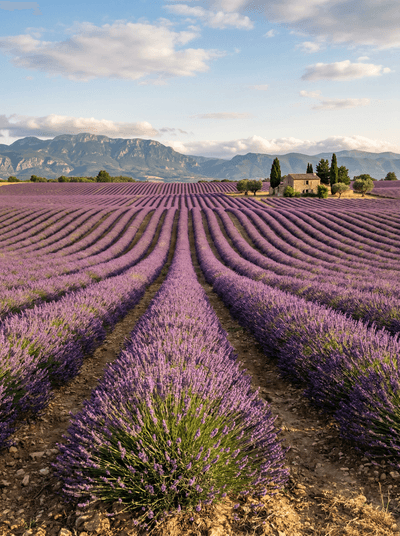
Lavender to the horizon in purple rows humming with bees, on a balcony above the Durance.
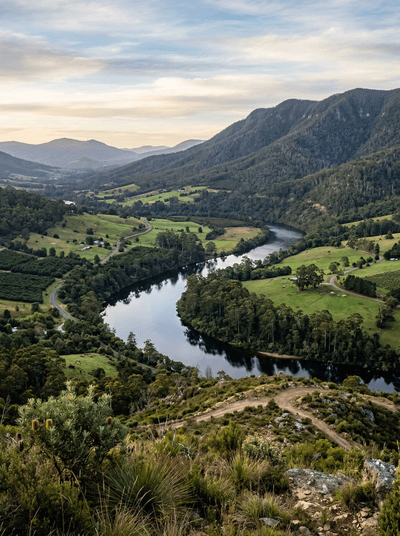
Huon Valley
Australia
Apples, cider and wooden boats follow a river until wet forest closes around the road.
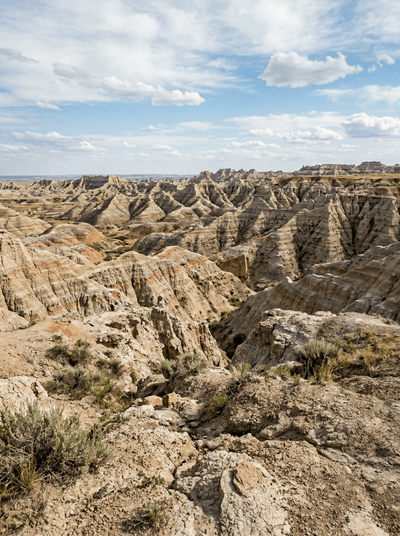
Badlands
United States
Striped buttes rising from the prairie like the spine of a buried dinosaur.
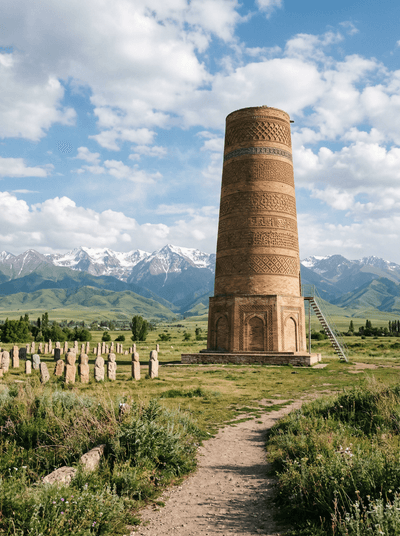
Burana Tower
Kyrgyzstan
An 11th-century minaret halved by earthquakes, all that remains of a capital swallowed by steppe.
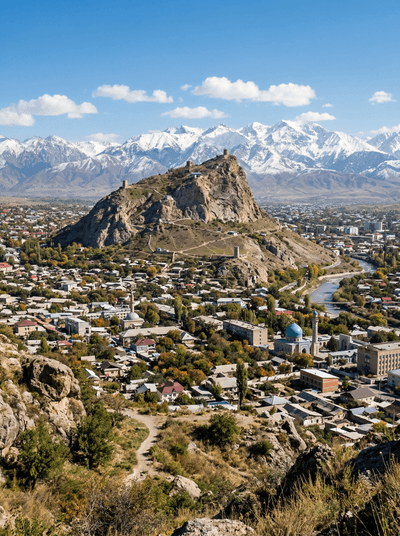
Osh
Kyrgyzstan
A five-peaked sacred mountain, worshipped for millennia, rising straight out of a Silk Road bazaar city.
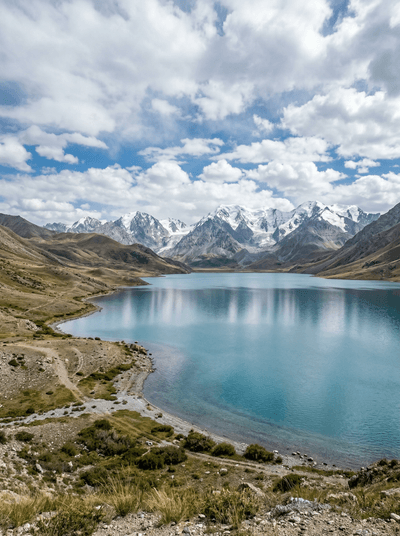
Chatyr-Köl
Kyrgyzstan
The 'Celestial Lake': faintly salt water at 3,530 metres, permit-guarded, ringed by bar-headed geese.