Portugal
Marvão
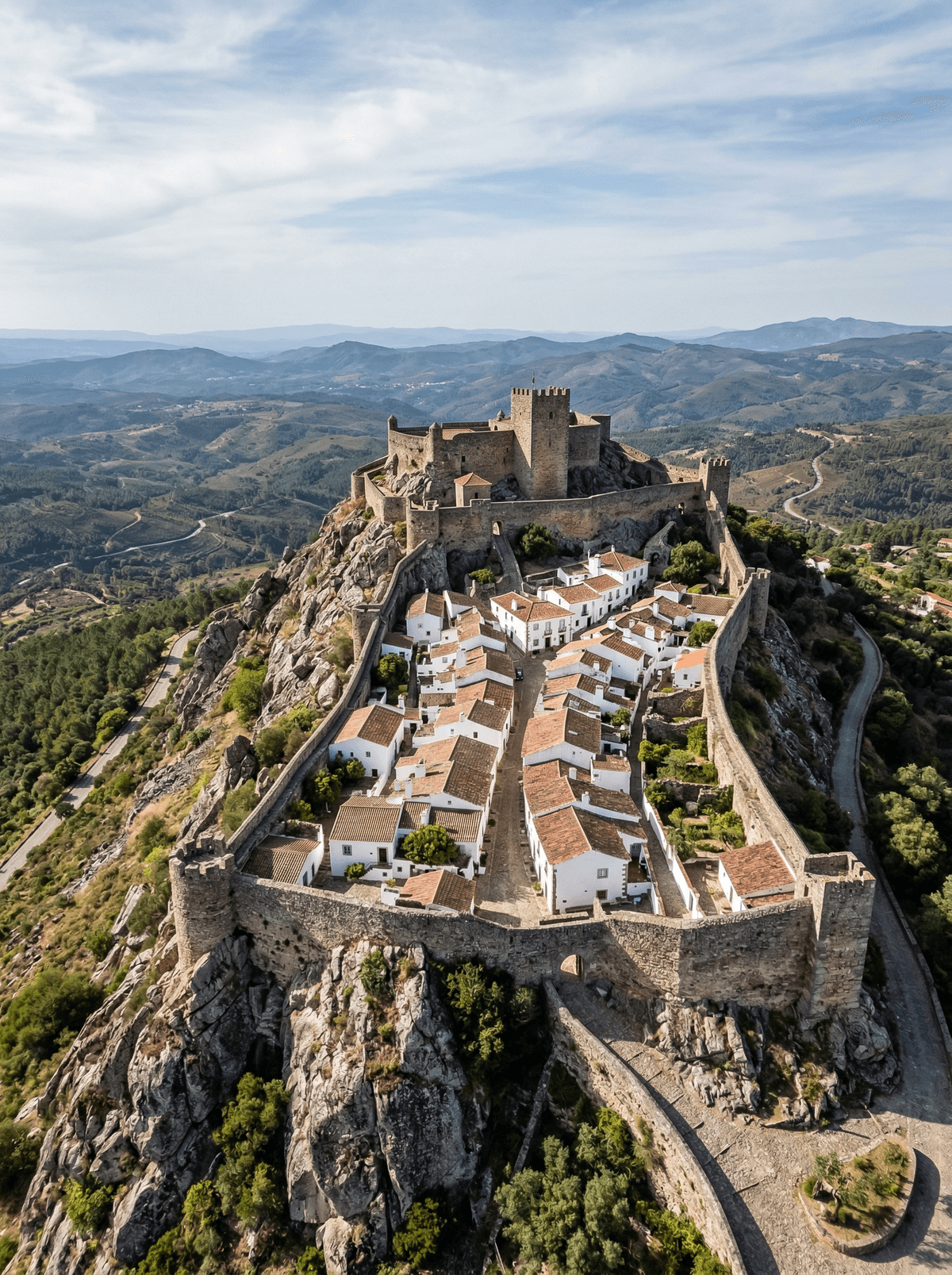
An eagle's-nest village at 862 metres, watching Spain dissolve into heat haze.
The village clings to a granite ridge at 862 metres, and from the castle wall Spain dissolves into heat haze. Some streets run narrow enough to touch both walls. The air holds woodsmoke and thyme, and the silence yields only to swifts diving through the battlements.
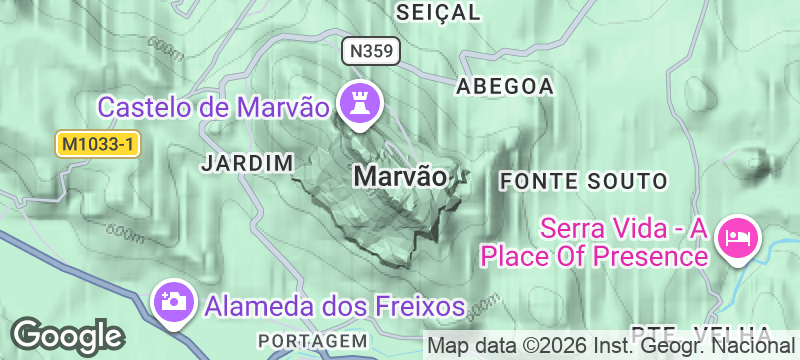
Marvão crowns the Serra de São Mamede where the land drops sharply toward the Spanish border, its castle fortified since at least the ninth century, when the Moors held the summit. The medieval walls, keep and cistern are original — genuine military architecture, not reconstruction — and the exposed ramparts stand at the weather's mercy, with walking routes leading out through cork-oak country. The surrounding natural park is among southern Portugal's most biodiverse corners, Mediterranean and Atlantic ecosystems overlapping from Egyptian vultures downward. Below the walls, the Roman city of Ammaia still emerges slowly from farmland, and Castelo de Vide nearby adds a second register: its medieval Jewish quarter and thirteenth-century synagogue are among the best preserved in Portugal.
Solo
A fortress of solitude in the literal sense — ramparts alone at dawn, serra trails through cork oak, and a village whose permanent population counts in the low hundreds.
Couple
Vast views, an intimate village, and a pace of long mornings and late dinners — a house inside the walls, waking to a panorama that stretches into another country.
- The castle at 862 metres commands the Upper Alentejo plain deep into Spain on clear days.
- The walls, keep and cistern are original medieval work — no reconstruction anywhere.
- The serra's overlap of ecosystems brings vultures over cork oak within the day's walk.
- Castelo de Vide's preserved Jewish quarter adds a half-day of Sephardic history nearby.
Castelo de Vide goat cheese with quince jam and toasted bread.
Chestnut soup in autumn, thick and smoky, in an earthenware bowl.
Gunsan
South Korea
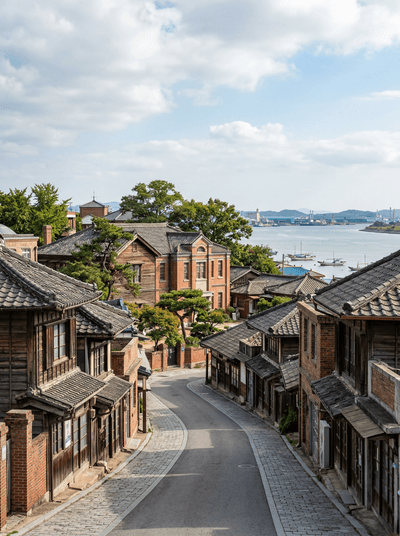
Korea's oldest bakery still sells the bread it sold in 1945, streets frozen around it.
Zacatecas
Mexico
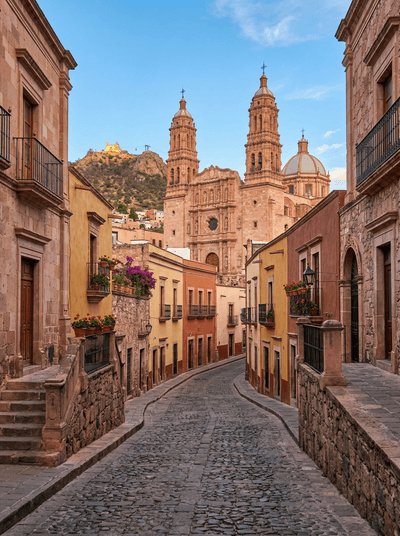
A pink-sandstone city climbs from silver mines to a cathedral carved like frozen lace.
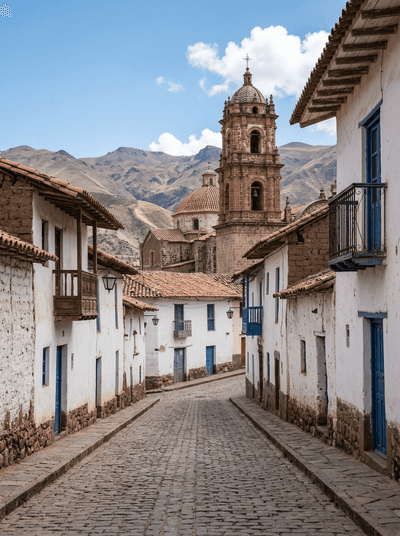
Lampa
Peru
A rose-pink Andean town hiding a full-scale Pietà replica in its colonial church.
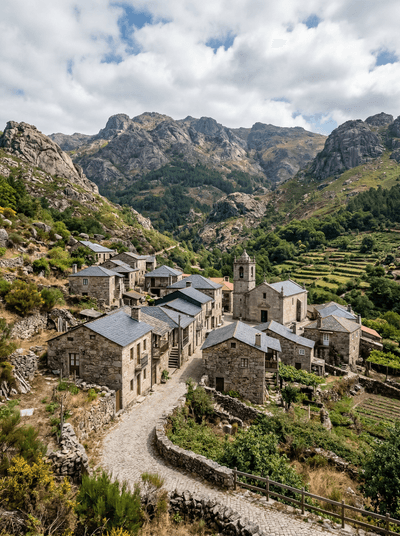
Pitões das Júnias
Portugal
A monastery abandoned to wolves and rain crumbles beside a waterfall at the road's end.
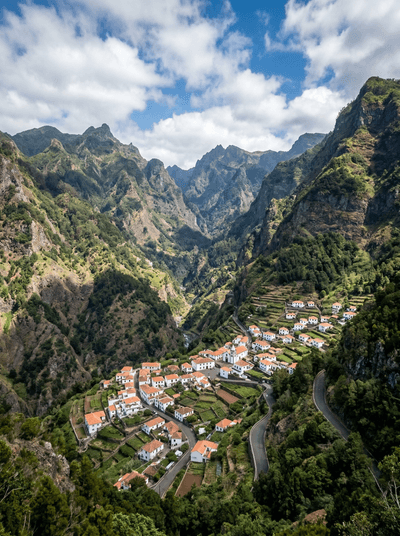
Curral das Freiras
Portugal
A village hidden in a mountain bowl so deep that nuns fled here from pirates.
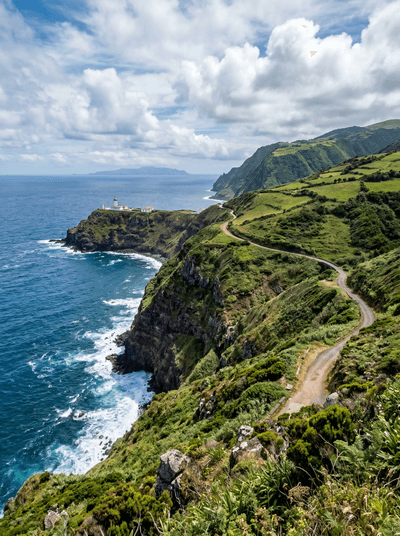
São Jorge
Portugal
Knife-edge ridges drop to coastal fajãs — green platforms born from cliff collapses.