Portugal
Pitões das Júnias
A monastery abandoned to wolves and rain crumbles beside a waterfall at the road's end.
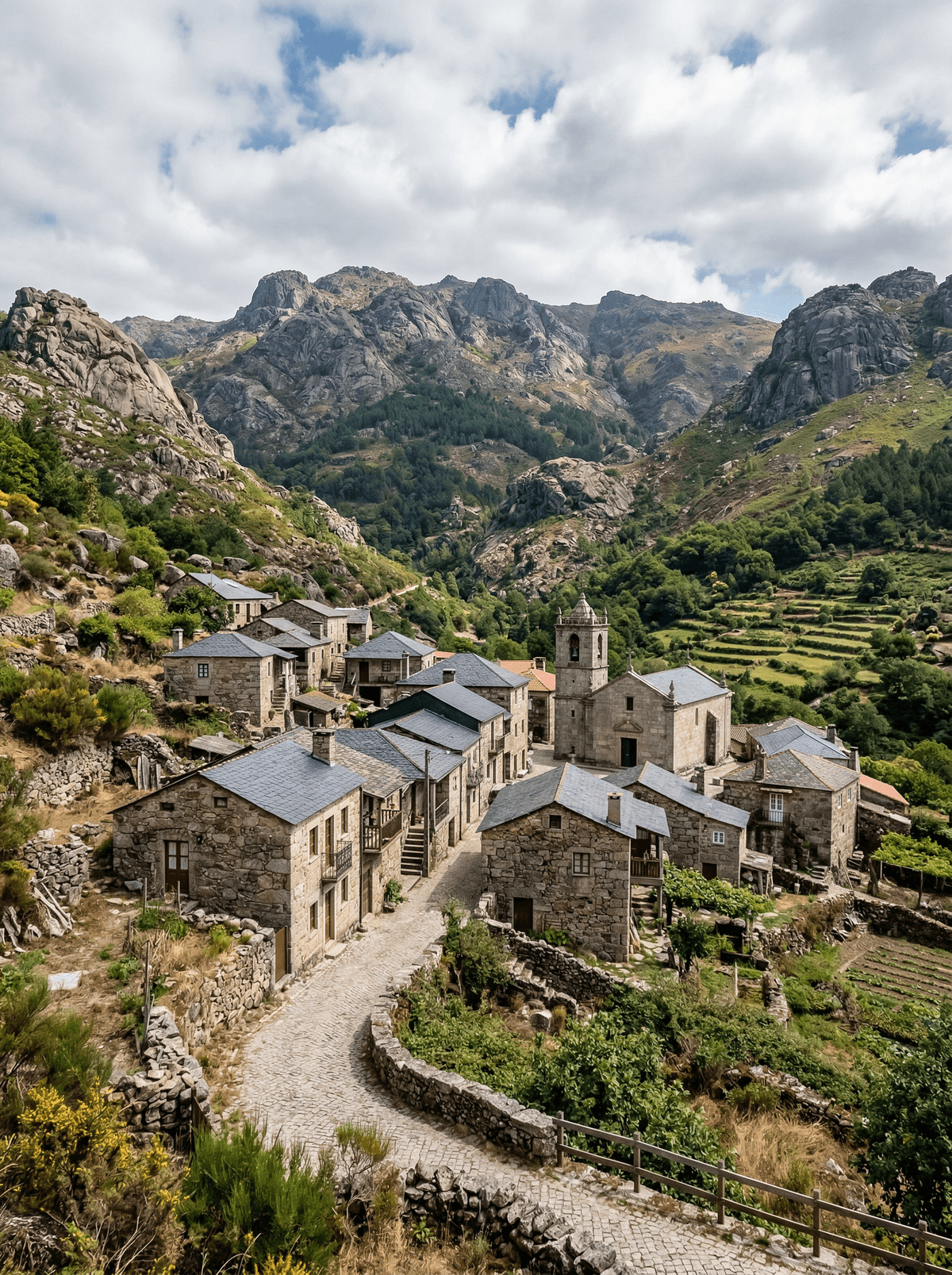
Water pours off a cliff edge into a green gorge, and below the cascade the roofless walls of a twelfth-century monastery dissolve slowly into the mountainside. No gift shop, no queue — just eight centuries of patient collapse and the run of falling water. Pitões das Júnias is where Portugal stops performing and simply exists.
Pitões das Júnias is a granite village of the Barroso highlands, routinely called one of the most remote settlements in the country — a thousand metres up inside Peneda-Gerês, snowbound in winter, its access road ending at the village edge. The Cistercian ruin of Santa Maria das Júnias lies a signed half-hour's walk beyond, across exposed moorland where winter snow can override any plan: abandoned since the sixteenth century, walls intact, nave open to the sky, the waterfall audible from the cloister. The village itself keeps communal traditions — shared ovens, collective cattle management, stone infrastructure unchanged in its essentials — with PDO-protected Barrosã cattle on the pastures and Iberian wolves recorded through the surrounding highland, one of southwestern Europe's last wild refuges for them. The quiet registers as physical weight.
Solo
Road's end in the most literal sense — and for genuine remoteness, that is the whole point. Monastery, waterfall and unhurried village rhythms reward arriving without an itinerary.
Couple
The gorge walk to the ruined nave is one of Portugal's most quietly dramatic experiences — sharing the falling water and the sky-open cloister builds the kind of memory that outlasts photographs.
- The twelfth-century Cistercian ruin keeps its walls, its silence and its waterfall.
- The village stands near a thousand metres with one of Portugal's smallest populations.
- Iberian wolves still range the highland around — among their last southwestern refuges.
- The tarmac ends at the village; the monastery is earned on foot across open moor.
Barrosã beef stewed slowly over a wood fire, the breed native to these mountains.
Mountain honey and broa de milho — the staples that sustain villages this remote.
Barhal Valley
Turkey
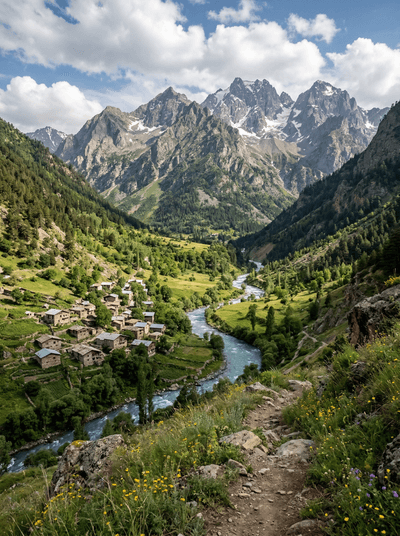
10th-century Georgian churches stand forgotten in steep valleys where the road ends and peaks begin.
Revash
Peru
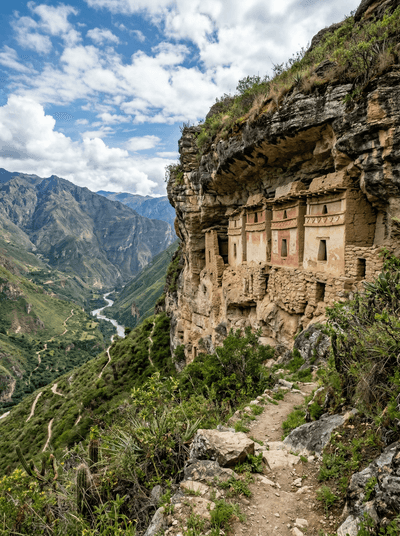
Miniature painted houses for the dead, set into a cliff above swirling cloud forest.
Taita Hills
Kenya
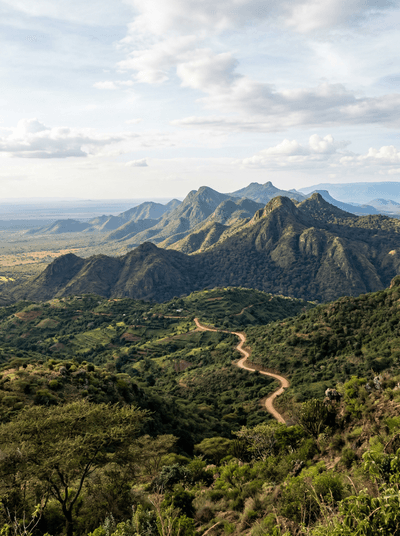
Mist clings to forest fragments where birds that exist only here still sing.
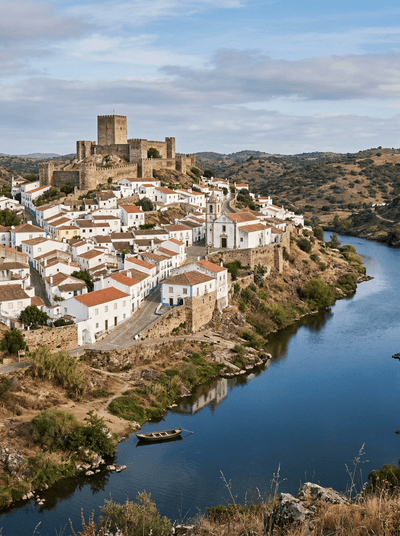
Mértola
Portugal
A whitewashed hill town whose mosque became a church — the mihrab still faces Mecca.
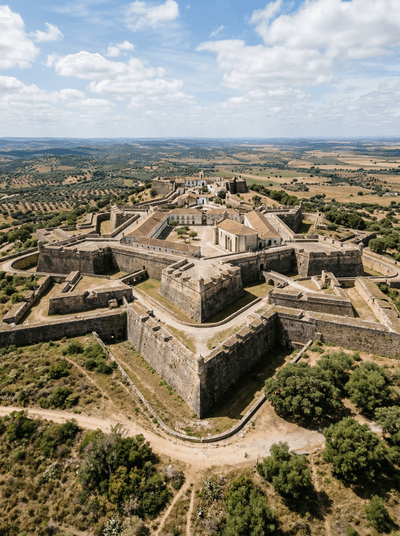
Elvas
Portugal
Walk the world's largest star fort at dawn, moat shadows tracing geometry across plains.
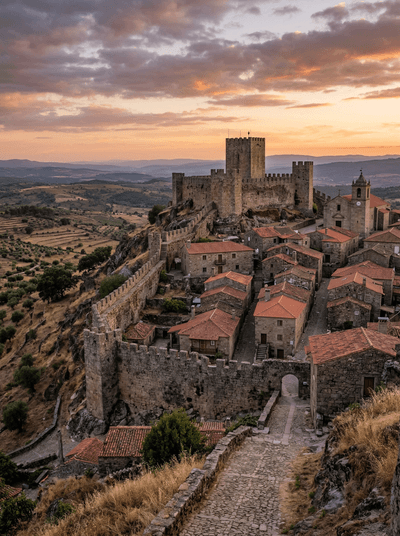
Marialva
Portugal
A medieval town stands roofless inside castle walls, abandoned to silence and moss.
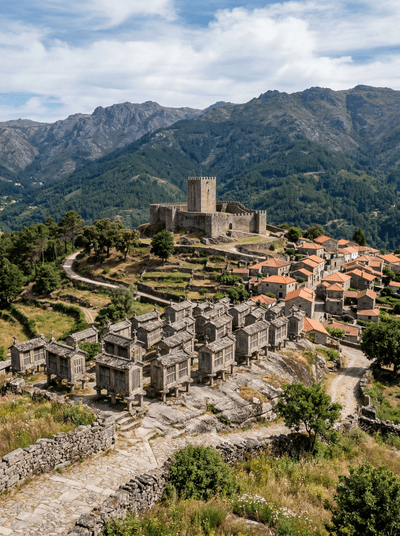
Lindoso
Portugal
Dozens of granite granaries cluster like tiny temples beneath a border castle.