Kenya
Mount Kenya
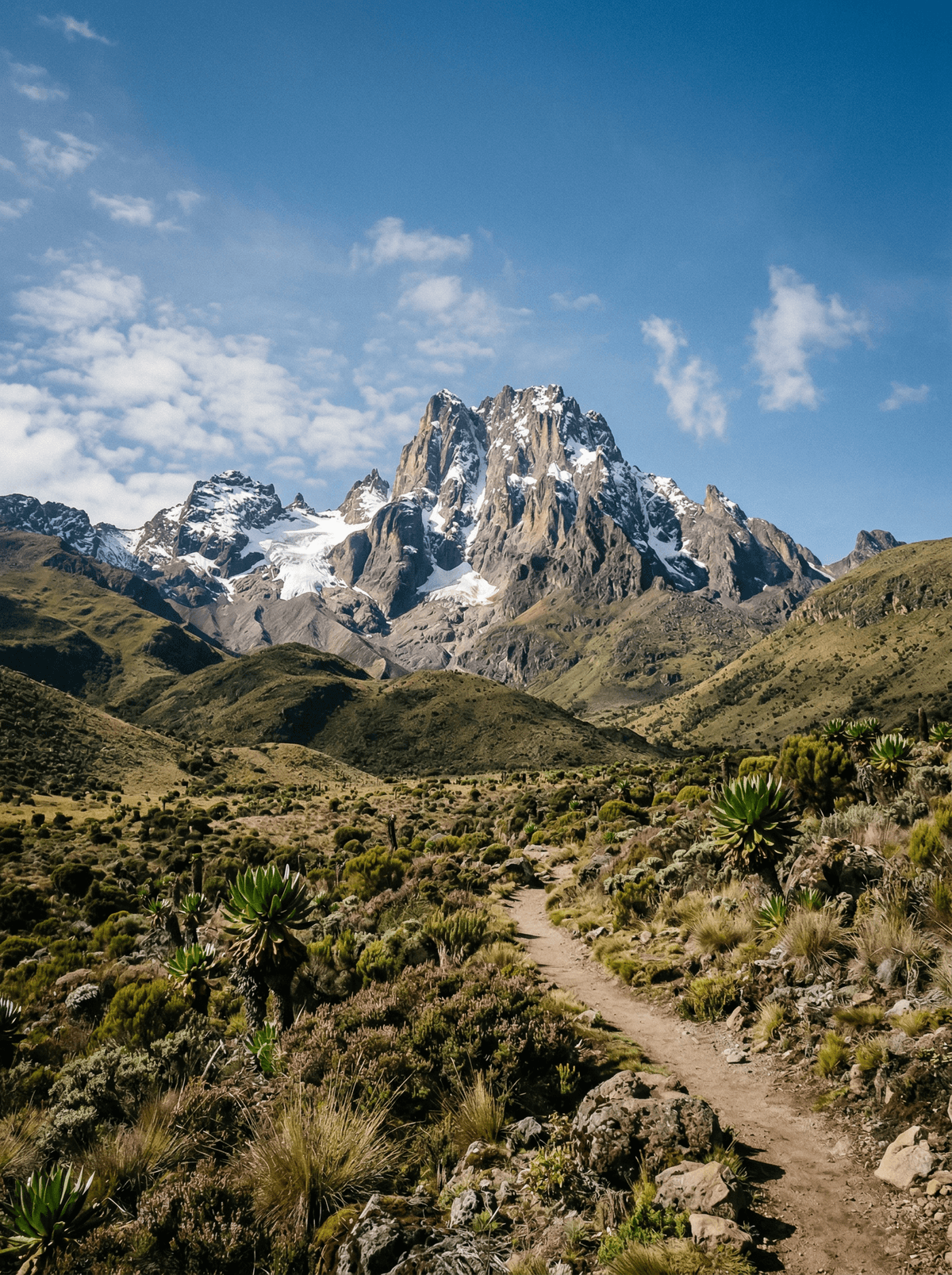
Equatorial glaciers cling to Africa's second-highest peak above a forest of giant lobelias.
The air thins and the landscape turns alien above 4,000 metres, where giant lobelias stand like sentinels and groundsels grow into shapes borrowed from another planet. Glaciers — equatorial glaciers, improbable and retreating — cling to the jagged peaks of Batian and Nelion. Below, bamboo gives way to moss-hung hagenia woodland, and every stream runs ice-cold on the equator.
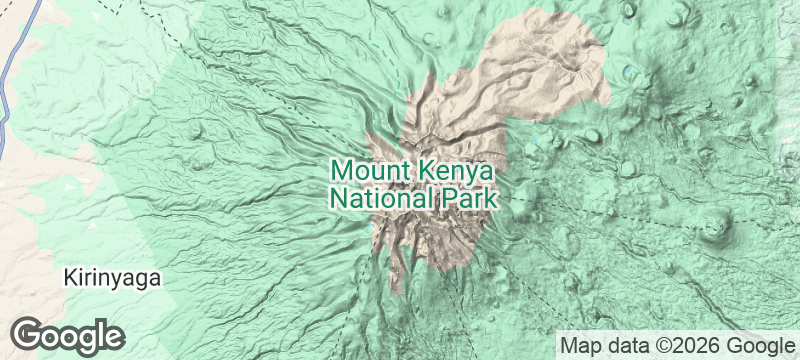
Mount Kenya is Africa's second-highest mountain — 5,199 metres of eroded stratovolcano rising straight off the equator — and World Heritage ground whose upper zones grow like science fiction: groundsels and lobelias metres tall, evolved in isolation above the cloud forest. Point Lenana, the trekking summit at 4,985 metres, is earned over three to five days on the Sirimon, Chogoria or Naro Moru routes; the true twins, Batian and Nelion, demand real rock climbing. The summit ice is among the last equatorial glacier cover on Earth and it is almost gone — see the mountain while it still wears white. Guides are the rule, the tarns are ice-blue, and the cold is honest at zero latitude.
Solo
The multi-day trek to Point Lenana is an East African rite of passage — guided through the zones, but the walking is just your breath, your boots and the mountain.
Friends
Chogoria's gorges and tarns are best shared — split guides and porters, drag each other through the altitude headaches, and take sunrise on Lenana together.
- Africa's second-highest summit at 5,199 metres, rising directly from the equator.
- Giant lobelias and groundsels tower over the moorland — plants of East Africa's high peaks alone.
- Point Lenana is a non-technical multi-day trek; Batian and Nelion are proper climbs.
- The summit ice is among Earth's last equatorial glacier cover — and it is retreating fast.
Hot soup, chapati and sweet Kenyan tea — altitude food on the trekking routes.
Fresh trout from the cold highland streams, grilled over charcoal below the gate.
New River Gorge
United States
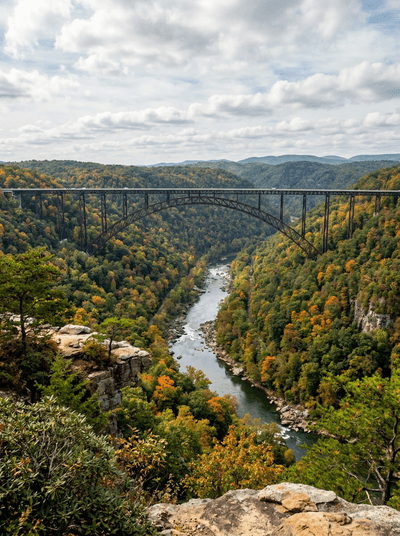
A bridge spanning cloud level above a gorge carved by one of North America's oldest rivers.
Canyon Guartelá
Brazil
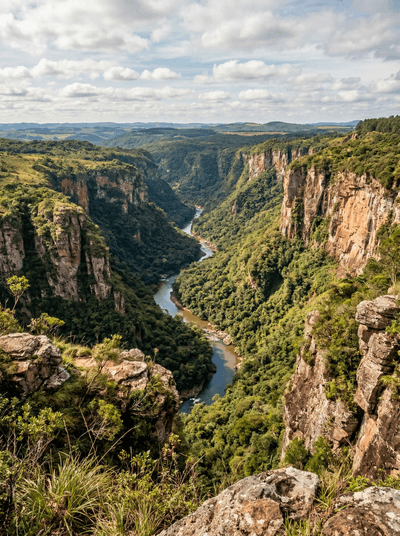
A river that refused to go around cut Brazil's longest canyon dead straight for thirty kilometres.
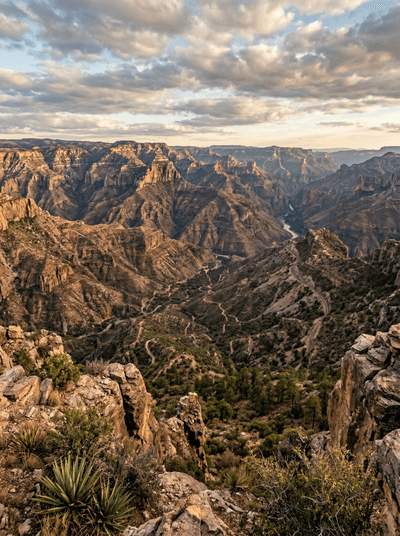
Copper Canyon
Mexico
The Chepe rides through canyon country that runs deeper than the Grand Canyon.
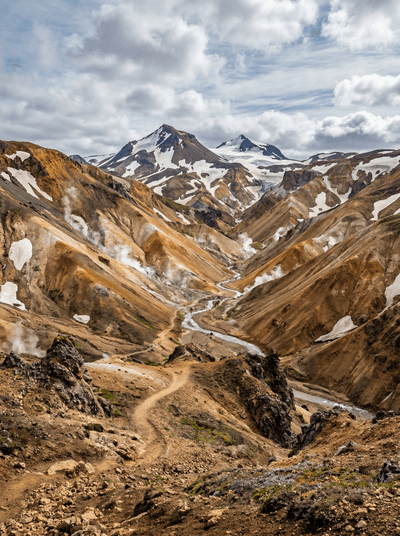
Kerlingarfjöll
Iceland
Steaming orange rhyolite mountains and hissing vents in a high-altitude geothermal desert.
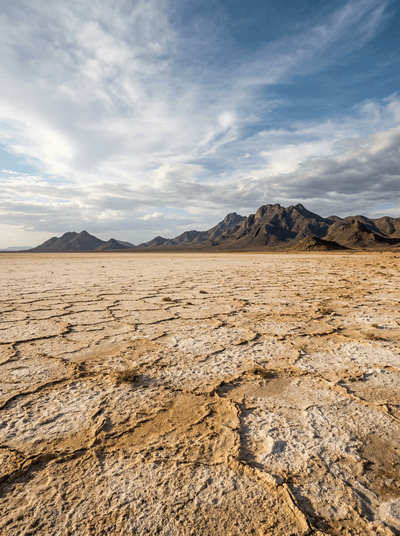
Chalbi Desert
Kenya
Heat mirages shimmer across a salt-crusted moonscape where Gabra nomads appear from the haze.
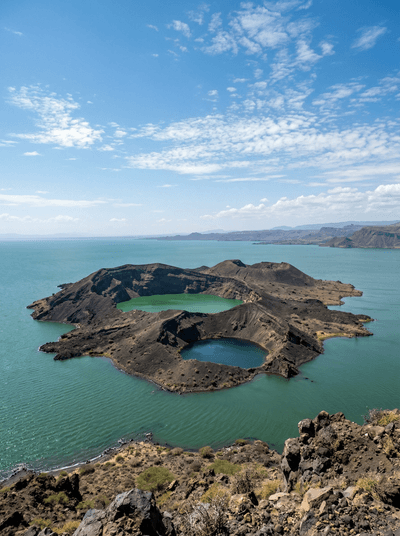
Central Island
Kenya
Three volcanic crater lakes in three different colours on an island ruled by Nile crocodiles.
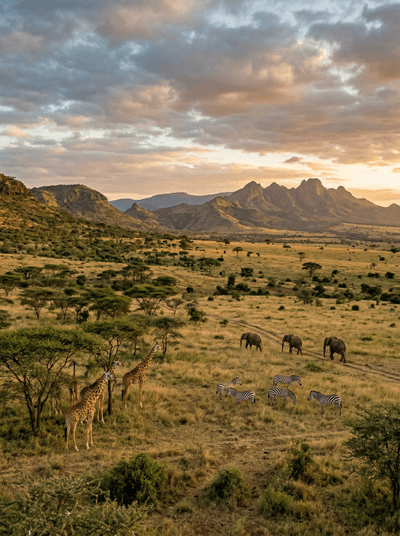
Lewa Wildlife Conservancy
Kenya
A cattle ranch turned rhino refuge that seeded Kenya's community conservancy movement.
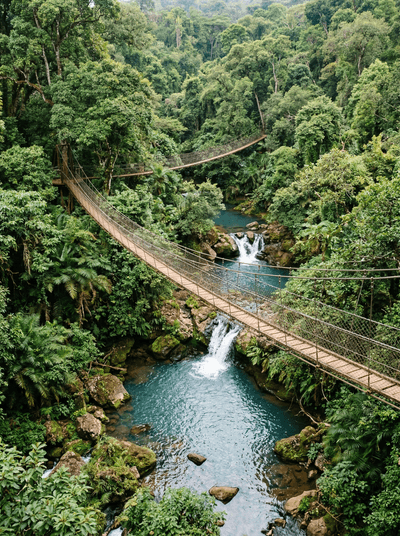
Ngare Ndare Forest
Kenya
A canopy walkway sways ten metres above the forest floor, ending at turquoise natural pools.