Indonesia
Mount Rinjani
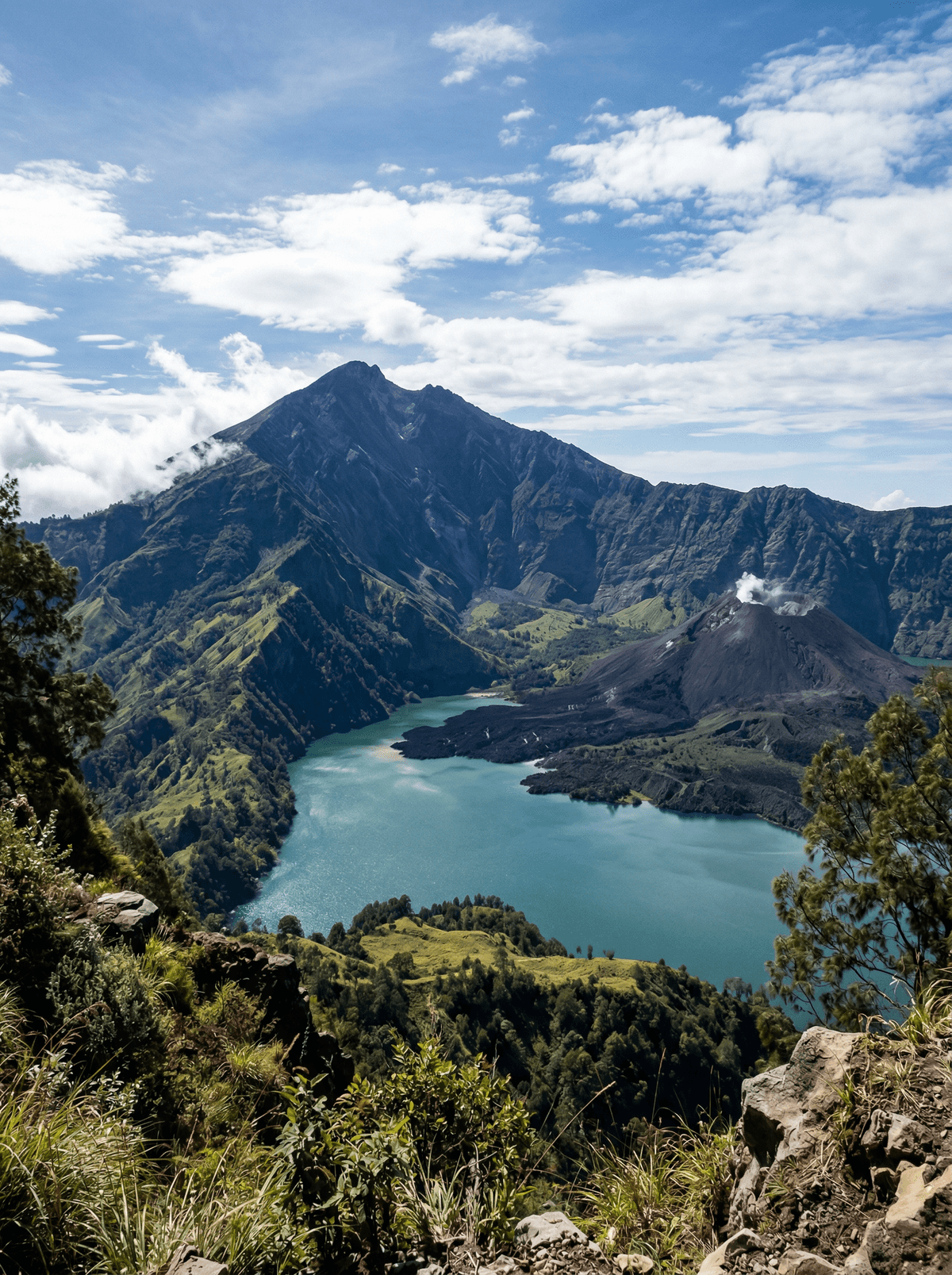
The crater lake holds another volcano inside it, still active, still building.
After two days of savanna, cloud forest and scree, the rim opens and the geography stops making ordinary sense: a turquoise lake fills the caldera, and out of the lake rises a younger cone, steaming. Segara Anak, the Child of the Sea, with a volcano growing in it.
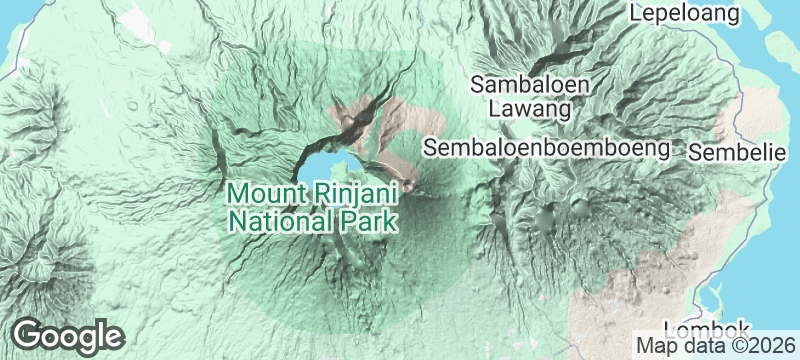
Rinjani is Indonesia's second-highest volcano at 3,726 metres, and its six-by-eight-kilometre caldera holds Segara Anak lake with the active Barujari cone rising from the water. The park reopened its trekking routes on 1 April 2026 after the annual wet-season closure; authorised guides and registration are the way in, with the Senaru approach through forest and Sembalun through open savanna, and the optional summit push adding steep, loose ground at altitude. Sasak and Hindu Balinese pilgrims both climb to the lake, which has held meaning here far longer than trekking has.
Solo
A registered trekking team gives one climber a guide, porters and camp logistics.
Friends
The long shared effort bonds a group, and the rim camp sunset is the payoff.
- Segara Anak fills the caldera with an active cone, Barujari, rising from the lake itself.
- Two approach routes give different mountains: Senaru's forest, Sembalun's savanna.
- Sasak and Balinese pilgrims climb to the lake, a living religious site.
- Routes reopened 1 April 2026 after the seasonal closure, guided and registered.
Ayam taliwang, Lombok's fiercely spiced grilled chicken, is the meal to agree chilli levels on.
On the mountain the guide team cooks everything; menus and water plans differ by operator.
Los Gigantes
Argentina
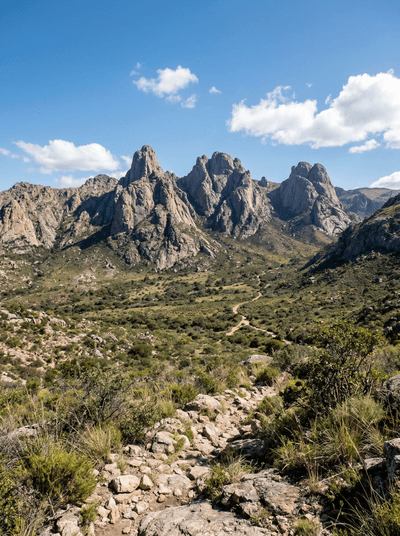
Red granite monoliths rise from the Córdoba sierras like fingers of a buried colossus.
Hoy
Scotland
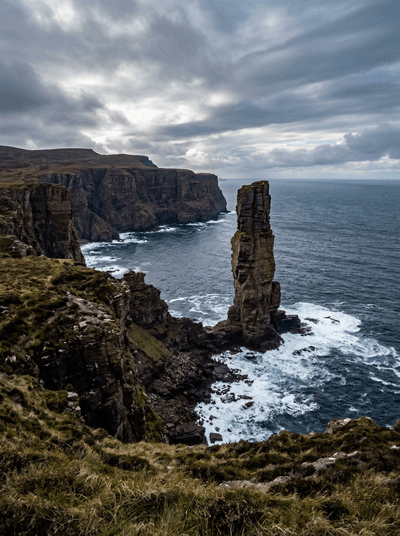
A 137-metre sandstone stack stands alone in the Atlantic, defying every storm thrown at it.
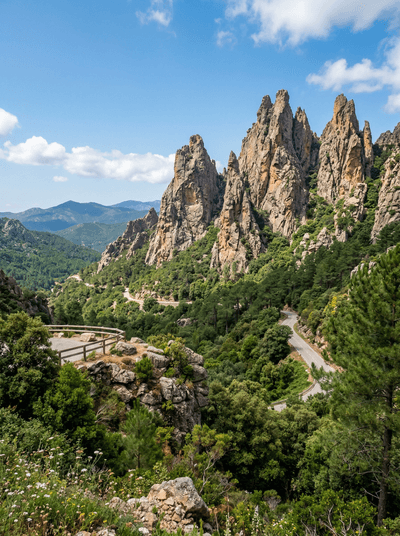
Bavella Needles
France
Red granite spires piercing the Laricio pine canopy like a mountain range losing its temper.
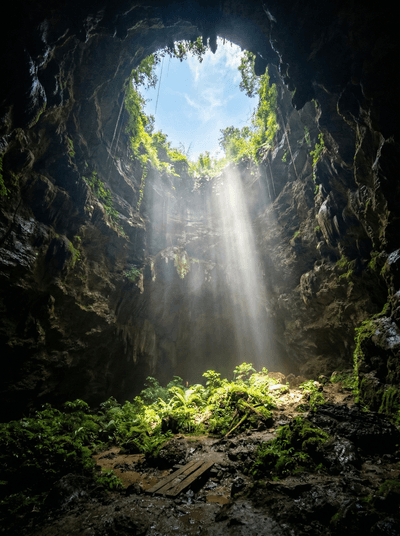
Jomblang Cave
Indonesia
A sixty-metre rope descent reaches a sinkhole forest lit by one shaft of sun.
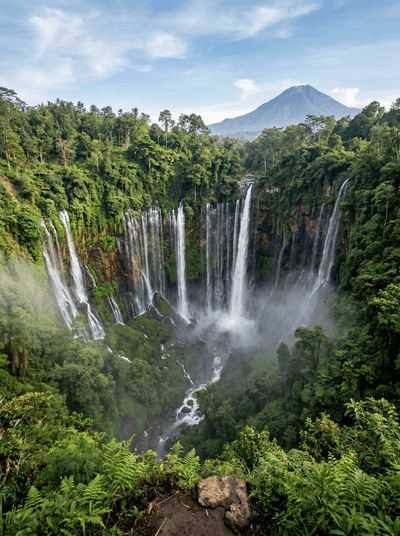
Tumpak Sewu
Indonesia
Hundreds of waterfalls pour off one cliff into a green amphitheatre below Semeru.
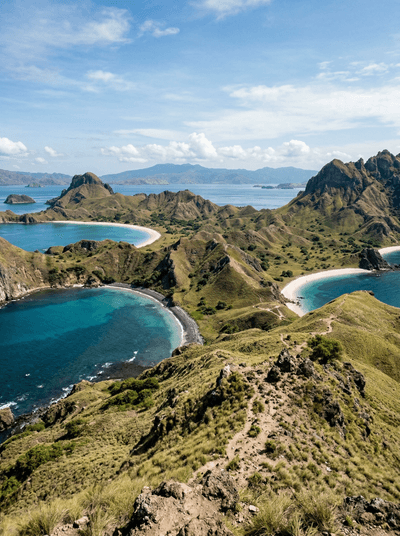
Komodo National Park
Indonesia
Around 5,700 giant lizards roam dry savanna islands where strong currents draw whales and turtles.
Alor Archipelago
Indonesia
Cold upwellings funnel hammerheads and threshers through Alor's volcanic straits.