United States
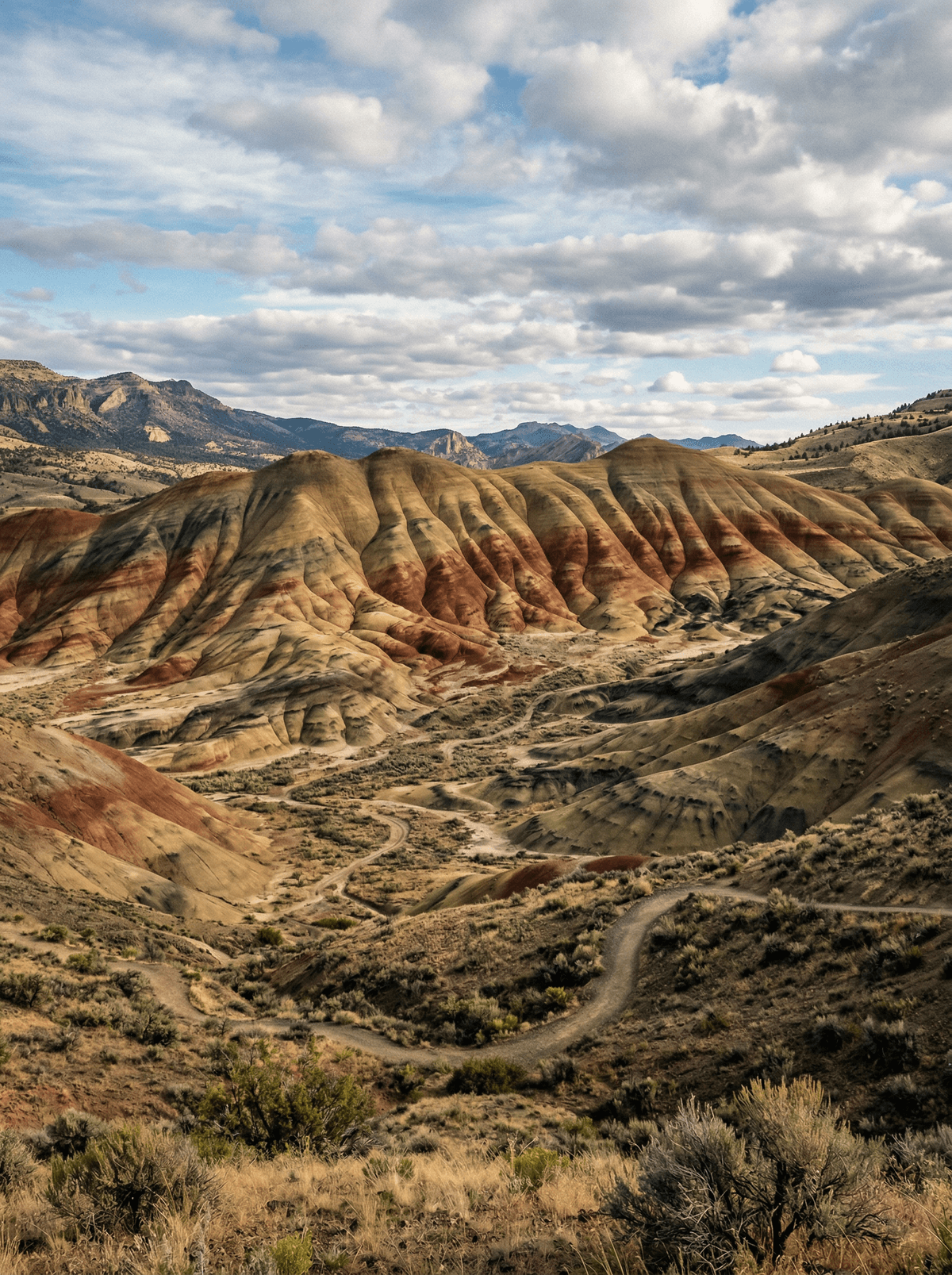
Painted Hills
Striped hills of ochre, gold and black, painted by 35 million years of changing climate.
The hills glow. Bands of rust, ochre, gold, and charcoal curve across mounds of claystone in stripes so vivid they look hand-painted. After rain, the reds deepen to crimson and the surface glistens. In midday sun, the colour flattens. At dusk, everything ignites. The silence of central Oregon's high desert presses in on all sides.
The Painted Hills unit of Oregon's John Day Fossil Beds National Monument preserves a banded sequence of past climates: stripes of red, tan, orange and black laid down one era at a time by volcanic activity over 35 million years ago. The colours refuse to stay still: changing light and moisture shift them through the day, they saturate after rain, and winter snowmelt leaves interspersed stripes of gold and red. The same slopes hold the Bridge Creek Flora, leaf fossils 39 to 30 million years old that include dawn redwood, with animal-bearing rock a few million years younger beside them. Short trails cover the main formations, best walked in late afternoon when the low sun does the lighting, and the nearest town, Mitchell, ten miles on, holds barely 130 people and the brewery that doubles as its gathering spot.
Solo
The drive through central Oregon's high desert to reach the Painted Hills is itself an exercise in solitude: long, empty roads through juniper and sage. The formations reward quiet observation more than group energy, and the trails are short enough to leave time for sitting and watching the colours shift.
Couple
The hills are at their most dramatic at dawn and dusk, when the low sun saturates the bands. A weekend pairing them with Mitchell, a tiny high-desert town with a brewery for the evening, strips everything back to the essential.
- The stripes of red, tan, orange and black each record a different past climate: a climate archive readable from a single overlook.
- The Bridge Creek Flora in these slopes preserves leaf fossils 39 to 30 million years old, dawn redwood among them.
- Light and moisture genuinely change the colours: the reds saturate after rain, and winter snowmelt reveals fresh stripes of gold and red.
- Late afternoon gives the best photography, when the low sun ignites the bands one by one.
Wings and a stout at Tiger Town Brewing, Mitchell's gathering spot, where the burgers come from nearby grass-fed herds.
Steak from Painted Hills Natural Beef, the grass-fed co-op founded by seven ranching families in the shadow of the hills.
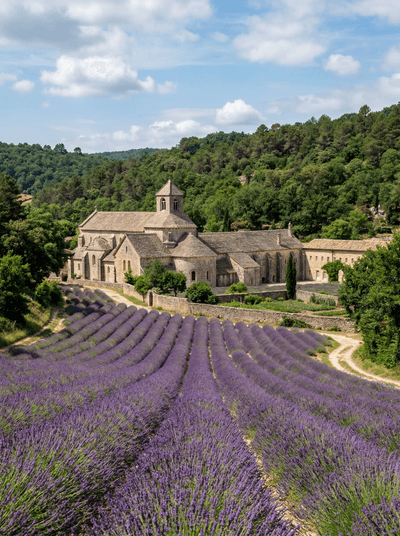
Sénanque Abbey
France
Cistercian silence in a valley of lavender rows so purple they vibrate in the June heat.
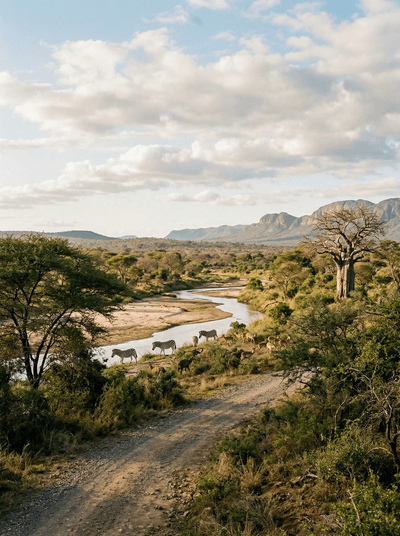
uMkhuze Game Reserve
South Africa
Hides sink to water level where nyala, rhino and birds arrive through sand forest.
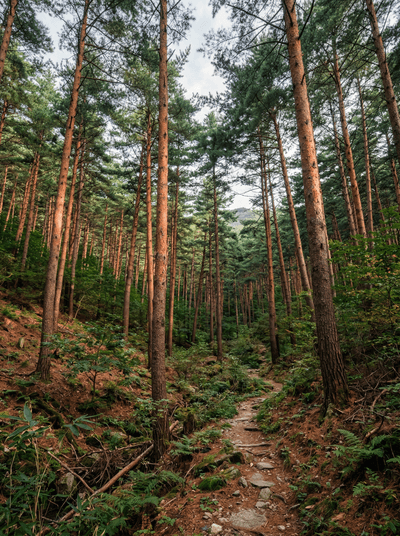
Uljin Geumgang Pine Forest
South Korea
Five hundred years as royal timber left a pine forest nothing else touched.

Northumberland Dark Sky Park
England
England's emptiest county, where the Milky Way casts shadows on the heather.
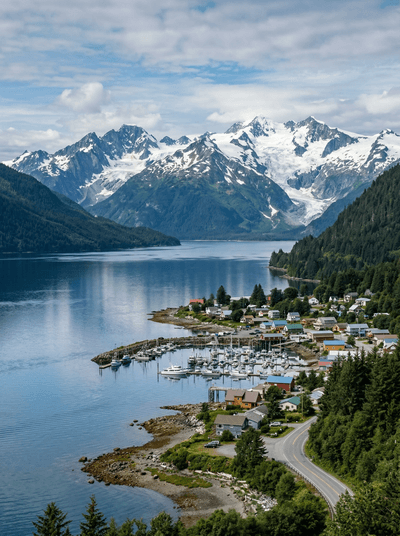
Haines
United States
Thousands of bald eagles gathering on one river in the shadow of coastal glaciers.
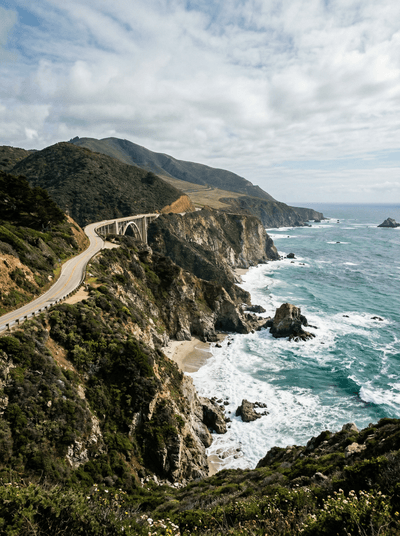
Big Sur
United States
An 80-foot waterfall spills onto a beach no path reaches, watched only from above.
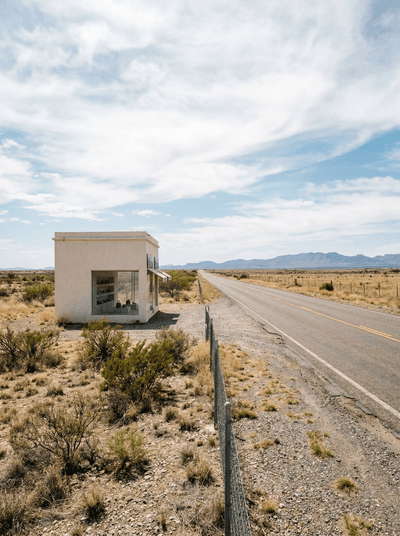
Marfa
United States
Minimalist art installations glowing in the Chihuahuan Desert beside a highway that goes nowhere.
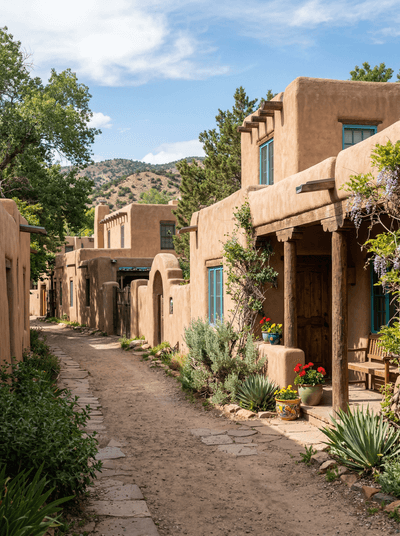
Santa Fe
United States
Adobe walls glow amber at sunset while piñon smoke drifts through the plaza.