Brazil
Pomerode
Half-timbered Fachwerk houses by the hundred, in a town whose name means the Pomeranians' clearing.
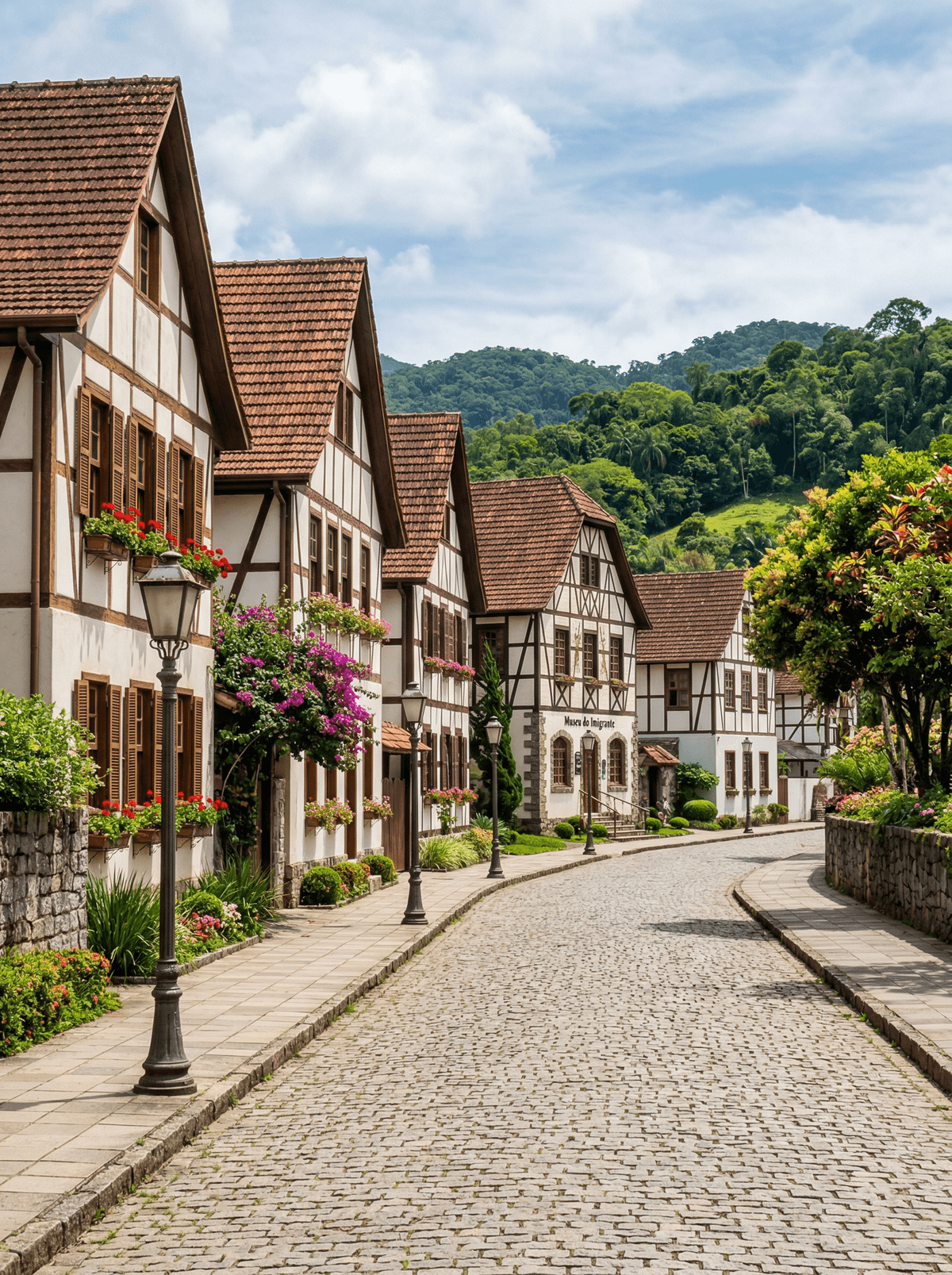
The bakery smells of cuca and apple, and the house it is in was put together with wooden joints instead of nails. Pomerode is a subtropical town in the Itajaí valley where a hundred and more timber-framed farmhouses are protected by law, and the town's name is a plain description of what its first families did to the land.
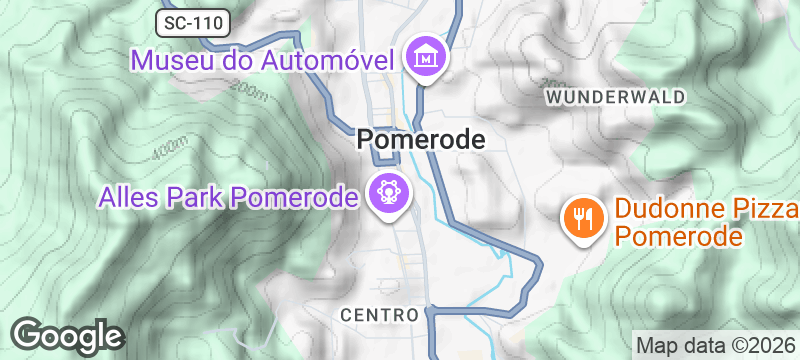
Pomerode sits in the middle valley of the Itajaí-Açu in Santa Catarina, a municipality of a little over 34,000 people that separated from Blumenau in 1959 and gets called the most German town in Brazil. The name is a translation of the work: Pommeroda, the Pomeranians' clearing, from the German verb for cutting the vegetation back to plant. The settlers who did it came from Pomerania in the north of Germany and lived off what they cleared, and what they built is still up. The Rota do Enxaimel runs through it, more than a hundred houses listed at municipal, state or federal level and the largest body of enxaimel construction in the country. The rest of the inheritance is social rather than architectural: folk groups, brass bands, choirs and sixteen hunting and shooting clubs, each with festivals of its own.
Couple
The Rota do Enxaimel is the day, and it rewards going slowly, because the joinery is the whole point and it is easy to drive past. Space the stops with confeitarias: this is the largest eating destination in the Vale Europeu Catarinense and the pauses will do most of the work.
Family
Children take to the strangeness of it fast, a Brazilian town of timber-framed farmhouses with brass bands and shooting clubs attached. The scale helps as well, a little over 34,000 people, so nothing is far from anything, and the bakeries make the argument for one more stop on their own.
- The Rota do Enxaimel takes in more than a hundred houses listed at municipal, state or federal level, the largest body of enxaimel building anywhere in Brazil.
- The name is a translation of the work: Pommeroda, the Pomeranians' clearing, from the German verb for cutting back the ground to plant on.
- The town keeps sixteen Clubes de Caça e Tiro alongside its folk groups, brass bands and choirs, and each of them runs festivals of its own.
- Pomerode has a little over 34,000 people and is the largest gastronomic hub in the Vale Europeu Catarinense.
The confeitarias are the reason to keep stopping: breads, cucas, biscuits, sweets and tarts, in the town that is the largest eating destination in the Vale Europeu Catarinense.
The dish the valley built is marreco recheado, the duck roasted whole on a stuffing of giblets and bread and sent out with sweet-sour red cabbage, apple purée and sauerkraut.

Falkland
Scotland
A Renaissance palace hides the oldest real tennis court on Earth, in play since 1539.
Şirince
Turkey
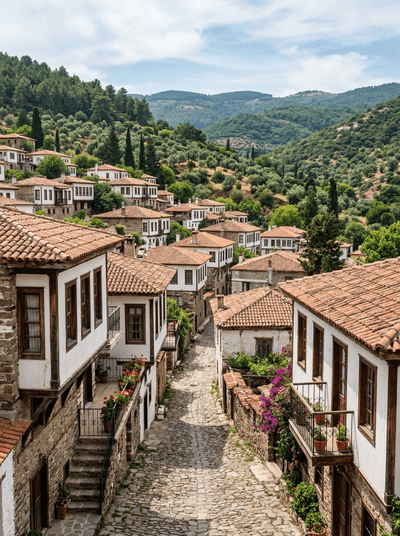
Grandmothers sell peach wine on doorsteps where Greek prayers gave way to Turkish ones in 1923.
Colmar
France
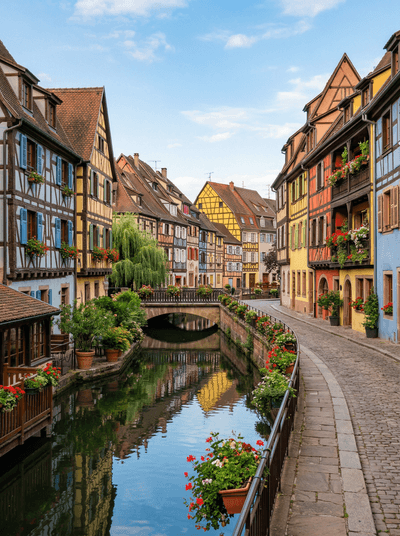
Candy-coloured half-timbered façades reflected in canals so still they look like poured paint.
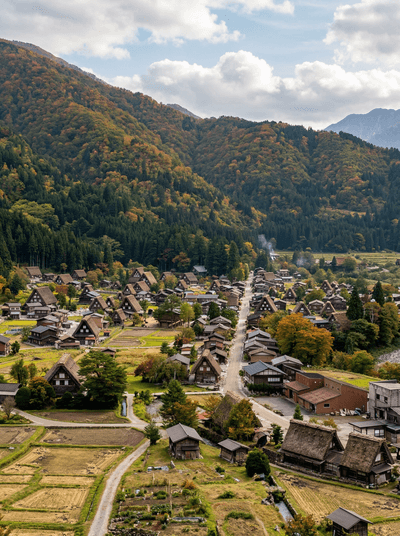
Shirakawa-go
Japan
Thatched roofs steep as praying hands, built for snow that buries the ground floor.
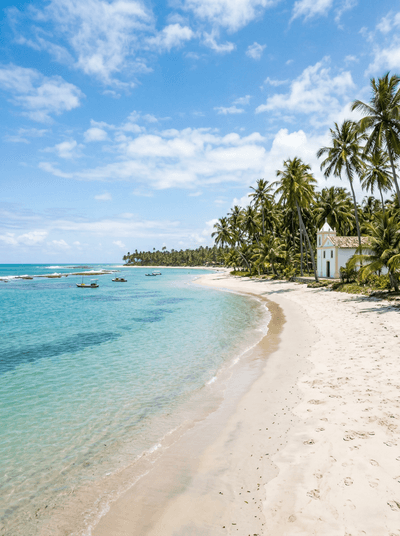
Praia dos Carneiros
Brazil
A chapel alone on the sand, and reef pools that open as the tide drops away.

Delta do Parnaíba
Brazil
Every dusk, thousands of scarlet ibis come in to sleep in the mangrove canopy.
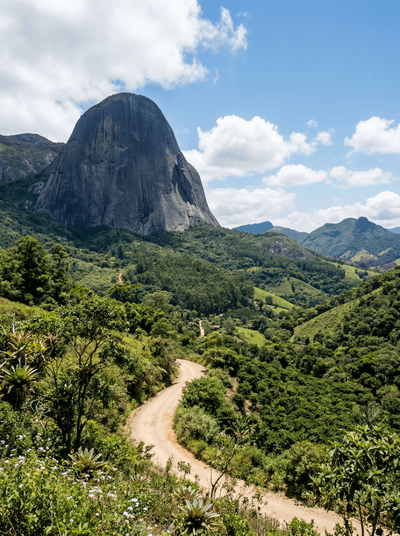
Pedra Azul
Brazil
A granite monolith blue with lichen, erupting from Atlantic Forest like a wave.
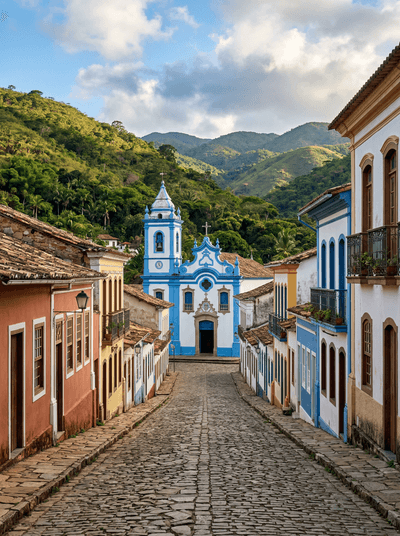
Triunfo
Brazil
Fog on dry-stone walls, in a scrap of rainforest stranded above the drought country.