Indonesia
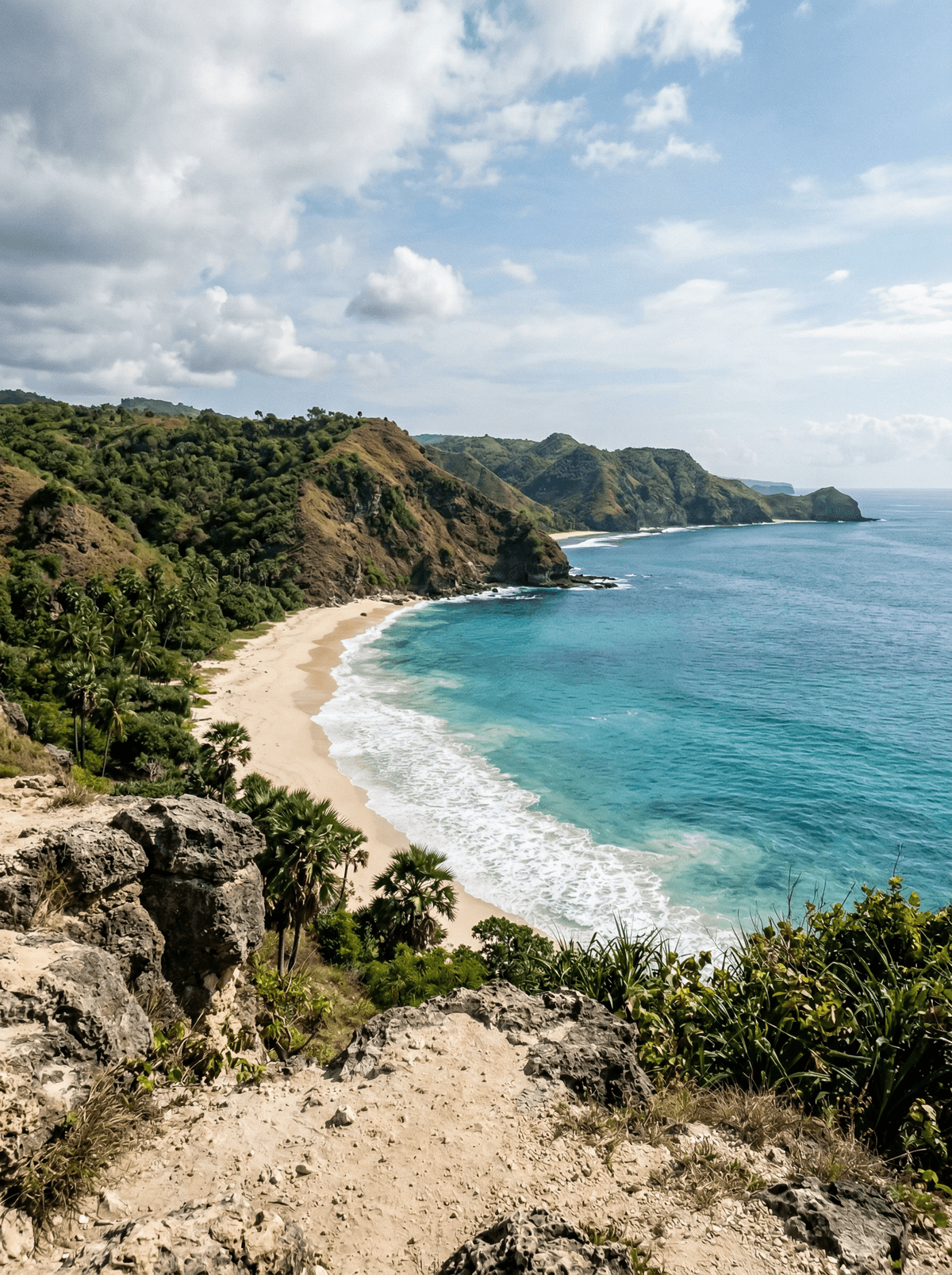
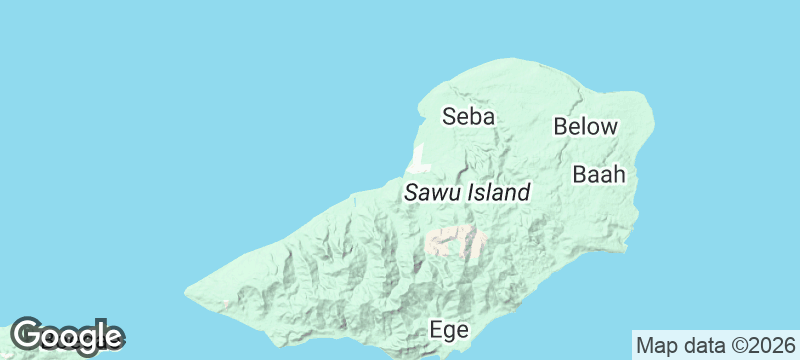
Savu Island
An island that runs on palm sap, where priests still read the stars for planting.
Lontar palms line every ridge, and morning and evening men climb them for sap: drunk fresh, boiled to sugar, fermented sharp. At Namata's stone precinct, the priestly deo rai still keep a calendar written in the night sky.
Savu lies between Sumba and Timor, dry, wind-carved and organised around the lontar palm, whose sap, leaves and timber run the island's economy and ceremony alike. The traditional priesthood still governs the ritual calendar by the stars, and Namata's megalithic precinct of fourteen sacred stones remains its ceremonial heart, visited with community welcome. The regency's own circuit joins Namata, the coloured cliffs of Kelabba Maja, craft villages and Napae's quiet beach, with Raemea publishing bookable community activities; flights and boats from Kupang run thin, which has kept all of it intact.
Solo
Raemea's named contacts and a rented motorbike open the island to one traveller.
Couple
One road day runs stones to striped cliffs to an empty beach.
Friends
Companions can split navigation and build the longer island loop.
- The lontar palm feeds, waters and roofs the island, tapped twice daily.
- Namata's fourteen sacred stones anchor a living priestly tradition.
- Kelabba Maja's striped rock formations look painted rather than weathered.
- Raemea village publishes its own bookable community activities.
Wolappa, pounded rice with lontar sugar wrapped in coconut leaf, is the island's own sweet.
Gula Sabu, the thick lontar syrup, runs through the local puddings and cakes.
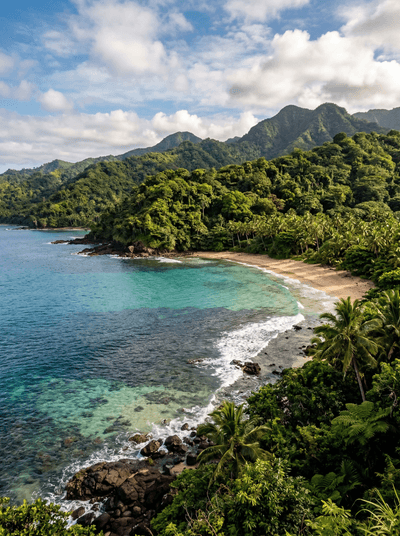
Taveuni
Fiji
Stand astride the 180th meridian in rainforest, one foot in today, one in yesterday.
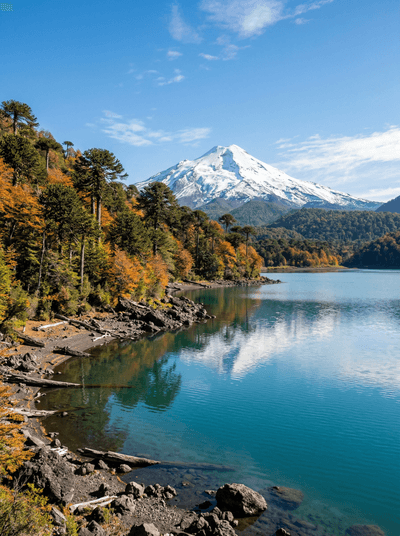
Parque Nacional Conguillío
Chile
Araucaria crowns stand over black lava and clear lakes beneath Volcán Llaima.
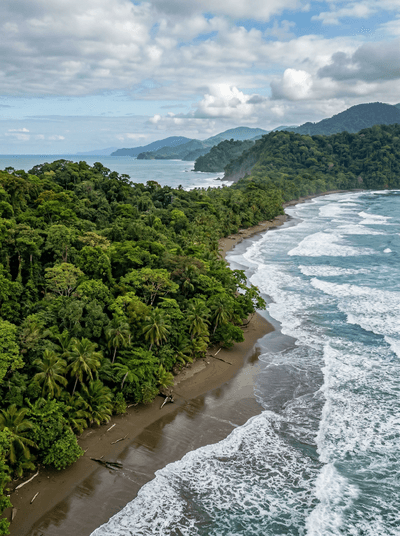
Corcovado National Park
Costa Rica
National Geographic called it the most biologically intense place on Earth. They undersold it.
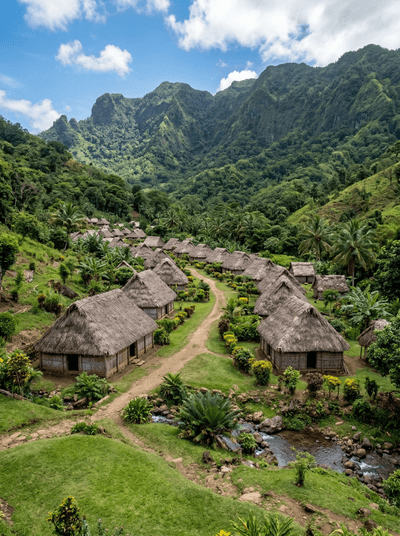
Navala Village
Fiji
Two hundred thatched bures, all built the same size, climb a valley above the Ba River.
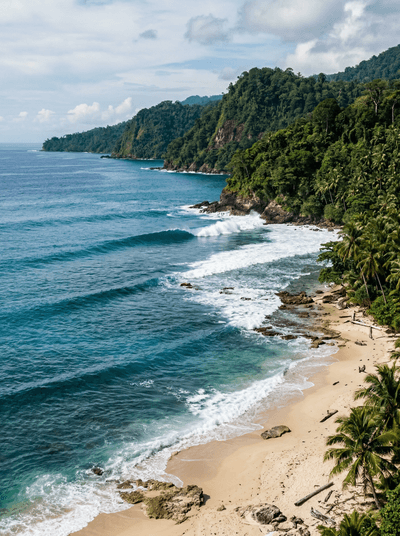
Nias Island
Indonesia
At Bawömataluo, jumpers still clear a two-metre stone tower in a single leap.
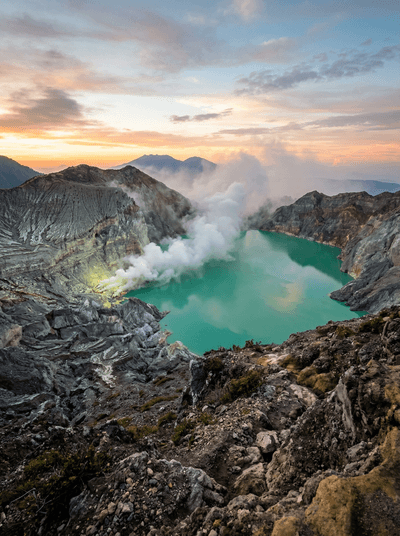
Ijen Crater
Indonesia
Sulphur miners and blue fire share Ijen's crater with a kilometre-wide acid lake.
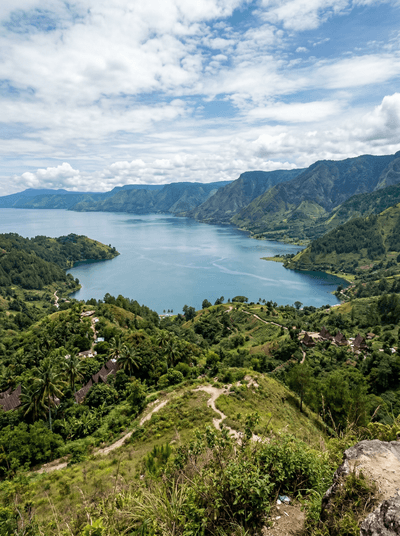
Lake Toba
Indonesia
A volcanic island the size of Singapore floats inside the largest caldera lake on Earth.
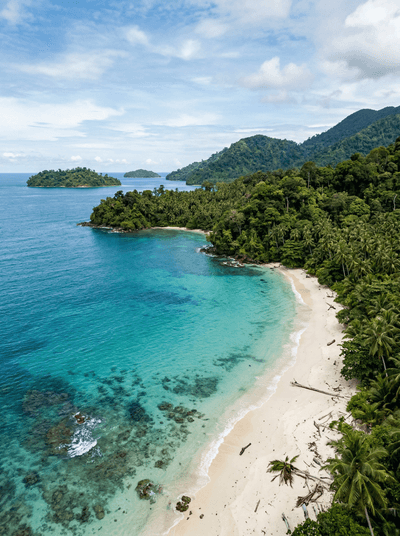
Mentawai Islands
Indonesia
Sago smoke in the longhouse, heavy water on the reef: the Mentawais run two worlds.