France
Scandola Nature Reserve
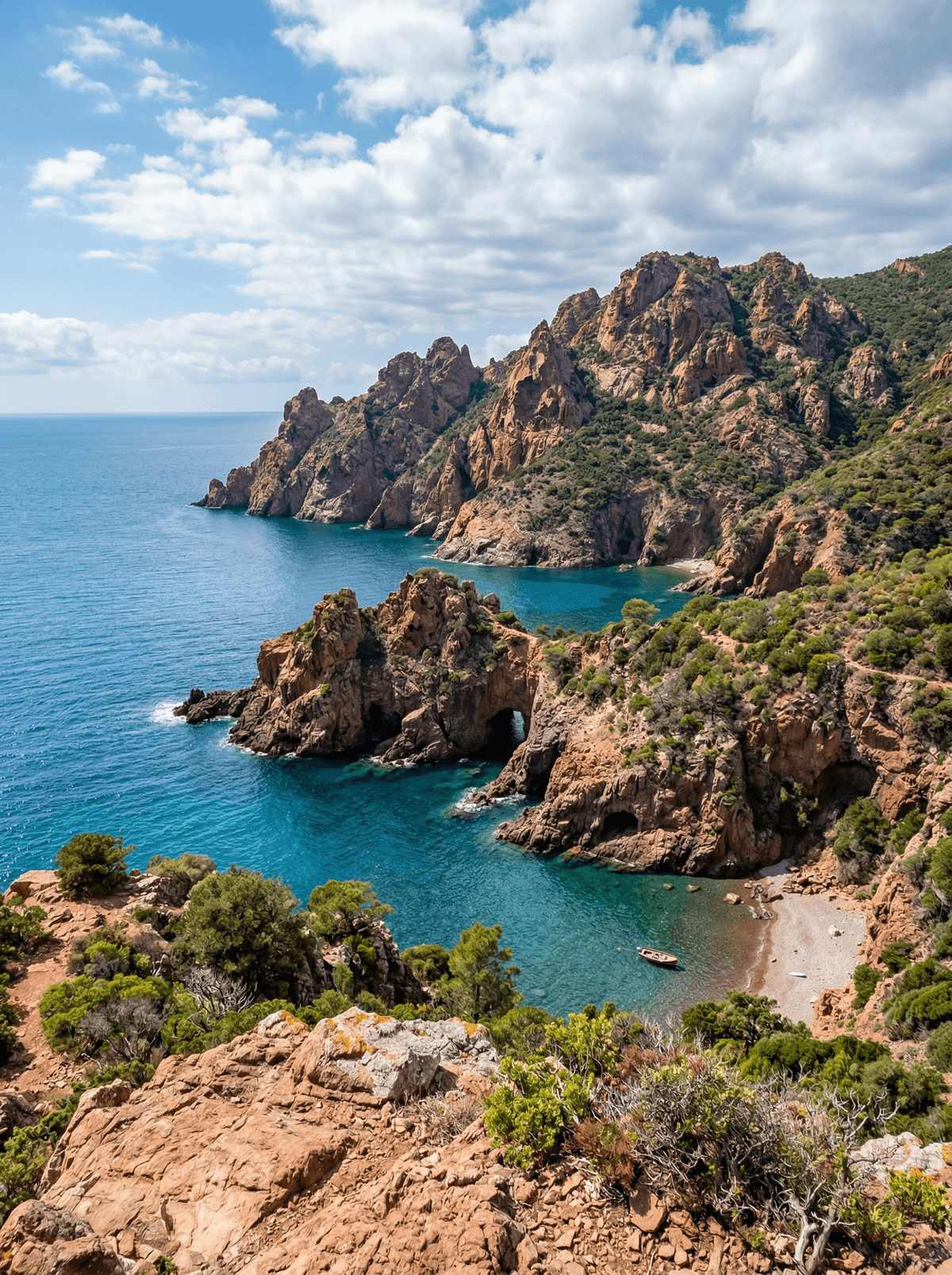
Volcanic red cliffs plunging into water so clear you count the fish from the boat.
The red volcanic cliffs drop straight into water so clear that the seabed shows metres down, fish moving through the blue like slow shadows. The Scandola reserve sits on the west coast of Corsica, France, and can only be reached by sea — a protected headland where ospreys nest on the sea stacks and the geology is a catalogue of volcanic violence in red, orange and black.
Scandola is the volcanic peninsula at the northern end of the Gulf of Porto, World Heritage since 1983 for both its nature and its landscape, and no road goes in: the boats from Porto, Galéria and Calvi are the only way, and the crossing itself — along cliffs of red rock, past sea caves and stacks and columns of cooled lava — is the visit. Ospreys nest on the stacks at one of their last Mediterranean strongholds, and the reserve keeps boats back from the active nests; under the surface, protection has brought the grouper back. There is nowhere to land inside the reserve, which is the whole idea: this is the west coast as it was before anyone built on it, and the crystal-clear waters and raw landscapes are held for the people who come after.
Solo
The boat out of Porto threads the volcanic coast in near silence — the boat keeps its distance from the osprey stacks and the sound is water on rock. The impossibility of arriving by land makes the sea approach feel like discovery.
Couple
The colours — red cliff, blue water, black lava — are improbable from the boat. The clarity of the water, the osprey stacks and the sheer remoteness make it a shared experience that photographs cannot reproduce.
- Volcanic red cliffs plunge into water so transparent you can watch the seabed from the boat.
- Ospreys breed on the sea stacks — the reserve is one of their last breeding strongholds in the Mediterranean.
- Access is by boat only, from Porto, Galéria or Calvi — the remoteness is itself the protection.
- The rock is volcanic — lava columns, sea caves and stacks shaped by eruption and then by the sea.
Aziminu — the Corsican fish soup of rockfish and mussels with a fiery rouille — in a Porto harbour restaurant after the boat.
Corsican honey — maquis-scented, from bees on wild rosemary and myrtle — on a slice of brocciu.
Rebun Island
Japan
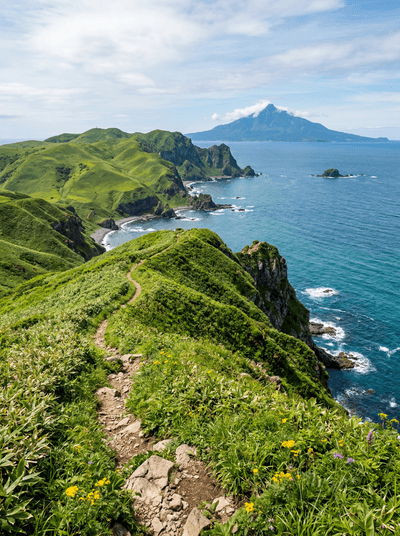
Alpine wildflowers blooming at sea level on a wind-battered island at Japan's edge.
Koh Libong
Thailand
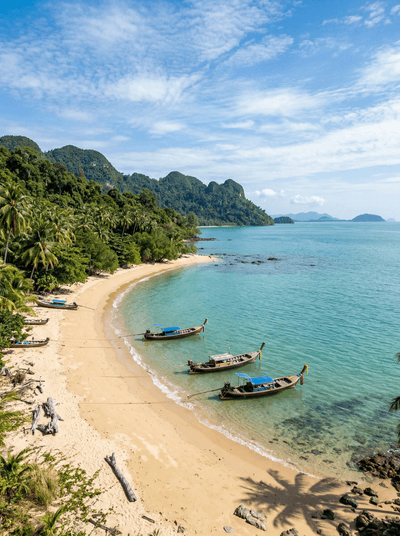
The island Thailand's last dugongs call home, where tides and prayer times set the clock.
Kabak
Turkey
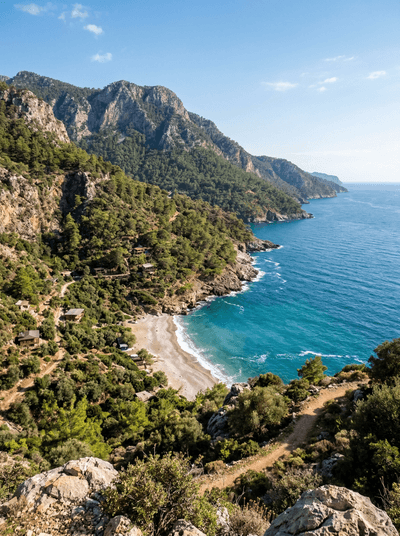
A cove reached by steep forest trail, wooden cabins under the pines above an almost-empty beach.
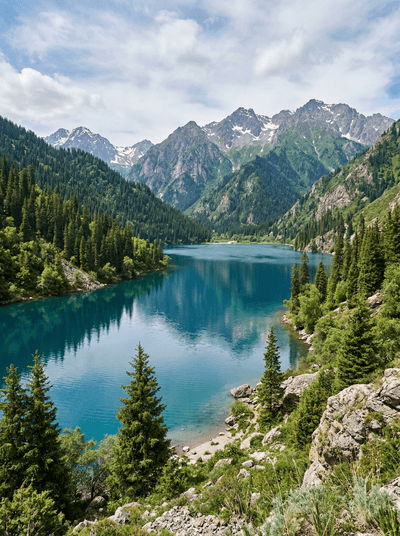
Sary-Chelek
Kyrgyzstan
A biosphere lake 234 metres deep in walnut forests where snow leopards still roam.
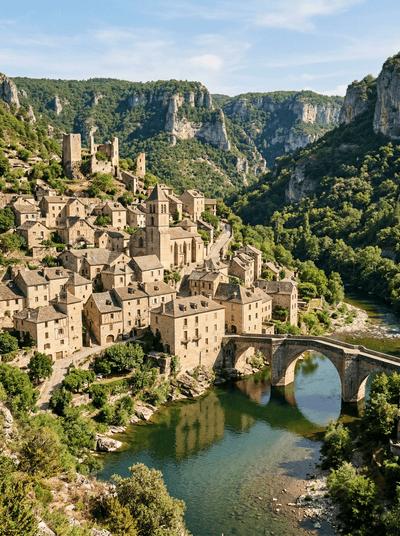
Sainte-Enimie
France
A medieval village wedged into the Tarn gorge so tightly the river runs through its gardens.
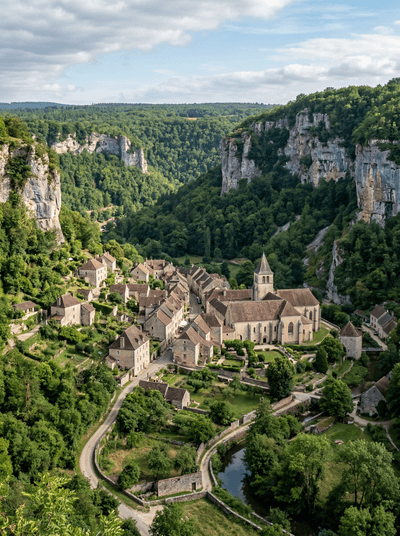
Baume-les-Messieurs
France
An ancient abbey below three converging cliffs where waterfalls run over moss into caves.
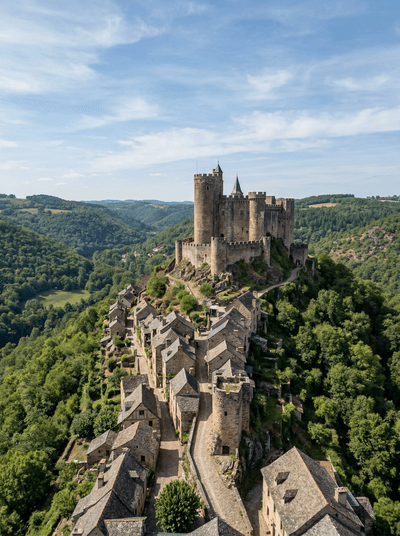
Najac
France
A single-street village on a ridge, a royal fortress at the tip, a river coiled below.
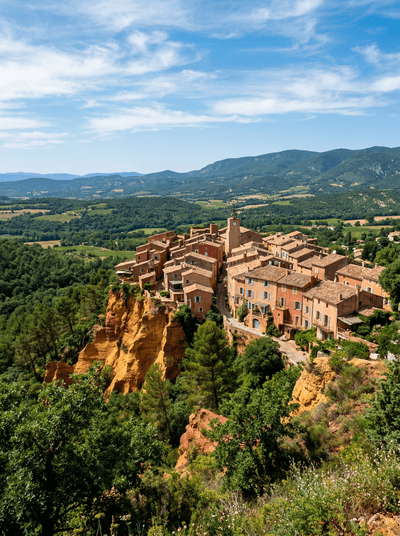
Roussillon
France
Ochre cliffs bleeding every shade from cream to blood-red into the village walls themselves.