Indonesia
Sumba Island
The dead lie under megalith slabs in village squares, and the living walk past daily.
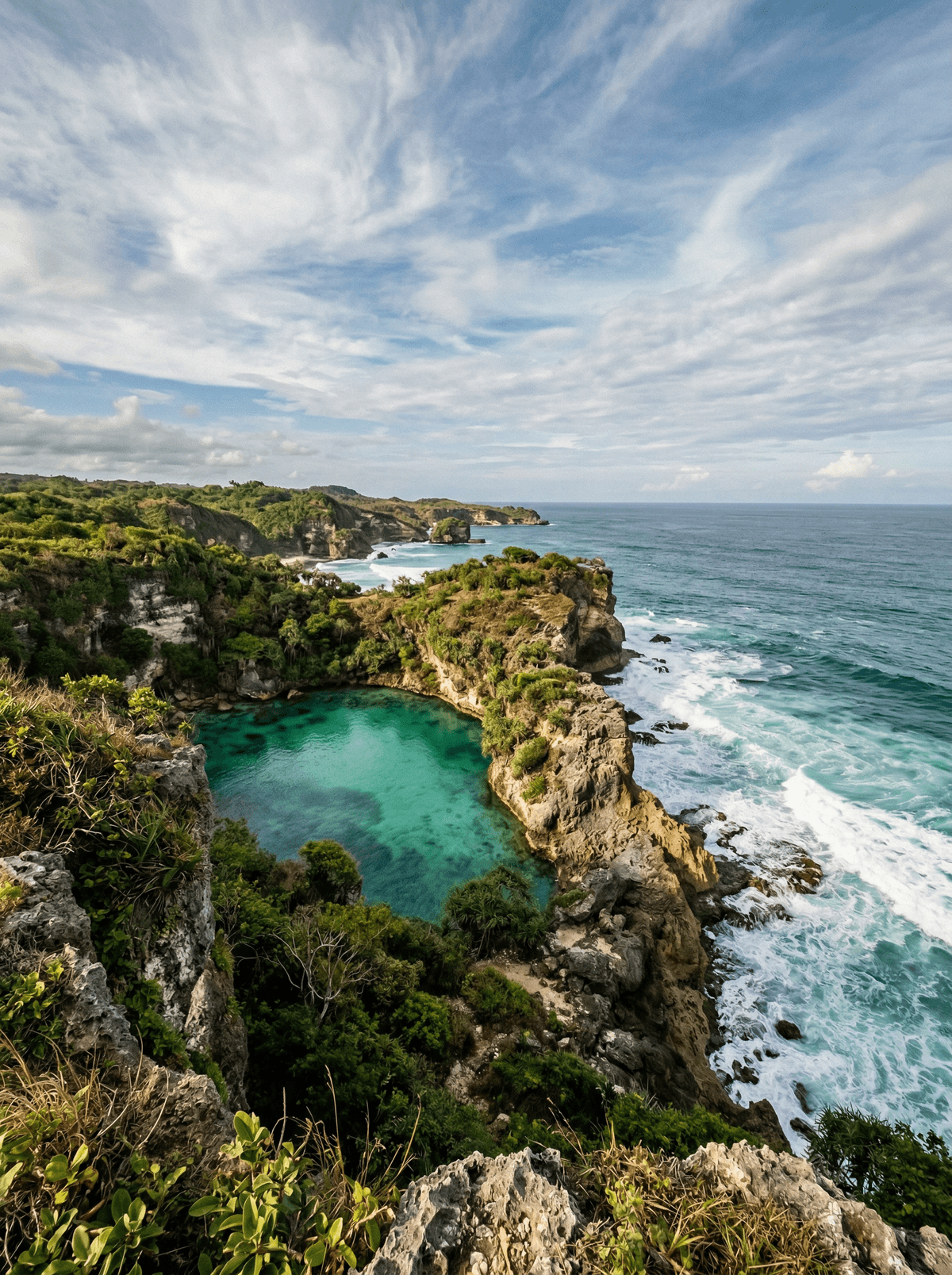
The tombs sit where the living walk past them daily: megalithic slabs in village courts, beneath clan houses whose roofs climb like steeples. On the savanna beyond, horses move through grass that turns gold by August.
Sumba stands culturally apart from its neighbours: a living megalithic tradition, the Marapu ancestral faith, and ikat textiles among the most complex woven anywhere, their motifs carrying clan genealogies. Villages such as Ratenggaro and Praijing keep massive stone slab tombs at their centres, entered as guests once welcomed, and weaving workshops thread the routes between. The Pasola mounted spear contest follows a locally determined ritual calendar in the early months of the year, attended by arrangement, and the island's coast alternates deserted beaches with surf that built its famous resort.
Solo
A local guide turns tombs and textiles from sights into stories.
Couple
Village mornings and empty-beach afternoons make an unhurried island week.
Friends
A shared car opens the west's villages and the coast in one loop.
- Stone tombs weighing many tonnes anchor the centres of living villages.
- Sumba's ikat weaving encodes clan histories thread by thread.
- The Pasola spear contest runs on a ritual calendar, not a tourist one.
- Savanna, deserted beaches and surf share the island with the culture.
Rumpu rampe, mixed local greens with corn, is Sumba's own vegetable plate.
Waingapu's market is the named place to graze the island's produce.
Taveuni
Fiji
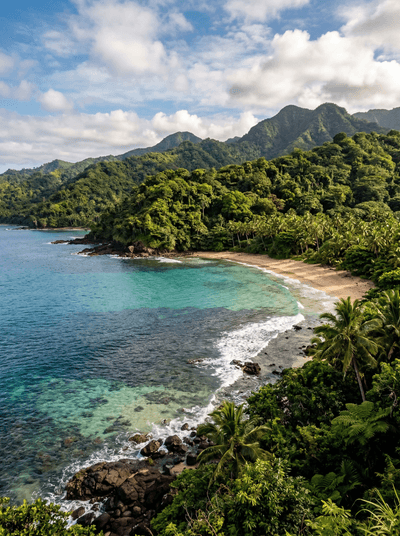
Stand astride the 180th meridian in rainforest, one foot in today, one in yesterday.
Parque Nacional Conguillío
Chile
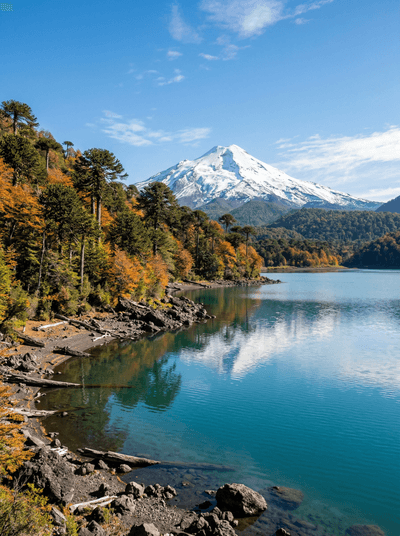
Araucaria crowns stand over black lava and clear lakes beneath Volcán Llaima.
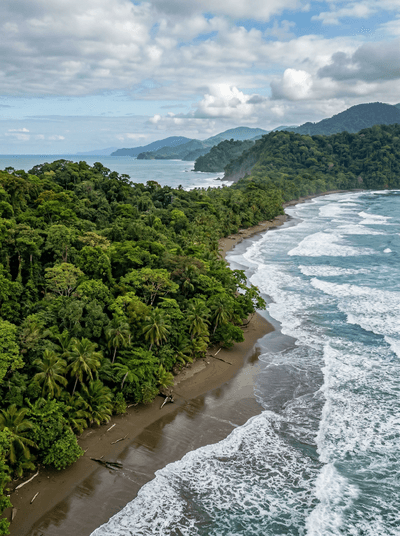
Corcovado National Park
Costa Rica
National Geographic called it the most biologically intense place on Earth. They undersold it.
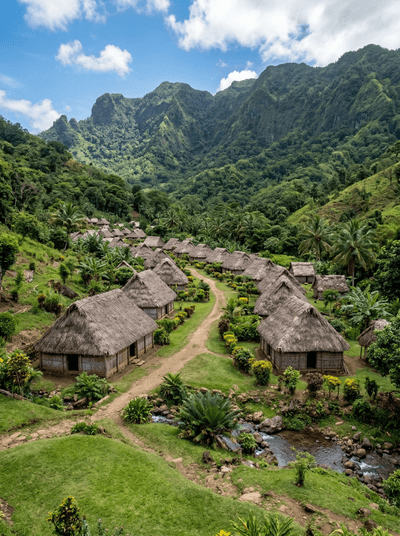
Navala Village
Fiji
Two hundred thatched bures, all built the same size, climb a valley above the Ba River.
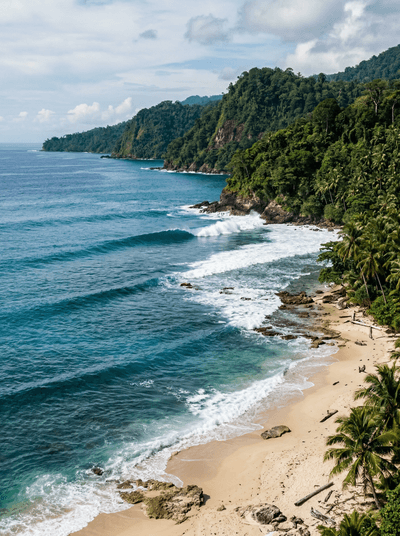
Nias Island
Indonesia
At Bawömataluo, jumpers still clear a two-metre stone tower in a single leap.
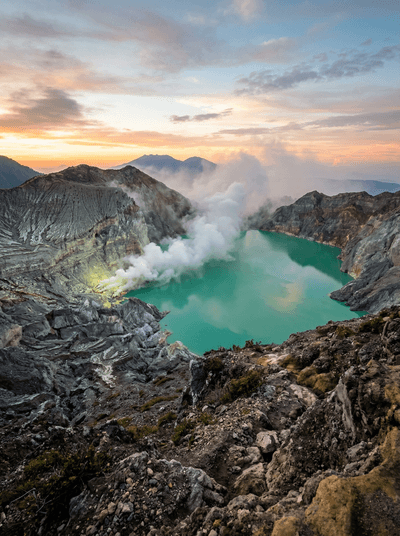
Ijen Crater
Indonesia
Sulphur miners and blue fire share Ijen's crater with a kilometre-wide acid lake.
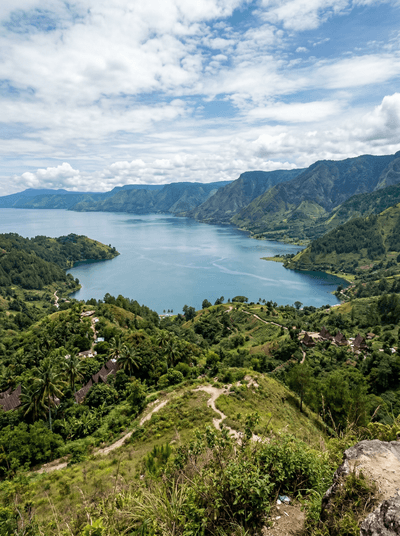
Lake Toba
Indonesia
A volcanic island the size of Singapore floats inside the largest caldera lake on Earth.
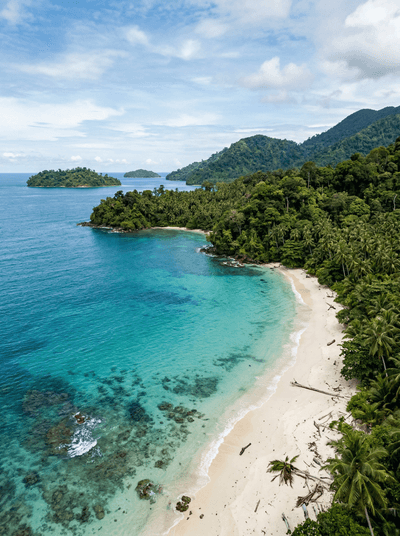
Mentawai Islands
Indonesia
Sago smoke in the longhouse, heavy water on the reef: the Mentawais run two worlds.