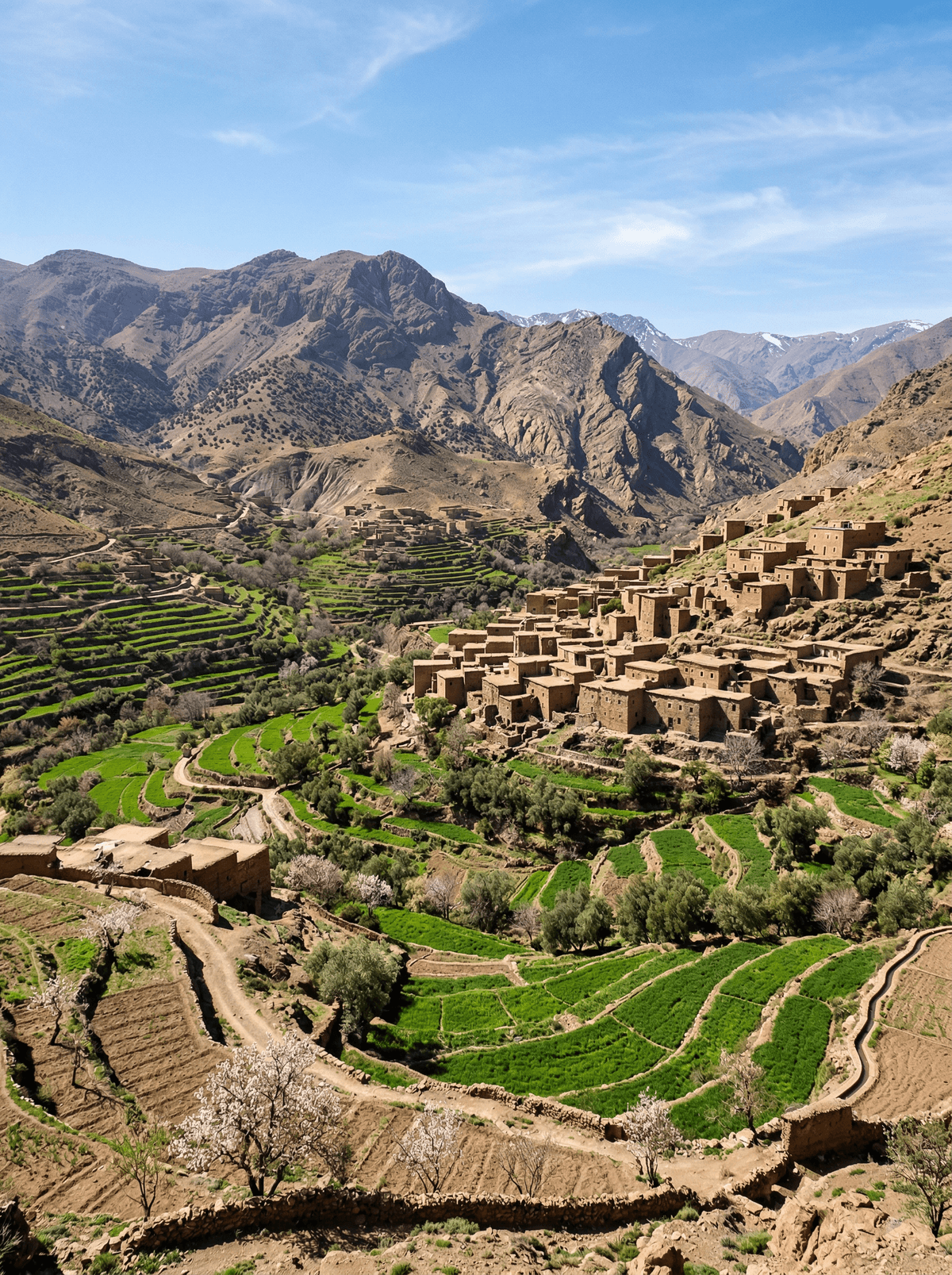
Morocco
Taliouine
Three crimson threads leave each dawn-picked crocus in Morocco's saffron heartland.
Before sunrise in the Taliouine growing plateau, purple crocuses are picked while they remain cool and closed. Back at the cooperative, each flower is opened by hand, three red stigmas separated and dried into a crop weighed in grams; around 150,000 flowers are needed for a kilogram.
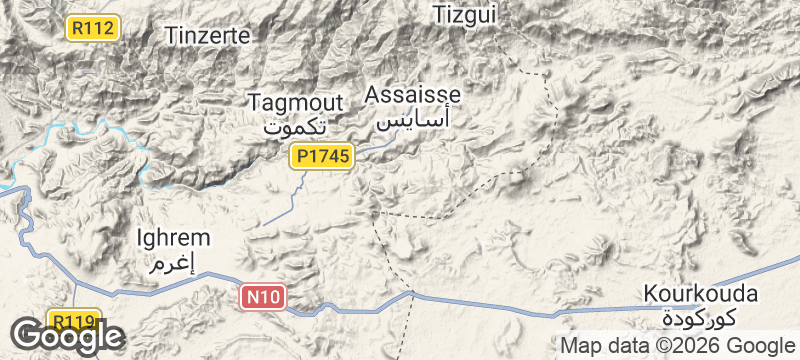
This protected-origin saffron supplies most of Morocco's production. Each harvest moves from cool dawn-picked flowers to hand-separated stigmas, careful drying and threads weighed in grams. South of town, Ifri Agadir adds a communal granary cut into tuff rock, while the ruined Glaoui kasbah recalls Taliouine's strategic place on the Taroudant-Ouarzazate route. Saffron tagine and tea turn the spice from something displayed in a jar into colour, scent and taste.
Solo
Follow the saffron story from field colour to dried threads, then take a local heritage route to Ifri Agadir and view the ruined kasbah from sound ground. The day stays coherent without depending on entry to any one workspace or building.
Couple
Start with the purple fields in harvest season, then follow the crop into saffron tea and a fragrant tagine. Ifri Agadir adds earthen architecture to a day already built around colour, handwork and taste.
- Taliouine saffron moves from dawn-picked crocus through hand separation, drying and grading.
- Each flower yields only three red stigmas, and roughly 150,000 flowers are required for one kilogram.
- Ifri Agadir preserves a communal granary carved beneath a tuff outcrop south of town.
- The ruined Glaoui kasbah places the town's agricultural wealth on the old strategic route between Souss and Drâa.
A Taliouine saffron tagine, the local threads releasing colour and fragrance slowly into the sauce.
Saffron tea at a local auberge or cooperative tasting, warm and gently aromatic rather than heavily sweetened.
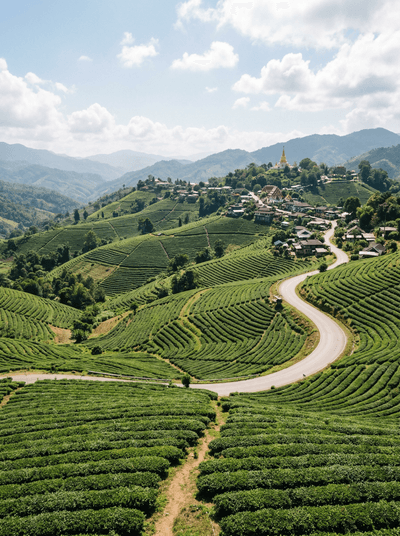
Mae Salong
Thailand
A Yunnanese tea village clinging to a ridge where Chinese lanterns swing in mountain wind.
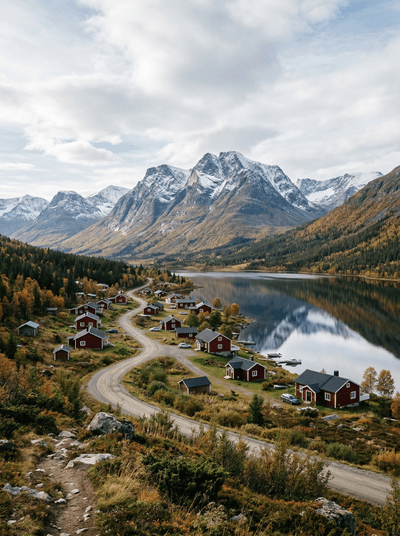
Borgafjäll
Sweden
Ralph Erskine's Arctic modernism planted in deep snow where a long road stops.
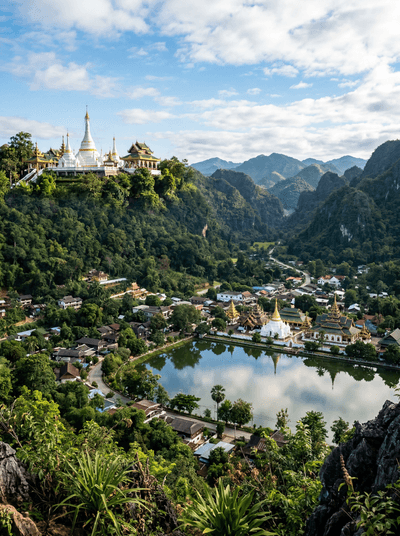
Mae Hong Son
Thailand
A mist-drowned valley town where Burmese pagodas reflect in a lake at the edge of nowhere.
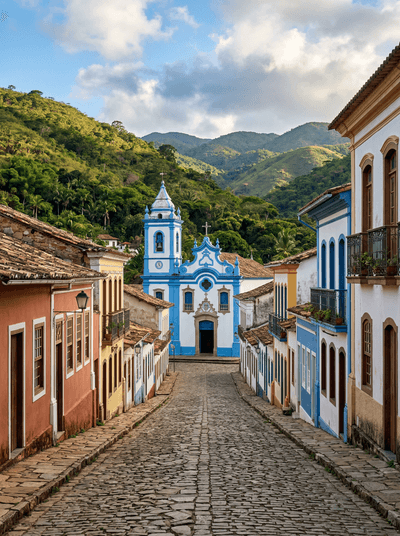
Triunfo
Brazil
Fog on dry-stone walls, in a scrap of rainforest stranded above the drought country.
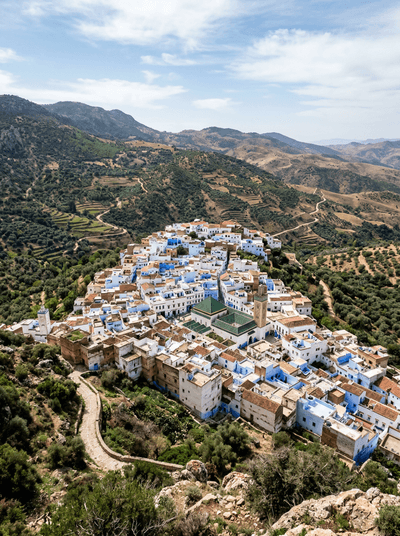
Moulay Idriss Zerhoun
Morocco
Five pilgrimages here during the moussem are said locally to equal one hajj to Mecca.
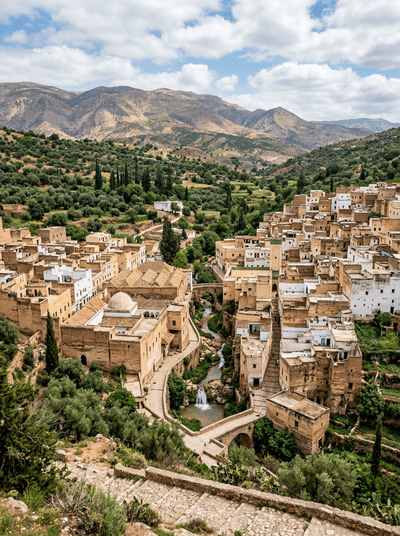
Sefrou
Morocco
Silk-buttoned festival dress meets river-cooled lanes in Morocco's century-old cherry capital.
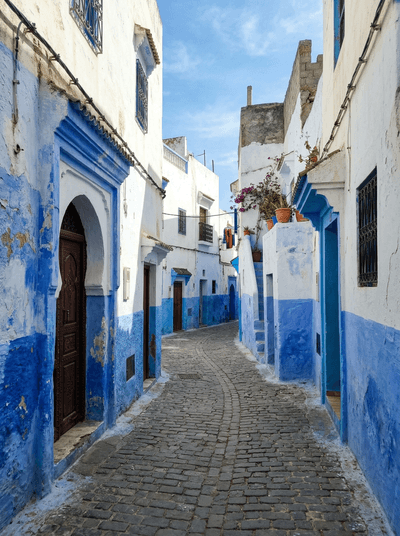
Asilah
Morocco
Fresh murals break across whitewashed lanes inside a fifteenth-century Atlantic wall.
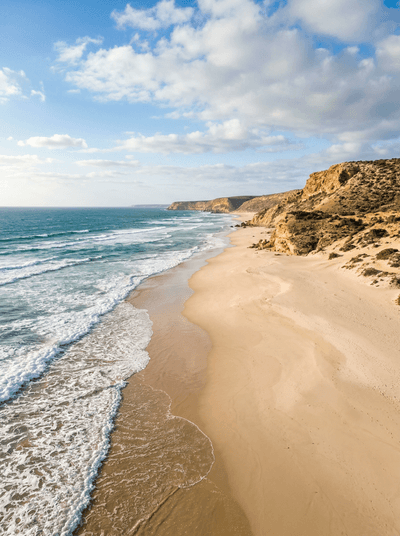
Plage Blanche
Morocco
Low tide reveals a forty-kilometre Atlantic corridor between dune, cliff and river mouth.