Morocco
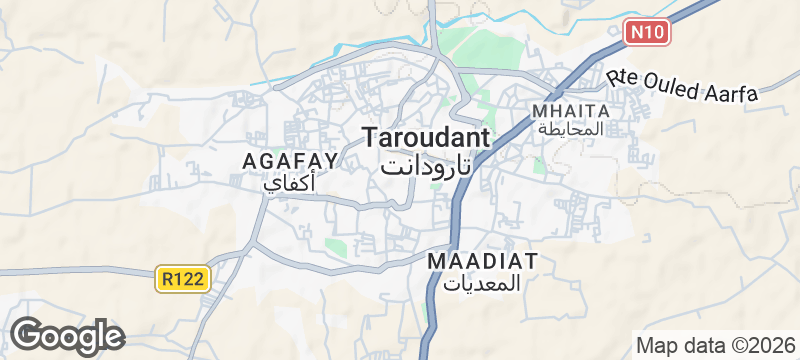
Taroudant
A hundred and thirty mud towers circle souks where silver is still chased by hand.
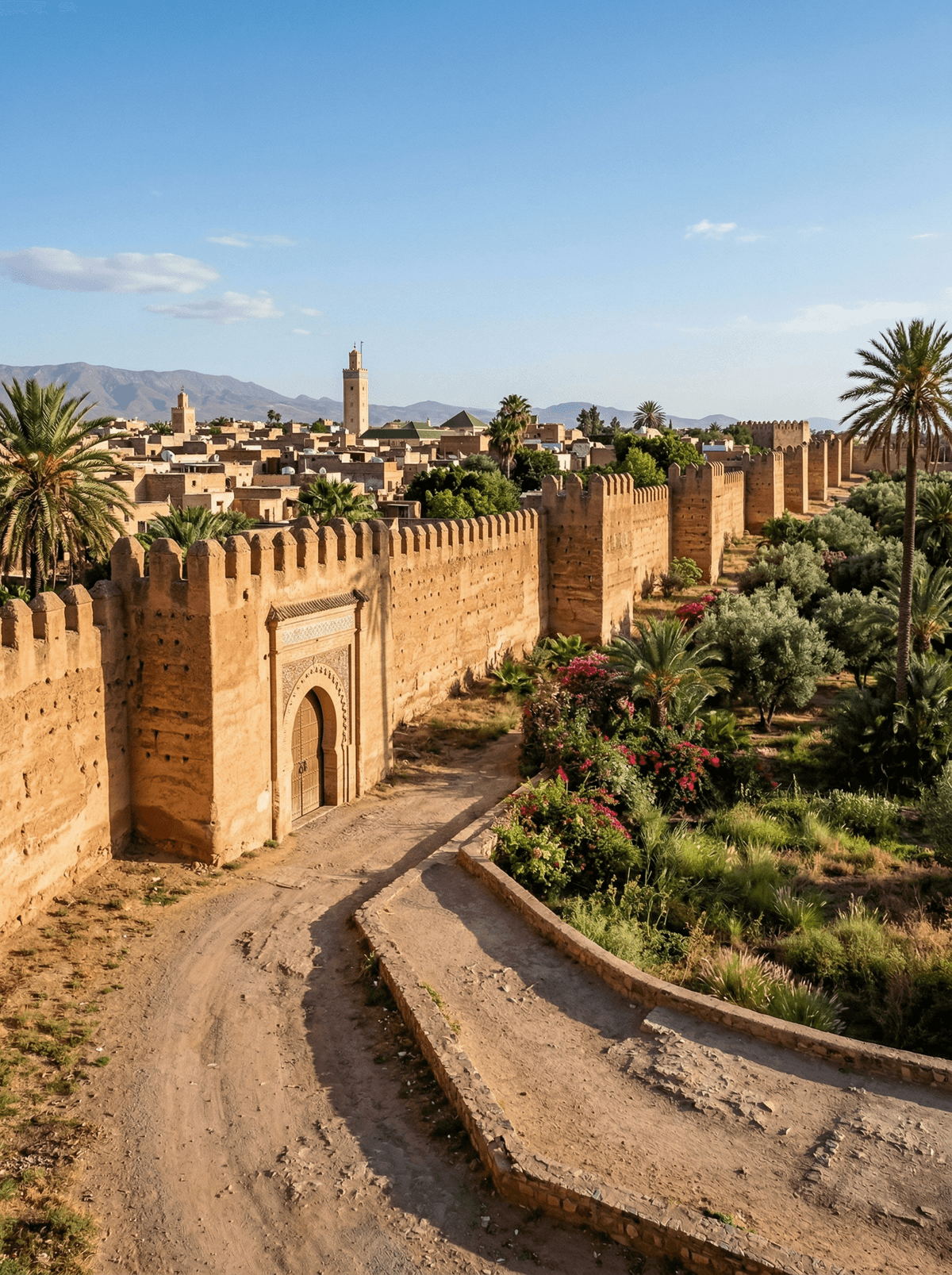
The wall is the town. Seven and a half kilometres of rammed earth built mostly in the sixteenth century, a hundred and thirty towers along it and gates that used to control who came in, and it is still one of the best preserved in Morocco. Inside it the medina is small enough to walk in an afternoon and the Atlas fills the horizon behind it.
Taroudant was the Saadian capital in the sixteenth century, before the dynasty moved to Marrakech, and it kept the wall and trade rather than the power. The souks split in two and the split still holds: the Arab souk for spices, textiles and household goods, the Amazigh souk for leather, chased silver and stonework. Both sell to the people of the Souss first, which is why the pace feels like a town at work rather than a preserved medina. A tanners' quarter and argan cooperatives beyond the gates connect the old trades to the landscape that supplies them. The earthquake centred in Al Haouz in 2023 belongs to the ramparts' long history of repair, not to the reason for walking them.
Solo
The souks need no guide and getting lost in them is the point, since the shops are stocked for people who live here. Give an hour to the tanners' quarter, where the hides are treated and coloured the way they always were, and another to a cooperative outside the wall for the argan.
Couple
Take the horse and cart round the outside of the wall as afternoon fades; low light lifts ochre from the mud and the towers throw shadows across the road. Thirty kilometres out, the Tioute oasis puts a Saadian kasbah above a thousand hectares of palm, orange and pomegranate.
- The rammed-earth wall runs about seven and a half kilometres with a hundred and thirty towers, and ranks among Morocco's best-preserved fortifications.
- This was the Saadian capital in the sixteenth century, before the dynasty moved the seat to Marrakech.
- The two souks divide by trade, spices and textiles in one and leather, chased silver and stonework in the other, and both serve the region's own people first.
- The Al Haouz earthquake added another repair chapter to ramparts that have enclosed the town since the Saadian era.
Argan oil out of the cooperatives just beyond the gates, in the country the tree came from, where they will show you the whole extraction before you taste it.
Oranges and pomegranates off the Tioute oasis half an hour away, a thousand hectares of them growing under a Saadian kasbah.
Kanazawa
Japan
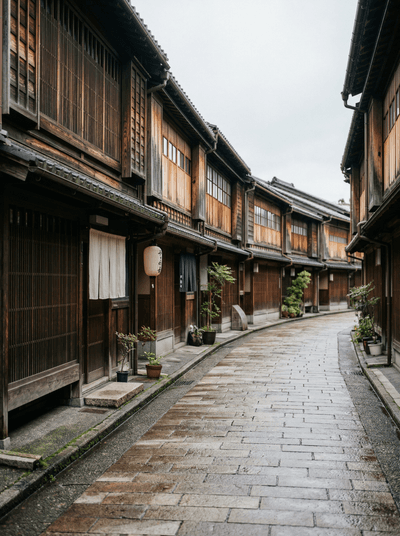
Samurai and geisha districts untouched by war where gold leaf gilds everything, even ice cream.
Marialva
Portugal
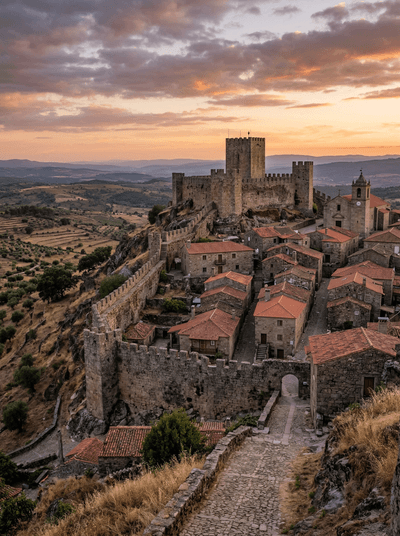
A medieval town stands roofless inside castle walls, abandoned to silence and moss.
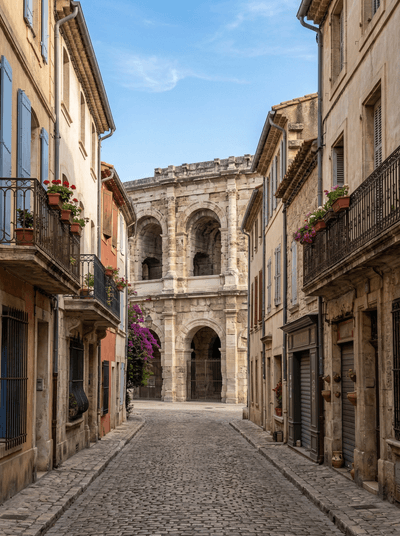
Arles
France
Roman amphitheatre stones still warm at twilight in the town Van Gogh painted into fever.
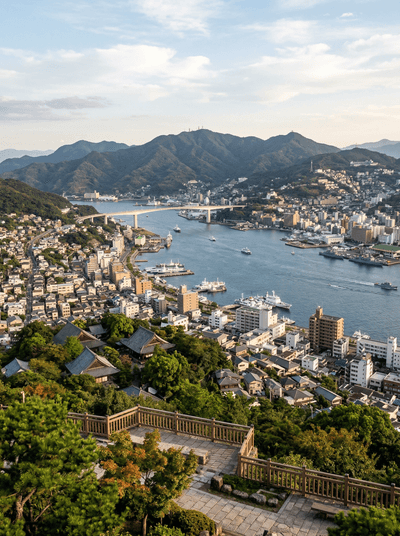
Nagasaki
Japan
A harbour city layered in Dutch, Chinese and Portuguese ghosts, where the churches went underground.
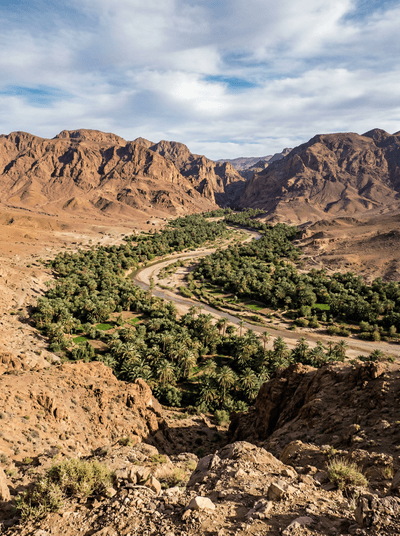
Draa Valley
Morocco
Two and a half million date palms carry a green river towards the Sahara.
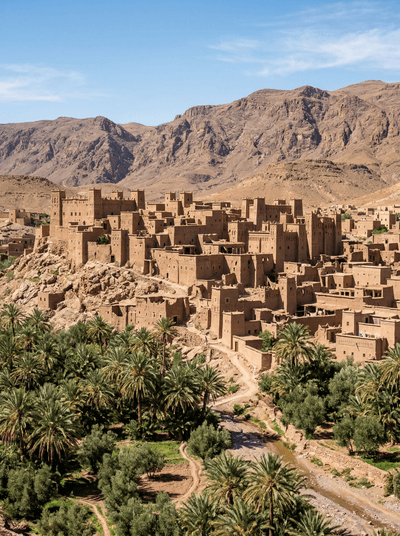
N'Kob
Morocco
Forty-five earthen kasbahs crowd an oasis beneath the broken ridges of Jebel Saghro.
Ijoukak
Morocco
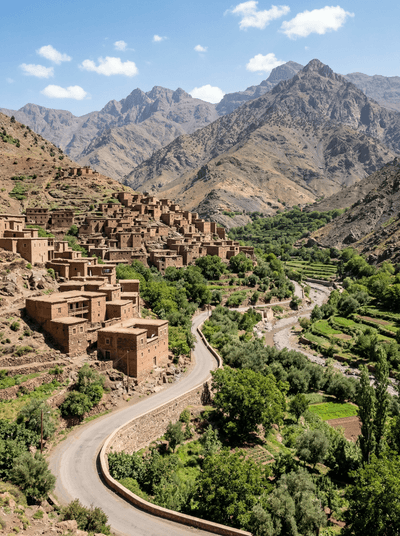
Walnut terraces drink from two rivers below the ruins of a mountain palace.
Skoura
Morocco
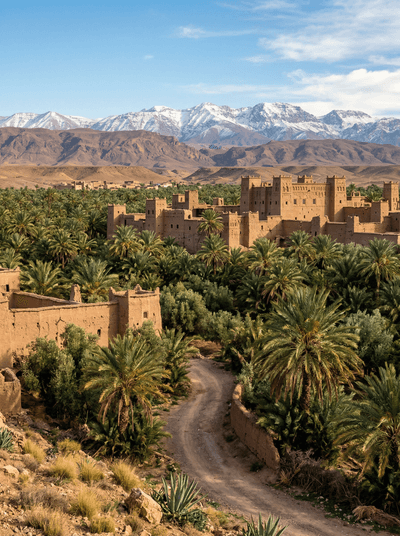
Water runs beneath twenty-five square kilometres of palms and a kasbah still occupied by its family.