
Tanzania
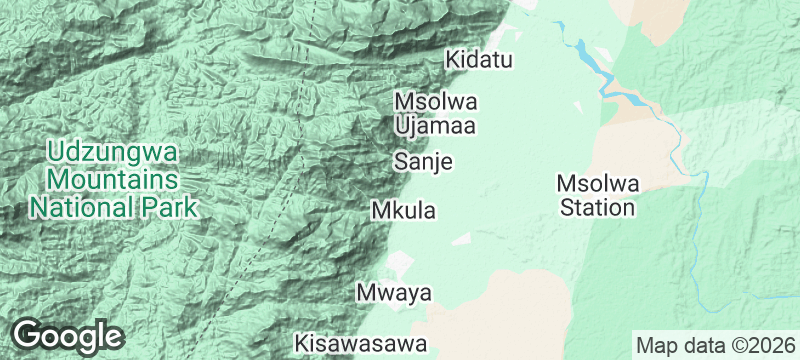
Udzungwa Mountains National Park
Primates unknown to science until 1979 live in these Eastern Arc forests.
The forest never quite dries: canopy over canopy up the Eastern Arc slopes, waterfalls dropping through it, and primates living here that live nowhere else, one of them unknown to science until 1979.
Udzungwa protects nearly 2,000 square kilometres of the Eastern Arc, among the world's richest biodiversity hotspots, and at least six primate species live in its forest: the Sanje mangabey, discovered only in 1979, and the Udzungwa red colobus exist nowhere else on Earth. The Sanje waterfall trail climbs through dense canopy to the falls, June to October keeping trails firm and river crossings low, and Hondo Hondo's forest camp at Mang'ula borders the park and does the cooking.
Solo
Fit solo hikers can book a guide for Sanjes or a longer Udzungwa route and enjoy forest without guaranteed primates.
Friends
Friends with similar fitness can choose deeper plateau routes and keep rare-species sightings as optional rewards.
- The Sanje mangabey and Udzungwa red colobus exist nowhere else on Earth.
- The mangabey was unknown to science until 1979.
- The Sanje waterfall trail climbs through unbroken canopy.
- Hondo Hondo's camp puts beds and meals at the park boundary.
Hondo Hondo's forest camp at Mang'ula cooks the stay at the park's edge.
Trail days travel on packed lunches; the forest offers shade, not kitchens.
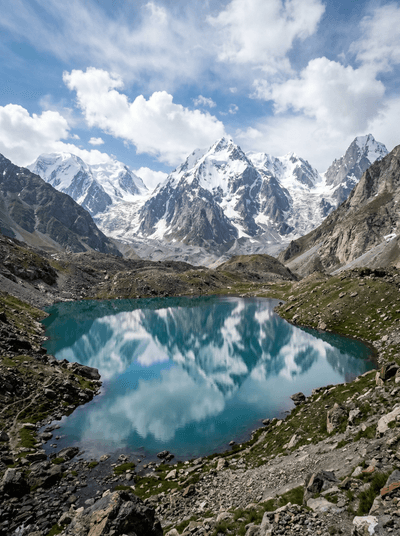
Rush Lake
Pakistan
At 4,694 metres, one of Earth's highest alpine lakes mirrors Rakaposhi and Diran in still water.
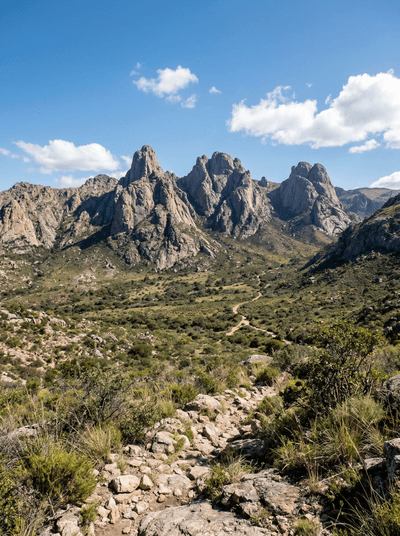
Los Gigantes
Argentina
Red granite monoliths rise from the Córdoba sierras like fingers of a buried colossus.
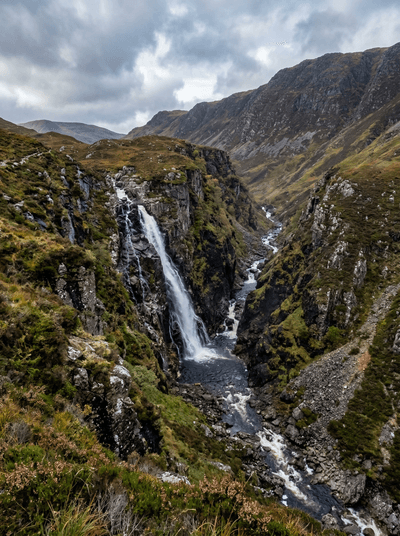
Falls of Glomach
Scotland
A 113-metre waterfall hidden in a gorge so remote the walk in takes half a day.
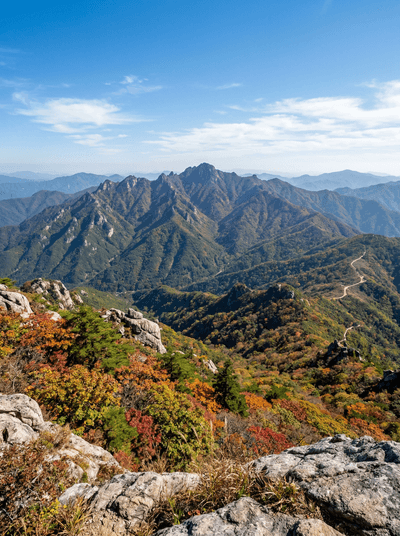
Jirisan
South Korea
Reintroduced black bears roam beneath a forty-kilometre ridge of huts and cloud.
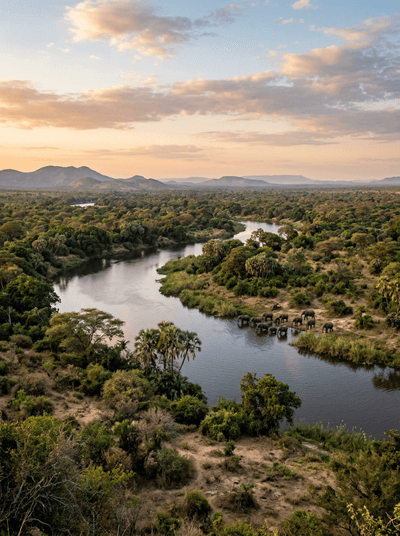
Nyerere National Park
Tanzania
Hippo pods crowd amber channels in a park twice the Serengeti's size.
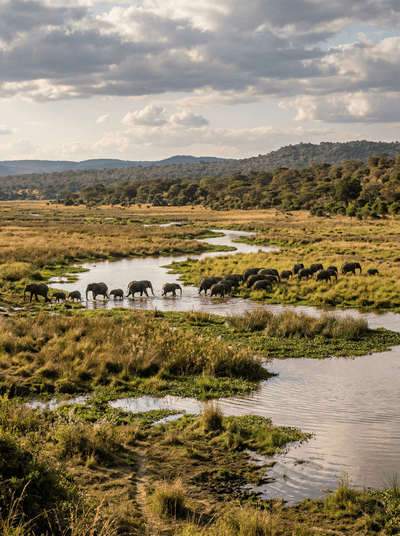
Moyowosi Game Reserve
Tanzania
Sitatunga wade a papyrus labyrinth on a flyway most birders never reach.
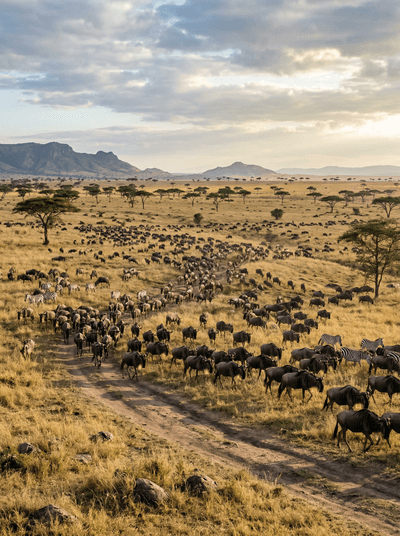
Serengeti National Park
Tanzania
Two million animals move with the rain across plains that have never known a fence.
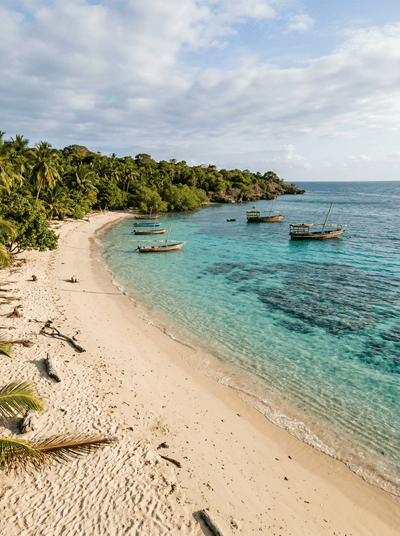
Mafia Island
Tanzania
The biggest fish in the sea feed each season off an island the crowds never found.