Turkey
Aizanoi
A complete Roman temple alone in a wheat field, grain prices carved in its market hall.
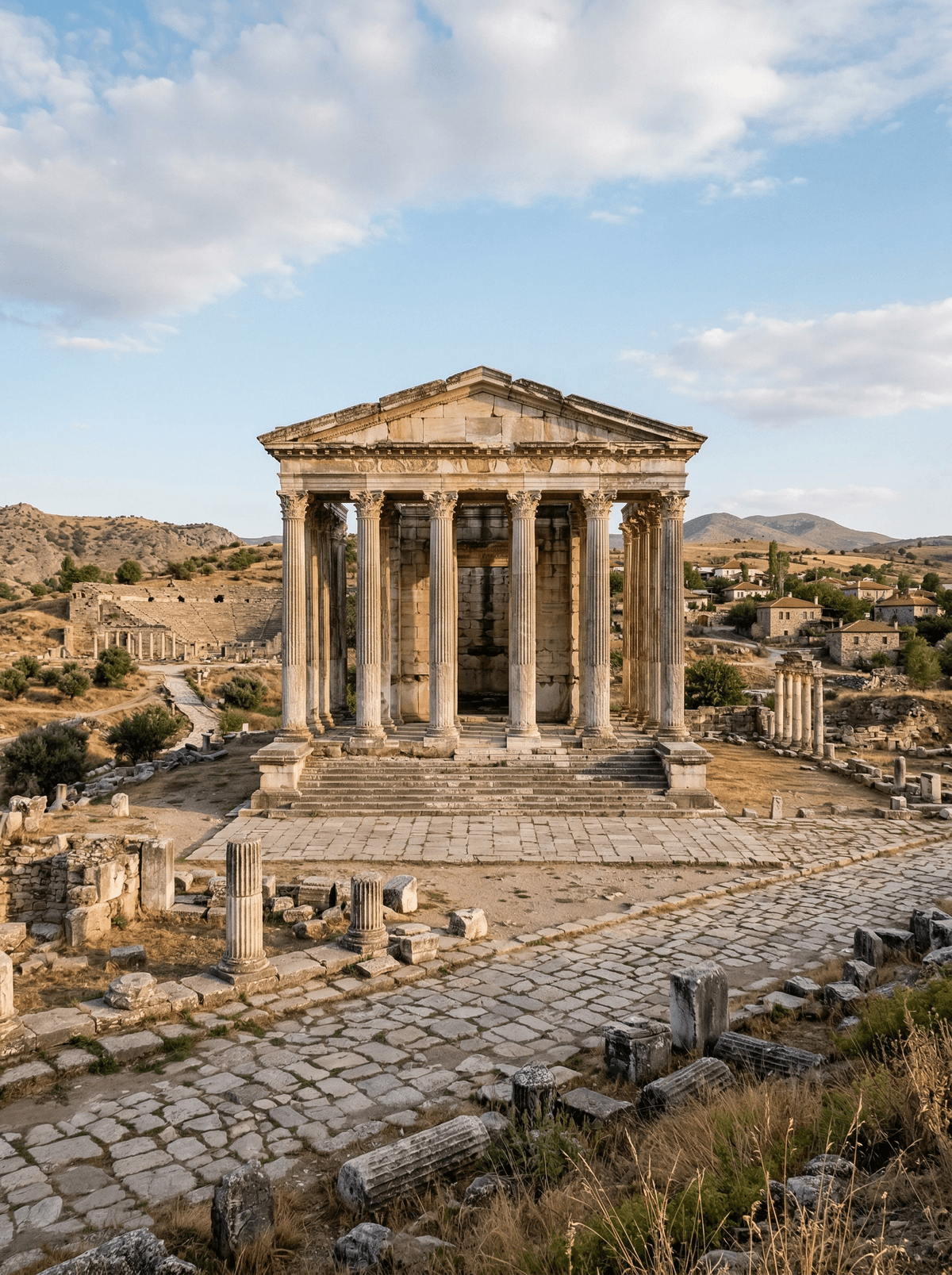
Wheat grows between the columns. The Temple of Zeus at Aizanoi rises from a working agricultural valley as if the farmers simply built around it, because they did. Beside it stands a round market hall where grain prices were carved into stone nearly two millennia ago, and on most days there is hardly another visitor in sight.
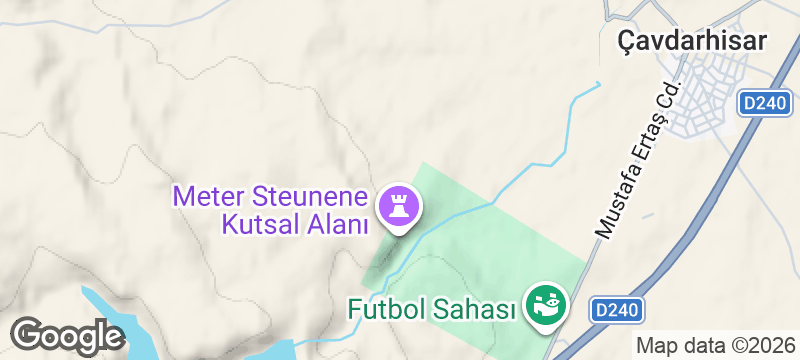
Aizanoi is a Roman city at modern Çavdarhisar in Kütahya province, centred on the Temple of Zeus built between 117 and 138 AD, its podium and full colonnade still standing, a completeness few Roman temples in Anatolia can match. In the round macellum, a carved copy of Emperor Diocletian's price edict of 301 AD still lists what goods should cost. Two Roman bridges over the Penkalas stream, today's Kocaçay, remain in daily use by the villagers. A combined theatre and stadium, raised after 160 AD, closes the circuit, and the whole city has sat on UNESCO's tentative World Heritage list since 2012, still almost unknown.
Solo
Walk among columns with no other visitors, read the price edict carved into the market hall, and drink çay from Kütahya's hand-painted ceramic cups in the village. Archaeology without an audience.
Couple
The intimacy of Aizanoi is its strength: no tour groups, no queues, only you two and a Roman temple in a wheat field. Kütahya's ceramics make a distinctive side trip.
- The Temple of Zeus, built 117 to 138 AD, keeps both its podium and its full colonnade, a completeness few Roman temples anywhere can match.
- In the round market hall, prices set by Emperor Diocletian's edict of 301 AD are still carved into the stone, an ancient commodities board.
- Wheat fields grow right up to the columns; villagers have farmed this valley for millennia.
- Two Roman bridges across the Penkalas stream are still in daily use.
Göveçli pilav, rice baked in meat stock under browned lamb, Kütahya's earthenware standby.
Peynirli su böreği, silky boiled pastry layered with cheese, parsley and plenty of butter.
Quilmes Ruins
Argentina
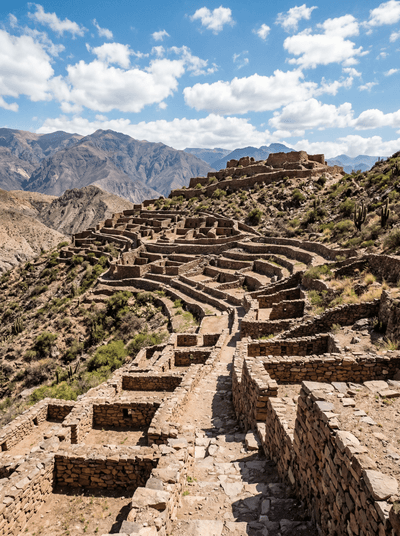
A pre-Columbian stone city climbs the hillside, its people unbeaten for a century.
Taro Island
Solomon Islands
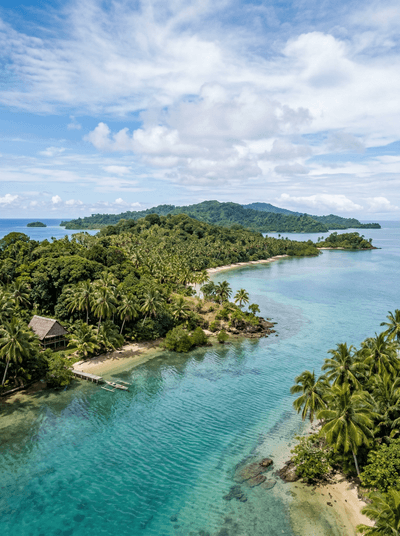
A provincial capital on an island low enough that the plan is to move it.
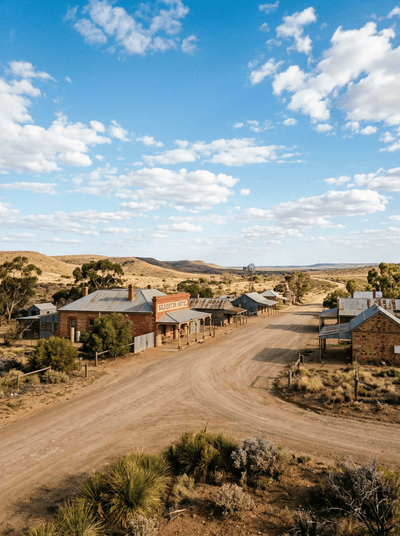
Silverton
Australia
Mad Max roads vanish into Mundi Mundi plain beyond corrugated-iron galleries and a former silver town.
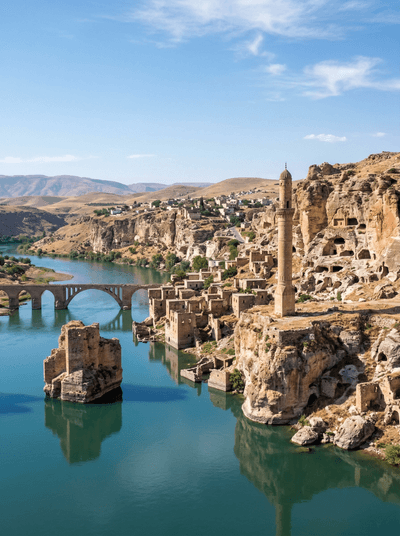
Hasankeyf
Turkey
A 12,000-year-old Tigris settlement now partly drowned by a dam, cave dwellings and minarets half-submerged.
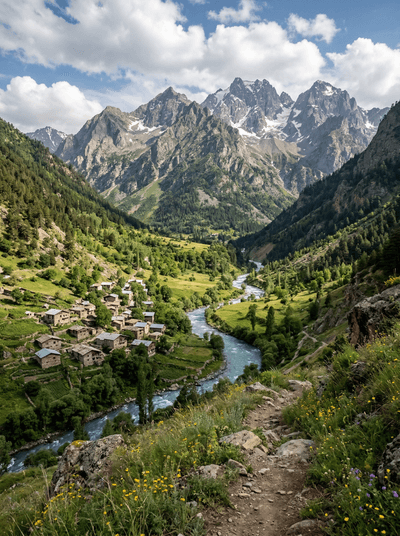
Barhal Valley
Turkey
10th-century Georgian churches stand forgotten in steep valleys where the road ends and peaks begin.
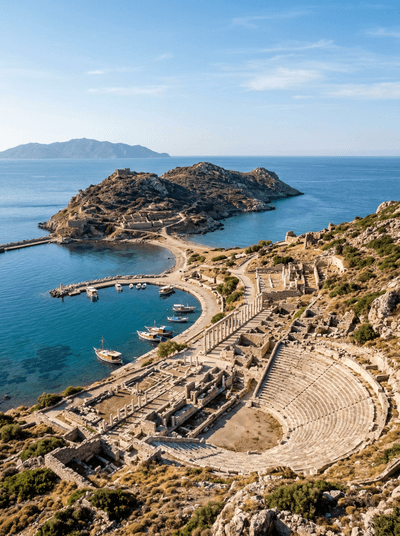
Knidos
Turkey
Two harbours face two different seas at a windswept cape where the Aegean meets the Mediterranean.
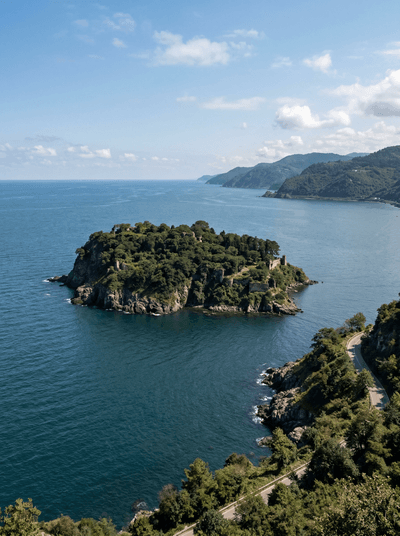
Giresun Island
Turkey
The eastern Black Sea's only island, its Hellenistic temple foundations sleeping beneath hazelnut trees.