Portugal
Amarante
A stone bridge, Baroque domes, and a town that trades fertility cakes in sincere tradition.
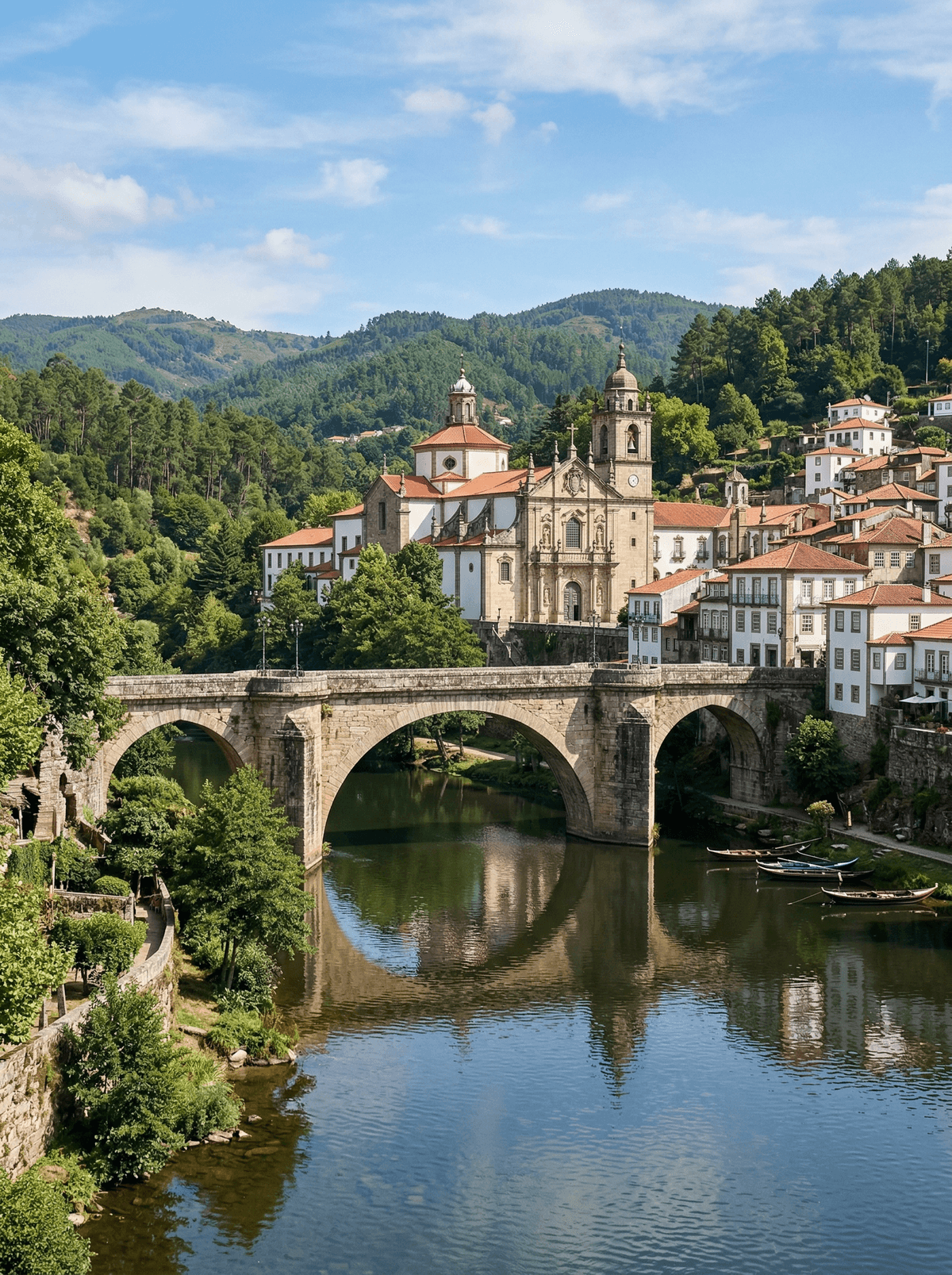
The Tâmega slides beneath a granite bridge so central that the town grew around it rather than the other way round. Baroque domes rise above willow-draped banks, and the town's famous cakes are shaped like exactly what you think — a centuries-old fertility tradition, and entirely sincere. Amarante is the country at its most disarmingly eccentric.
Amarante's identity hangs on the Ponte de São Gonçalo and the adjoining church and monastery honouring a thirteenth-century saint of matchmaking — pilgrims have touched his tomb seeking love since the convent rose in 1540, and the Festa de São Gonçalo tradition has traded its bolos as tokens of romantic intent for centuries. The bridge itself, rebuilt in the eighteenth century at the medieval ford, reflects its arches perfectly in still water. Beyond the festival, a Baroque quarter mirrors itself in the river, the museum named for Amadeo de Souza-Cardoso holds the modernist the town raised, and conventual pastry recipes guarded for generations still cross the counters. The surrounding hills pour vinho verde, most of it drunk locally rather than shipped — the pours here taste different from anything in shops.
Solo
Small enough for a day, rich enough to linger — the Souza-Cardoso museum, riverside walks and a counter stool at a conventual pastry shop make a quiet solo triumph.
Couple
A town whose patron is the matchmaker, whose sweetest tradition celebrates fertility, and whose riverside was designed for slow lunches — a love letter someone forgot to send.
Friends
The cake tradition is the story you retell — fertility pastries traded as tokens since anyone can remember — and the local vinho verde rarely leaves the district. Come for the absurdity, stay for the warmth.
- The São Gonçalo tradition trades fertility cakes between hopeful strangers, sincerely.
- Pilgrims have touched the saint's tomb seeking love since the 1540 convent rose.
- The bridge's arches double perfectly in the still Tâmega below the Baroque quarter.
- Local vinho verde rarely leaves the district — the pours differ from any shop bottle.
Bolos de São Gonçalo — the frank-shaped cakes baked as tokens of romantic intent.
Conventual sweets from centuries-guarded recipes — fogaça and egg-yolk pastries.
Takamatsu
Japan
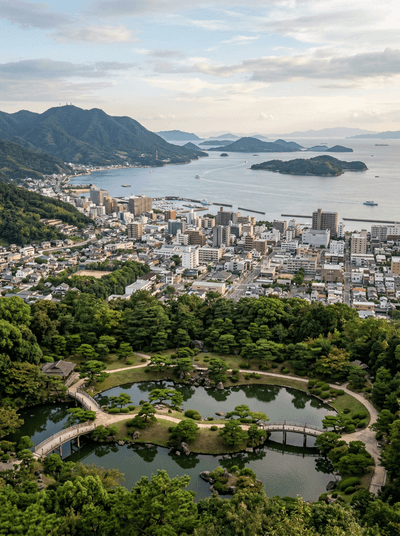
The udon capital, where you carry your own bowl and queue before the doors open.
Beppu
Japan
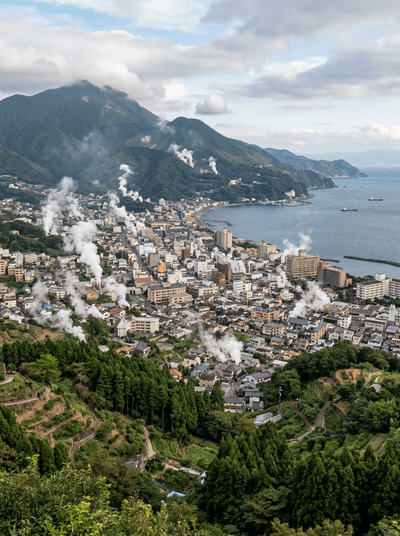
Steam rising from every crack in the ground in a city that boils from below.
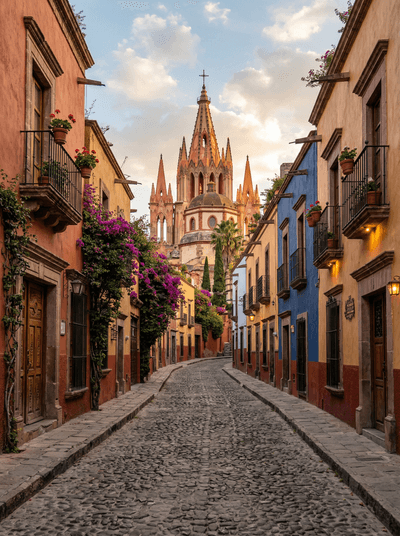
San Miguel de Allende
Mexico
Colonial light turns pink at dusk, every doorway hiding an artist's courtyard.
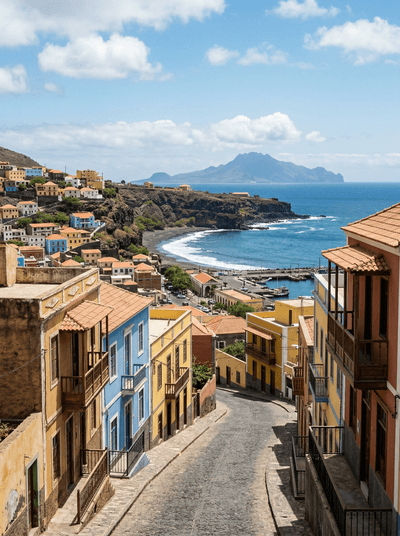
São Filipe
Cape Verde
A hundred pastel sobrados crowd the clifftop above a beach of jet-black volcanic sand.
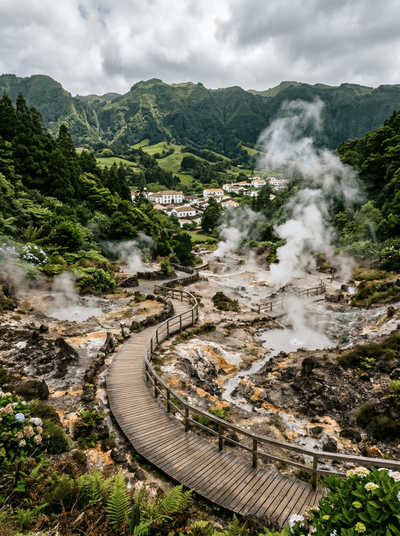
Furnas
Portugal
Hot springs bubble through botanical gardens while stew slow-cooks in volcanic earth.
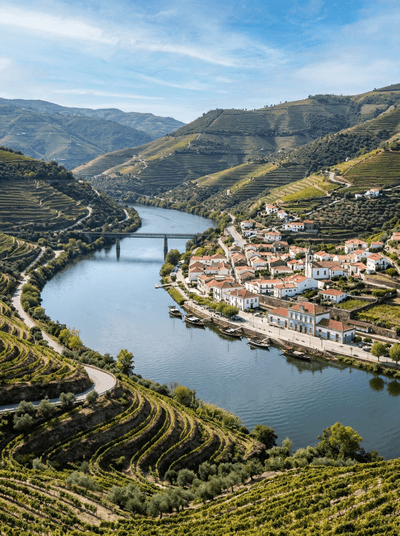
Pinhão
Portugal
Terraced vineyards plunge to the Douro so steep the harvest travels by shoulder.
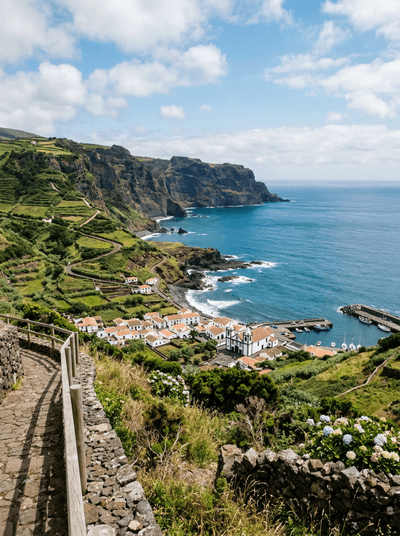
Santa Maria
Portugal
The Azores' oldest island hides a red clay desert and golden beaches the others lack.