Cape Verde
São Filipe
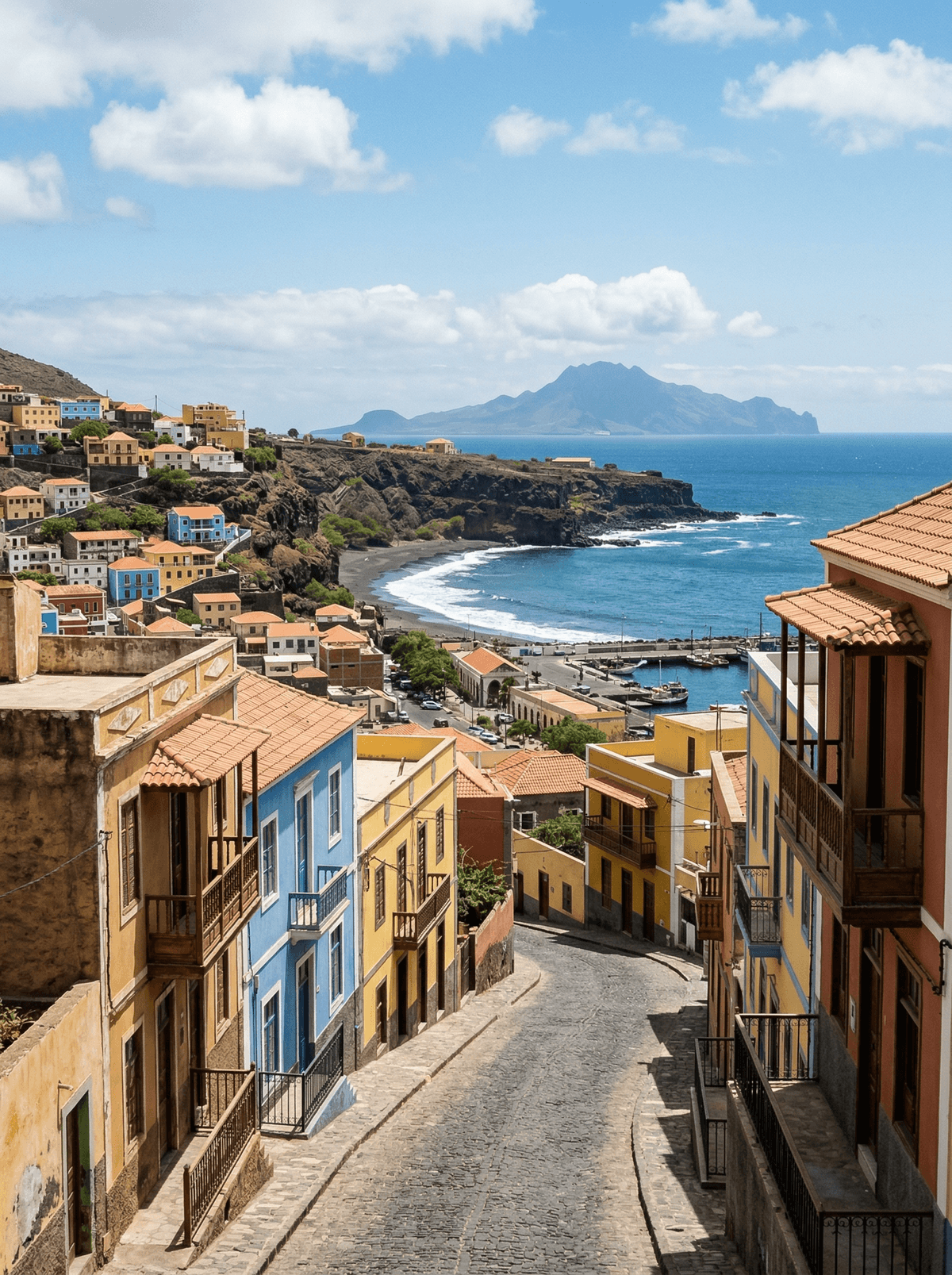
A hundred pastel sobrados crowd the clifftop above a beach of jet-black volcanic sand.
Carved wooden balconies lean over cobbled streets washed in ochre, rose and blue. Below the last square the cliffs drop to a beach of black volcanic sand, and on clear days the neighbouring island of Brava rides the horizon.
São Filipe is Fogo's principal town and among Cape Verde's oldest, founded in the sixteenth century. Around a hundred sobrados survive from the island's nineteenth-century wine and coffee boom: two-storey merchant houses with inner courtyards, where landowning families lived upstairs and enslaved people worked below until abolition in 1876. Cape Verdean families later bought many of the houses back, and the old centre now runs to markets, shaded squares and the widest choice of rooms and restaurants on the island. The volcano that built the black beach below is the same one most visitors are here for, and the town is its natural gateway.
Solo
The old town rewards slow walking: pastel façades, shaded squares, a working market, and a clifftop path above the black beach for sunset.
Couple
Sleep in a restored sobrado built around a courtyard, and take wine and coffee grown on the volcano as the evening light turns the façades amber.
Friends
Make this the volcano base: the island's widest choice of beds, and proper restaurants for the night after the summit.
- Around a hundred two-storey sobrado town houses survive in São Filipe's historic centre, painted in pastels around inner courtyards.
- The town sits on cliffs above a black volcanic sand beach, with Brava visible across the water.
- Djagacida, Fogo's maize and pigeon-pea dish, and caldera-grown wine and coffee reach the town's tables.
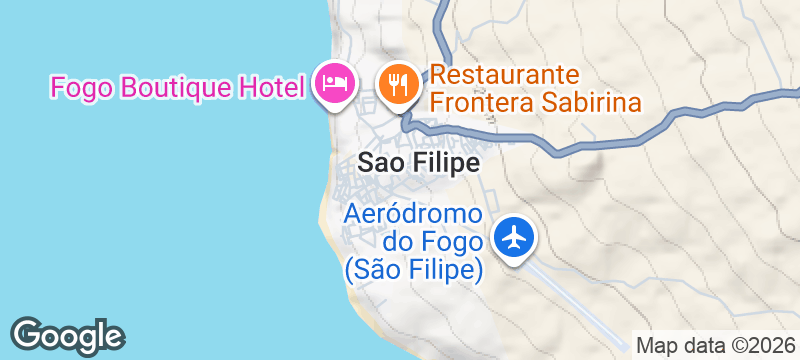
- São Filipe offers Fogo's broadest choice of rooms and is the practical base for the volcano.
Djagacida is the island's own comfort food, maize, pigeon peas and pork simmered slowly; ask where the good one is today.
Fogo grows both its own coffee and its own wine; take them together at sunset above the black shore.
Visby
Sweden
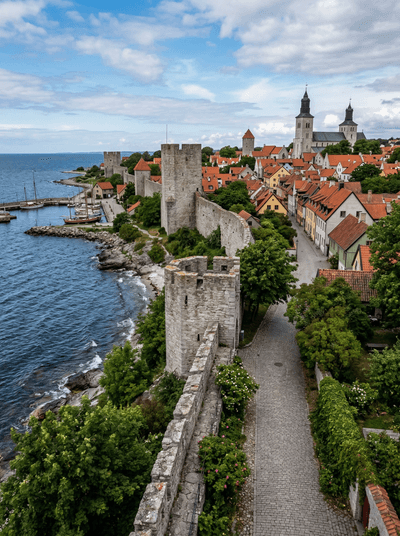
Ruined medieval churches rise from rose gardens inside three kilometres of fortress wall.
Ioannina
Greece
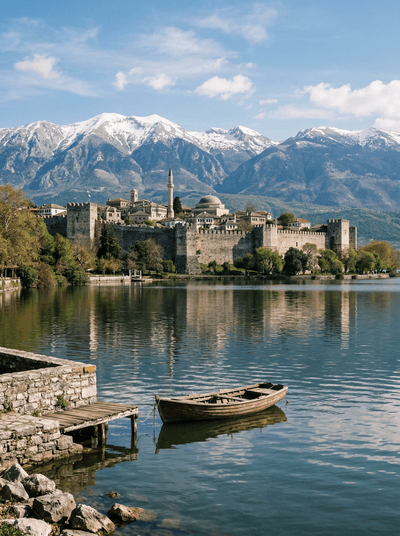
Ali Pasha's lake fortress — silversmith workshops and Ottoman mosques on an island reached by boat.
Takamatsu
Japan
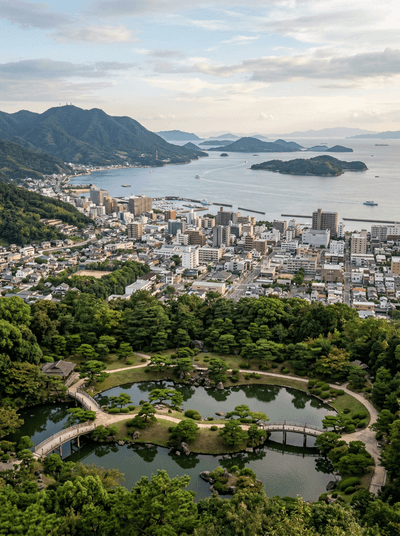
The udon capital, where you carry your own bowl and queue before the doors open.
Palermo
Italy
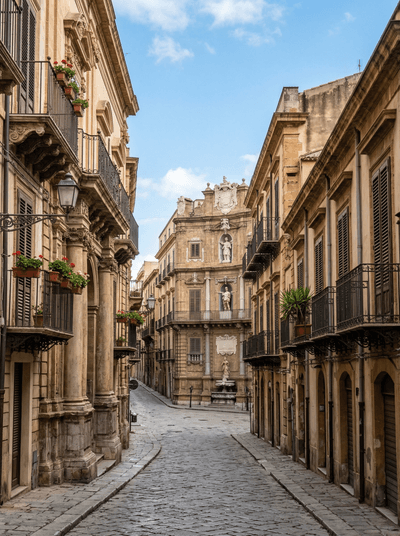
Arab-Norman domes rise above street markets where stigghiola smoke drifts through medieval alleyways.
Vale do Paúl
Cape Verde
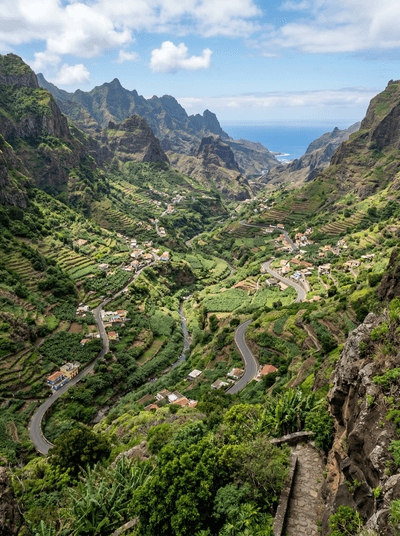
Sugarcane and coffee terraces pour off a crater rim into a valley threaded with running water.
Tarrafal
Cape Verde
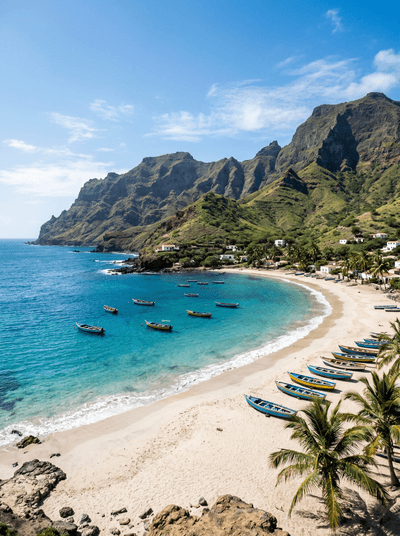
A palm-shaded swimming cove shares its town with the prison called the Camp of Slow Death.
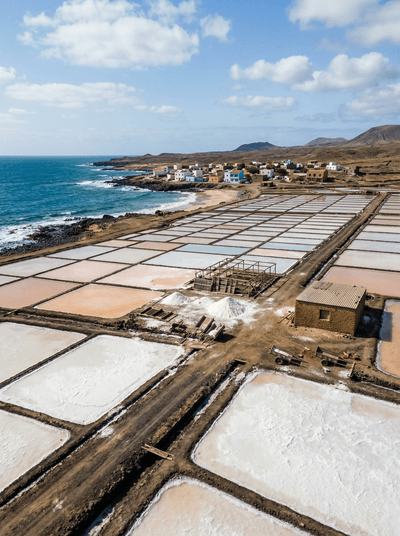
Salinas de Porto Inglês
Cape Verde
Women of the island's salt cooperative still harvest white gold from wetland pans.
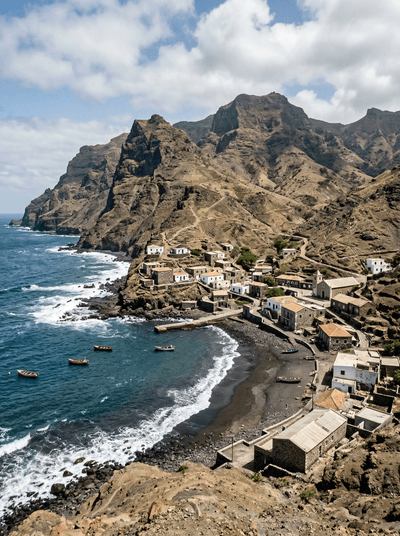
Tarrafal de Monte Trigo
Cape Verde
A black-sand cove where the day's menu is written by whatever the fishing boats bring home.