Canada
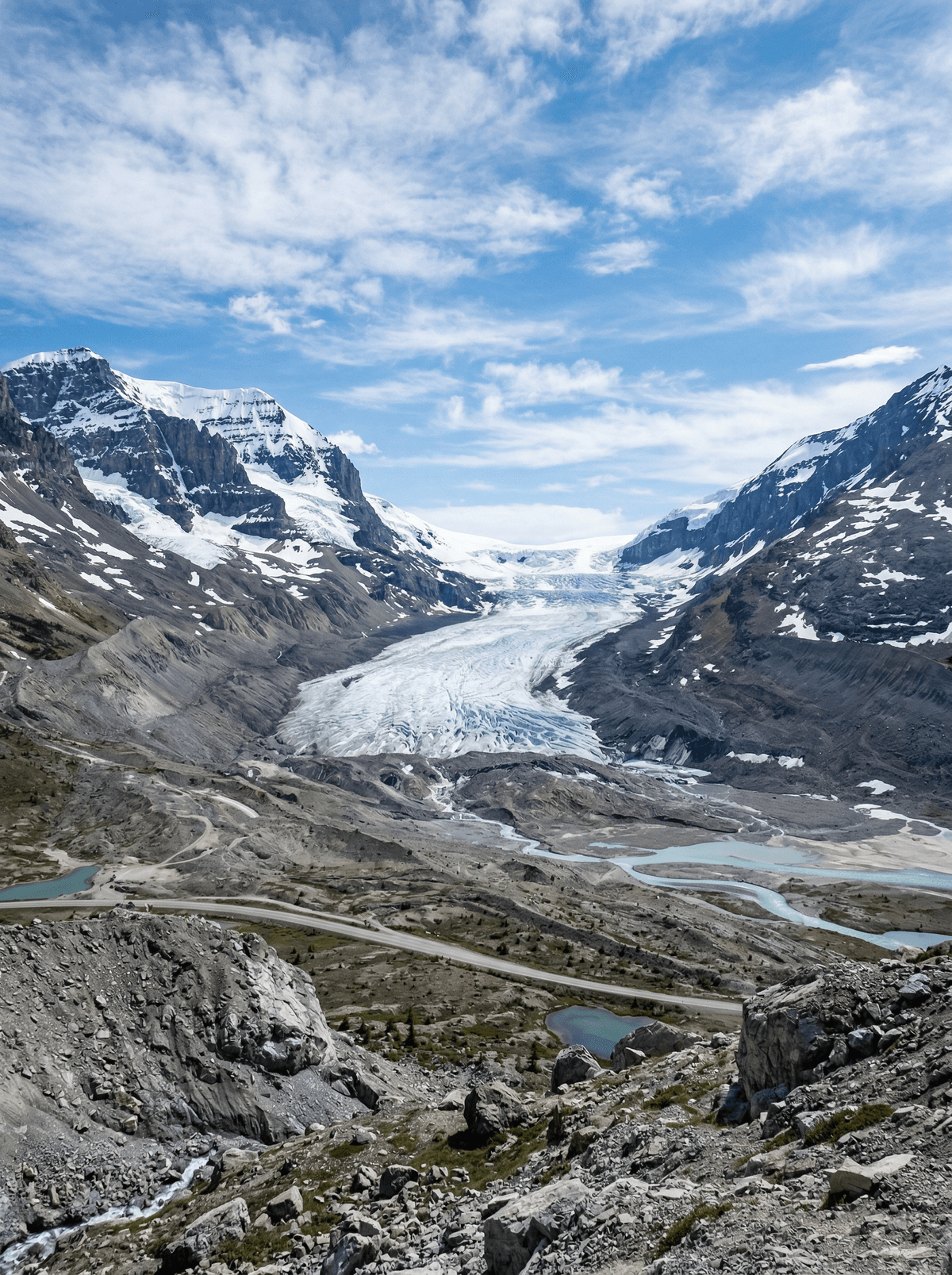
Athabasca Glacier
A tongue of the Columbia Icefield lies close enough to touch, and visibly leaving.
Marker posts count the ice's retreat year by year down the moraine. Wind off the glacier crosses the road like a season of its own.
The Athabasca is the icefield's most accessible tongue, reached by guided ice walks and all-terrain coaches from the Discovery Centre. The dated markers make climate change a walkable timeline rather than an abstraction. Respect the ropes: the crevasses are real.
Solo
Guided ice access removes the technical barriers for a lone traveller.
Couple
Walk the retreat timeline together; the markers say more than any plaque.
Friends
The icefield day slots cleanly into a group's Parkway run.
Family
Coaches onto the ice give children a glacier without mountaineering.
- The icefield's most accessible tongue lies steps off the Parkway.
- Dated markers make the ice's retreat a walkable timeline.
- Guided walks and ice coaches manage the real crevasse risk.
Altitude, inside the Discovery Centre, plates Canadian dishes with the glacier filling the windows.
Saskatoon-berry preserves reach even this altitude of menu.
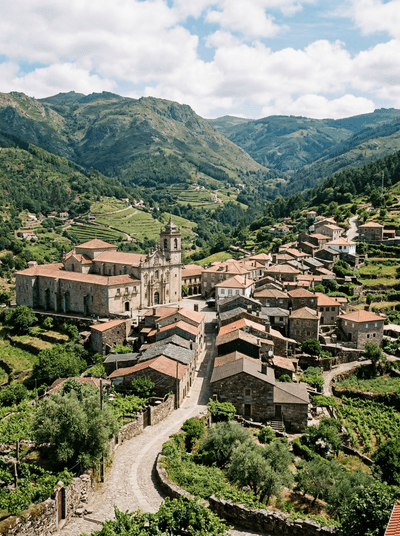
Arouca
Portugal
A 516-metre suspension bridge sways 175 metres above a gorge — Portugal's vertigo capital.
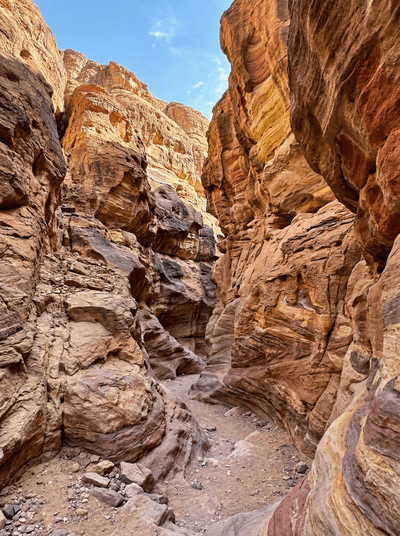
Coloured Canyon
Egypt
Sandstone walls rippling in rust, ochre, and violet, narrow enough to touch both sides.
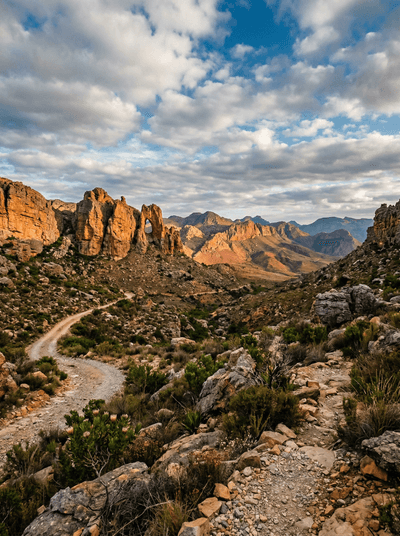
Cederberg
South Africa
Red sandstone arches hold the last heat while rooibos valleys fall into shadow.
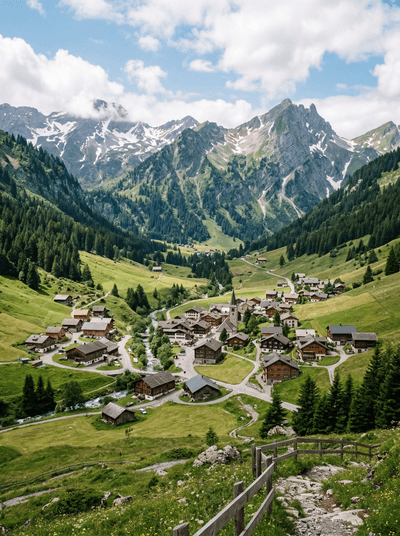
Malbun
Liechtenstein
A golden eagle flies beside you on the trail above Liechtenstein's only ski village.
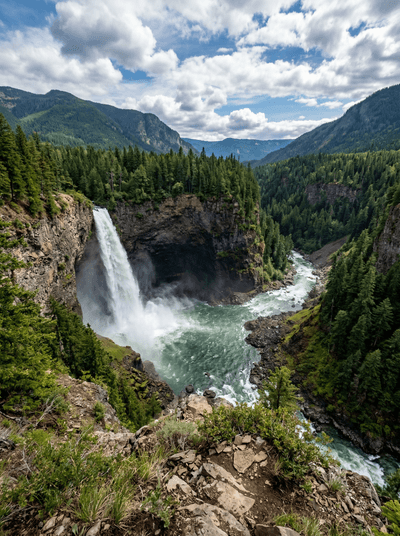
Wells Gray Provincial Park
Canada
Waterfalls on a volcanic scale pour through a park most itineraries still miss.
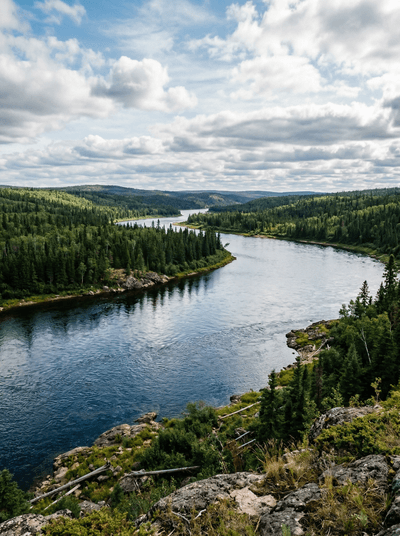
Churchill River
Canada
A voyageur highway of lakes and granite still runs its canoe routes through the boreal north.
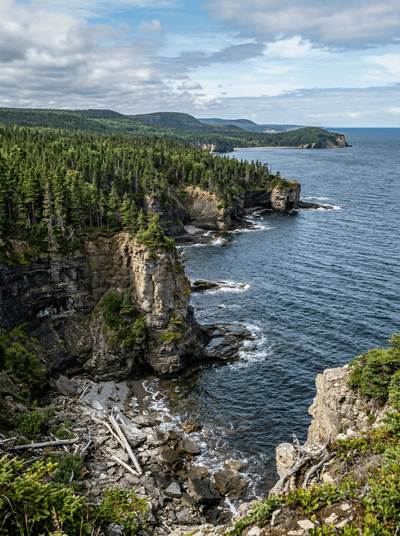
Île d'Anticosti
Canada
Waterfalls, canyons and fossil-rich shores spread across a Gulf island with one village and few humans.