Mexico
Barranca de Metztitlán
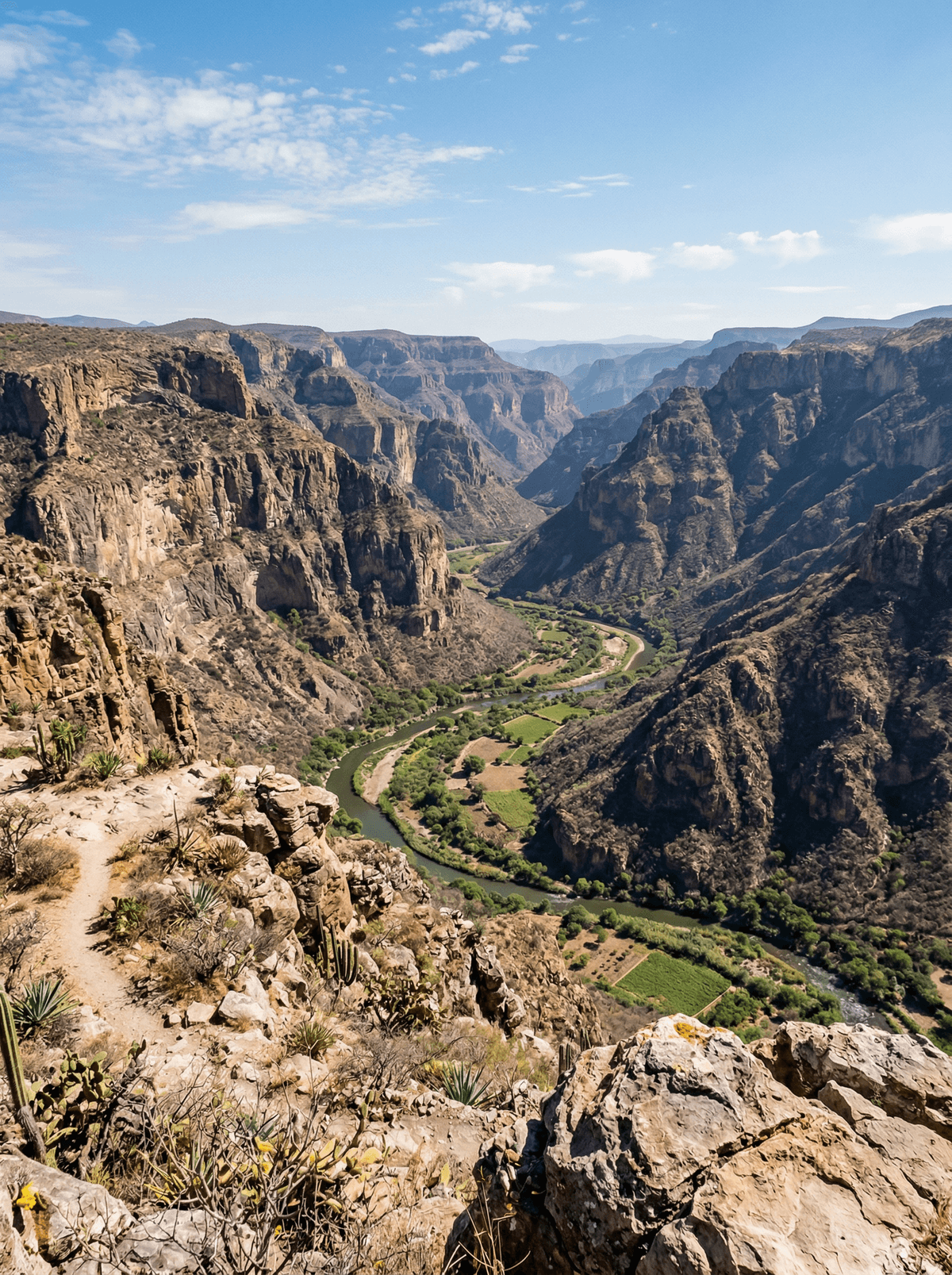
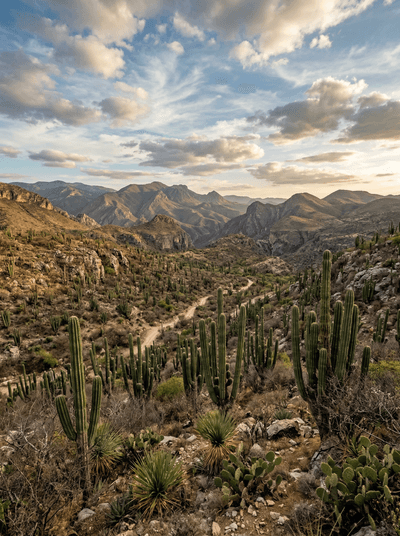
Giant cacti and a sixteenth-century convent occupy the same dramatic dry valley.
The canyon holds two kinds of monument. Columnar cacti stand in their thousands on the slopes, and a fortress-like convent has watched over the valley floor since the fifteen hundreds.
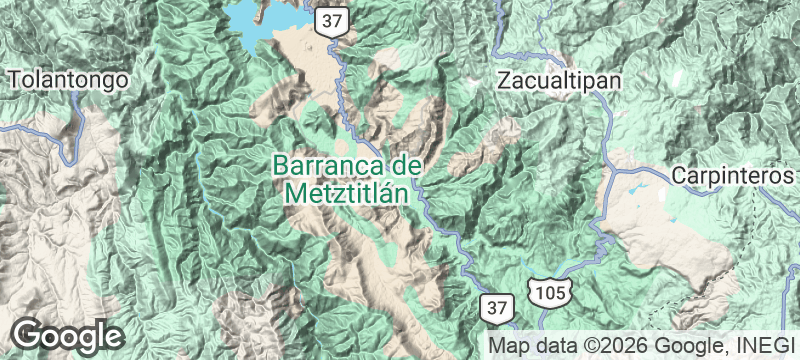
Barranca de Metztitlán protects an exceptional concentration of cacti, agaves and dry-valley habitats in Hidalgo, with viewpoints, rock art, the sixteenth-century convent and several visitor centres spread across the reserve. Distances are real and signage varies, so a vehicle or local guide makes the day workable. The valley's earth-oven cooking tradition runs as deep as its botany.
Solo
Drive the reserve's viewpoints with local guidance, saving the convent a slow hour.
Couple
Pair the cactus slopes with the valley's earth-oven barbacoa tradition.
- Barranca de Metztitlán protects an exceptional concentration of cacti, agaves and dry-valley habitats.
- CONANP identifies viewpoints, rock art, a sixteenth-century convent and several visitor centres.
- A vehicle or local guide is sensible because signs and distances vary across the large reserve.
Zacatamal, the valley's great tamal, cooks for some fourteen hours in an earth oven.
Tecocos, stuffed with bean or pea paste, are the local hand food.
Mount Sunday
New Zealand
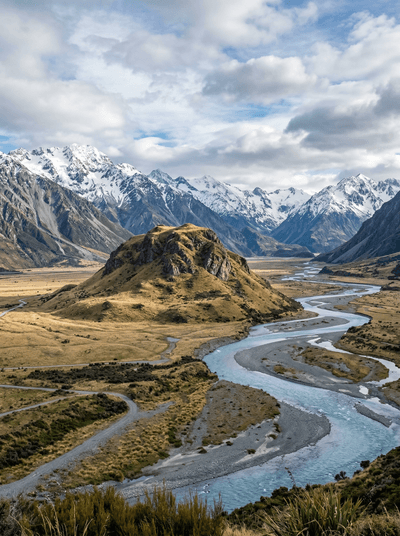
A solitary hill guarding a braided river plain — Tolkien's Rohan made real, set removed.
Jebel Qamar
Oman
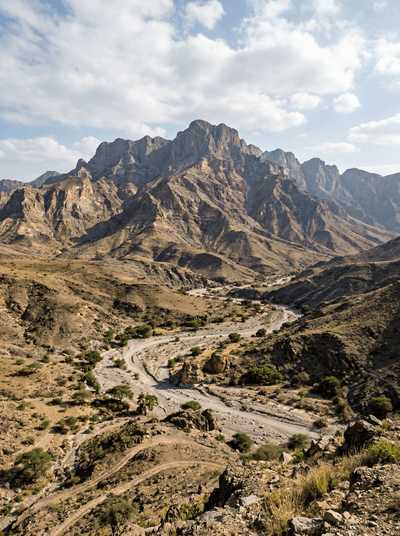
Forest-softened escarpments drop through hidden wadis towards Dhofar's western sea.
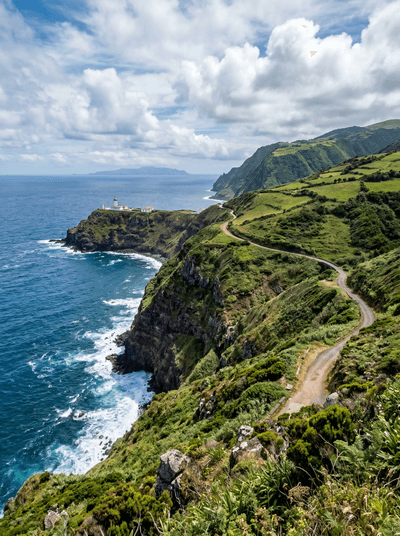
São Jorge
Portugal
Knife-edge ridges drop to coastal fajãs — green platforms born from cliff collapses.
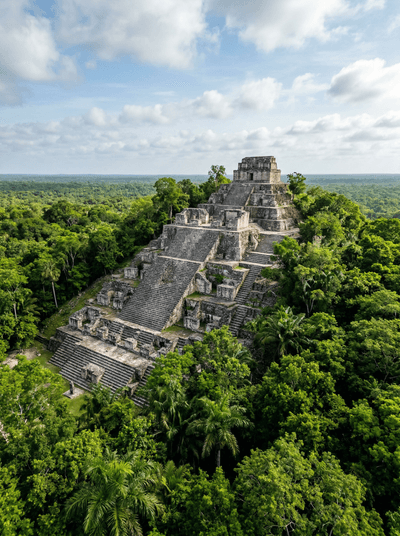
Calakmul
Mexico
A Maya capital's towers still stand above an unbroken sea of forest.
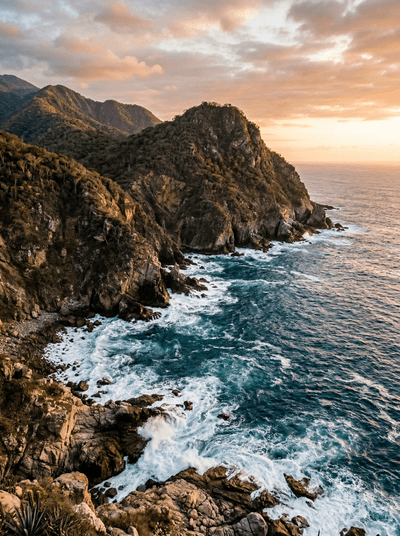
Cabo Corrientes
Mexico
Fishing villages, forested headlands and open Pacific beaches shape Jalisco's far coast.
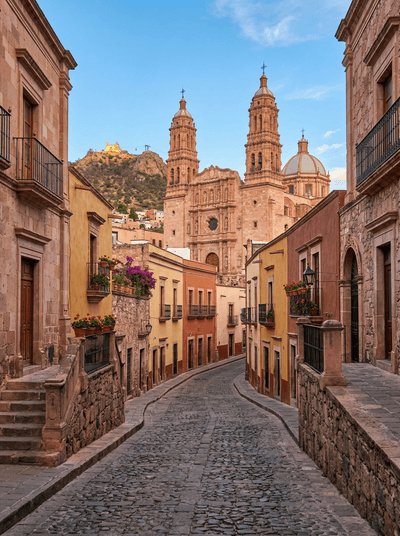
Zacatecas
Mexico
A pink-sandstone city climbs from silver mines to a cathedral carved like frozen lace.
Tehuacán-Cuicatlán Valley
Mexico
Forests of columnar cacti record millennia of human life in Mexico's drylands.