United States
Bryce Canyon
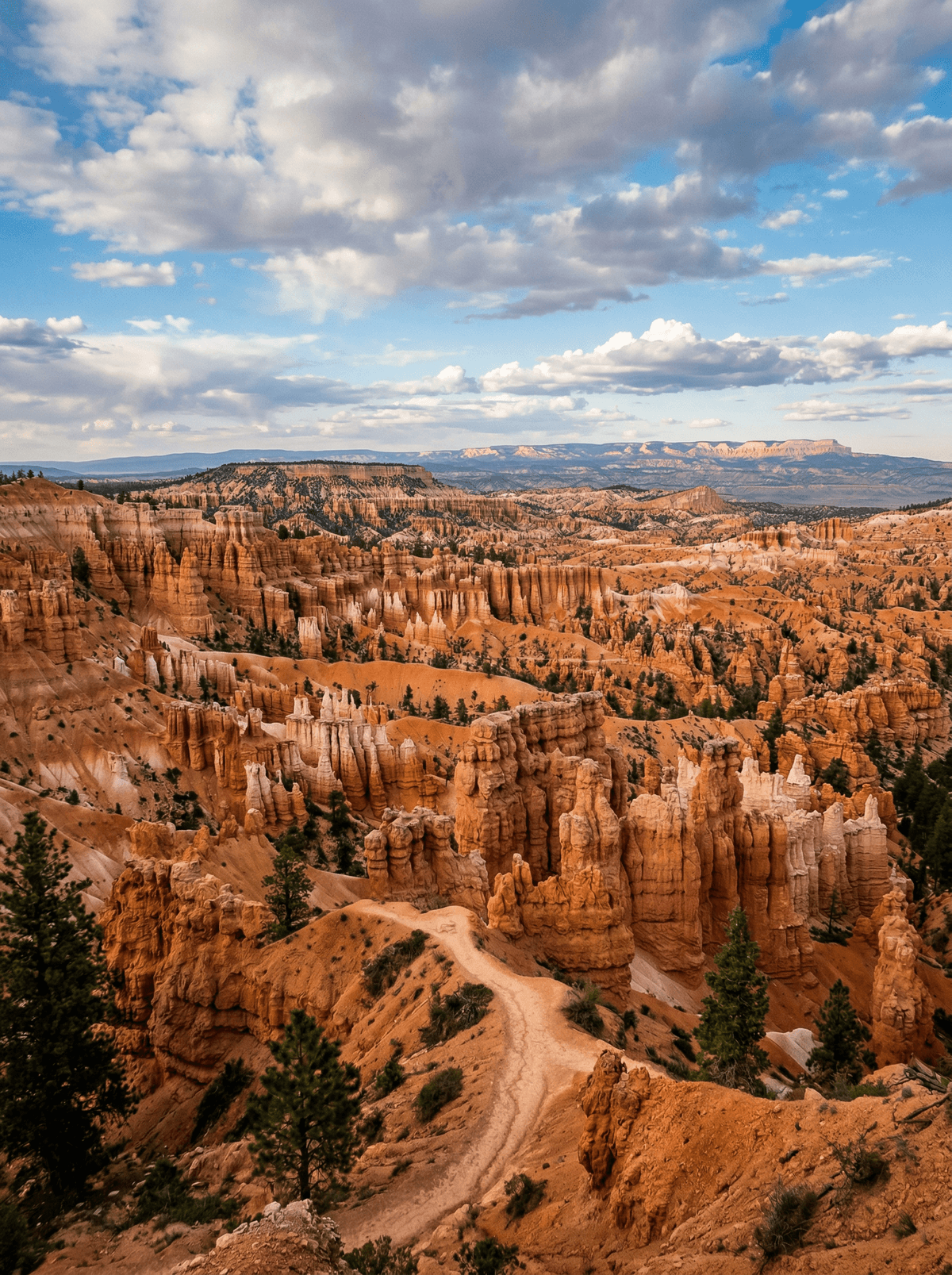
An amphitheatre of orange hoodoos so dense it looks like a forest made of stone.
The first view stops you mid-step: thousands of hoodoos packed into one glowing amphitheatre, tapering, leaning, throwing shadows that move by the minute. It looks like a petrified forest, and it is still being carved as you watch, one freeze and thaw at a time.
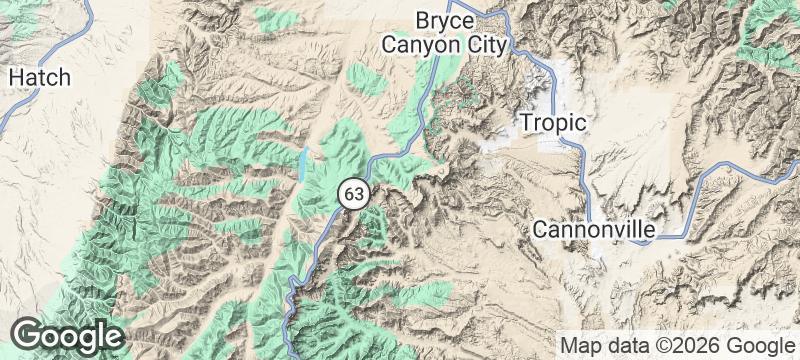
Bryce is not strictly a canyon but a run of natural amphitheatres eaten into the edge of a high plateau at the very top of the Grand Staircase, and it holds the largest concentration of hoodoos found anywhere on Earth. The columns are the work of roughly two hundred freeze-thaw cycles a year, prying the rock apart grain by grain, so the forest of stone is genuinely alive in slow motion. The Navajo Loop drops through Wall Street, a slot between hoodoo walls where the trail switchbacks in deep shadow, and above it all the plateau's skies rank among the darkest in the country, celebrated at the park's annual astronomy festival. At eight thousand feet the air is thin, cool and winter comes hard.
Family
The rim viewpoints sit steps from the shuttle, the short loops go down among the hoodoos safely and children grasp erosion instantly here.
Couple
Dawn at the rim with coffee while the amphitheatre lights from the top down, then a sky after dark that settles the argument for staying over.
Solo
Walk the Navajo Loop early, alone among the towers, and the silence between the hoodoos does the rest.
- The park holds the largest concentration of hoodoos found anywhere on Earth, packed into glowing natural amphitheatres.
- Roughly two hundred freeze-thaw cycles a year keep carving the rock, so the stone forest is still visibly under construction.
- The Navajo Loop drops through Wall Street, a shadowed slot between hoodoo walls below the rim.
- The plateau's night skies rank among the country's darkest, celebrated at the park's annual astronomy festival.
Hearty home-style meals at the park's 1920s lodge, moments from the rim.
A cowboy buffet and steakhouse spread at the family-run gateway ranch inn that has fed Bryce visitors for generations.
Brimham Rocks
England
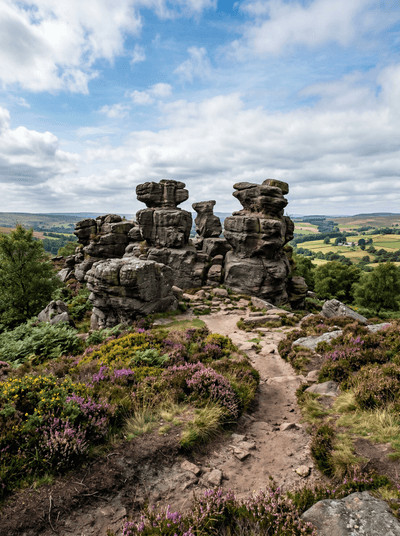
Wind-carved boulders balanced on pinpoints like a giant's abandoned chess set.
Cennet & Cehennem
Turkey
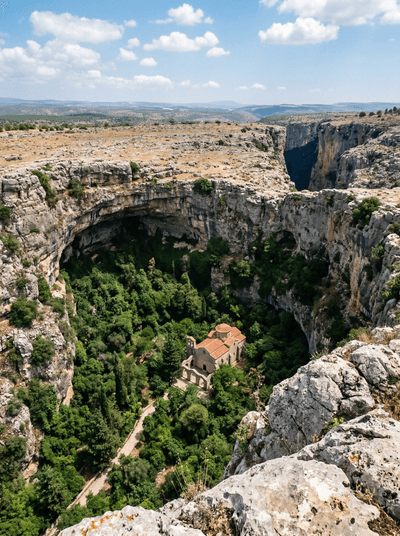
Twin sinkholes side by side: one a fern-filled paradise, one an abyss that held a monster.
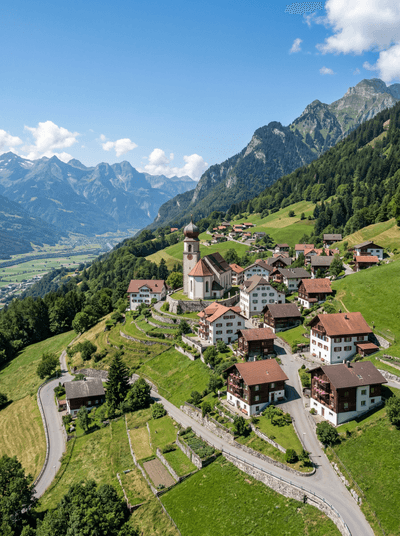
Triesenberg
Liechtenstein
Seven centuries on, this mountainside still speaks the Walser German its settlers carried from Valais.
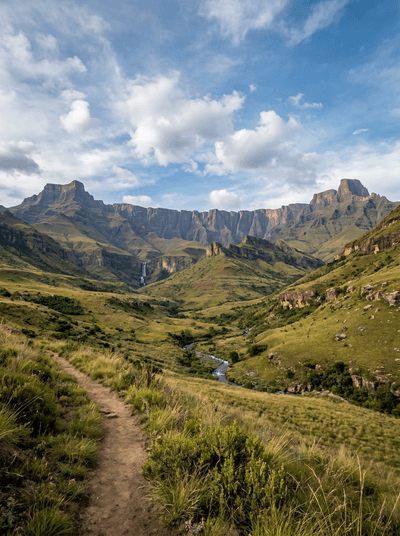
Drakensberg
South Africa
Basalt walls rise above sandstone caves painted across thousands of years.
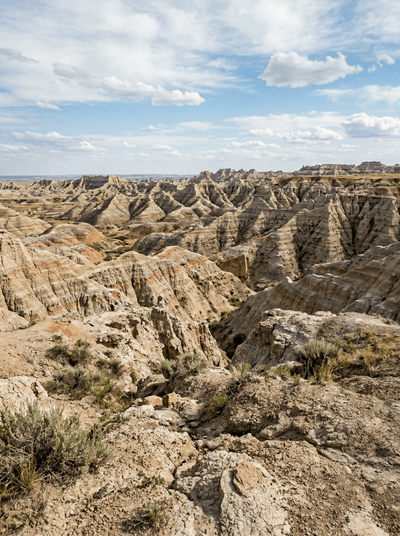
Badlands
United States
Striped buttes rising from the prairie like the spine of a buried dinosaur.
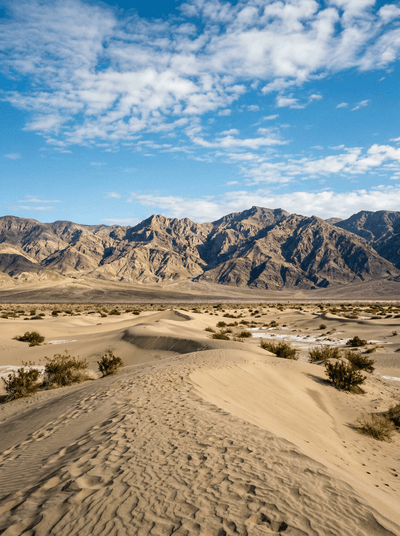
Death Valley
United States
Sailing stones that move across a dry lake bed when no one is watching.
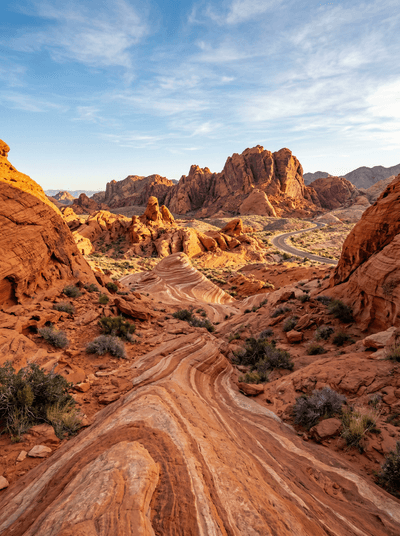
Valley of Fire
United States
Two-thousand-year-old petroglyphs baking into sandstone so red it radiates heat after dark.
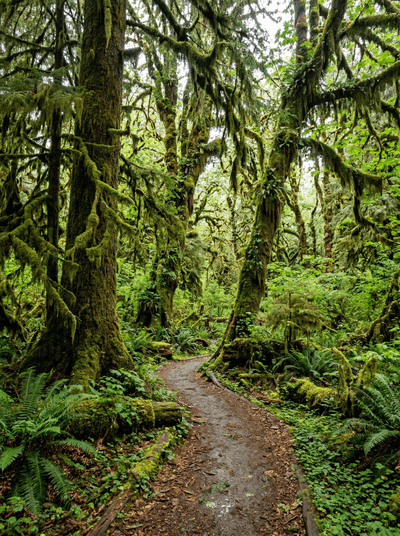
Hoh Rainforest
United States
Twelve feet of rain a year drape the maples in moss that swallows sound whole.