Kyrgyzstan
Burana Tower
An 11th-century minaret halved by earthquakes, all that remains of a capital swallowed by steppe.
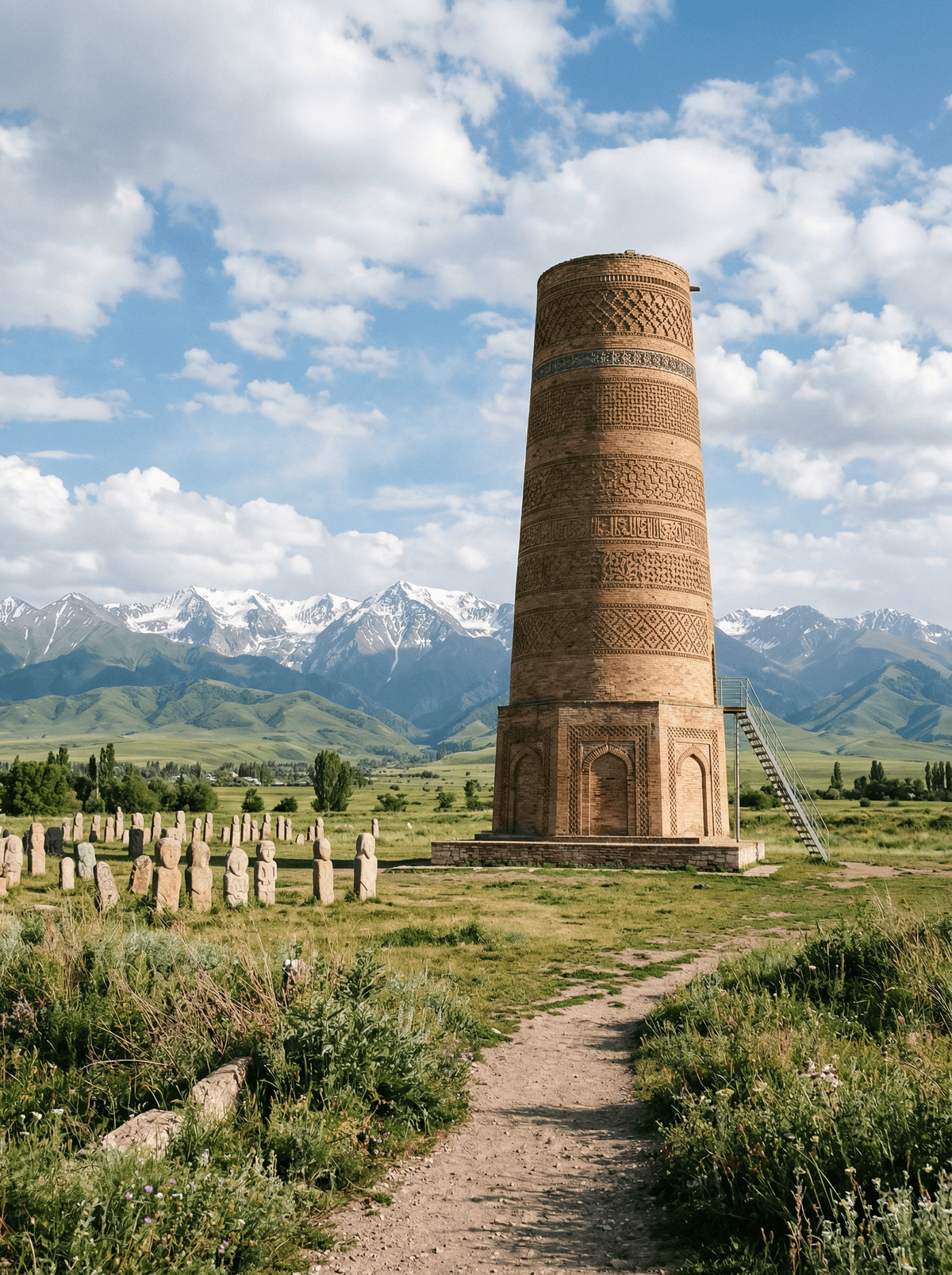
A truncated minaret juts out of the wheat flats like a broken finger pointing at the sky. Burana is what remains when a Silk Road capital is swallowed by earthquakes and centuries: twenty-five metres of 11th-century brickwork ringed by carved stone warriors from Turkic grave fields.
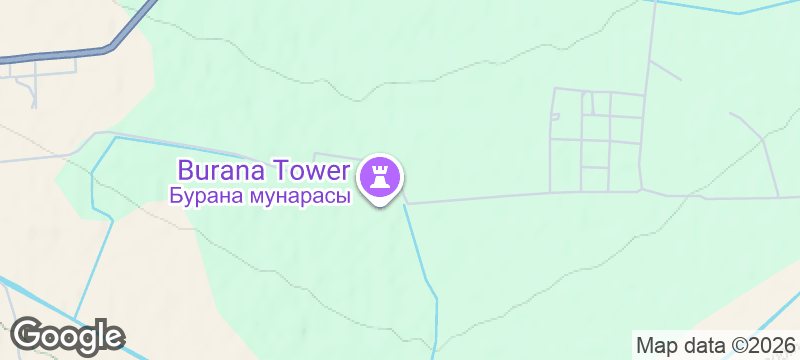
Burana was the minaret of Balasagun, the capital the Karakhanids raised late in the 9th century on the northern Silk Road; the city has gone under the fields, and the tower is what remains. Built in the 11th century to some 45 metres, it lost its upper half to a 15th-century earthquake and now stands at 25, with an external stair and a steep, winding climb inside to a view across the whole Chüy Valley. Around it the grounds work as an open-air museum: balbals and petroglyphs, grave markers, castle foundations and the remains of three mausoleums. Restorers shored up the leaning west face in the 1970s. The site sits 80 kilometres east of Bishkek near Tokmok, and the steppe, patient, still holds most of the buried city unexcavated.
Couple
The tower and balbals take an hour or two to absorb, but the weight of what they represent lingers longer. Pair the visit with shashlik on the road back for history and lunch in one outing.
Family
Children can climb the winding stair and count the stone warriors. The story of a vanished city under the fields fires imaginations, and the open, walkable site gives young visitors room to roam.
- The tower is all that remains of Balasagun, the Karakhanid capital founded at the end of the 9th century.
- A 15th-century earthquake took the top half, reducing 45 metres of minaret to today's 25.
- You can climb it: an external stair, then a steep winding stairway inside, opening onto the whole valley.
- Balbals, petroglyphs, grave markers and the remains of three mausoleums make the grounds an open-air museum.
Lamb shashlik from a roadside grill on the drive out, served the default way: raw onion, vinegar and warm bread.
Hot samsa from a bazaar tandoor in Tokmok, the market town down the road, eaten standing before the drive back.
Cullinan
South Africa
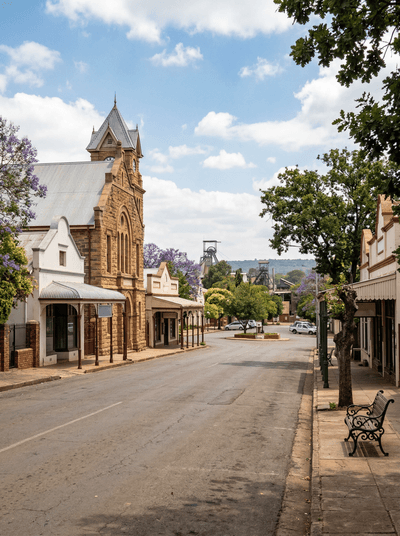
The world's largest gem diamond emerged behind a town still living beside its mine.
Corfe Castle
England
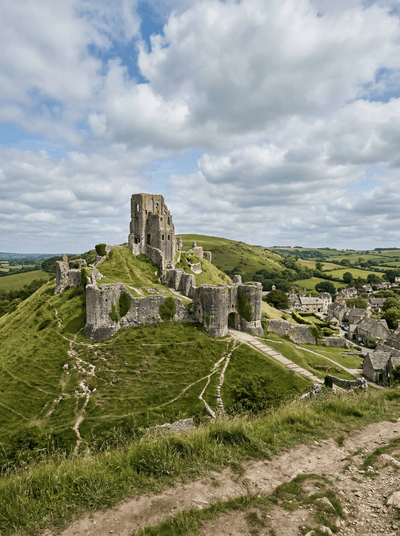
A shattered Norman fortress split down the middle by Cromwell, still defying the skyline.
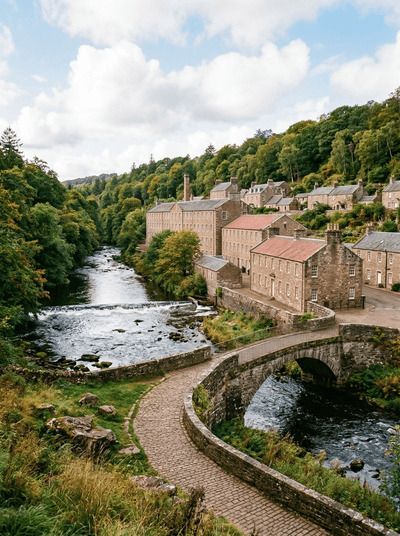
New Lanark
Scotland
A utopian mill village frozen in the 1800s, where waterfalls power looms and idealism alike.
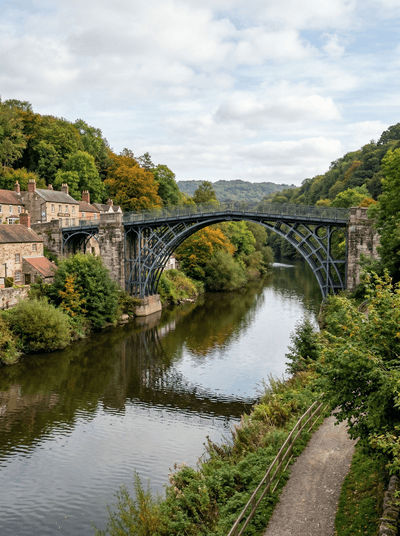
Ironbridge
England
The valley where the Industrial Revolution was born, its iron bridge still spanning the gorge.
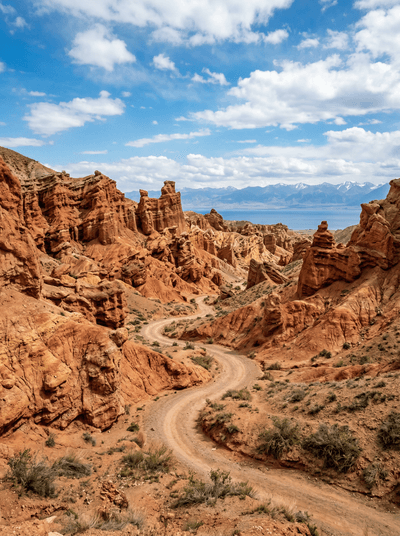
Skazka Canyon
Kyrgyzstan
Wind-carved sandstone castles in rust and amber rising from desert that ends at a mountain lake.
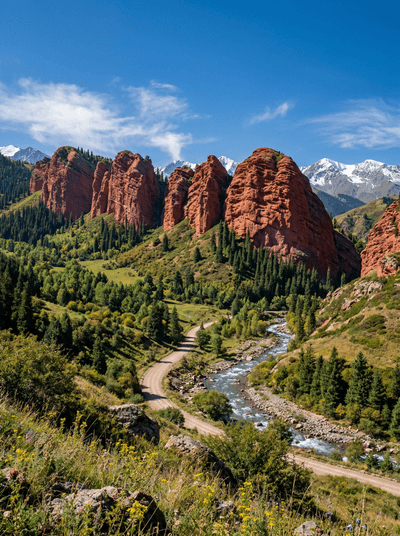
Jeti-Ögüz
Kyrgyzstan
Seven rust-red sandstone bulls rearing from the valley floor, a broken heart cleaved beside them.
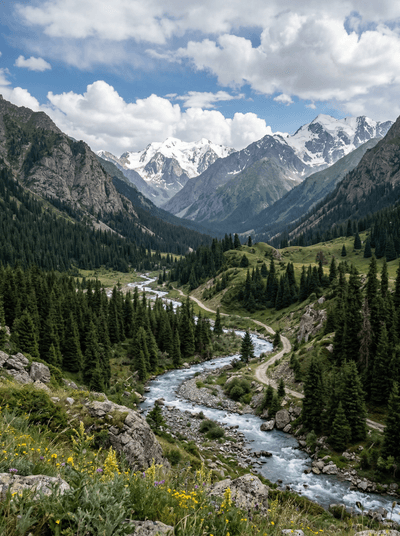
Barskoon Valley
Kyrgyzstan
Waterfalls named Tears of the Snow Leopard, in a gorge that keeps two monuments to Gagarin.