Argentina
Cafayate
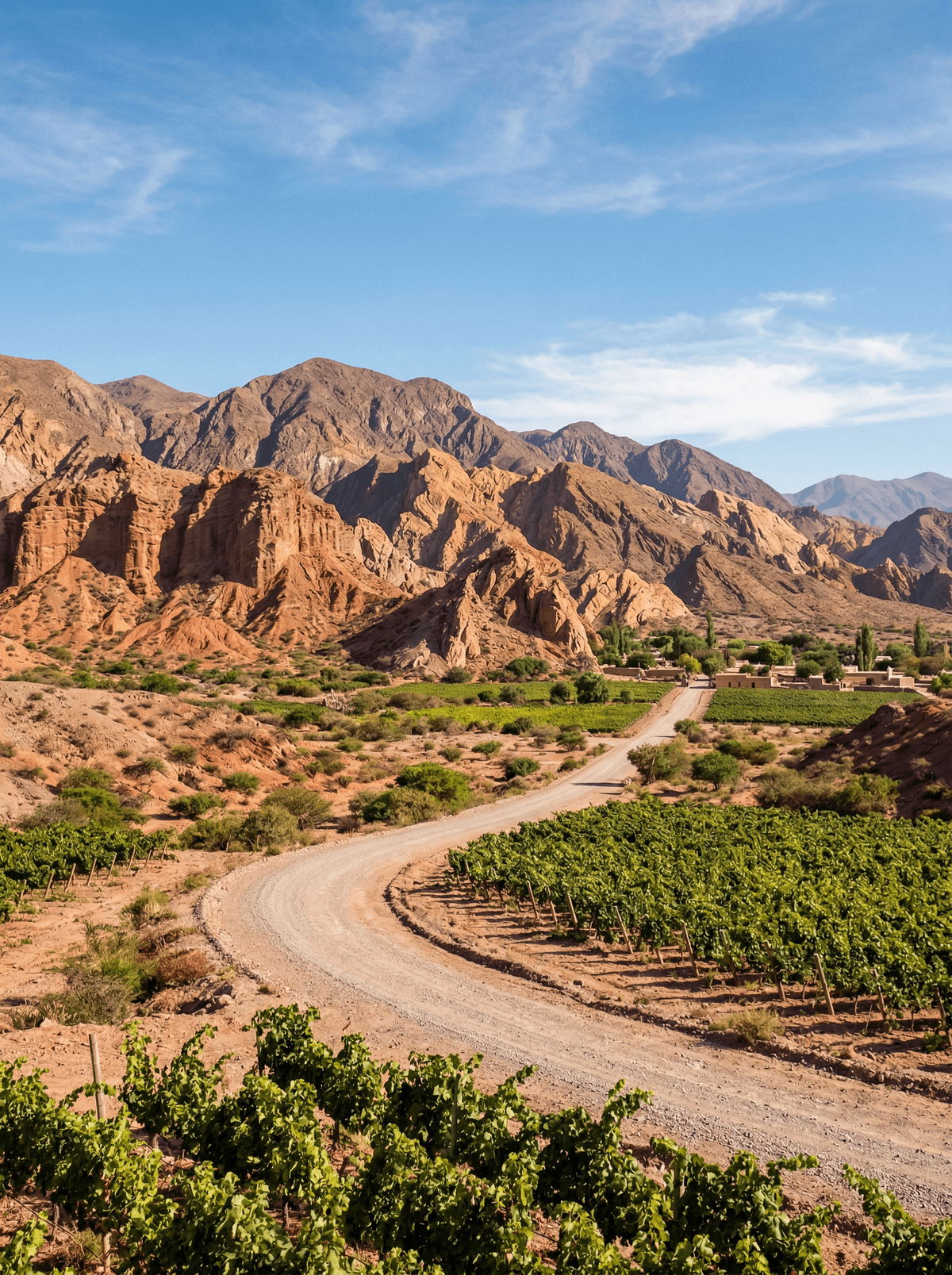
Torrontés poured in a canyon of red-rock cathedrals carved by wind and flash floods.
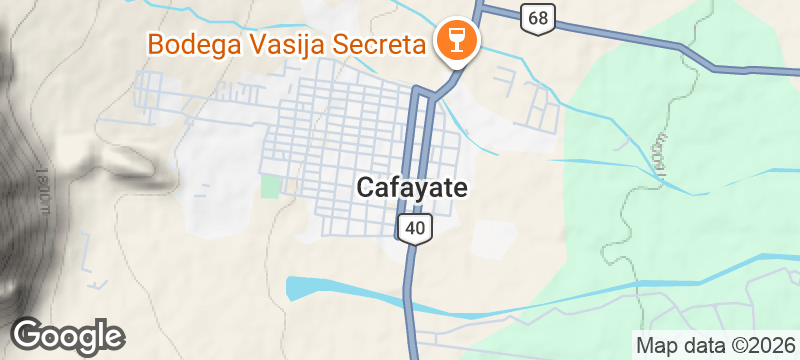
Cafayate sits in the Calchaquí Valleys at 1,683 metres, a high desert ringed by red sandstone where the wine is white and the light is the colour of old Malbec. Torrontés reaches its most celebrated expression here — floral, dry, unmistakably of this altitude — and the small bodegas producing it scatter along dirt roads within bicycle range of the plaza. The approach itself is the Quebrada de las Conchas: 47 kilometres of red formations with names like El Anfiteatro and La Garganta del Diablo that generations of travellers have found inadequate.
This is the wine capital of the Calchaquí Valleys, its vines among the loftiest serious plantings anywhere, vines running from roughly 1,600 metres around town to higher plantings deeper in the valleys. The fierce ultraviolet at altitude thickens grape skins and concentrates flavour, giving Torrontés whites and Malbec reds a character distinct from Mendoza's. The town, founded in 1840 around a colonial-style plaza with its regional wine museum, keeps the unhurried rhythm of a market town — and its cellars receive by reservation, tasted at a pace rather than counted in pours. The Quebrada de las Conchas outside, carved by its river through Cretaceous rock, belongs to the same connected landscape rather than a checklist of photo stops.
Couple
The bicycle bodega circuit is a complete day — out in the morning, Torrontés in three small cellars, back as evening light turns the cliffs crimson, dinner on the plaza as the necessary conclusion.
Family
The Quebrada de las Conchas holds any age — formations named for what they have eroded into, a river through red canyon walls, and viewpoints reachable by everyone. Adult tastings stay at booked venues.
Friends
A group cycling the cellar circuit unhurried, ending with a long dinner and Torrontés by the carafe, is the template for how a wine region should be explored — small enough to feel discovered, large enough for two days.
- Torrontés reaches its most celebrated expression in these high, sun-fierce valleys.
- The Quebrada de las Conchas lines the road in with red-rock amphitheatres and gorges.
- Family bodegas ring the town, their tastings booked ahead and poured without hurry.
- The plaza keeps market-town rhythm once the day's buses have gone.
Torrontés — the aromatic white that thrives nowhere quite like these valleys.
Cabrito slow-roasted over vine cuttings, smoky and falling from the bone.
Arrowtown
New Zealand
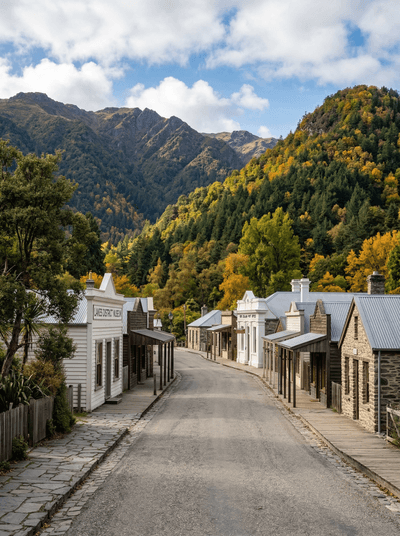
A gold-rush town where autumn turns every tree amber above Chinese miners' cottages.
Tobermory
Scotland
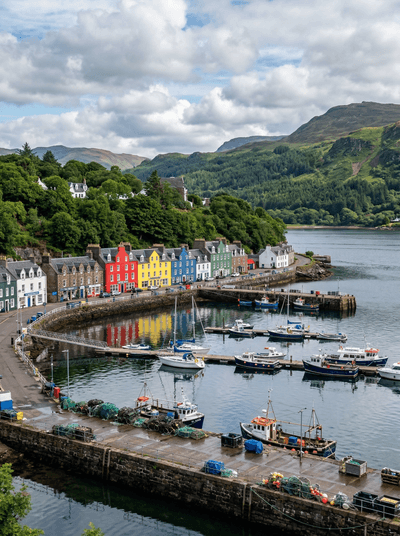
Crayon-bright houses line a harbour where fishing boats rock above sunken Armada gold.
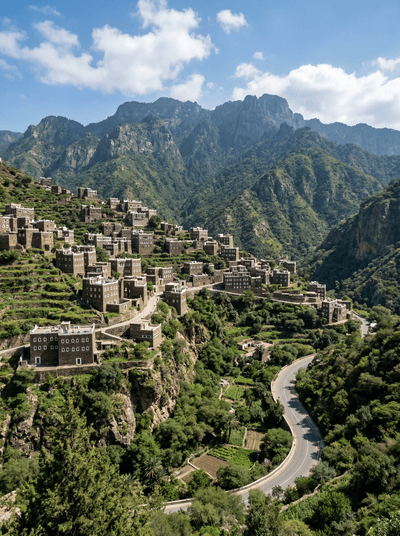
Abha
Saudi Arabia
A mountain city where mist wraps painted houses and the air smells of juniper after rain.
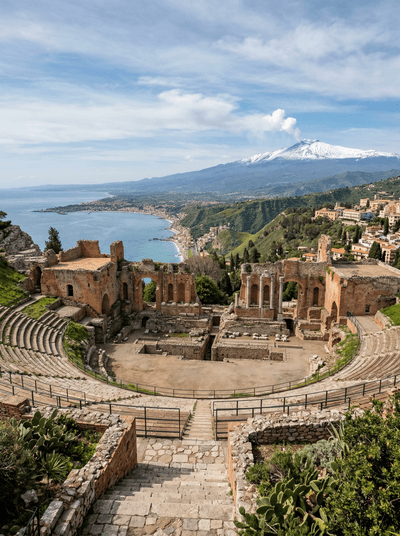
Taormina
Italy
A Greek theatre where Etna smoulders behind the stage, the sea glittering far below.
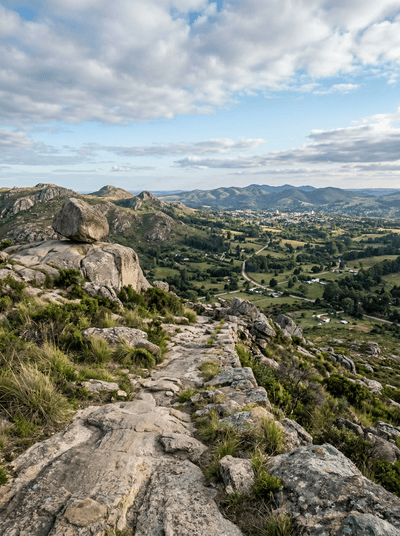
Tandil
Argentina
Two-billion-year-old hills worn to stumps, where artisan salami cures in granite-cooled caves.
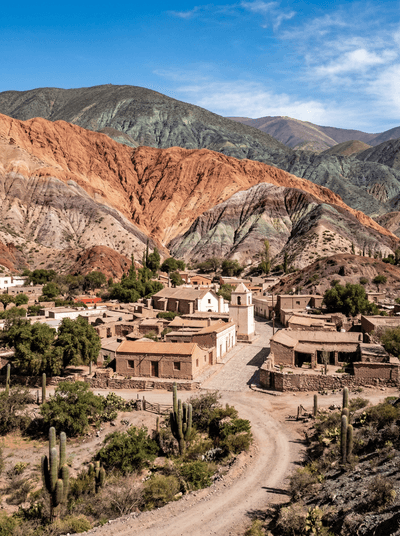
Purmamarca
Argentina
A seven-colour hill burns amber over adobe lanes where llamas carry the morning market.
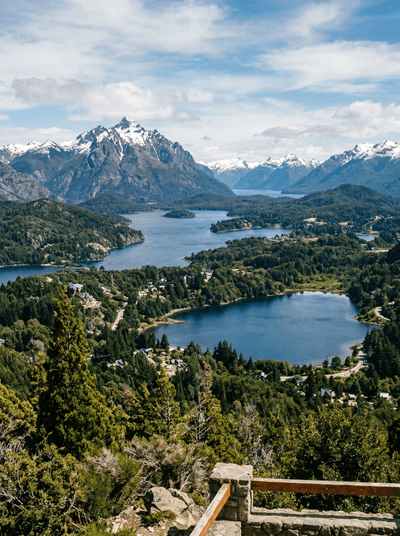
Bariloche
Argentina
Chocolate-scented streets beside a glacial lake so clear you count pebbles metres down.
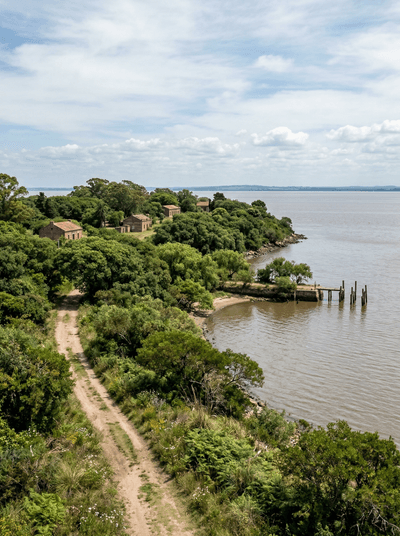
Isla Martín García
Argentina
Four Argentine presidents were imprisoned on this river island near Buenos Aires.