Argentina
Purmamarca
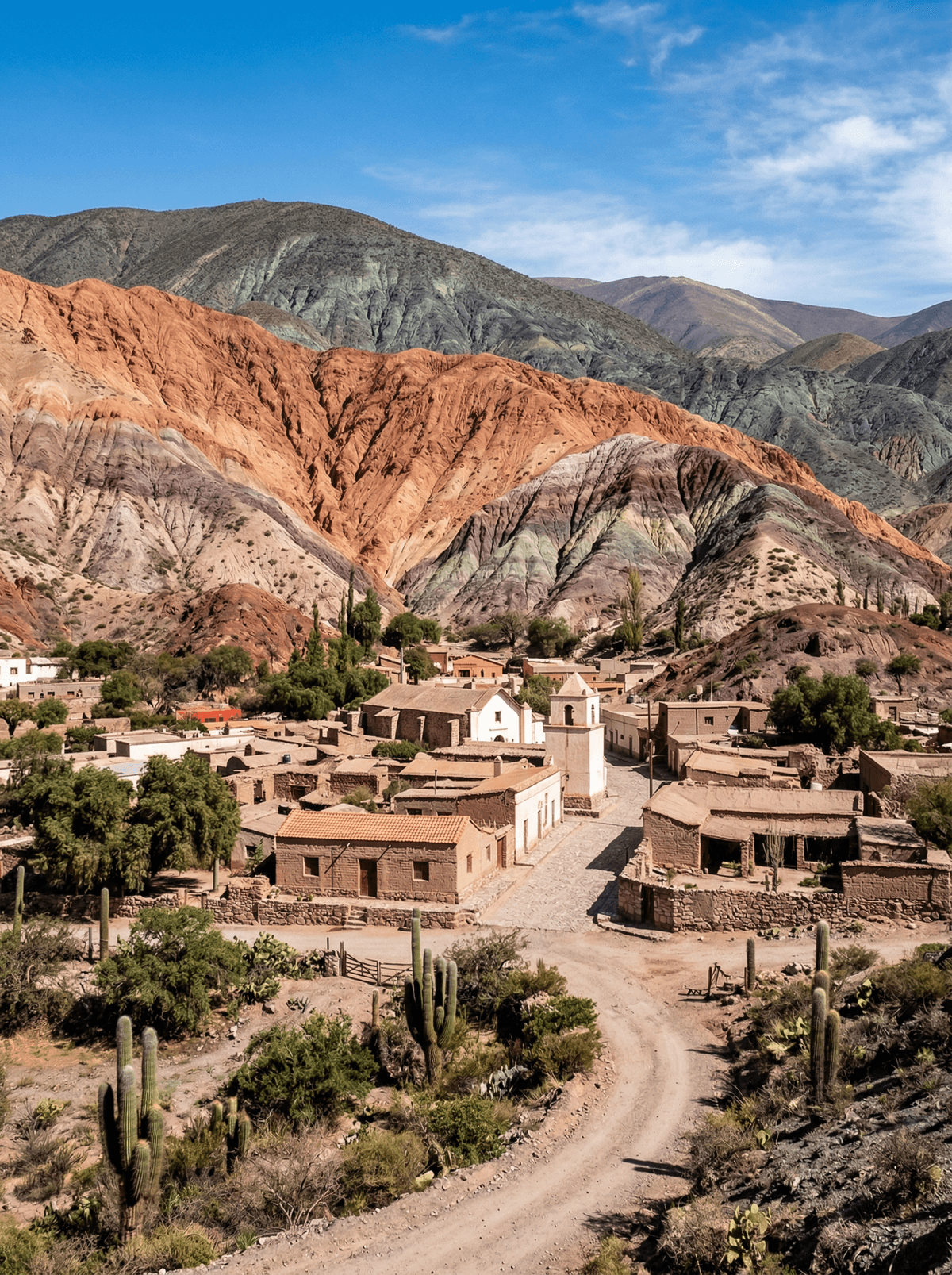
A seven-colour hill burns amber over adobe lanes where llamas carry the morning market.
Purmamarca sits in a bowl walled on three sides by layered mineral colour — ochre, orange, violet, yellow and green stacked in bands laid down over hundreds of millions of years, rising close enough to shape every lane and courtyard. A single church, Santa Rosa de Lima of 1648, anchors the adobe plaza where artisans lay out weavings at first light. The Cerro de los Siete Colores looms directly above — and it is, very conservatively, at least seven.
At 2,324 metres inside the UNESCO-listed Quebrada de Humahuaca, the village stands on one of the pre-cordillera's most complete geological records: Precambrian to Cretaceous formations weathering at different rates, iron oxides, copper, manganese and carbonates doing what looks like paintwork. Spanish missionaries founded the settlement in the seventeenth century around an existing Omaguaca community, and the plaza still traces the colonial grid. The Paseo de los Colorados, a three-kilometre signed circuit around the base of the coloured hills, is the way to read the geology at close range — walked slowly, for the altitude and the intense sun, not for a promised light effect. The craft market fills the square with weavings and ceramics, and the whole visit works on foot.
Solo
The Paseo de los Colorados early, ahead of the building heat and the coaches, is one of northwest Argentina's fine solitary walks — the colours shifting minute by minute as the sun climbs.
Couple
Purmamarca rewards the couple who stays the night — the village in late afternoon, colours deepening and the market winding down, is a different place from the daytime bustle. An adobe posada and a dinner of humita completes it.
Family
Children respond straight to the hill colours — vivid enough to need no explanation. The circuit is short enough for small legs, and the market offers tangible souvenirs that tie the trip to the place.
- The market lays out salt, quinoa and hand-dyed llama-wool textiles beneath the coloured cliff.
- The signed Paseo de los Colorados circles the hills' base in three kilometres from the plaza.
- Adobe streets keep an architecture that has not fundamentally changed in three centuries.
- The village sits inside the UNESCO-listed Quebrada de Humahuaca's painted geology.
Goat cheese empanadas from market vendors, the pastry warm and crumbling.
Tamales in corn husks and quinoa stew ladled from iron pots, with coca tea taken as the valley takes it.
Scanno
Italy
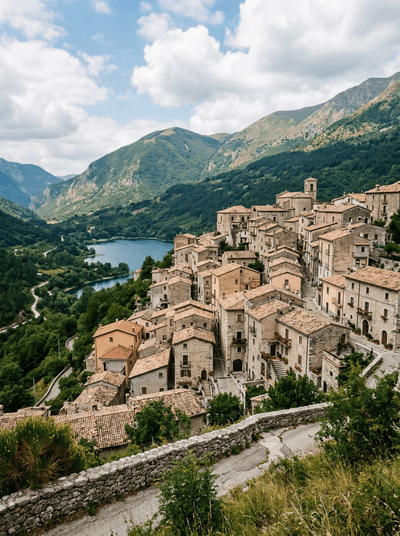
A mountain village above a heart-shaped lake, where women still wear traditional dress on feast days.
Misfat al Abriyyin
Oman
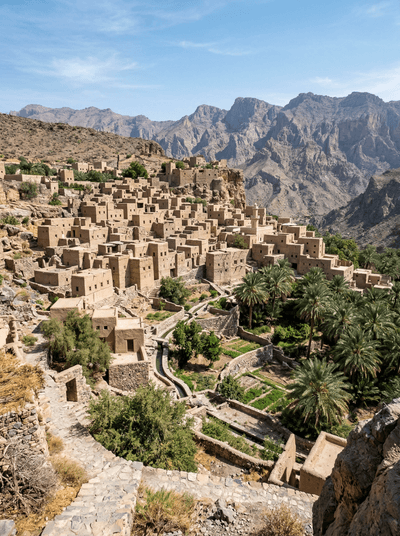
Falaj water slips beneath date palms and ochre houses on a mountain ledge.
Moustiers-Sainte-Marie
France
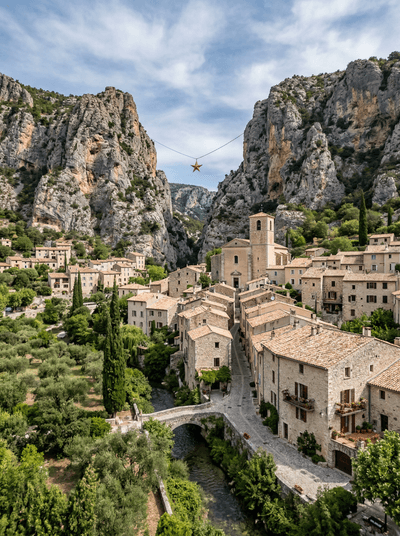
A gold star on a chain slung between two cliffs above a village of faïence painters.
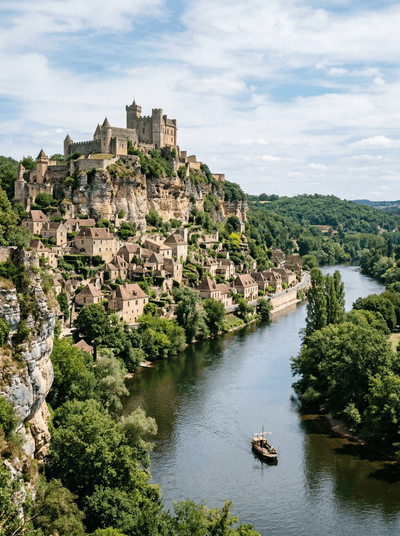
Beynac-et-Cazenac
France
A fortress village gripping a cliff high above the Dordogne's green coil.
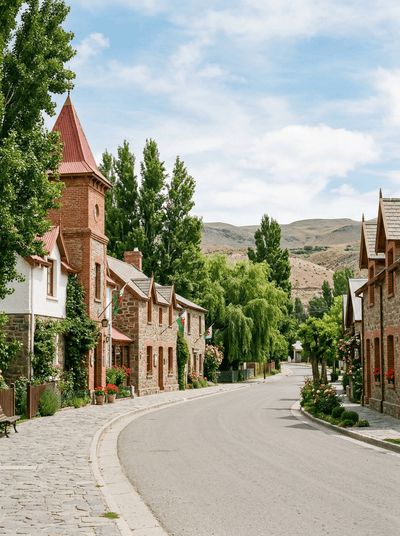
Gaiman
Argentina
Welsh teahouses serving bara brith and cream scones in the middle of Patagonian steppe.
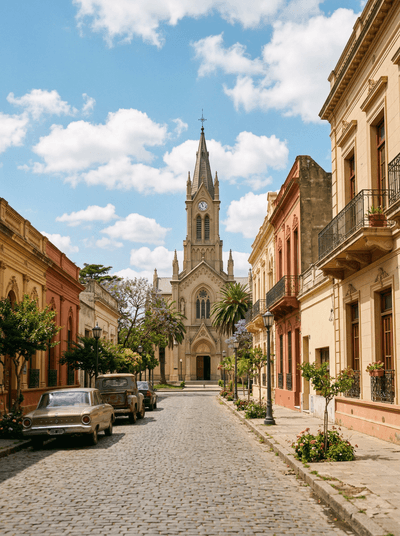
Mercedes
Argentina
Pulperías where gauchos still drink behind wooden counters worn smooth since the 1800s.
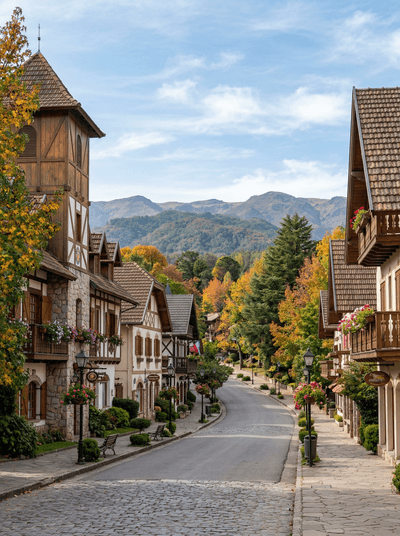
Villa General Belgrano
Argentina
Oktoberfest and strudel in an alpine-styled village settled partly by a scuttled warship's crew.
Cafayate
Argentina
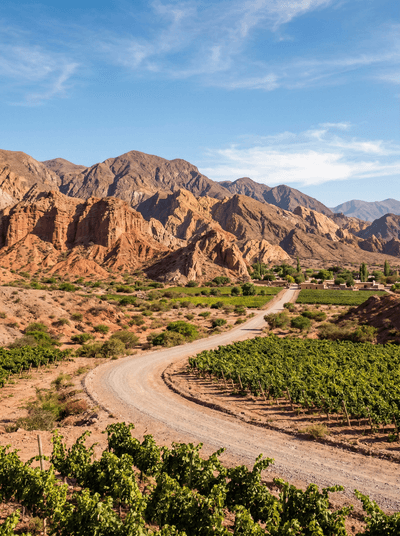
Torrontés poured in a canyon of red-rock cathedrals carved by wind and flash floods.