Peru
Cañón del Pato
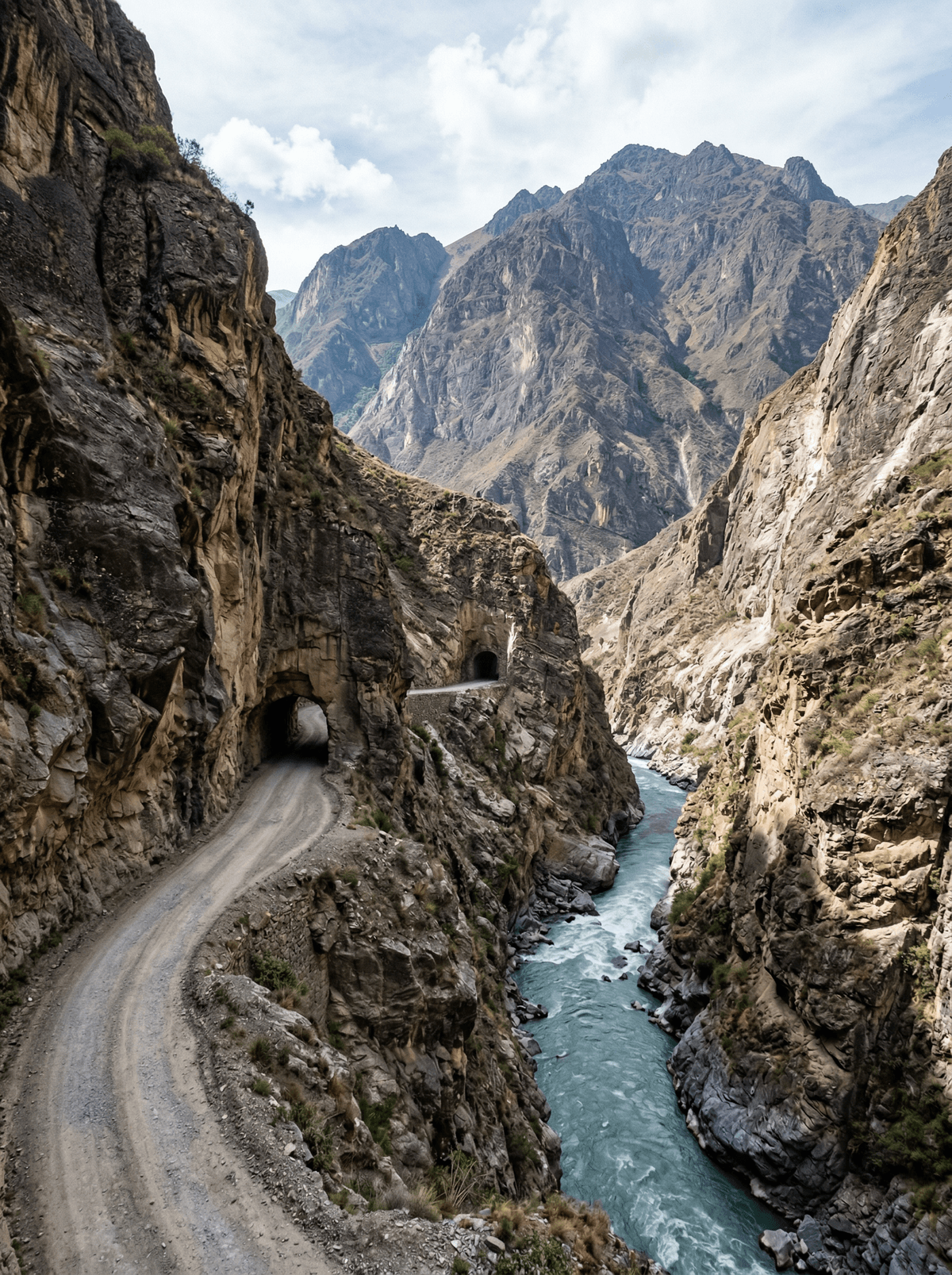
A road threading dozens of hand-carved tunnels through a canyon that nearly closes overhead.
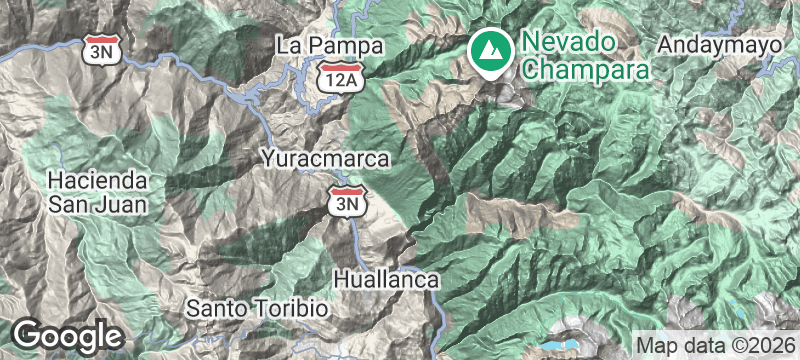
The canyon walls press in until rock stands close on either side of the vehicle. Each tunnel is hand-carved, unlit, and opens onto a new frame of the gorge — the Río Santa churning far below, walls rising sheer where the Cordillera Blanca and Cordillera Negra nearly touch. Tunnel after tunnel after tunnel, each darker than the last.
The Cañón del Pato is where the Santa River saws between Peru's two great Áncash ranges, and the road through it — some three dozen tunnels blasted and hand-drilled through solid rock across decades of twentieth-century labour — is the experience: a public through-route, not a managed attraction, best travelled as a journey rather than a stop. In the narrowest reaches the gorge pinches to a car's-width corridor of rock and river-noise; every tunnel mouth reframes the drama. The honest terms of the visit are the road's own — a competent, rested driver — or a properly supported cycle descent — with the road's current state respected, and no expectation of formal viewpoints or services in the gorge itself. What it gives back is a road-journey with few equals in South America, geology swallowing you kilometre by kilometre between Huaraz's valley and the coast.
Solo
One of Peru's most dramatic through-drives — the narrowing walls and dark tunnels intensify travelled alone, as pure journey.
Family
Older children are genuinely thrilled by the tunnels and the river echoing below — the drive is the attraction itself, no hiking required.
Friends
The canyon descent is a cult route for adventure cyclists — tunnels, rapids below and shared adrenaline, ridden with proper support.
- Dozens of hand-carved tunnels thread the gorge, each opening a new frame.
- The Santa River saws between the Cordillera Blanca and Negra ranges below the road.
- At its narrowest the canyon pinches to a corridor barely wider than the road.
- A through-journey, not a stop — driven or cycled on the road's own honest terms.
Trucha frita at roadside stops along the Santa, golden from the pan.
Sopa de trigo at the humble kitchens dotting the canyon road.
Royal Natal National Park
South Africa
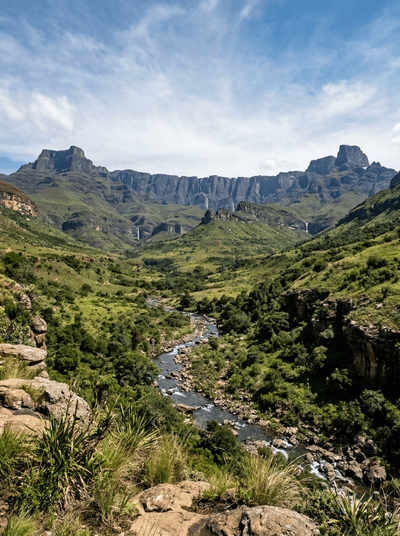
The Amphitheatre's five-kilometre rock wall fills the sky above a river-cut mountain valley.
Saklıkent Gorge
Turkey
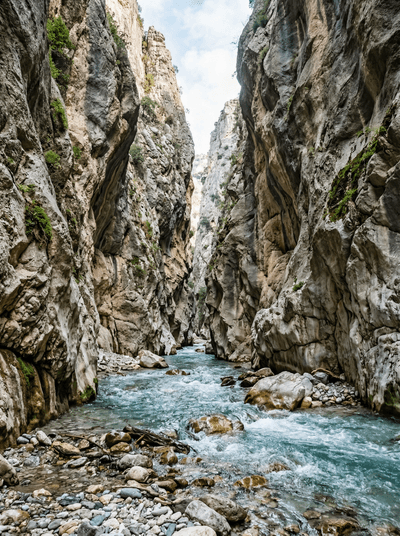
Ice-cold river water rushes through a 300-metre-deep slot canyon narrow enough to brush both walls.
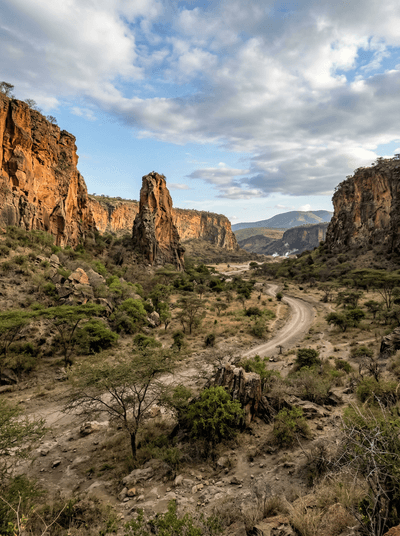
Hell's Gate National Park
Kenya
Cycle past zebras through a volcanic gorge where geothermal steam hisses from the earth.
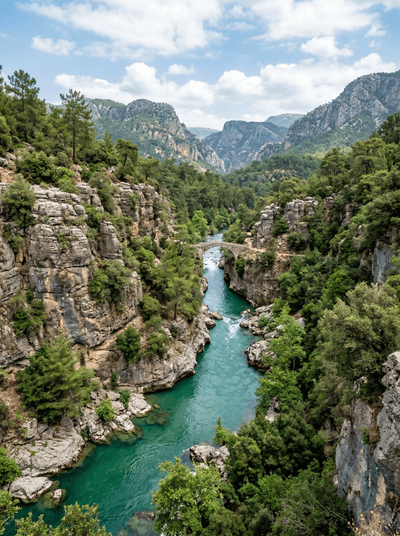
Köprülü Canyon
Turkey
White water through a canyon spanned by a Roman bridge, a ruined city perched above.
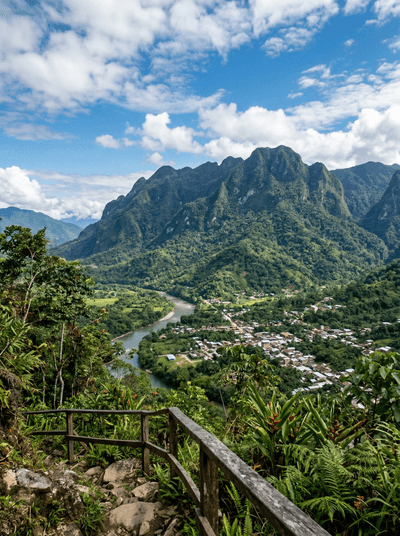
Tingo María
Peru
A cave inside a sleeping-woman mountain where oilbirds shriek in the dark.
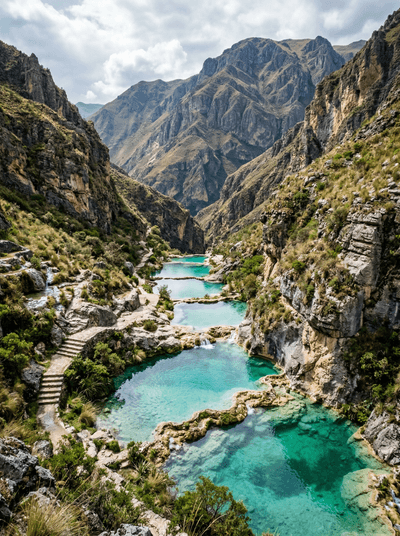
Millpu
Peru
A chain of electric-blue pools threading a pale limestone gorge in the high Andes.
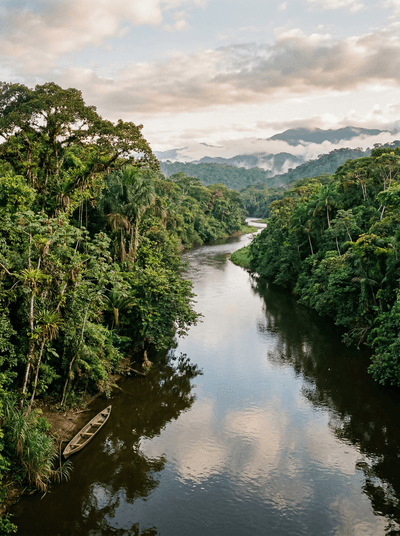
Manú National Park
Peru
One protected descent from glacial grassland to jungle where jaguars still patrol.
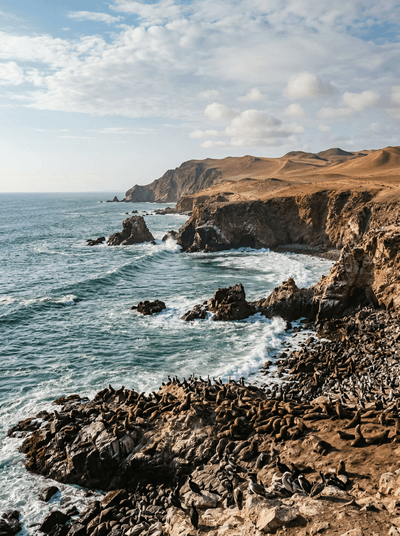
Reserva Nacional San Fernando
Peru
A desert bay where Andean condors descend from the mountains to the Pacific shore.