Mexico
Celestún
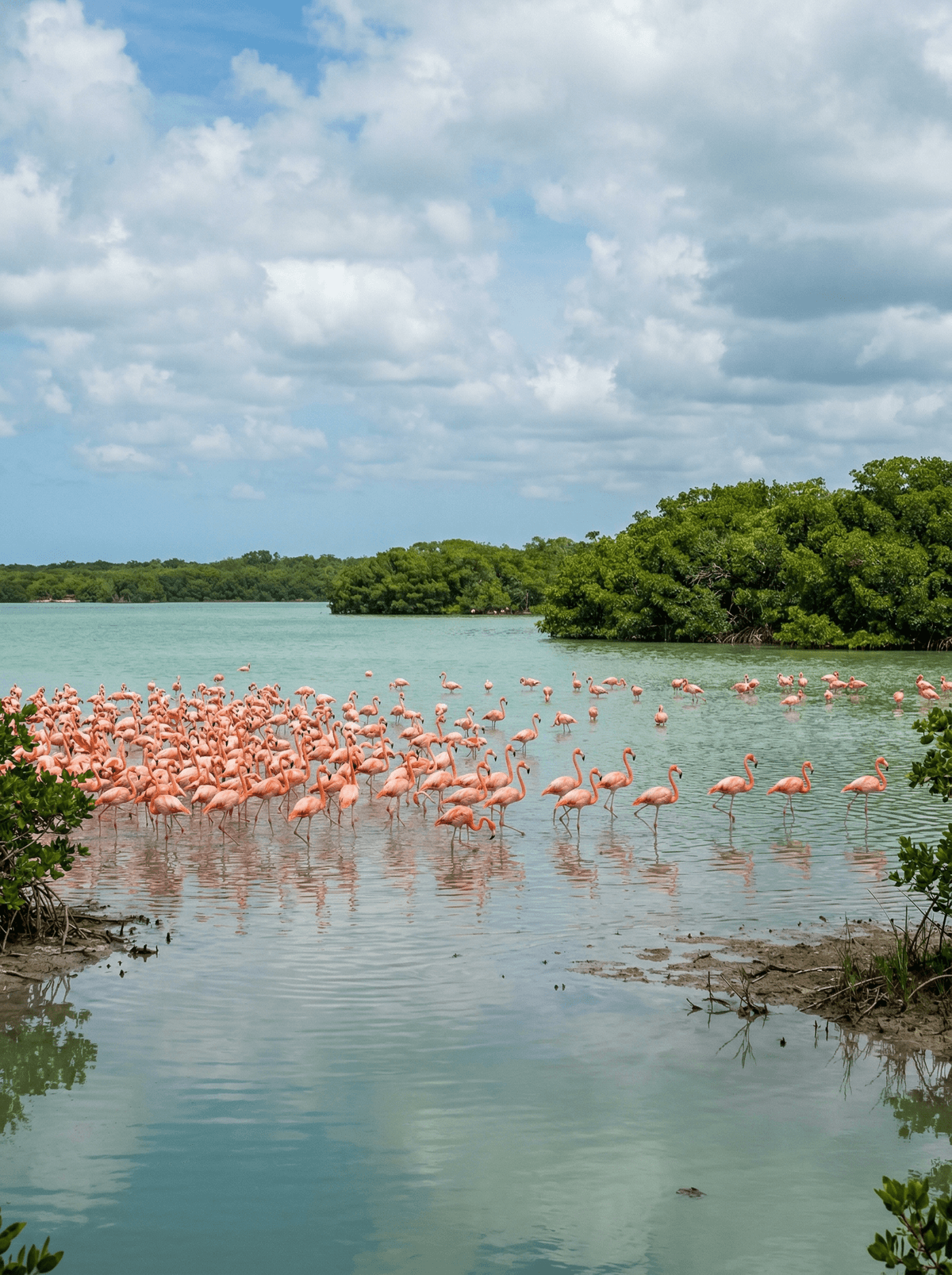
Mangrove water and Gulf light draw flamingos to a working Yucatán fishing village.
The boats go out for fish at dawn and for flamingos by mid-morning. Where the ría opens between mangrove walls, pink birds feed against green water in a wetland that belongs to them first.
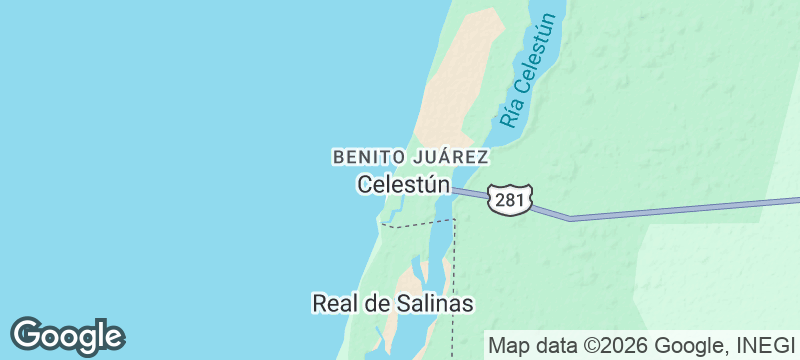
Ría Celestún protects mangroves and groundwater-fed wetlands on the Gulf coast, and it remains one of the region's important flamingo refuges. The largest concentrations are recorded from November to February, though no boat can promise numbers on a given morning. Authorised routes thread the ría and its freshwater spring, and the village itself, still a working fishing town, gives the visit its second half.
Couple
Share an early authorised boat into the ría, then a long seafood lunch in the village.
Family
Take the boat route in the cooler morning and finish on the Gulf beach beside town.
- Ría Celestún protects mangroves, groundwater-fed wetlands and an important flamingo refuge.
- CONANP identifies November to February for the largest flamingo concentrations, without guaranteeing numbers.
- Authorised boat routes and the fishing village create a substantial visit even when birds are dispersed.
Celestún is a fishing village first, and its seafront restaurants serve the fillet of the day straight off the boats.
Shrimp cocktails, octopus and ceviches carry the village's own catch to the table.
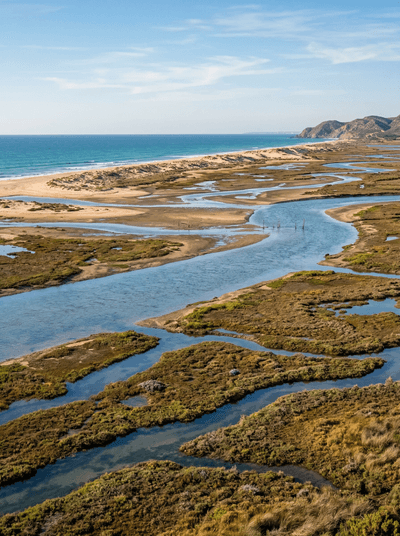
Ria Formosa
Portugal
A shifting labyrinth of barrier islands, salt marsh and seahorse nurseries off the Algarve.
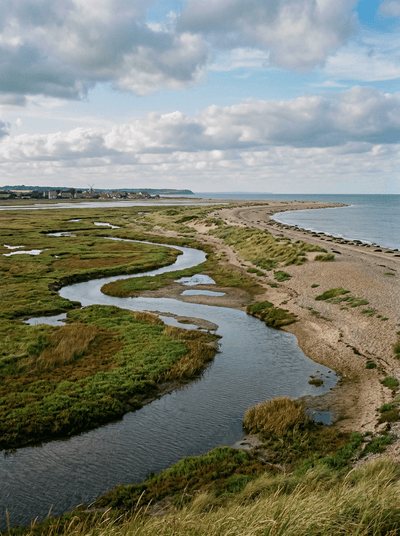
Blakeney Point
England
A shingle spit where grey seals haul out in their hundreds beneath enormous skies.
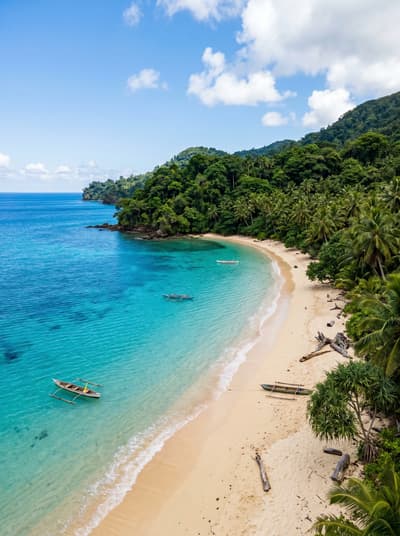
Lamen Bay
Vanuatu
A grey shadow slides over pale seagrass: Lamen Bay is where Vanuatu's dugongs graze.
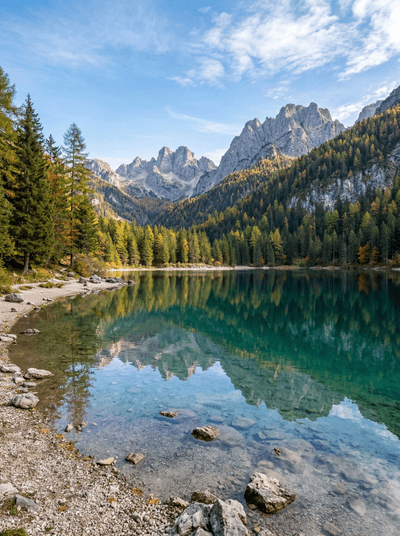
Lago di Tovel
Italy
An alpine lake that turned blood-red every summer until 1964, and never has again.
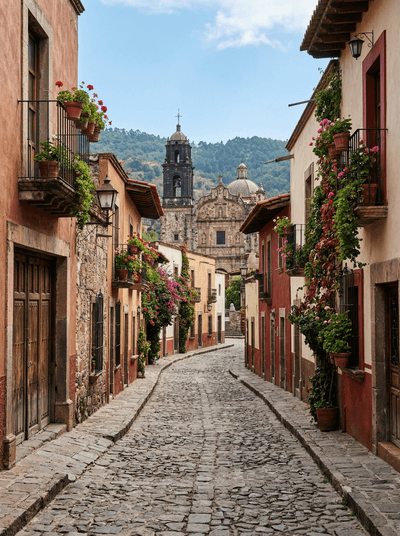
Huasca de Ocampo
Mexico
Basalt columns rise from a gorge like a giant's pipe organ, mist threading through at dawn.
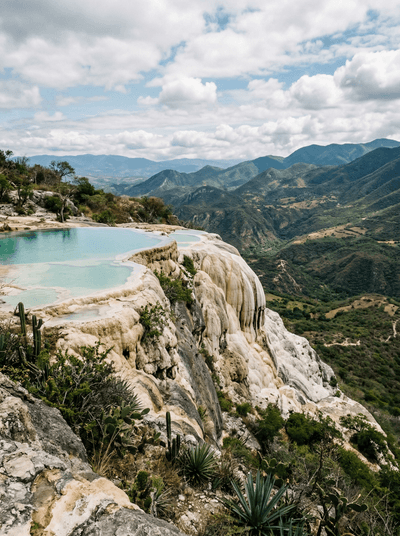
Hierve el Agua
Mexico
A waterfall caught mid-plunge in pale stone hangs above the Oaxaca valleys.
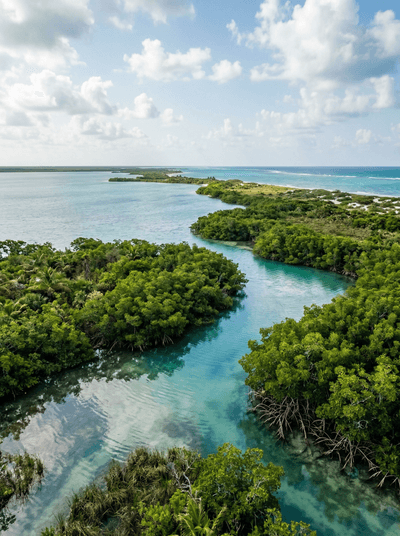
Sian Ka'an Biosphere Reserve
Mexico
Forest, mangrove and reef meet across half a million protected hectares.
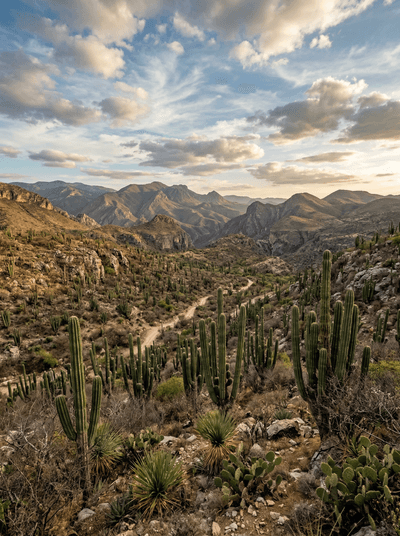
Tehuacán-Cuicatlán Valley
Mexico
Forests of columnar cacti record millennia of human life in Mexico's drylands.