Mexico
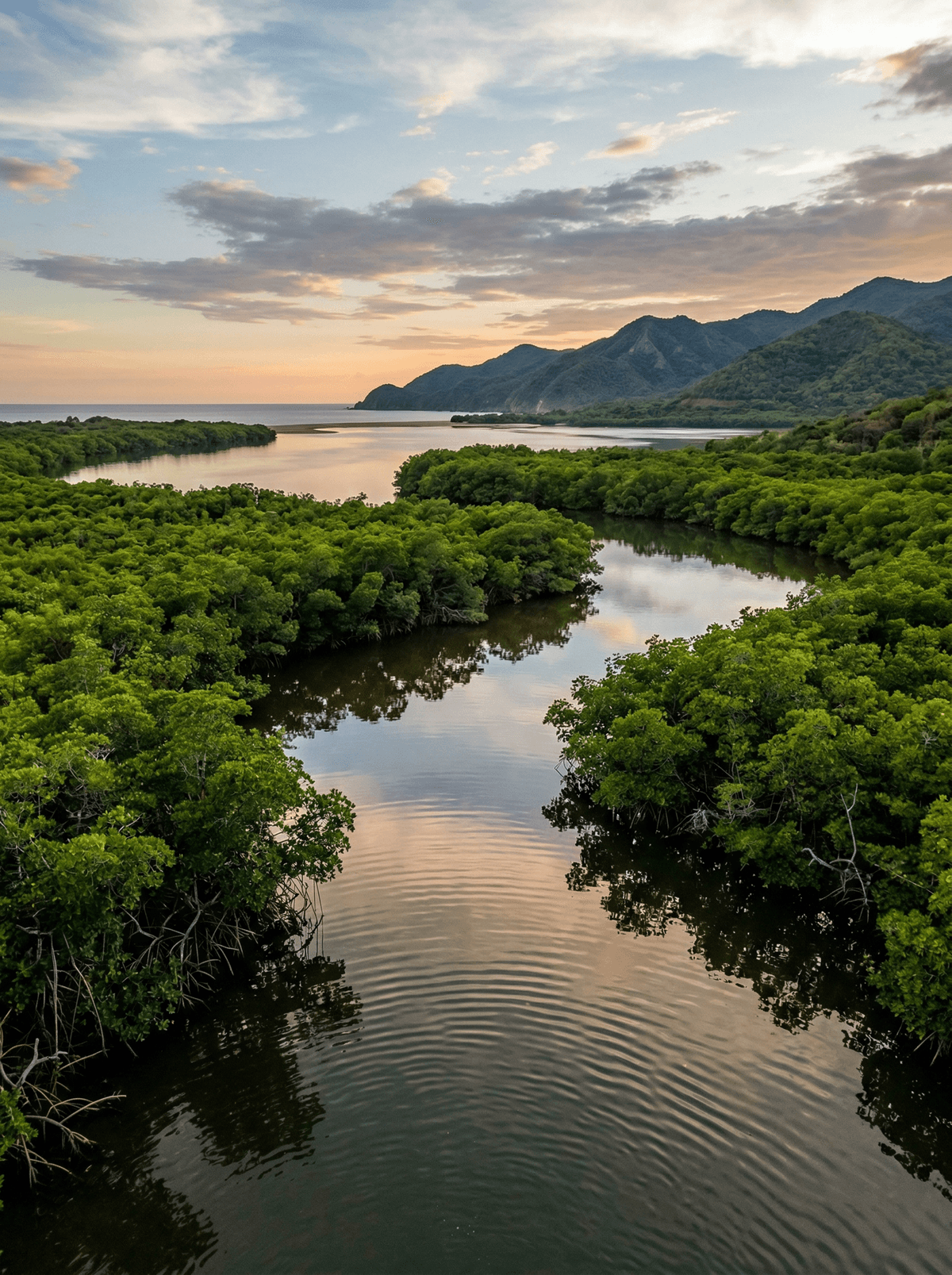
Chacahua Lagoon
Mangrove channels lead towards lagoon villages, dunes and Oaxaca's open Pacific.
The lancha noses out of the mangrove shade and the lagoon opens wide and bright, with dunes on the seaward side and a village strung along the water. Out here the road gives up and the boat becomes the street.
Lagunas de Chacahua National Park protects a chain of lagoons, mangroves, dunes and turtle-nesting beaches on Oaxaca's Pacific coast, home to Afro-Mexican communities whose cooking carries the coast's history. Local boat operators link the road approach with the lagoon villages and ocean beach. Bioluminescence and wildlife belong to darkness, season and luck rather than to any itinerary.
Solo
Take the lancha through the mangroves, stay in a village cabin and let the coast set the pace.
Friends
Share the boat run, the dunes and an after-dark swim if the season brings light.
- Lagunas de Chacahua National Park protects lagoons, mangroves, dunes and turtle-nesting beaches.
- Local boat operators connect the road approach with lagoon communities and coastal routes.
- Bioluminescence and wildlife depend on darkness, season and luck rather than appearing on demand.
Chacahua's Afro-Mexican kitchens make tamales de tichindas, lagoon mussels cooked whole in the masa, shell and all.
Small shoreline restaurants fry the day's fish and prawns within sight of the boats.
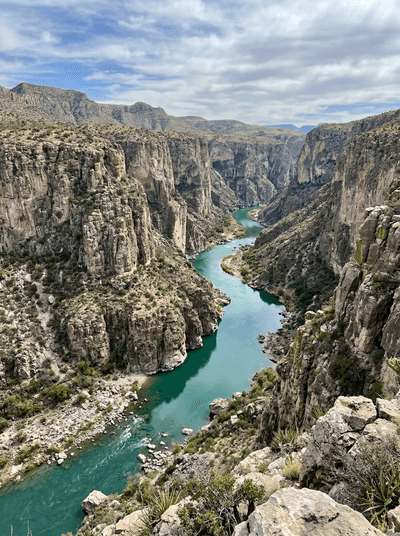
Cañón del Pegüis
Mexico
The Río Conchos cuts striped desert rock into a remote Chihuahua gorge.
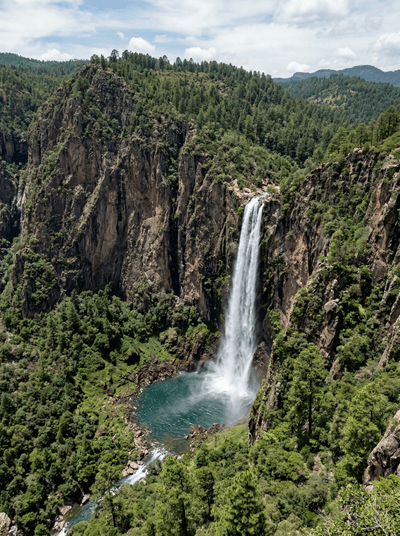
Basaseachi Falls
Mexico
Seasonal water plunges into a pine-lined canyon in Chihuahua's Sierra Madre.
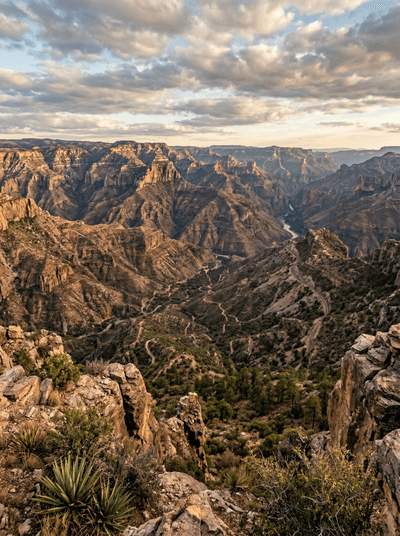
Copper Canyon
Mexico
The Chepe rides through canyon country that runs deeper than the Grand Canyon.
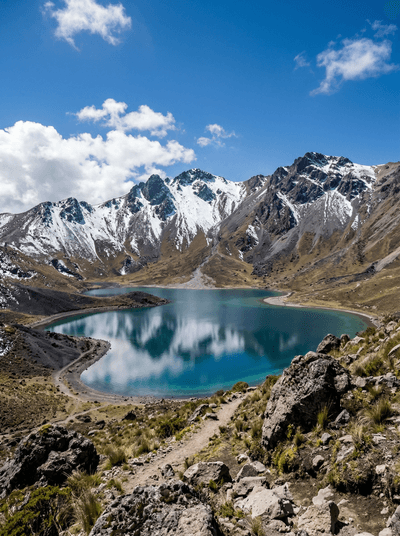
Nevado de Toluca
Mexico
Cold crater paths circle two high lakes beneath Mexico's shifting mountain weather.