Mexico
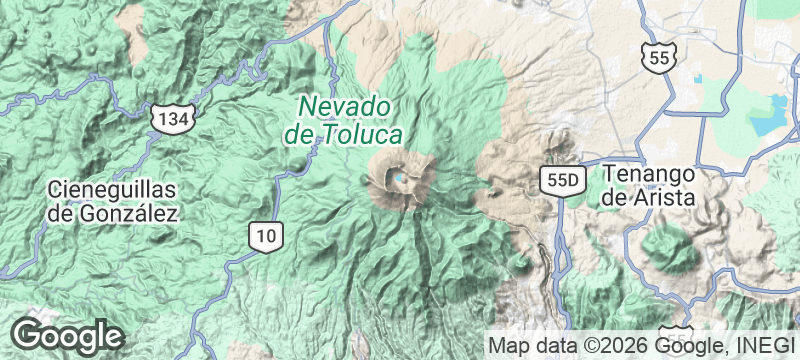
Nevado de Toluca
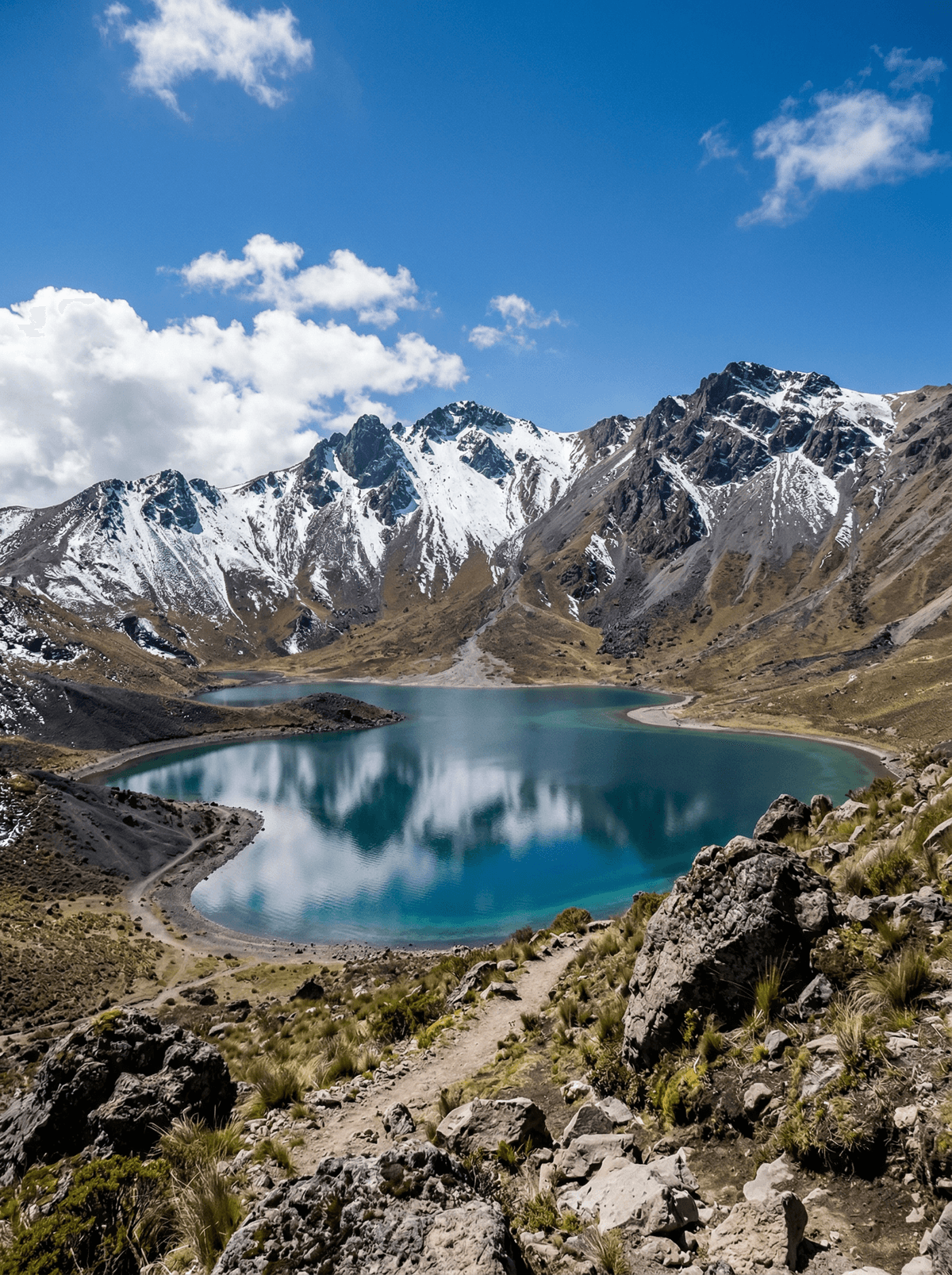
Cold crater paths circle two high lakes beneath Mexico's shifting mountain weather.
Inside the crater the weather makes the rules. The Sun and Moon lakes lie in volcanic stone above 4,000 metres, jade one hour and iron-grey the next, with cloud pouring over the rim between.
Nevado de Toluca's marked paths and community vehicles climb towards a crater landscape holding the Sun and Moon lakes, with views governed by weather and conservation controls. CONANP requires proper mountain clothing and restricts the summit to suitably equipped visitors. Toluca below contributes the region's singular sausage, coloured green with herbs and chillies.
Solo
Take the crater path in full mountain kit and read the lakes' moods.
Friends
Take the cold start together, earn the altitude, and the chorizo verde after.
- Marked paths and community vehicles lead towards the crater landscape of Nevado de Toluca.
- The high circuit overlooks the Sun and Moon lakes, subject to weather and conservation controls.
- CONANP requires proper mountain clothing and restricts summit access to equipped visitors.
Chorizo verde, Toluca's green sausage of chillies, herbs and pumpkin seed, waits below the mountain.
Mexican antojitos at Parque de los Venados answer the crater's cold on the way down.
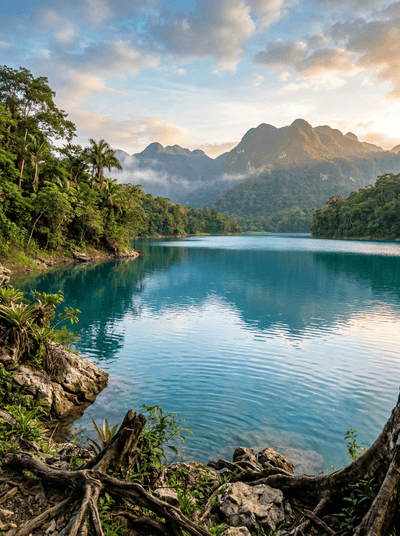
Laguna de Miramar
Mexico
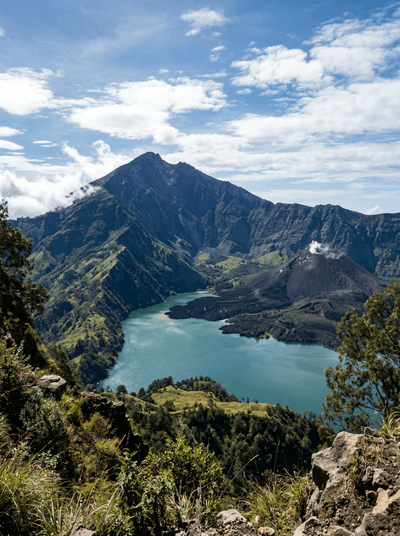
Jade water lies dead still inside unbroken forest, without an engine within earshot.
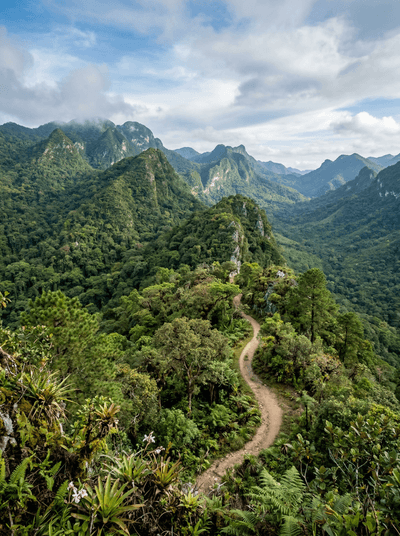
El Cielo Biosphere Reserve
Mexico
Tropical forest gives way to cloud forest along one steep Tamaulipas reserve.
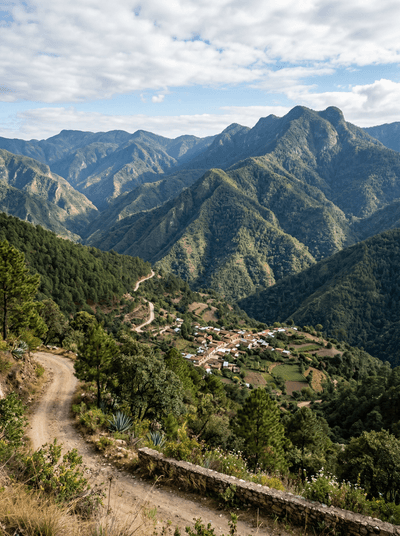
Oaxacan Sierra Norte
Mexico
Cloud-forest trails link Zapotec villages that invented community ecotourism in Mexico.
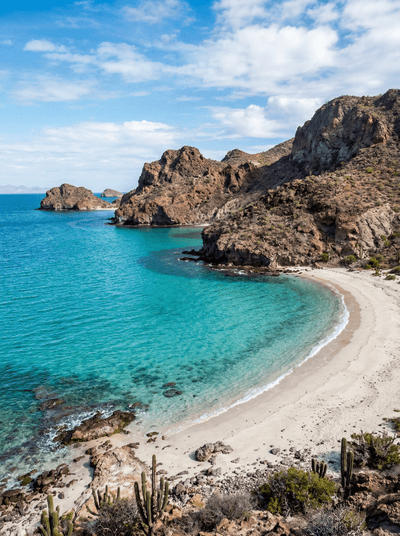
Espíritu Santo Island
Mexico
Red volcanic cliffs fold around clear coves reached by boat from La Paz.