
France
Chaos de Montpellier-le-Vieux
Dolomite towers and arches eroded into a ruined city that nature built and nobody lived in.
The rock city has no inhabitants. Dolomite towers, arches, corridors and chambers spread over a hundred and twenty hectares of the Causse Noir, eroded into forms so architectural they look built — doorways, walls, windows — by nothing more intentional than water and wind. Montpellier-le-Vieux is a natural labyrinth on a limestone plateau in southern France, where geology imitates civilisation and the silence imitates abandonment.
The chaos stands on the Causse Noir above the gorges of the Dourbie, one of the Grands Causses, the high, empty limestone plateaux of the Aveyron, and its dolomite has weathered over millions of years into a stone city that shepherds long avoided and that Édouard-Alfred Martel mapped in 1883, giving the formations the names they still carry — the Sphinx, the Elephant, the City Gate, the Gate of Mycenae. Waymarked paths loop through it at every length, a little train runs the long way round for those who want it, and the site has strung via ferrata and zip lines across the towers, so that you can clip to the cable and cross the gaps between the rocks above the void. Outside the labyrinth the causse is sheep, wind and box scrub to the horizon, so the rock city feels like the only event for miles. The site is seasonal and ticketed; check the opening dates before the drive up.
Family
Children treat the formations as a maze — running the corridors, naming the shapes, clambering over boulders. The via ferrata adds cable-secured climbing for older ones. Natural architecture engages in ways built architecture often does not.
Friends
The via ferrata through the towers — aerial walkways, zip lines, clipping between formations above the void — is shared adrenaline in a setting that looks like a civilisation left behind. The emptiness of the causse afterwards is the contrast.
- Dolomite towers, arches and corridors form a natural labyrinth — the rock city covers a hundred and twenty hectares of eroded limestone.
- Via ferrata and zip lines thread through the formations — clipped to cables, you cross the gaps between rock towers above the void.
- The shapes have names — the Sphinx, the Elephant, the City Gate — but the formations suggest new ones at every angle.
- The Causse Noir around the chaos is empty and windswept — the rock city feels like the only event for miles.
Pérail — the soft ewe's-milk cheese of the causses — with a spoon of recuite, the sheep's clotted cream you find nowhere else.
Aligot — elastic cheese-and-potato mash — with a grilled Aveyron sausage at a Millau table after the climb.
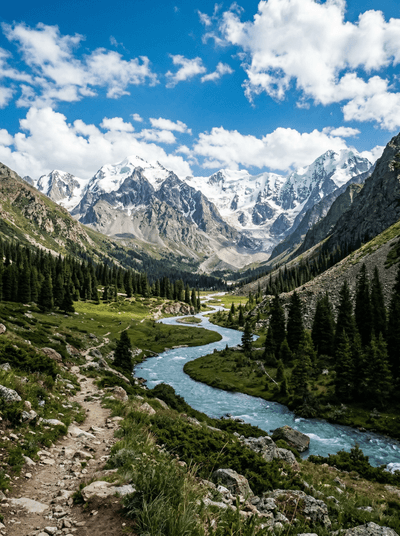
Ala-Archa
Kyrgyzstan
A juniper gorge an hour from the capital, climbing 3,300 vertical metres to glacier peaks.
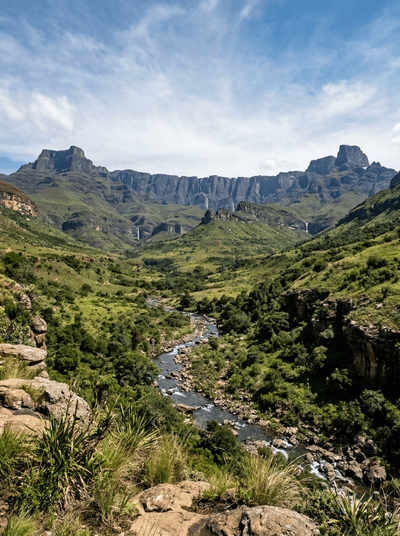
Royal Natal National Park
South Africa
The Amphitheatre's five-kilometre rock wall fills the sky above a river-cut mountain valley.
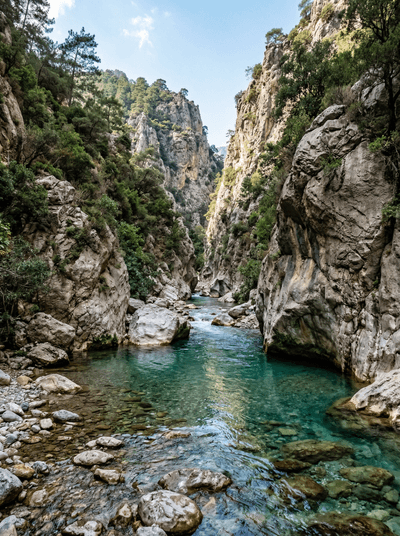
Göynük Canyon
Turkey
Wade chest-deep through turquoise water between vertical canyon walls into a hidden waterfall chamber.
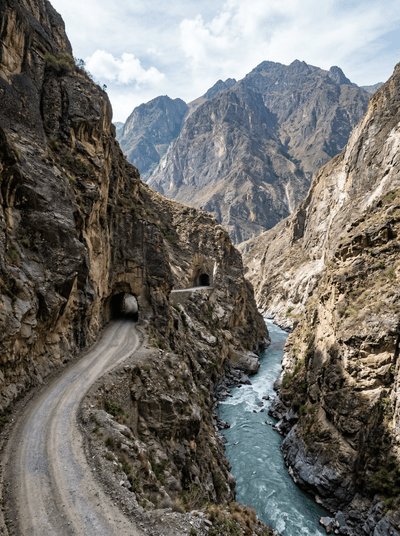
Cañón del Pato
Peru
A road threading dozens of hand-carved tunnels through a canyon that nearly closes overhead.
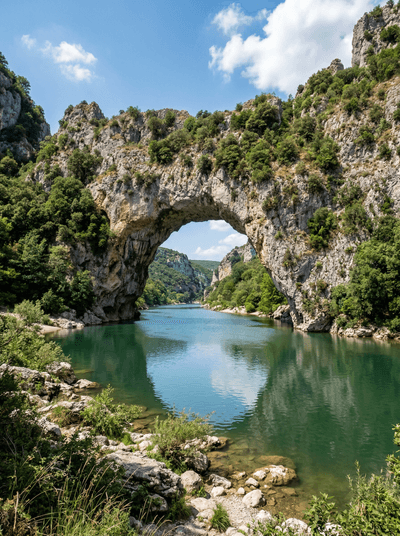
Vallon-Pont-d'Arc
France
Gateway town to the Ardèche canyon, its stone arch and 36,000-year-old cave paintings.
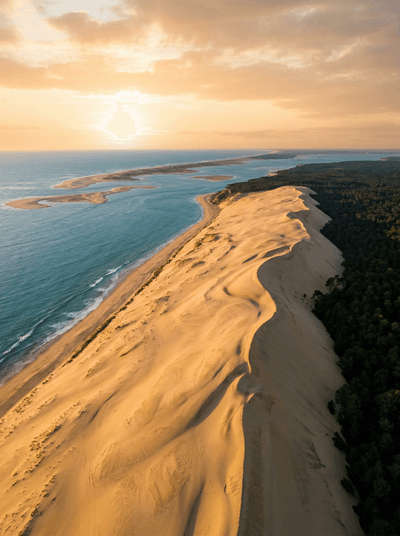
Dune du Pilat
France
Europe's tallest sand dune — a hundred metres of hot grain, the Atlantic crashing below.
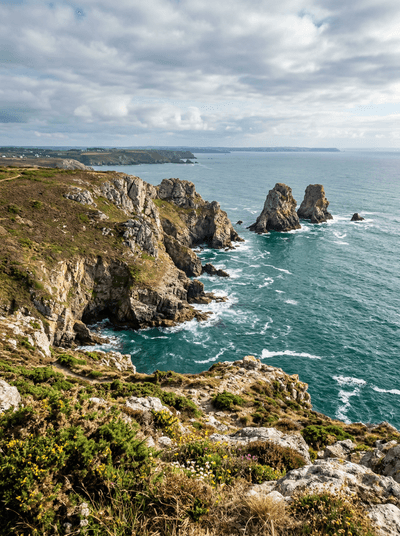
Presqu'île de Crozon
France
Sea stacks and hidden coves on a windswept peninsula where the Atlantic chews the rock raw.
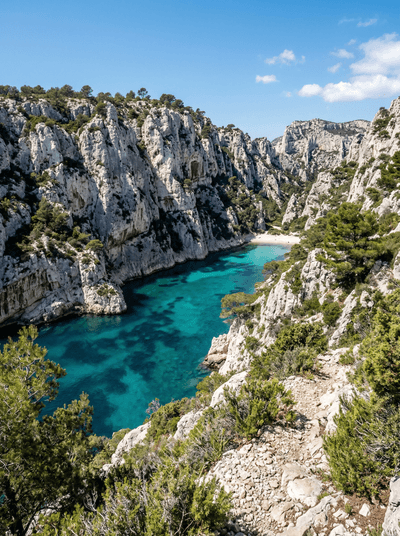
Les Calanques de Marseille
France
Jagged white inlets slicing into the coast like fjords filled with Mediterranean turquoise.